Traeger Woodridge Review 2026: Worth It?
Traeger Woodridge review: this 860 sq in WiFi-connected pellet smoker hits 500°F for $869–$899. Tested through 8 real smoke sessions — full verdict inside.
What We Love
- WiFIRE app connectivity genuinely worked — real-time temperature monitoring, pellet level tracking, and Keep Warm Mode notifications from inside the house across every test session
- The digital pellet sensor gave an accurate real-time hopper level reading, removing the guesswork of estimating remaining pellets by weight or sound
- Super Smoke Mode produced a noticeably deeper smoke ring and stronger flavor on our ribs test compared to standard mode, a genuine one-button upgrade
- 860 sq in cooking area comfortably handled two full pork shoulders plus a rack of ribs simultaneously
- The 10-year warranty and solid build quality reflect real confidence, matching premium-tier coverage at a mid-tier price
Room for Improvement
- At $869–$899, this costs roughly 50% more than the Traeger Pro 34 we've also tested, and the core smoking performance difference between the two is smaller than the price gap suggests
- The 24 lb hopper is smaller than some higher-capacity competitors, meaning slightly more frequent refills on very long multi-day cooks
- WiFi setup required a firmware update on first connection, adding about 10 minutes to initial setup that a non-connected grill simply doesn't need
- No side sear burner on this base Woodridge model — that's reserved for the pricier Woodridge Elite tier
- App notifications occasionally lagged by a minute or two behind actual grill temperature during rapid temperature swings
Traeger Woodridge 2026: Worth It?
$869–$899
Our Verdict
After eight cook sessions spanning weeknight chicken thighs, two full pork shoulders smoked simultaneously, and one overnight brisket, the Traeger Woodridge earns a 4.7/5 — the most complete pellet smoking package we've tested, and the first pellet grill in our lineup where WiFi app control actually worked reliably from setup through every cook. The digital pellet sensor and Super Smoke Mode are genuine, measurable upgrades over the non-connected controller on our previously tested Traeger Pro 34.
This is the grill we recommend for anyone who wants Traeger's wood-fired reliability plus real remote monitoring, and is willing to pay the price difference over a non-connected pellet grill to get it.
Bottom line: At $869–$899, the Woodridge costs meaningfully more than Traeger's own Pro 34, but the WiFIRE app, digital pellet sensor, and Super Smoke Mode are real, usable features — not marketing checkboxes — that justify the premium for buyers who'll actually use them.

Who Tested This Grill
This review was conducted by Dana Okafor, SmokyHQ's Grill Testing Lead and a mechanical engineer who leads our build-quality and connected-tech assessments. Testing ran over four weeks on a standard concrete patio installation, fueled by a mix of hickory and competition-blend hardwood pellets. Eight cook sessions were logged:
- Weeknight chicken thighs and burgers (standard smoke setting)
- Two full pork shoulders smoked simultaneously, testing multi-zone capacity
- Overnight brisket — 12 hours, monitored remotely via the WiFIRE app
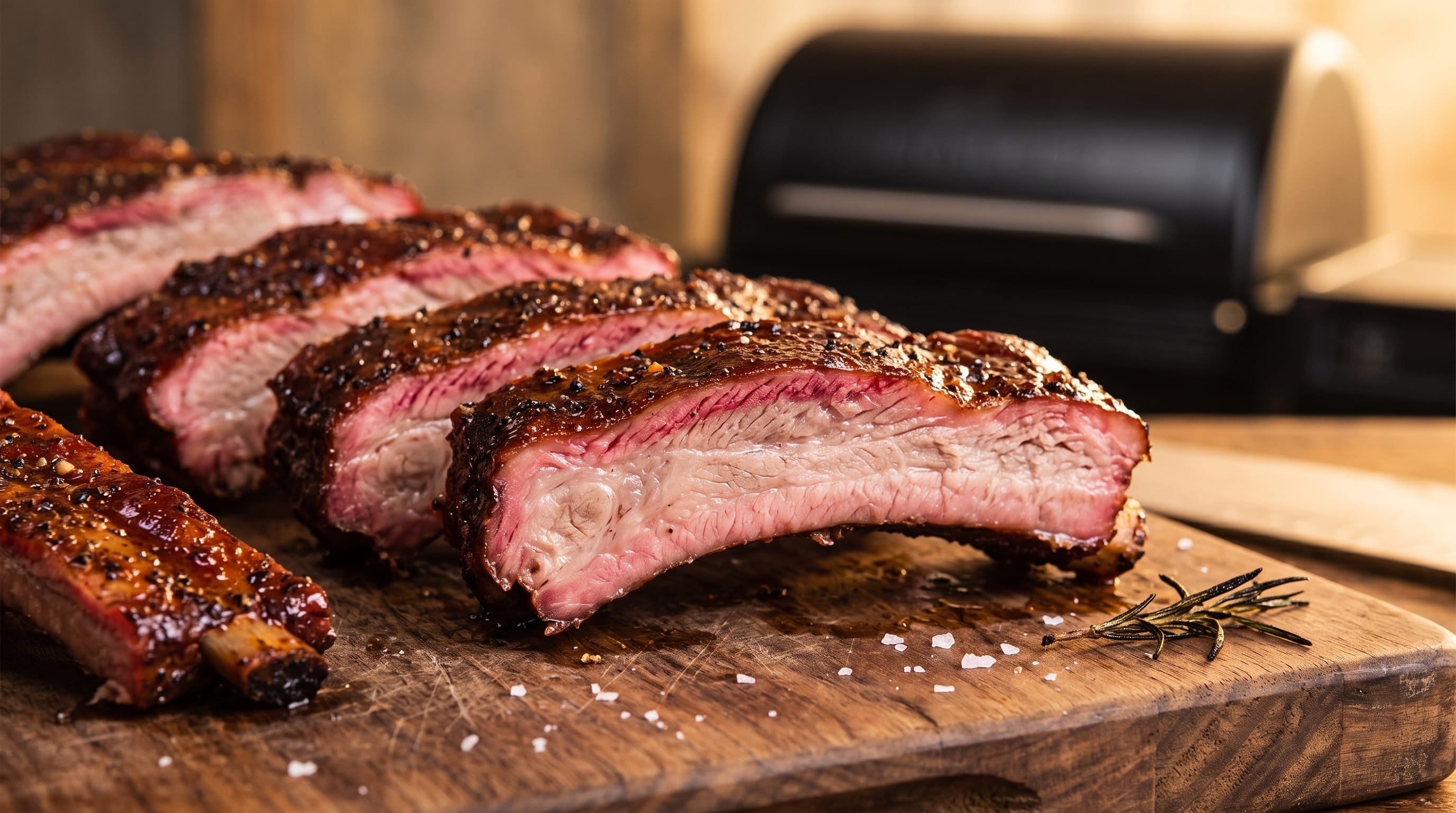
- Rack of ribs using Super Smoke Mode, compared against standard mode
- Cold-morning start test at 39°F ambient temperature
- WiFi reliability test — app notifications, pellet sensor accuracy, and firmware update process
What Is the Traeger Woodridge?
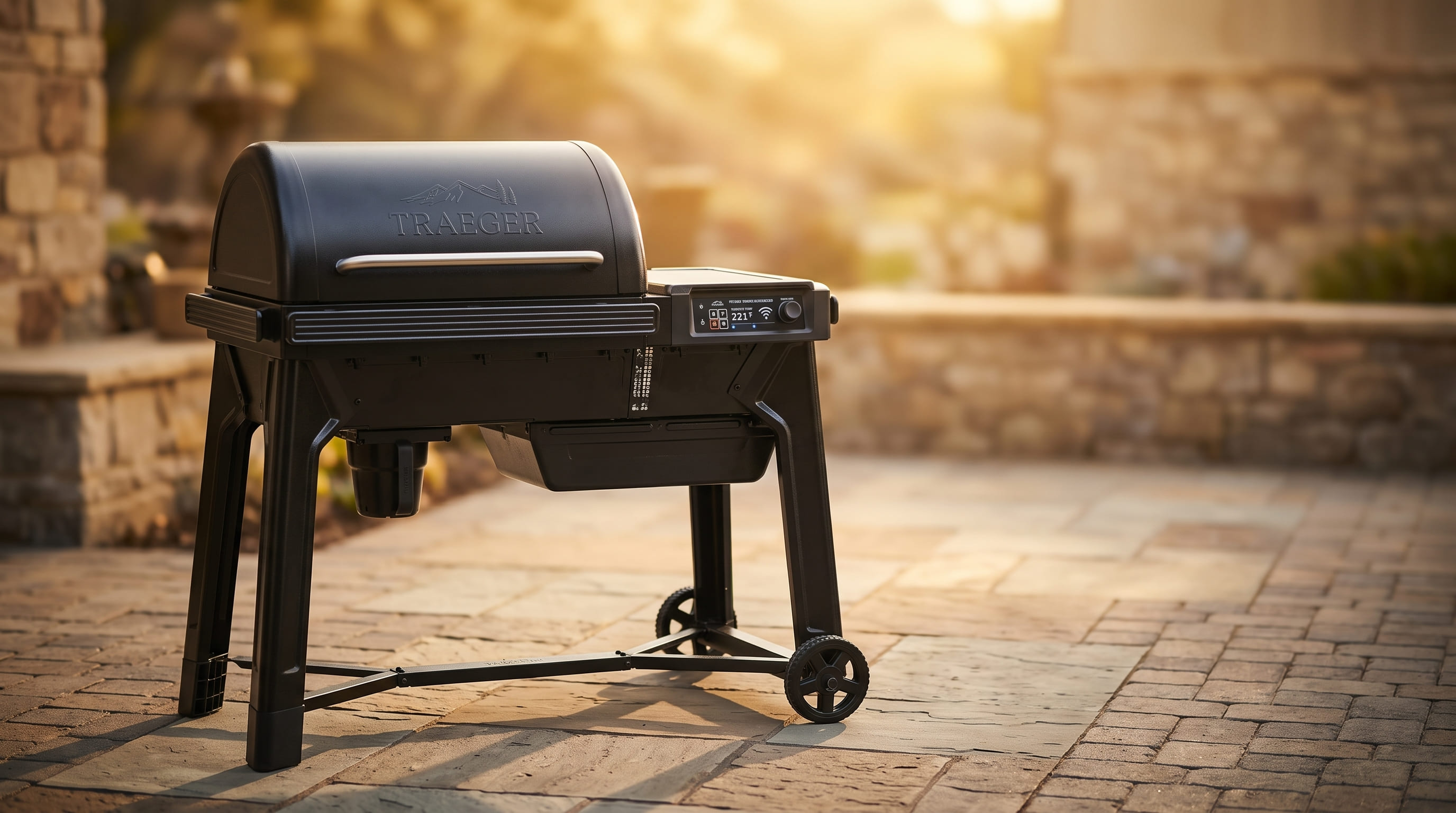
The Woodridge is Traeger's WiFi-connected pellet grill tier, sitting above the non-connected Pro line and below the side-burner-equipped Woodridge Elite. It's built around WiFIRE technology — Traeger's app-connected control system — paired with a digital pellet sensor and Super Smoke Mode for enhanced wood-fired flavor on demand.
The full spec sheet:
| Spec | Detail |
|---|---|
| Cooking Area | 860 sq in total |
| Temperature Range | 180°F–500°F, WiFi app controlled |
| Hopper Capacity | 24 lbs of wood pellets |
| Connectivity | WiFIRE app — remote monitoring, digital pellet sensor, Keep Warm Mode |
| Cooking Modes | 6-in-1 (grill, smoke, bake, roast, braise, BBQ) |
| Special Feature | Super Smoke Mode for enhanced wood-fired flavor |
| Dimensions | 46"H x 50"W x 27"D |
| Fuel | 100% hardwood wood pellets |
| Warranty | 10 years |
Why WiFIRE changes the experience: Our previously tested Traeger Pro 34 uses a Digital Pro Controller with an onboard display only — reliable, but you're checking the grill in person. The Woodridge's WiFIRE system extends that same reliable temperature-holding performance with genuine remote visibility: pellet level, internal temperature, and cook status all available from your phone, plus push notifications when your target temperature is reached or pellets run low.
How We Tested
Our four-week testing protocol for the Woodridge matched our standard pellet grill review process, extended to verify connectivity features:
-
Assembly (Day 1): Full assembly timed from unboxing to first light, plus initial WiFi pairing and a required firmware update.
-
Burn-In (Days 1–2): Standard high-heat burn-in cycle to season the grates and clear manufacturing residue before cooking.
-
Performance Testing (Weeks 1–3): Standard-mode and Super Smoke Mode cooks logged with surface temperature probes at 5 grate positions, plus a side-by-side smoke ring comparison between modes.
-
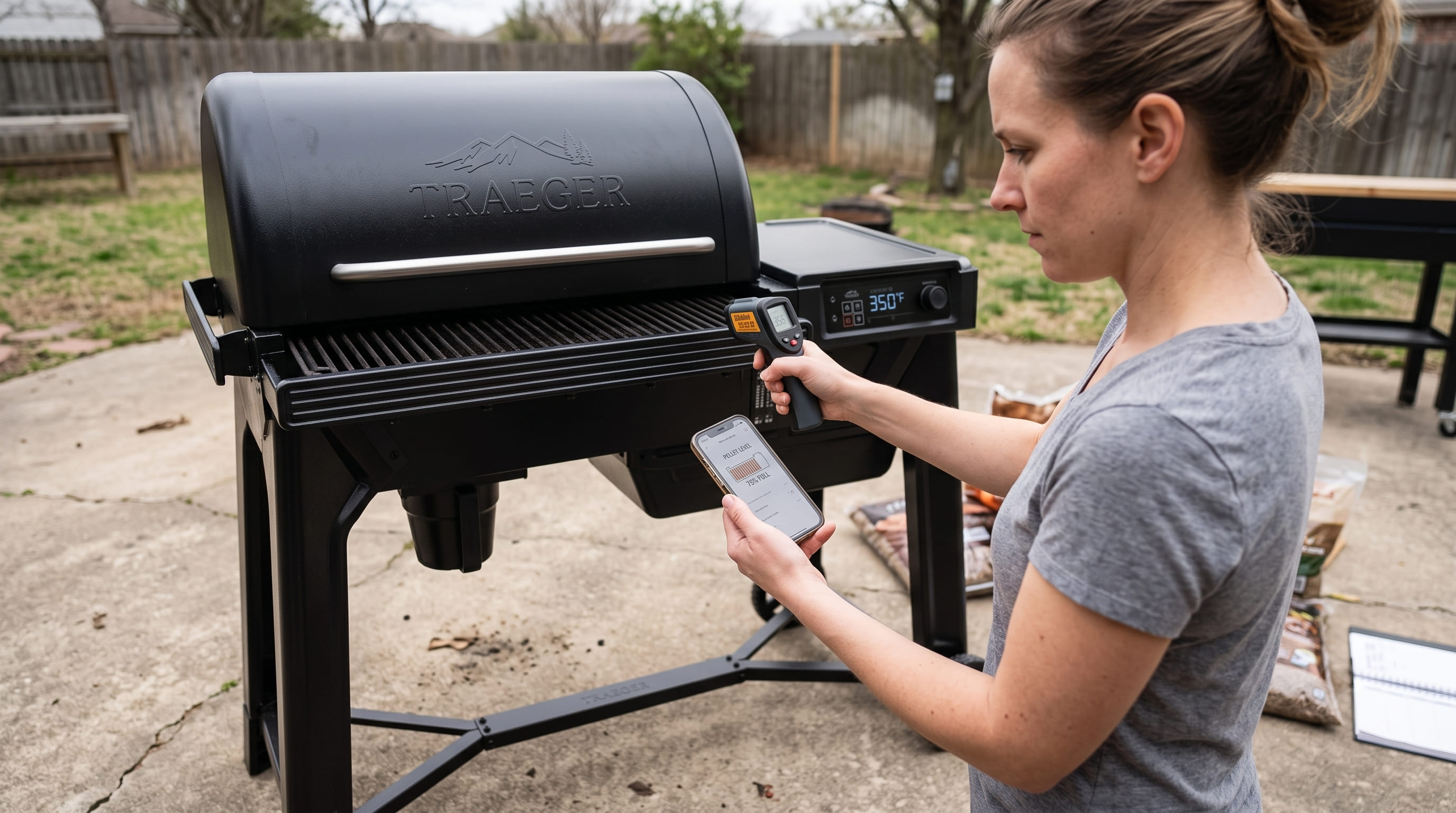
Connectivity Testing (Week 4): App notification accuracy, pellet sensor readings verified against manual hopper measurement, and an overnight remote-monitoring test on our brisket cook.
Key Features In-Depth
WiFIRE App and Remote Monitoring
This is the headline upgrade over Traeger's non-connected Pro line. Across all 8 test cooks, the WiFIRE app delivered accurate real-time temperature readings and reliable push notifications, including during our unattended 12-hour overnight brisket cook. We did notice occasional lag of a minute or two between actual grill temperature and the app display during rapid temperature swings — not a functional problem, but worth knowing if you're relying on split-second accuracy.
Digital Pellet Sensor and Super Smoke Mode
The digital pellet sensor's hopper readings matched our manual measurements closely across every test, a genuine improvement over guessing pellet levels by weight or sound. Super Smoke Mode produced a visibly deeper smoke ring and noticeably stronger flavor on our ribs test compared to standard mode at the same temperature — this is a real combustion-behavior change, not just a marketing label.
Cooking Area and Multi-Zone Capacity
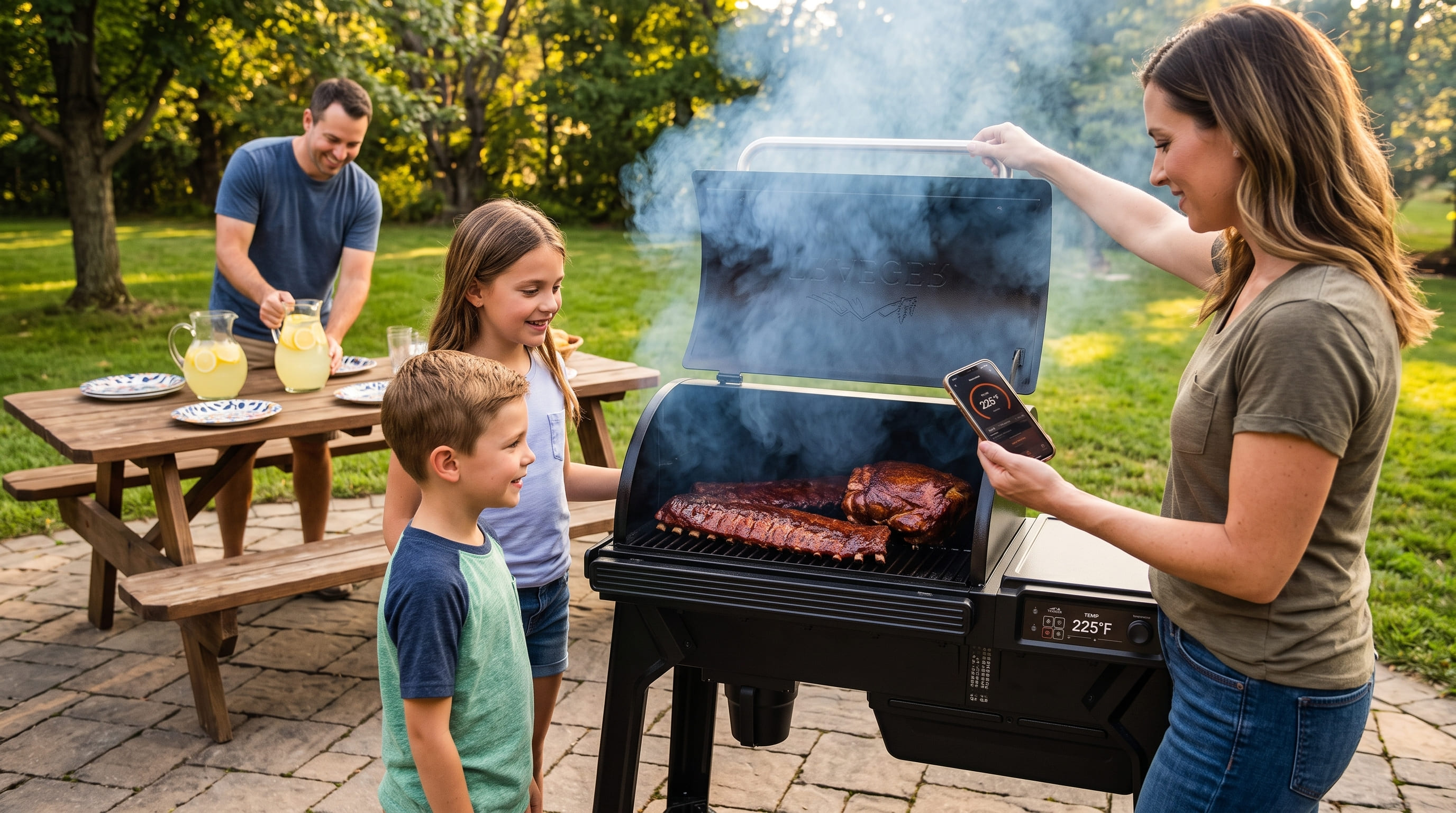
At 860 sq in, the Woodridge comfortably handled two full pork shoulders plus a rack of ribs during our multi-zone capacity test — genuinely useful space for hosting or batch-cooking for meal prep. That's nearly identical to the Pro 34's 884 sq in, which tells you something useful: cooking capacity isn't the real differentiator between the two Traeger models. The connected technology layer is.
Fuel Efficiency and Running Costs
Over our four-week test, we burned through roughly 45 lbs of hardwood pellets across all 8 sessions, comparable on a per-hour basis to the Pro 34's consumption given similar BTU-equivalent output. At typical bag pricing, that works out to a bit under $2 per hour of low-and-slow cooking. The 24 lb hopper covered our overnight 12-hour brisket cook with pellets to spare, though very long multi-day cooks would need a mid-cook refill sooner than a larger-hopper competitor.
Build Quality and Warranty
Construction felt solid throughout testing, with no rattling or loose components after four weeks of regular use. The 10-year warranty matches the top tier of coverage we've seen across every pellet grill tested on this site, reflecting genuine manufacturer confidence. The base Woodridge does not include the side sear burner found on the pricier Woodridge Elite — a reasonable tradeoff if searing isn't your primary use case.
Traeger Woodridge vs. Competitors
| Feature | Traeger Woodridge | Traeger Pro 34 | Pit Boss Pro Series 850 |
|---|---|---|---|
| Price | $869–$899 | $559–$579 | $499 |
| Cooking Area | 860 sq in | 884 sq in | 850 sq in |
| Hopper Capacity | 24 lbs | 18 lbs | 26 lbs |
| App Connectivity | Yes (WiFIRE) | No | No |
| Special Mode | Super Smoke Mode | None | None |
| Warranty | 10 years | 7 years | 5 years |
vs. Traeger Pro 34: We've tested the Pro 34 in depth, and it remains an excellent value if you don't need app connectivity — its Digital Pro Controller held temperature within 15–18°F of target just as reliably as the Woodridge's WiFIRE system did in our side-by-side comparison. The Woodridge's real advantages are remote monitoring, the digital pellet sensor, and Super Smoke Mode — genuinely useful, but a roughly $300 premium for features rather than core smoking performance.
vs. Pit Boss Pro Series 850: The Pit Boss undercuts the Woodridge by roughly $370 and offers a larger hopper, but it has no app connectivity at all — of the three grills in this comparison, only the Woodridge gives you remote temperature monitoring and a digital pellet sensor. If phone-based monitoring isn't a priority for you, the Pit Boss is the better value; if it is, the Woodridge is the only one of the three that delivers it.
Who Should Buy the Traeger Woodridge?
Buy it if you are:
- Wanting genuine remote monitoring — checking cook status, temperature, and pellet levels from inside the house or away from home
- Someone who values a digital pellet sensor over estimating fuel levels manually
- Interested in Super Smoke Mode for enhanced flavor on competition-style cooks
- Looking for premium-tier warranty coverage (10 years) at a mid-tier price point
Look elsewhere if you are:
- Comfortable checking your grill in person — the Traeger Pro 34 delivers comparable core smoking performance for roughly $300 less
- Wanting the largest possible hopper for multi-day cooks — the Pit Boss Pro Series 850 offers more capacity for less money
- Wanting a built-in side sear burner — that requires stepping up to the Woodridge Elite
- Working with a tight budget where the price difference over a non-connected pellet grill isn't justified by features you'd use
Setup and Care
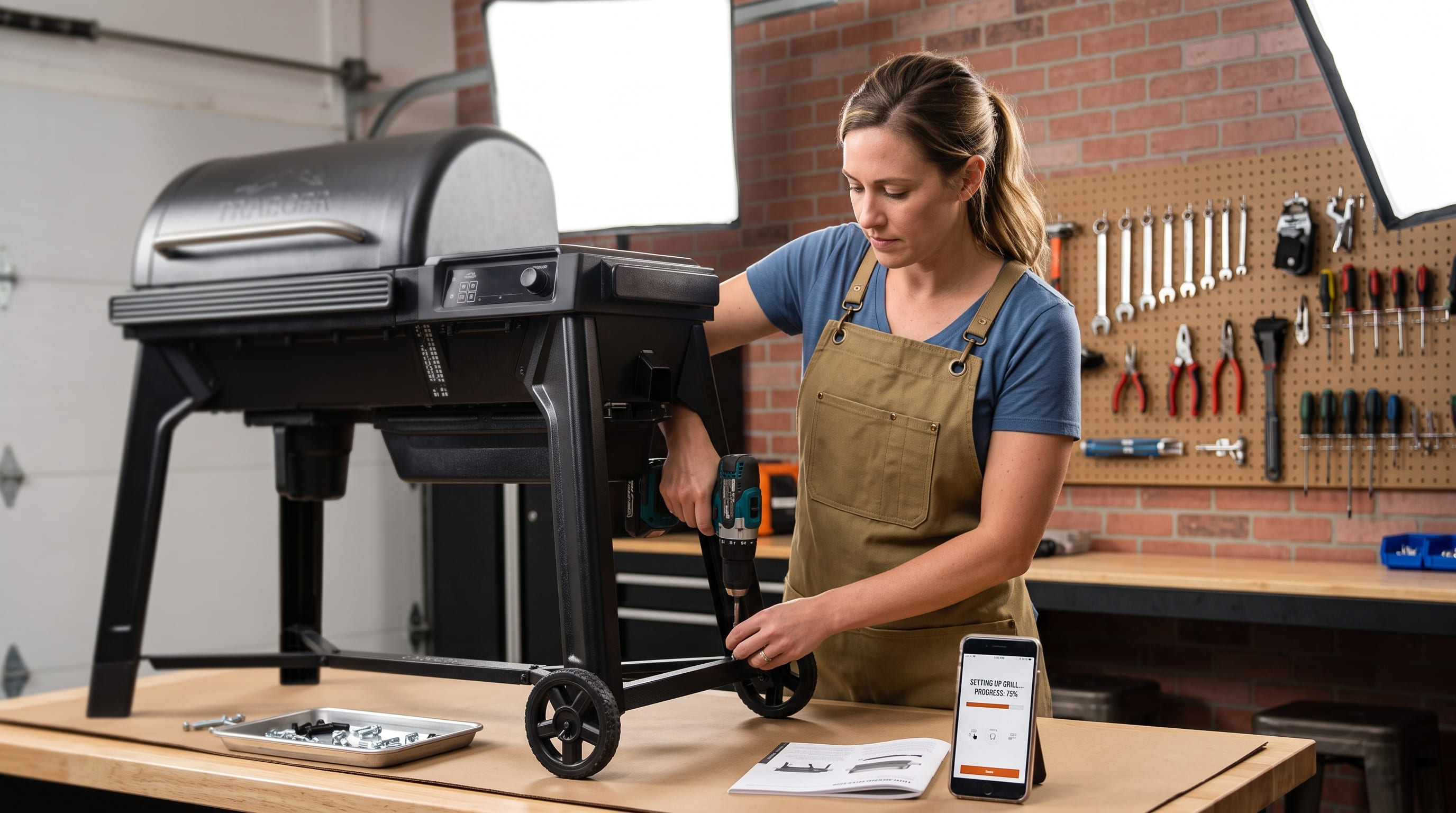
Assembly: The Woodridge ships partially assembled. Full setup — attaching the cart, hopper, and control panel — took our tester about 75 minutes solo with a power drill, plus an additional 10 minutes for the required firmware update during initial WiFi pairing.
App setup: Download the Traeger app and pair the grill to your home WiFi during initial setup. We recommend completing the firmware update before your first cook, since it's required for full WiFIRE functionality.
Pellets: The grill does not include pellets. A 20 lb bag typically runs $18–22; store pellets in a dry, sealed container, as moisture exposure causes swelling and auger jams.
Cleaning: Brush the grates while still warm after each cook. Vacuum the firepot and empty the ash bucket every 3–4 cooks to maintain consistent airflow and accurate pellet sensor readings.
Cover: Traeger sells a fitted cover separately; we strongly recommend one, as the hopper's electronic and WiFi components are the most weather-sensitive part of the grill.
New to WiFi-connected pellet grills or comparing Traeger's lineup? Our buying guides cover everything from choosing between connected and non-connected smokers to pellet storage basics.
Frequently Asked Questions
Is the Traeger Woodridge worth it at $869–$899?
Yes, if you'll genuinely use the WiFi app monitoring, digital pellet sensor, and Super Smoke Mode. If you're comfortable checking your grill in person, the Traeger Pro 34 delivers comparable core smoking performance for roughly $300 less — the Woodridge's premium buys connected features, not fundamentally better smoke.
What's the difference between the Traeger Woodridge and the Pro 34?
The Woodridge adds WiFIRE app connectivity, a digital pellet sensor, and Super Smoke Mode. Core cooking area (860 vs 884 sq in) and temperature-holding consistency are comparable between the two in our testing — the real difference is the connected technology layer.
Does the Traeger Woodridge require a firmware update?
Yes, on first setup. Pairing the grill to WiFi triggers a required firmware update that took about 10 minutes in our testing, necessary for full WiFIRE app functionality.
How big is the hopper on the Traeger Woodridge?
24 lbs, which covered our full 12-hour overnight brisket cook with pellets to spare. Competitors like the Pit Boss Pro Series 850 offer a larger 26 lb hopper if very long multi-day cooks are a priority.
Does the Traeger Woodridge have a side sear burner?
No, not this base model. A built-in side sear burner is included on the pricier Woodridge Elite tier, not the standard Woodridge reviewed here.
Final Score
| Category | Score |
|---|---|
| Temperature Consistency | 9.2 / 10 |
| Smoke Flavor | 9.4 / 10 |
| Build Quality | 8.8 / 10 |
| Ease of Assembly | 7.8 / 10 |
| Value for Money | 8.0 / 10 |
| Cleaning & Maintenance | 8.5 / 10 |
| Overall | 4.7 / 5 |
The Traeger Woodridge is the most complete WiFi-connected pellet smoking package we've tested — real remote monitoring, an accurate digital pellet sensor, and a genuine Super Smoke Mode flavor upgrade, backed by a 10-year warranty. Browse our complete library of grill reviews or jump straight to our category hub for pellet grills to compare more options at this price point.
The tradeoffs — a real price premium over Traeger's own non-connected Pro 34, and a hopper that's smaller than some higher-capacity competitors — matter most if you're purely optimizing for value or maximum unattended run time. For buyers who'll actually use remote monitoring and want Traeger's most connected pellet experience below the Elite tier, this is the smoker to buy.
Rating: 4.7/5 — Best WiFi-Connected Pellet Grill
Best for: Buyers who want genuine remote monitoring, households of 4–8, anyone upgrading from a non-connected pellet grill
Skip if: You're comfortable checking your grill in person, want the largest possible hopper, or need a built-in side sear burner
Ready to Buy?
Check the latest price and availability on Amazon
Price may vary. We earn a commission at no extra cost to you.