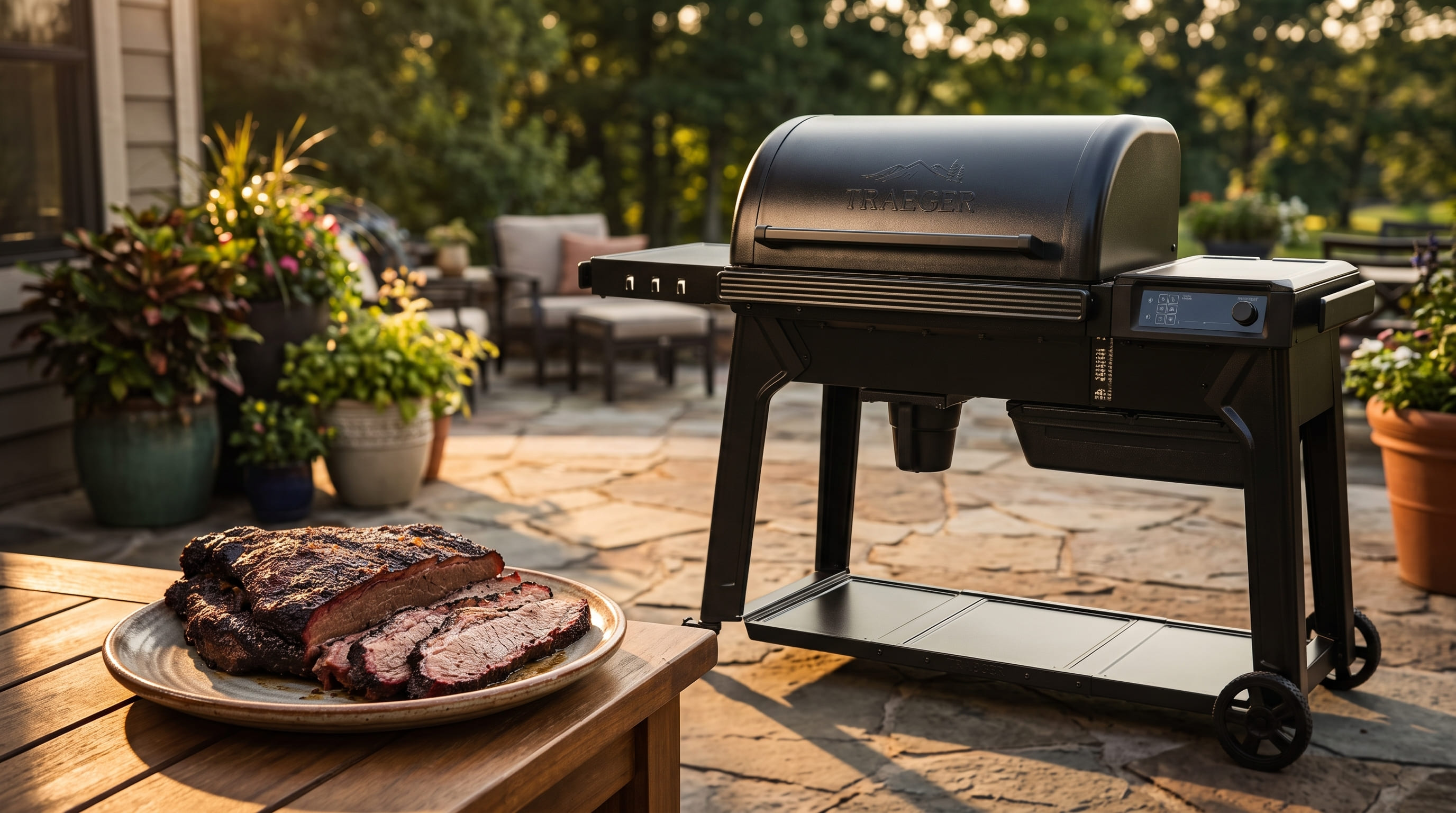
Expert grill and smoker reviews backed by multi-cook burn-in testing, thermal mapping, and hands-on trials. We buy every product at retail price — zero brand influence, zero guesswork.
Every grill on SmokyHQ goes through a rigorous multi-cook testing protocol developed by our pitmaster and engineering team. We evaluate each unit using standardised equipment across every performance category — the same protocol, every time, regardless of brand.
Thermal Mapping
Surface probes map hot spots and temperature consistency across the grates
Heat Retention
Tested across searing, low-and-slow, and cold-weather conditions
Ignition & Control
Startup time, temperature stability, and control precision measured
Build Quality
Weld inspection, material gauge, and long-term wear assessment
We never accept free products in exchange for positive coverage. Our reviews are unbiased because we pay retail price, just like you.
Competition-Grade Testing Team
A KCBS certified judge and a mechanical engineer lead every test — real cook data, not spec-sheet summaries.
FTC-Compliant Affiliate Disclosure
Every affiliate link is clearly disclosed on every page. Commissions never influence our ratings or recommendations — period.
Frequently Asked Questions
Evidence-based answers to the most common grill-buying questions from our readers.
What type of grill should I buy: pellet, gas, or charcoal?
It depends on what you value most. Pellet grills offer set-and-forget temperature control and genuine smoke flavor, making them best for beginners and low-and-slow cooks. Gas grills heat up fast and are easiest for weeknight cooking. Charcoal delivers the highest heat and most authentic flavor but requires the most hands-on skill. Kamado grills (like the Big Green Egg) combine charcoal flavor with excellent heat retention and versatility, at a higher price point.
How much cooking area do I need on a grill?
For a family of 4, look for at least 400 square inches of primary cooking area. If you regularly host or cook for 6+ people, 500-700 square inches gives you room for a full spread without crowding. Check for warming rack space separately — total listed area often includes the warming rack, which cooks food differently than the primary grates.
Are pellet grills worth the extra cost over gas grills?
For most backyard cooks, yes — pellet grills add genuine wood-fired flavor and hands-off temperature control that gas cannot replicate, and prices have come down significantly since 2020. If you mainly want fast weeknight grilling (burgers, dogs, quick sears), a quality gas grill remains the better value. Pellet grills shine for smoking ribs, brisket, and pork shoulder.
How long should a quality grill last?
A well-built gas or pellet grill with stainless or powder-coated steel construction should last 8-12 years with regular cleaning and a cover. Charcoal grills, having fewer moving parts, often last longer — 10-15 years. The most common failure points are burner tubes (gas), igniter/auger systems (pellet), and grates — all of which are typically replaceable without buying a new unit.
What is the difference between direct and indirect grilling?
Direct grilling cooks food right over the heat source — ideal for burgers, steaks, and anything under 20 minutes of cook time. Indirect grilling positions food away from direct flame, using convection heat (with the lid closed) for slower cooks like whole chickens, ribs, and roasts. Most modern grills, including all the ones we test, are built to support both zones.
Are Amazon grill deals trustworthy?
Amazon carries many reputable outdoor cooking brands including Weber, Traeger, Pit Boss, and Char-Broil. Every grill we review is purchased at retail price and tested using the same protocol regardless of brand. Look for a minimum 3-year warranty on the firebox/burners, and check current-generation model numbers, since older listings sometimes linger on Amazon after a redesign.
How do I know when it is time to replace my grill?
Replace your grill when you see rust perforating the firebox or burner tubes (a safety issue, not cosmetic), when temperature control becomes unreliable despite a clean burner, or when replacement parts cost more than 40-50% of a new unit. Surface rust on grates and exterior panels is normal and doesn't require replacement — that's a cleaning and reseasoning job.
Do grill warranties actually get honored?
Major brands like Weber, Traeger, and Pit Boss generally honor warranty claims for manufacturing defects, though response time varies. The key is registering your grill after purchase and keeping your receipt. Most warranties cover the firebox and burners longer (often 5-10 years) than cosmetic parts like grates and side shelves (1-2 years) — read the tiered coverage before you buy.
What's the difference between a pellet grill and a dedicated smoker?
A pellet grill is a hybrid — it can smoke low-and-slow at 180-250°F but also grill at higher temperatures up to 450-500°F, making it a genuine all-rounder. A dedicated smoker (offset, vertical water smoker, or kamado) is generally built to hold a steady low temperature for very long unattended cooks, sometimes with more fuel efficiency and flavor depth than a pellet grill, but with little or no high-heat searing capability. Choose a pellet grill if you want one machine for both jobs; choose a dedicated smoker if low-and-slow barbecue is your primary focus.
How often should I deep clean my grill?
Brush the grates after every cook while they are still warm, and empty ash or grease trays every 3-4 cooks to maintain airflow and prevent flare-ups. Plan a full deep clean — degreasing the interior, checking burner tubes or the auger system, and inspecting hoses or wiring — at least twice per grilling season, and always before long-term winter storage. Skipping regular cleaning is one of the most common causes of uneven heat and premature burner failure we see in long-term testing.