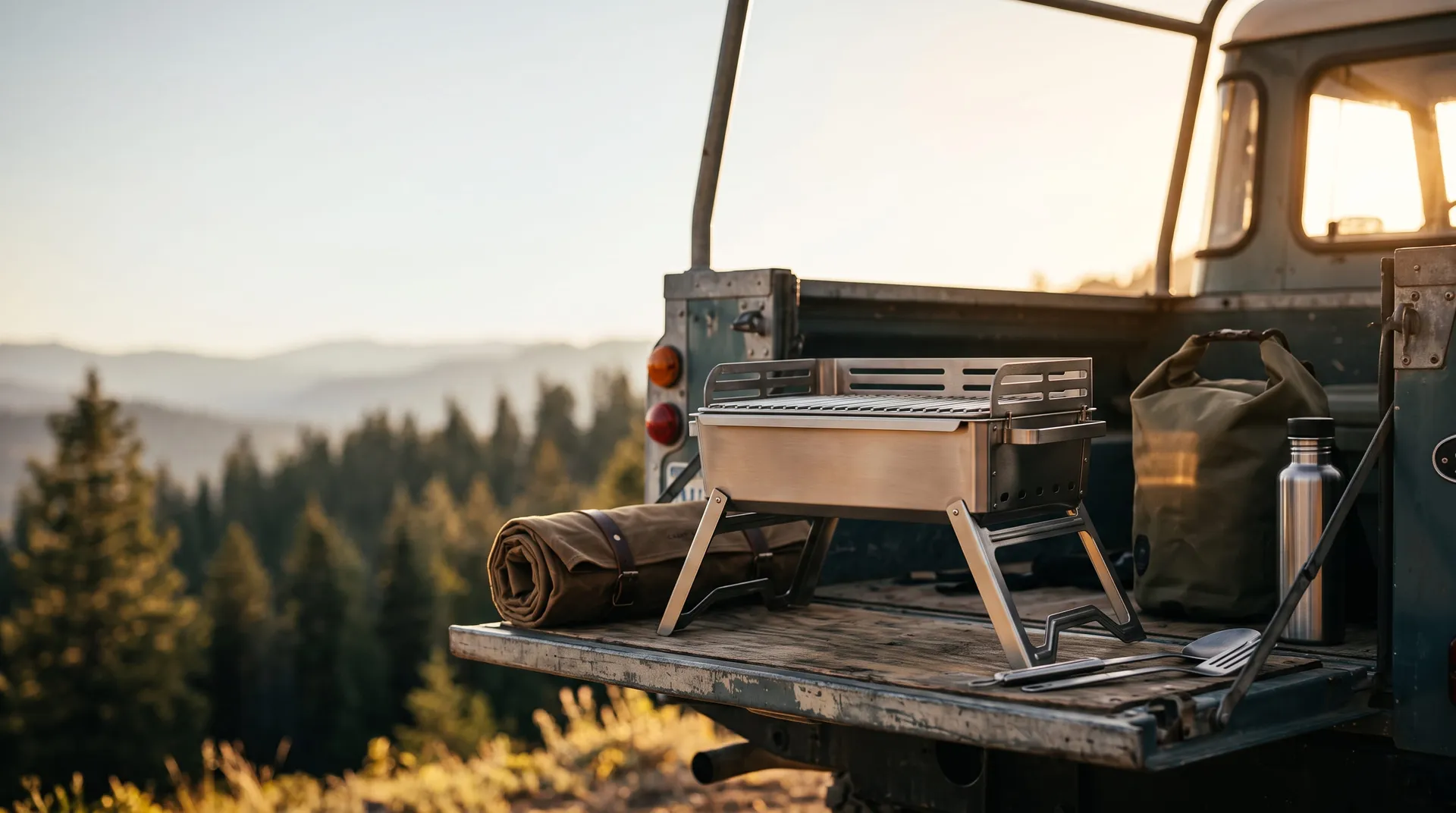
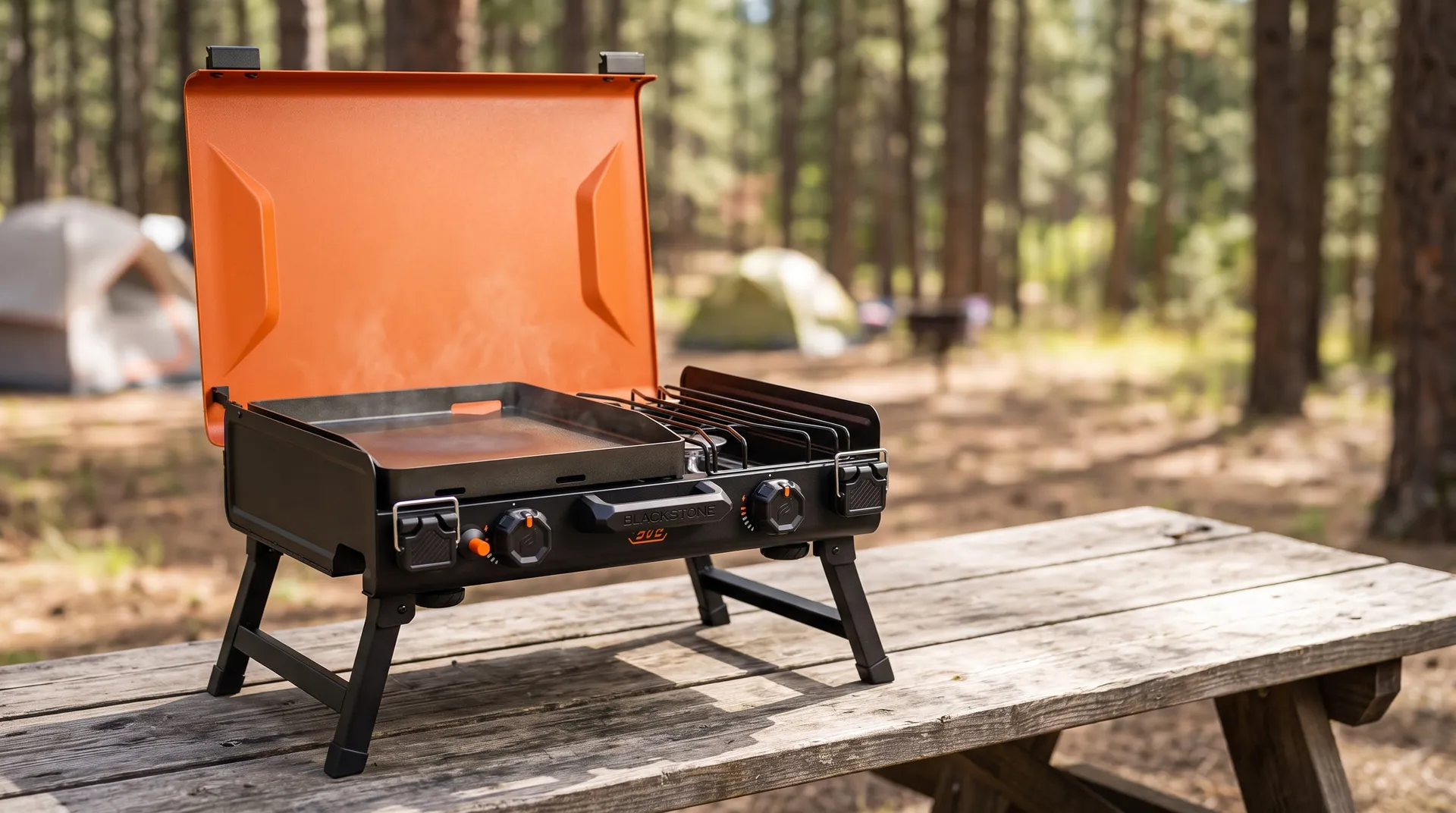
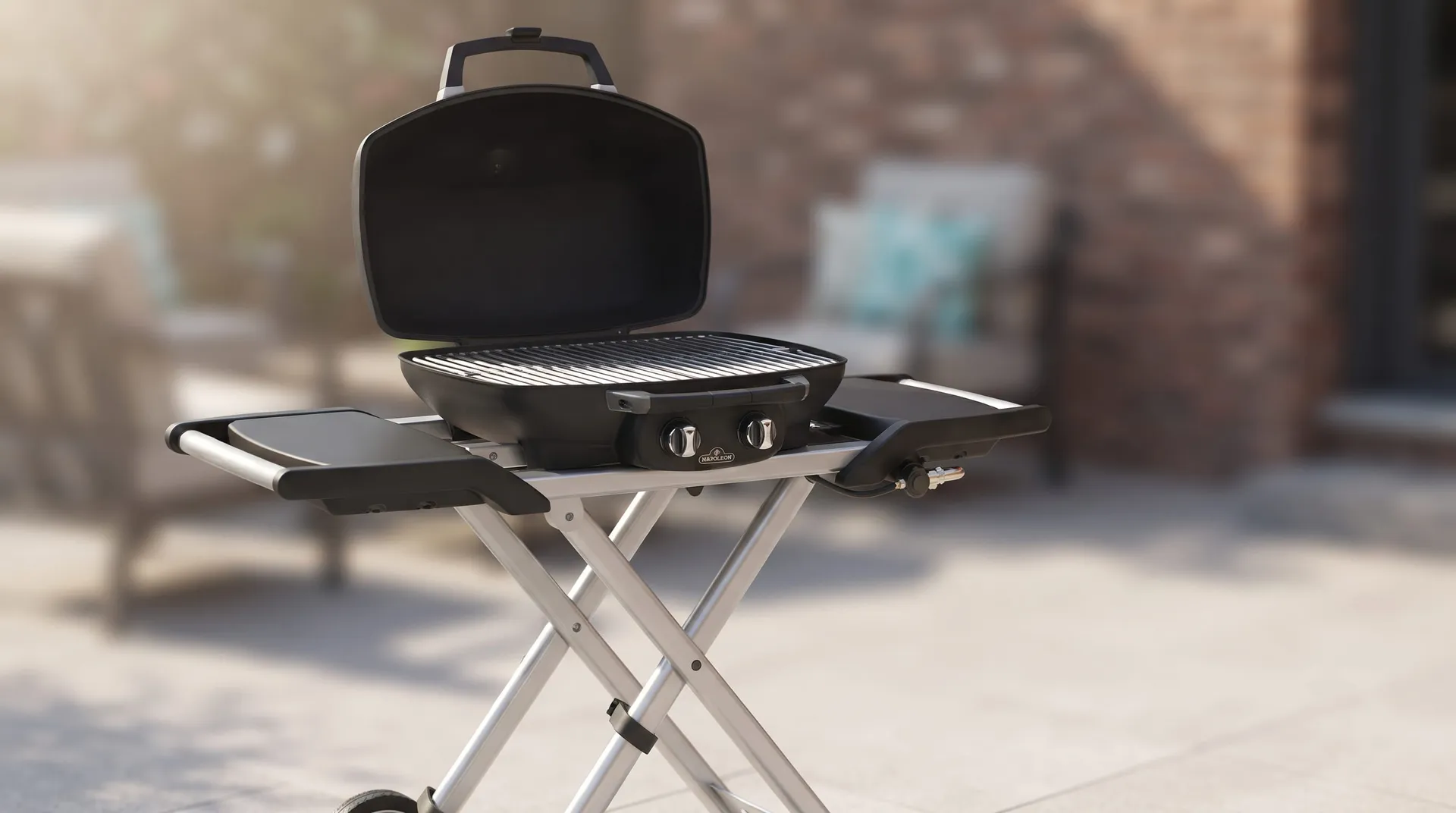
If none of the picks matched you exactly, these are the things that decide whether a portable grill works on the road, in the order they matter for most buyers.
Weight and how far you carry it
Weigh the grill plus its fuel and anything else you'll haul. A grill you can lift isn't the same as one you can walk 500 yards with.
For a walk-in beach or park, stay under about 15 lb with charcoal or 1 lb propane. For tailgates and car camping, 20–45 lb is fine because the car does the carrying. At an RV or base camp, setup and stability matter more than weight.
Propane or charcoal
Propane starts instantly, adjusts with a knob and leaves no hot ash. Charcoal is lighter to carry, cheaper up front and easy to buy on the road, but it takes time to light and cool, and you have to carry out or dispose of the ash safely.
Many campgrounds and parks restrict charcoal and wood fires during fire bans while still allowing gas appliances with a shut-off valve. Rules vary by agency and season, so check before you go.
How long a propane cylinder lasts
Propane holds about 21,500 BTU per pound. Divide that by a grill's hourly BTU rating to estimate how long a 1 lb cylinder lasts with every burner on high; a full 20 lb tank holds about 430,000 BTU.
| Grill | Burner output, all on high | 1 lb cylinder | 20 lb tank |
|---|
| Cuisinart Petite Gourmet | 5,500 BTU | About 4 hours | Not typical |
| Megamaster Tabletop | 11,000 BTU | About 2 hours | Around 39 hours |
| Napoleon TravelQ | 12,000 BTU | Under 2 hours | Around 36 hours |
| Blackstone 2364 | 14,400 BTU | About an hour and a half | Around 30 hours |
| Cuisinart Portable | 20,000 BTU | Not supported out of the box | Around 21 hours |
Real run times are longer at medium heat, but small cylinders often fall short in practice: on the Megamaster each one lasted only one or two cooks. Disposable cylinders cost much more per pound of propane than a refilled 20 lb tank, so for regular trips an adapter hose and a big tank pay for themselves. Our guide on how long a propane tank lasts covers checking how much is left.
What to know about 1 lb cylinders
The green disposable cylinders are DOT-39 cylinders built to be used once. Don't refill them yourself; if you want to stop buying throwaways, look for 1 lb cylinders sold as refillable from a propane supplier, or switch to a 20 lb tank and hose.
Empty disposables usually can't go in household trash while they may still hold gas. Return them to a propane retailer, a household hazardous-waste site or a campground collection bin.
Each time you connect a cylinder or hose, brush soapy water on the connection and open the valve. Growing bubbles mean a leak, so reseat the fitting or replace the part before lighting.
Cold, wind and altitude
Propane turns from liquid to gas by absorbing heat, so small cylinders chill as they work and lose pressure on frosty mornings. Keep spare cylinders in the car overnight on cold trips (never run them there); a 20 lb tank copes much better.
Wind is the bigger problem on small grills. Turn the grill so the wind hits the back of the lid rather than blowing across the burner, and keep the lid closed as much as you can. At altitude, water boils below 212°F and food takes longer, so check doneness with a thermometer rather than the clock.
One burner or two
Two burners let you sear and hold at once, which matters for tailgate crowds. On a single-burner grill, the center over the flame runs hottest, so sear there and slide food toward the edges to finish. Our guide to direct vs indirect grilling shows how to set up zones on any grill.
Stability and build
Look for locking lids, sturdy legs and latches that won't open in the car. Small grills have short legs, so they tip more easily on sand or grass, and three of our five picks wobbled on grass or gravel. Pack a small folding table or a sturdy board, and keep the grill out of foot traffic and away from where kids and dogs play.
Grill or griddle
A grill gives you sear marks, a lid for thicker food and a bit of smoke flavor from drippings. A griddle cooks eggs, pancakes, bacon, chopped vegetables and smash burgers, all foods that fall through or stick to grates.
| You mostly cook | Better choice |
|---|
| Burgers, steaks, sausages, chicken | Grill |
| Breakfast for the whole camp | Griddle |
| Fish fillets and delicate vegetables | Griddle, or a grill with a mat |
| A mix, one trip a year | Grill, plus a cast-iron pan for breakfast |
Rules at parks, campsites and stadiums
Many stadium lots set tailgating hours, and some ban charcoal or open flames in certain areas. Some beaches and parks allow grills only in designated spots or ban charcoal outright because people bury hot coals in the sand. The agency's website or the gate staff can tell you what's allowed that day.
Accessories worth packing
- A heat-resistant mat: it protects tables, tailgates and truck beds.
- An instant-read thermometer: it checks doneness in poor light without cutting into food.
- A headlamp: evening cooks at camp or after a game need one.
- A carry bag or hard case: it keeps grease and soot off the rest of your gear, once the grill is cool.
- A lidded metal ash can: the safe way to carry out cooled charcoal ash.
- A spare cylinder or an adapter hose: either keeps you from running out mid-cook.
- Long tongs and a spatula: they keep your hands away from the heat on a low grill. Use silicone or wood on a nonstick griddle.
Mistakes portable grill buyers make
- Choosing by grate size alone: a big, heavy grill ends up staying home. Choose by carry distance first.
- Skipping a test cook at home: a missing part or dead igniter is easy to fix in the driveway and miserable at camp. Run the first burn-in at home too; the Cuisinart manual asks for at least 30 minutes to burn off manufacturing residue.
- Packing a warm grill: grease drips, and a hot grill can melt a bag or scorch the car's carpet. Let it cool for at least 30 minutes first.