Grill Not Heating Up Properly: Causes and Fixes
Grill not heating up properly? Real causes and fixes across gas, charcoal, pellet, and electric grills, from clogged burners to weak fires, from our team.
Lighting Isn't the Same Problem as Heating
A grill that lights fine but never actually gets hot enough is a different problem than one that won't light at all, and it has a different set of causes. This guide covers what to check when your grill starts up normally — flame, auger, or element all working — but still can't reach or hold a proper cooking temperature, across gas, charcoal, pellet, and electric grills. If your grill won't light at all, see our gas grill ignition troubleshooting guide instead.
Quick Diagnostic Table
| Fuel Type | Most Likely Cause | Fix |
|---|---|---|
| Gas | Clogged burner ports or regulator bypass | Clean burners, reset regulator |
| Charcoal | Insufficient airflow or low-quality fuel | Open vents fully, use a full chimney |
| Pellet | Dirty firepot or auger jam | Clean firepot, check pellet quality |
| Electric | Weak outlet circuit or failing element | Test on a dedicated circuit, inspect element |
| Any fuel type | Excessive lid gaps or missing insulation | Check seals, avoid excessive lid opening |
If your grill used to reach proper temperature and now doesn't, the cause is almost always maintenance-related — a clogged component or degraded fuel — rather than a defective unit. Work through the checks below in order before assuming you need a replacement part or new grill.
Gas Grills: Lights Fine, Won't Get Hot
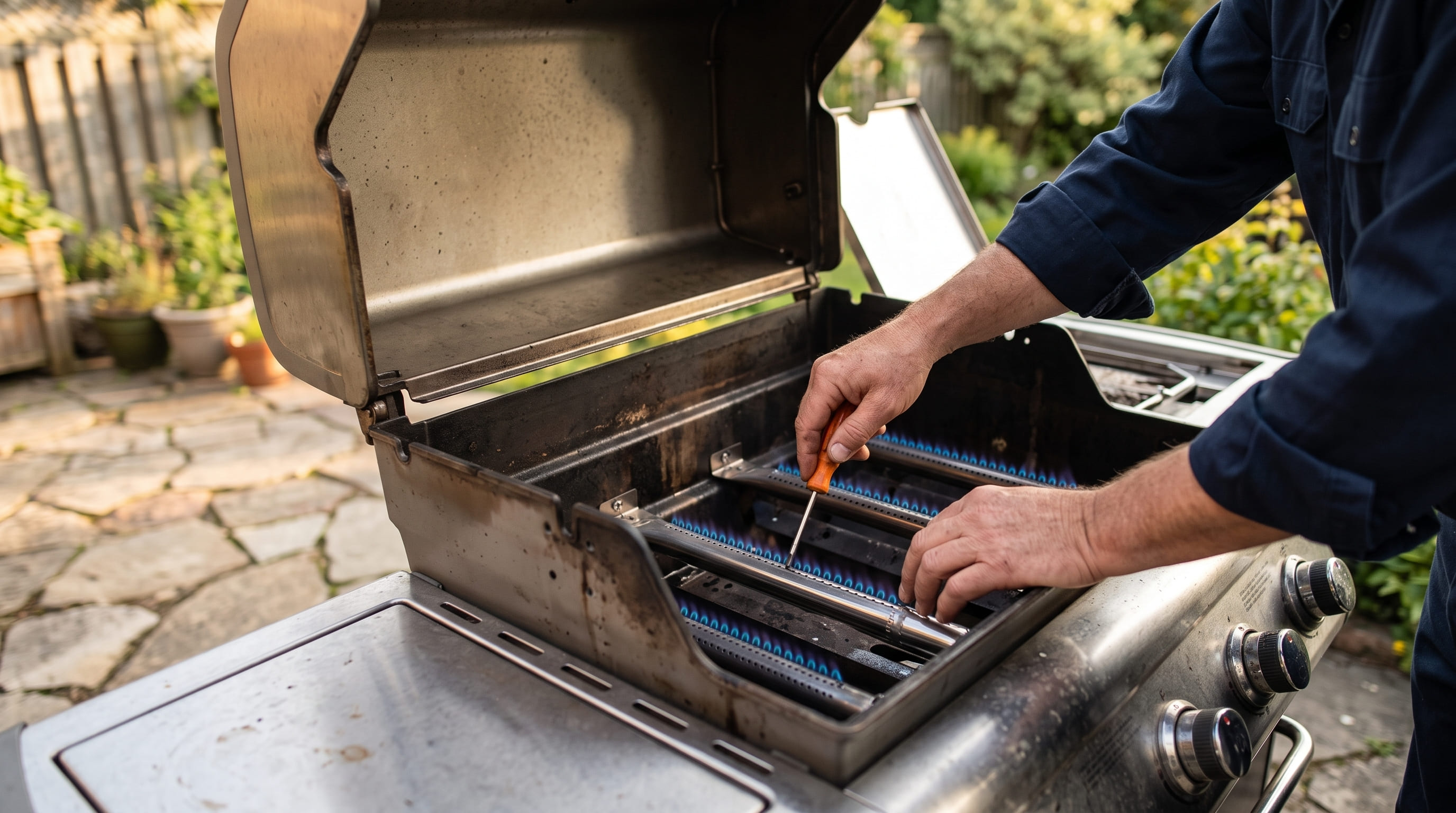
Clogged Burner Ports
The single most common cause we see. Grease and debris buildup inside burner tubes restricts gas flow even when the burner is lit and producing some flame — the result is a weak, uneven heat that never reaches the temperatures your grill is rated for. Our tested Weber Spirit E-325 held consistent heat across a full 5-point temperature mapping when clean, but the same unit with clogged ports showed noticeable cold spots and a lower overall ceiling in our comparison testing.
Fix: Remove the burner tubes and clear each port with a pipe cleaner or dedicated burner-port brush. Check for insect nests inside the tube — a surprisingly common full blockage cause after a season of storage.
Regulator in Bypass Mode
A propane regulator's safety feature can restrict gas flow to a trickle after a pressure surge, producing a flame that lights but never reaches full strength. This is frequently mistaken for a burner or ignition problem. See our full regulator reset steps for the exact process.
Low Propane or Cold Weather
A tank that's genuinely low, or cold ambient temperatures that reduce propane pressure, can both produce a flame that lights normally but caps out well below your grill's rated maximum. Weigh the tank against its stamped tare weight to check actual fuel level, and budget a longer preheat window in cold weather.
Charcoal Grills: Coals Won't Get Hot Enough
Insufficient Airflow
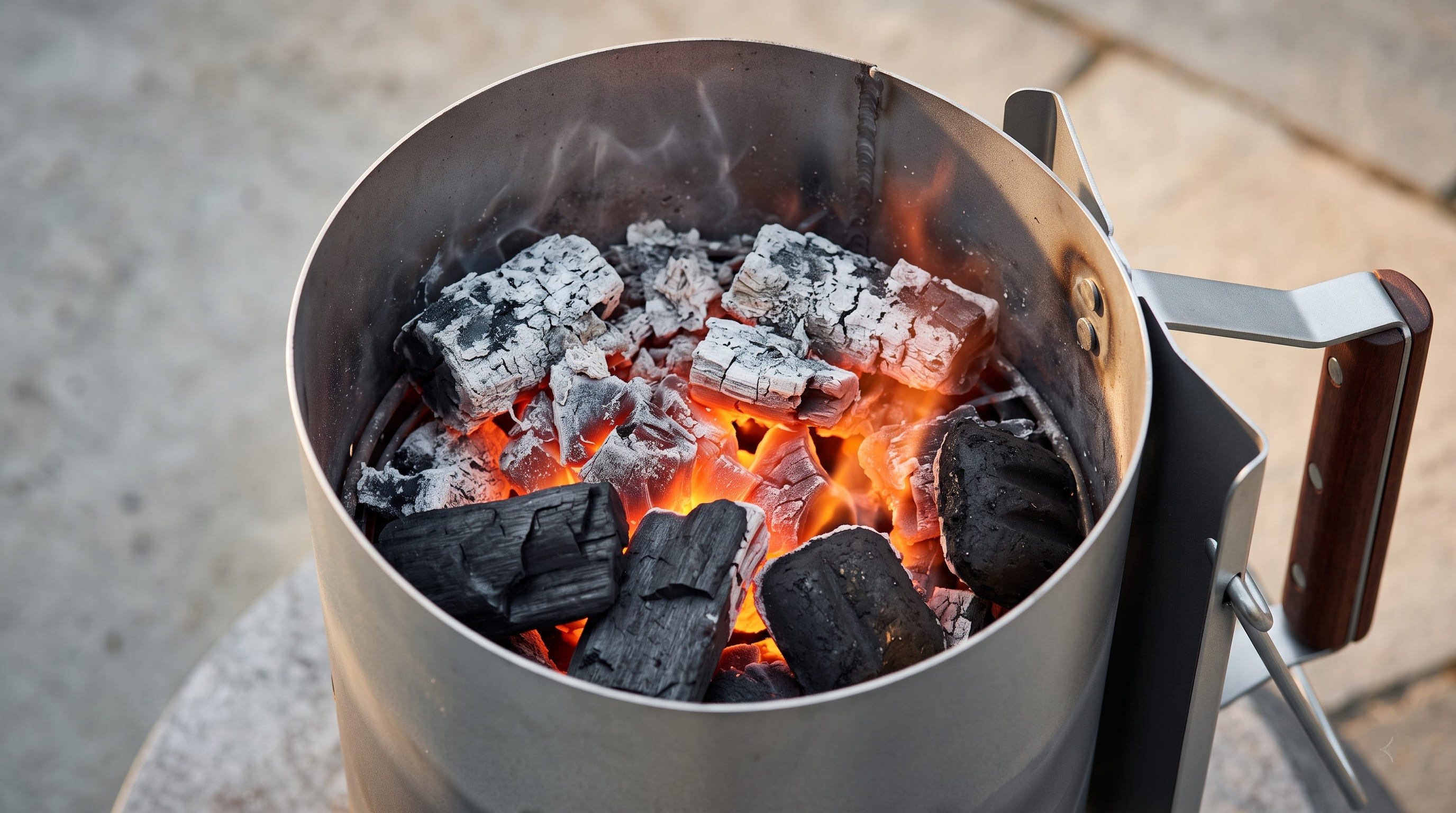
Charcoal fires need oxygen to burn hot, and closed or restricted vents are the most common reason a charcoal grill stays lukewarm despite a full load of coals. Our testing on the Weber Original Kettle 22-Inch confirmed the bottom vent does most of the real temperature work — if both top and bottom vents aren't opened enough, the fire simply won't reach searing heat no matter how much charcoal you add. See our charcoal grill temperature control guide for the full vent mechanics.
Old or Low-Quality Charcoal
Charcoal that's been exposed to moisture, even briefly, burns weaker and less predictably than dry, properly stored fuel. If a fresh chimney load still won't ash over properly or produce strong heat, check whether your charcoal has been stored in a dry, sealed container — damp charcoal is a common, easy-to-miss cause of consistently weak fires.
Not Enough Charcoal, or Poor Arrangement
A thin, sparse layer of charcoal simply can't generate the heat mass needed for high-temperature cooking. For a hard sear, a full, mounded pile of fully ashed-over coals is necessary — a half-empty chimney's worth spread thin across the grate won't get you there, even with vents wide open.
Pellet Grills: Won't Reach or Hold Set Temperature
Dirty Firepot
Ash buildup in the firepot restricts airflow around the fire, which directly limits how hot a pellet grill can burn regardless of what temperature you set on the controller. Our testing across the Traeger Pro 34 and Pit Boss 150 found that vacuuming out the firepot every 3–4 cooks is the single most effective habit for maintaining both accurate temperature and full heat output.
Auger Feed Issues
If the auger isn't feeding pellets consistently — often due to moisture-swollen pellets jamming the mechanism — the fire can starve for fuel and struggle to reach or hold target temperature, even though the controller and igniter are both working correctly. Store pellets in a dry, sealed container, since moisture exposure is the most common cause of auger problems.
Poor Pellet Quality
Low-quality pellets with high moisture content or excessive sawdust filler burn less efficiently and produce less consistent heat than properly manufactured hardwood pellets. If a grill that previously performed well suddenly runs cooler than usual, check whether you've switched pellet brands or if your current bag has been exposed to humidity.
Weather and Wind Exposure
Wind and cold temperatures pull heat away from a pellet grill's cooking chamber, sometimes causing the controller to struggle to hold target temperature even with a clean firepot and dry pellets. Positioning the grill to shield it from direct wind, and budgeting extra pellets in cold weather, both help close this gap.
Electric Grills and Smokers: Won't Heat Up Fully
Weak or Overloaded Circuit
Electric grills and smokers draw significant current, and a circuit shared with other high-draw appliances, or an extension cord that's too long or too thin a gauge, can starve the unit of the power it needs to reach full temperature. Our tested Weber Lumin Portable Electric Grill reliably hit its full 600°F ceiling on a dedicated outlet in testing — the same unit on a heavily loaded circuit or an underrated extension cord may fall meaningfully short.
Fix: Plug directly into a wall outlet where possible, and if an extension cord is necessary, use a short, heavy-gauge, outdoor-rated cord rather than a long, thin household one.
Failing Heating Element
If an electric grill consistently underperforms its rated temperature even on a confirmed good circuit, the heating element itself may be degrading. This is less common than circuit issues but worth checking if every other cause has been ruled out — most manufacturers cover this under warranty if the unit is still within its coverage period.
Ambient Temperature Effects
Like other fuel types, electric grills and smokers take longer to reach and hold temperature in cold weather, since more of the element's output goes toward overcoming heat loss to the surrounding air. This is normal physics, not a malfunction, though it's worth budgeting extra preheat time on cold days.
Causes That Apply Across Every Fuel Type
Excessive Lid Opening
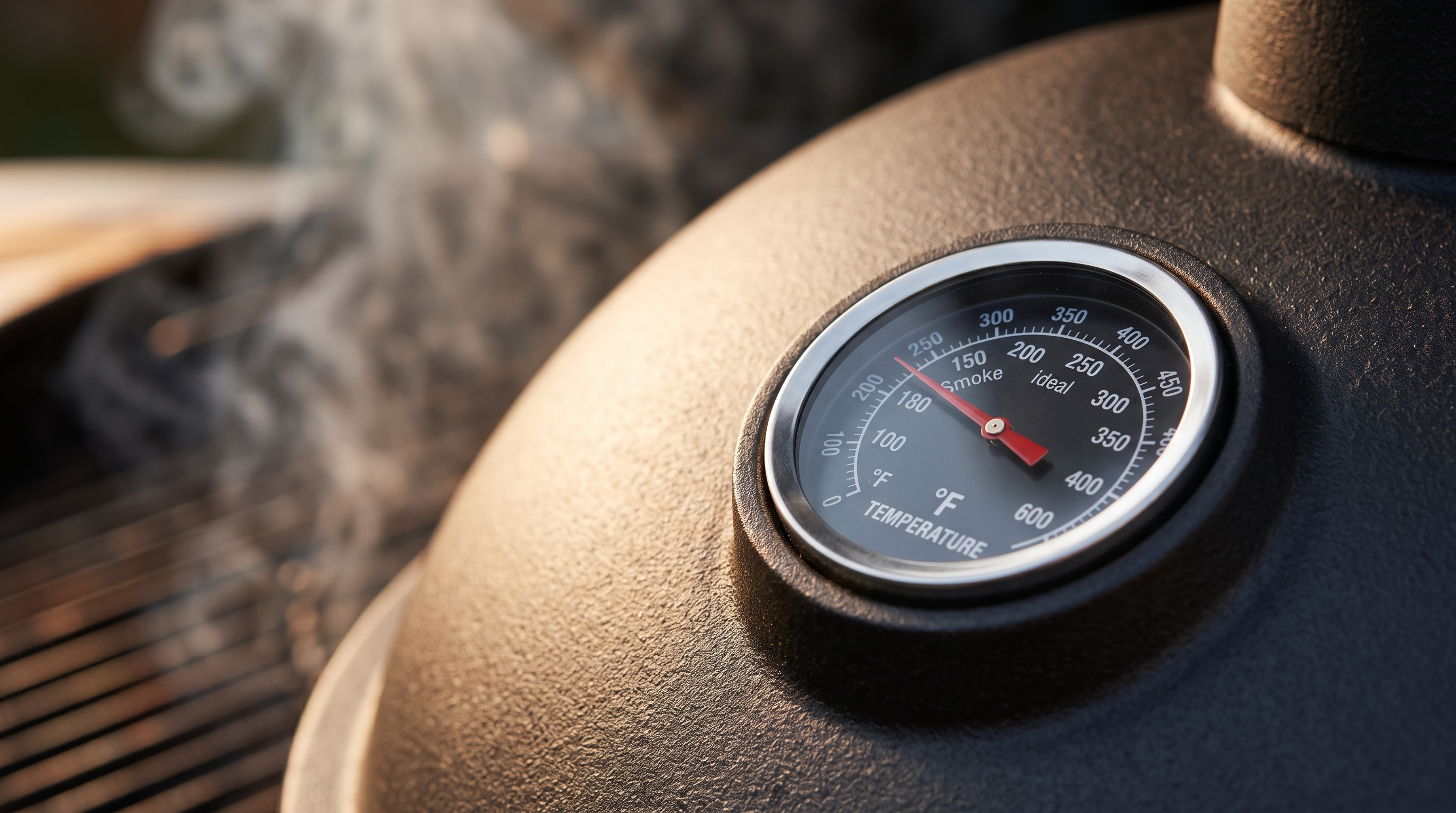
Every time you open the lid, heat and (on charcoal and pellet grills) smoke escape, and the grill has to work to recover that lost heat. Frequent lid-lifting during a cook is one of the most common self-inflicted causes of a grill that seems to struggle reaching or holding temperature, regardless of fuel type. Trust your thermometer rather than checking visually.
Damaged or Missing Seals and Gaskets
Gaps around the lid, firebox door, or hopper access panel let heat escape continuously, forcing the grill to work harder to maintain temperature and often capping its realistic maximum. Inspect gaskets and seals periodically, especially on charcoal and pellet units, and replace worn seals rather than compensating with more fuel.
Cold Ambient Temperature and Wind
Every fuel type loses more heat to cold air and wind than it does in mild, still conditions — this affects gas, charcoal, pellet, and electric grills alike. Budget longer preheat times and expect a slightly lower practical ceiling in genuinely cold or windy conditions, and consider a wind-blocking position or a grill cover with a viewing window for monitoring without opening the lid.
Preventing Low-Heat Problems Before They Start
Routine Cleaning Matters More Than Equipment Age
Nearly every cause in this guide is a maintenance issue, not a sign your grill needs replacing. Burner ports, firepots, and vents all restrict heat output when neglected, regardless of how new or expensive the grill is. Our grill cleaning and maintenance guide covers the routine that prevents most of these issues from developing in the first place.
Check Fuel Quality Before Blaming the Grill
Damp charcoal, moisture-swollen pellets, and low or cold propane all produce symptoms that look like equipment failure but are actually fuel problems. Ruling out fuel quality first, before assuming a mechanical issue, saves unnecessary part replacements or service calls.
When to Call a Professional
Most low-heat issues in this guide are DIY-fixable in under 30 minutes. Consider professional service or a manufacturer warranty claim if:
- You've cleaned burners, firepot, or vents thoroughly and heat output still hasn't improved
- An electric unit underperforms consistently on a confirmed dedicated circuit with no extension cord
- You suspect a gas leak at any point — stop immediately and do not attempt further troubleshooting yourself
- A pellet grill's auger continues jamming after clearing visible obstructions and confirming dry pellets
Frequently Asked Questions
Why does my gas grill light but never get hot enough?
Almost always a clogged burner port or a propane regulator stuck in bypass mode, both of which restrict gas flow even after successful ignition. Clean the burner tubes first, then try a regulator reset if the flame still runs weak.
Why won't my charcoal grill get hot even with a full chimney?
Check vent position first — both top and bottom vents need to be open for a hard sear, and the bottom vent does most of the real temperature work. Damp or old charcoal is the second most common cause; store charcoal in a dry, sealed container to prevent this.
Why does my pellet grill run cooler than the set temperature?
A dirty firepot restricting airflow is the most common cause in our testing. Vacuum the firepot and empty the ash bucket every 3–4 cooks, and confirm your pellets haven't absorbed moisture, which reduces burn efficiency.
Can an extension cord cause my electric grill to underheat?
Yes. A long or thin-gauge extension cord, or a circuit shared with other high-draw appliances, can starve an electric grill of the power it needs to reach full temperature. Use a short, heavy-gauge, outdoor-rated cord, or plug directly into a wall outlet.
Does cold weather really affect how hot my grill can get?
Yes, across every fuel type. Cold air pulls heat away faster, propane pressure drops in cold temperatures, and electric elements work harder to overcome ambient heat loss. Budget extra preheat time and expect a slightly lower practical ceiling in genuinely cold conditions.
How do I know if the problem is my grill or my fuel?
Rule out fuel quality first — damp charcoal, moisture-swollen pellets, and low or cold propane all mimic equipment failure. If fresh, properly stored fuel still produces weak heat after cleaning the relevant components, the issue is more likely mechanical.
Final Takeaway
A grill that lights or starts up normally but won't reach proper cooking temperature is almost always a maintenance or fuel-quality issue, not a sign of a defective unit. Work through the fuel-specific checks above in order — clogged components and airflow restrictions account for the large majority of cases we've diagnosed across every fuel type — before assuming you need professional service or a replacement grill.
For broader upkeep, see our grill cleaning and maintenance guide, or if your grill won't light at all rather than just running weak, our gas grill ignition troubleshooting guide covers that separately.
Ready to shop? Browse our top-rated grill picks to find your perfect match.