How to Clean Grill Grates (All Materials)
How to clean grill grates for cast iron, stainless steel, and porcelain-coated grates, plus what actually removes baked-on residue, from our testing team.
Grates Take More Abuse Than Anything Else on Your Grill
Grill grates absorb more direct heat, grease, and carbon buildup than any other component, which is exactly why they're the first thing to affect both flavor and food release if neglected. This guide covers grate-specific cleaning for every common material — cast iron, stainless steel, and porcelain-enameled — plus the habits that keep grates performing like new for years instead of one season.
Quick Answer: Cleaning Method by Grate Material
| Grate Material | Best Cleaning Method | Frequency |
|---|---|---|
| Porcelain-enameled cast iron | Brush while warm, mild soap for deep clean | Every cook + deep clean monthly |
| Stainless steel | Brush while warm, vinegar solution for deep clean | Every cook + deep clean monthly |
| Bare cast iron | Brush while warm, re-oil after cleaning | Every cook + reseason as needed |
| Cast iron griddle/flat-top | Scrape while warm, oil after each use | Every cook |
If you take away one habit from this guide: brush the grates while they're still warm, immediately after cooking, before residue has a chance to cool and harden. This single step prevents the majority of the stuck-on buildup that makes grates genuinely hard to clean later.
Why Grate Material Changes Your Cleaning Approach
The Core Difference
Porcelain-enameled and stainless steel grates are more resistant to rust and easier to clean with mild soap and water, while bare cast iron requires a gentler approach that avoids stripping its seasoning — the natural nonstick layer built up through repeated use and oiling. Using the wrong method on the wrong material is the most common way grates get damaged: soap and heavy scrubbing on bare cast iron strips seasoning and invites rust, while treating porcelain-enameled grates too gently lets grease buildup accumulate over time.
Identifying What You Have
Porcelain-enameled grates, like those on the Weber Spirit E-325, have a smooth, glossy black coating. Bare cast iron, common on many charcoal grills and some griddle surfaces, has a matte, slightly rough texture and will show a dull grey color if the seasoning has worn thin. Stainless steel grates have a brushed metallic finish and don't carry any coating to protect.
Cleaning Porcelain-Enameled Cast Iron Grates
After Every Cook
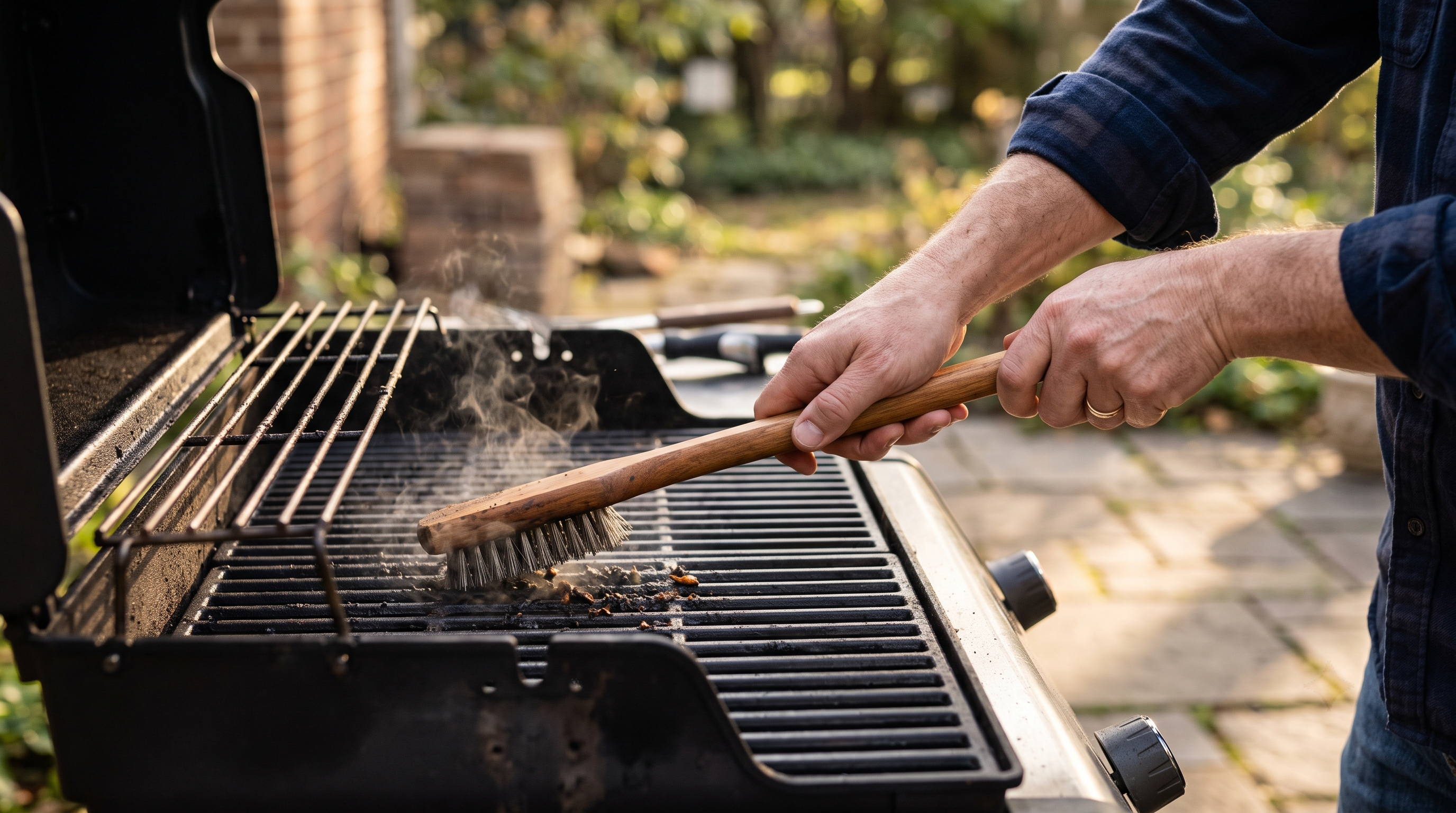
While the grates are still warm (not hot enough to burn you, but warm enough that residue hasn't fully hardened), scrape with a stiff grill brush or a grate scraper to remove loose debris. Warm residue comes off dramatically easier than cold, baked-on residue — this is the single highest-leverage habit in this entire guide.
Monthly Deep Clean
Remove the grates and soak them in warm water with a small amount of dish soap for 15–20 minutes to loosen baked-on grease, then scrub with a non-abrasive brush or sponge. Rinse thoroughly and dry completely before returning them to the grill — leaving any moisture on porcelain-enameled grates risks rust forming at any chips or scratches in the coating.
Cleaning Bare Cast Iron Grates
Never Use Soap
Soap strips the oil-based seasoning layer that gives cast iron its nonstick properties and rust resistance. Instead, scrape off residue with a stiff brush or a cast-iron-safe chainmail scrubber while the grates are warm, using hot water only if needed to loosen stuck-on bits.
Re-Oiling After Cleaning
Once clean and completely dry, apply a thin layer of high-smoke-point oil (vegetable, canola, or flaxseed all work) with a folded paper towel, then heat the grates briefly until the oil stops smoking. This rebuilds the seasoning layer removed during cleaning and cooking, and is the step most beginners skip — skipping it is the most common reason bare cast iron grates start rusting within a season.
If Rust Has Already Formed
Light surface rust is normal and recoverable, not a sign the grates are ruined. Scrub the rusted area with a wire brush or fine steel wool until the rust is gone and bare metal shows, then re-season with 2–3 thin oil coats as described above. See our grill cleaning and maintenance guide for the full seasoning process.
Cleaning Stainless Steel Grates
Everyday Maintenance
Brush while warm just like other materials, then wipe down with a cloth to remove loose particles. Stainless steel doesn't require re-oiling the way bare cast iron does, since it has no seasoning layer to maintain — the tradeoff is that it also doesn't build up the natural food-release properties seasoned cast iron develops over time.
Removing Discoloration and Baked-On Grease
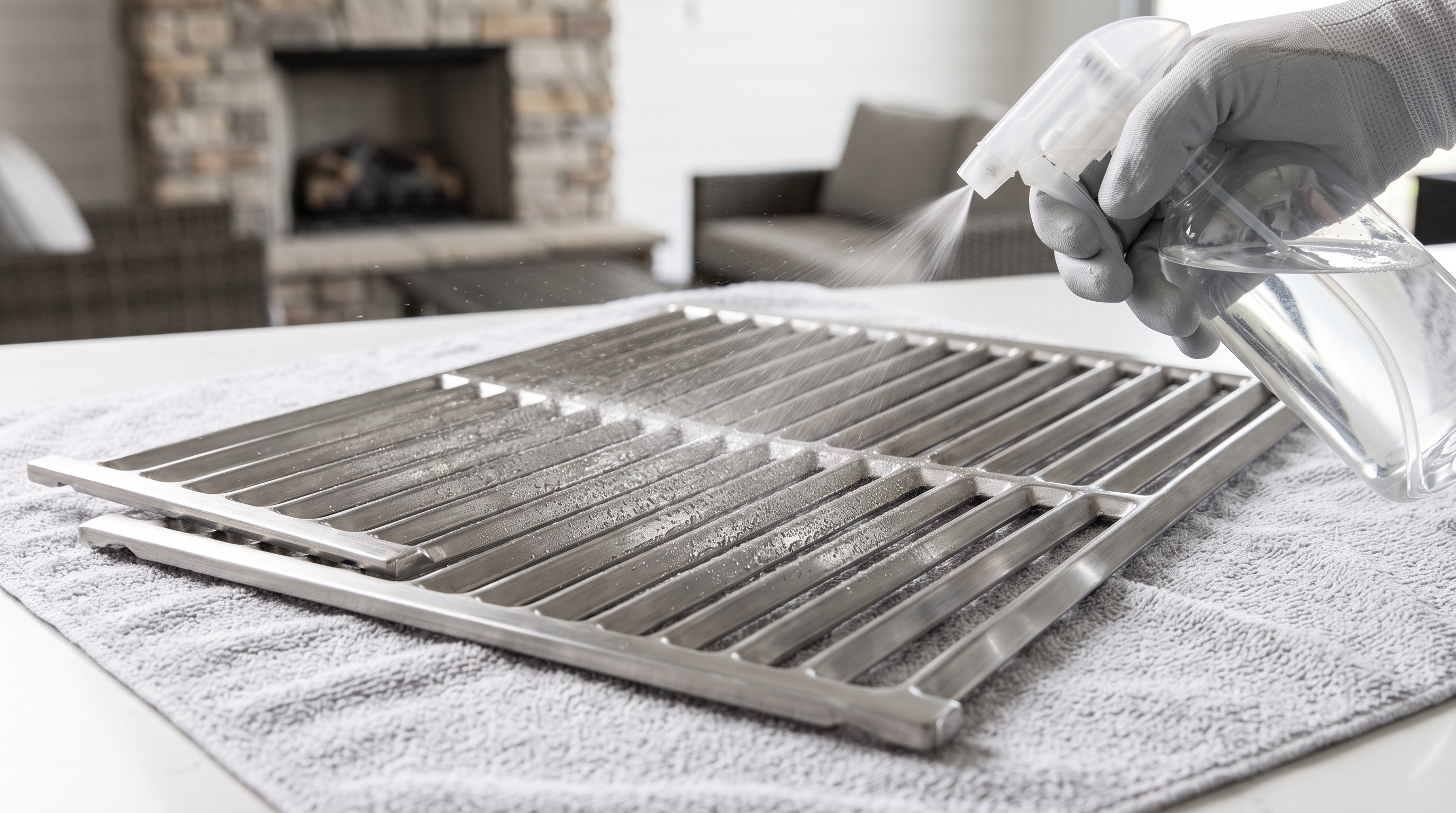
A solution of equal parts white vinegar and water, applied and left to sit for 10–15 minutes before scrubbing, effectively cuts through baked-on grease and light discoloration without harsh chemicals. Avoid steel wool on stainless steel specifically — unlike cast iron, it can leave micro-scratches that trap grease more easily over time and dull the finish.
Cleaning Cast Iron and Steel Griddle Surfaces
Flat-top griddles, like the Blackstone Original 36-Inch, use a similar principle to bare cast iron grates: scrape while warm using a metal spatula or dedicated griddle scraper, avoid soap on a seasoned surface, and finish with a thin oil wipe after each use. Our full seasoning walkthrough covers building and maintaining that layer from a bare or stripped surface.
Tools Worth Keeping On Hand
The Essentials
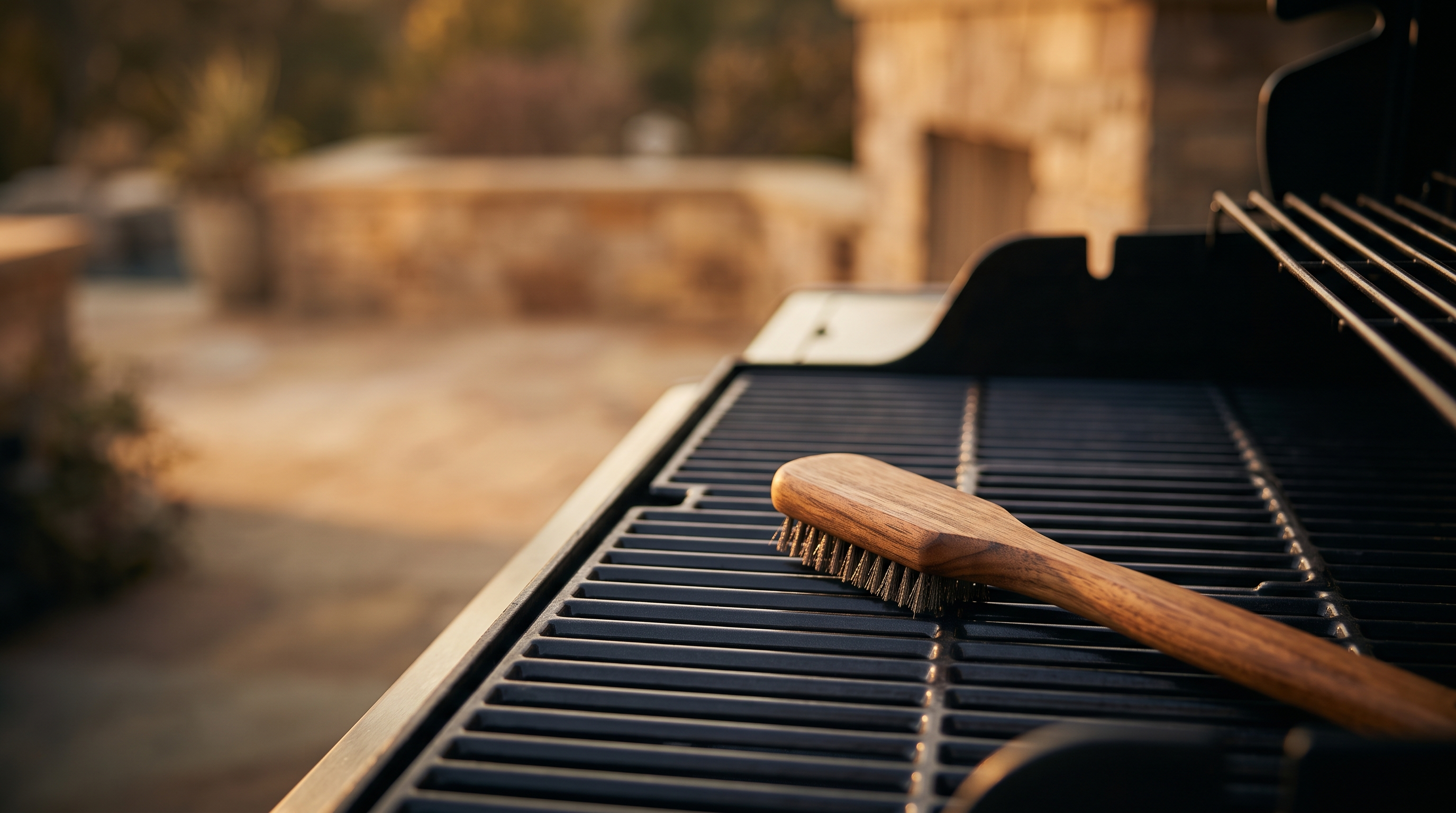
A stiff-bristled grill brush (bristle-free designs are worth considering, since traditional wire bristles can occasionally break off and end up in food), a metal grate scraper for stuck-on residue, and microfiber cloths or paper towels for drying and oiling round out nearly everything you need across every grate material covered here.
Material-Specific Extras
For bare cast iron and griddles, keep a dedicated bottle of high-smoke-point oil on hand, separate from cooking oil, specifically for seasoning maintenance. For stainless steel, a spray bottle pre-mixed with equal parts water and white vinegar makes the deep-clean process faster and more consistent than mixing it fresh each time.
When to Replace Grates Instead of Cleaning Them
Signs Cleaning Won't Fix
Warping, large cracks in porcelain enamel that expose bare metal underneath, or rust that has perforated through the metal rather than sitting on the surface are all signs a grate has moved past cleaning and into replacement territory. Surface rust and light discoloration are cosmetic and fully recoverable; structural damage isn't, and cooking on a warped or perforated grate can create dangerous hot spots and uneven heat that no amount of cleaning will resolve.
Extending Grate Lifespan
Grates that are cleaned consistently after every cook and stored dry routinely outlast grates that only get attention during an occasional deep clean. On grills with removable grates, like most kettle and cabinet-style smokers, storing them indoors or under a fitted cover between uses meaningfully slows the rust cycle compared to leaving them exposed to weather between cooks.
Cleaning Grates You Haven't Touched in Months
Assessing the Damage First
Before reaching for the harshest tool available, assess what you're actually dealing with. Light, even surface rust or a uniform layer of old grease usually responds well to the standard methods above, just with more soak time or repeated passes. Heavy, flaking rust or thick carbonized buildup that's been baked on repeatedly over multiple seasons may need a more aggressive approach.
The Reset Method
For genuinely neglected grates, a longer soak (30–60 minutes) in hot water with dish soap (porcelain/stainless) or a full self-cleaning oven cycle if the grate material allows it (check manufacturer guidance first — this is not safe for every coating) can loosen years of buildup in one pass. Follow with a firm scrub using a grate scraper or wire brush, and for bare cast iron, a full re-seasoning cycle afterward rather than a single light oiling, since a reset this aggressive strips essentially all existing seasoning.
Common Mistakes That Damage Grates
- Using soap on bare cast iron. Strips seasoning and accelerates rust — reserve soap for porcelain-enameled and stainless steel grates only.
- Scrubbing cold, hardened residue. Waiting until grates are fully cooled before cleaning turns a 2-minute job into a 20-minute one. Brush while still warm.
- Skipping re-oiling on cast iron. Cleaning without re-oiling leaves bare metal exposed to moisture and is the most common cause of preventable rust.
- Using steel wool on stainless steel. Leaves micro-scratches that trap grease and dull the finish over time — use a non-abrasive pad instead.
- Storing grates wet. Any material left wet, especially porcelain-enameled and bare cast iron, is more prone to rust forming at chips, scratches, or bare spots.
Frequently Asked Questions
Can I use soap to clean my grill grates?
Only on porcelain-enameled or stainless steel grates. Soap strips the protective oil-based seasoning on bare cast iron grates, which accelerates rust — clean those with hot water and a brush instead, then re-oil.
How often should I deep clean my grill grates?
Brush lightly after every cook while still warm, and do a full deep clean roughly once a month during regular grilling season, or more often if you're cooking several times a week.
Why are my grill grates rusting?
Usually moisture exposure combined with a stripped or missing seasoning layer on cast iron, or storing any grate material wet. Light surface rust is recoverable — scrub it off with a wire brush and re-season bare cast iron with oil afterward.
What's the best tool for cleaning grill grates?
A stiff-bristled or bristle-free grill brush for routine cleaning, plus a metal grate scraper for stuck-on residue. For deep cleans, add mild dish soap (porcelain/stainless) or a vinegar-water solution (stainless steel discoloration).
Do I need to oil my grill grates after cleaning?
Only bare cast iron grates need re-oiling after cleaning, to rebuild the seasoning layer removed during the cleaning process. Porcelain-enameled and stainless steel grates don't require this step.
Is it safe to use a wire grill brush?
Generally yes with regular inspection, though bristle-free brush designs (coiled metal, nylon-and-scraper hybrids) have become popular specifically to eliminate any risk of a bristle breaking off and ending up in food. Inspect any wire brush periodically for loose bristles regardless of which style you use.
Final Takeaway
Grate cleaning comes down to matching the method to the material: soap and water for porcelain-enameled and stainless steel, oil and no soap for bare cast iron, and warm-not-cold timing across every type. Brushing while the grates are still warm after each cook remains the single highest-leverage habit here — it turns grate maintenance from an occasional chore into a 2-minute routine step.
For the full maintenance picture beyond just the grates, see our grill cleaning and maintenance guide, or check our griddle seasoning guide if you're maintaining a flat-top. Ready to shop? Browse our best grills of 2026.
Ready to shop? Browse our top-rated grill picks to find your perfect match.