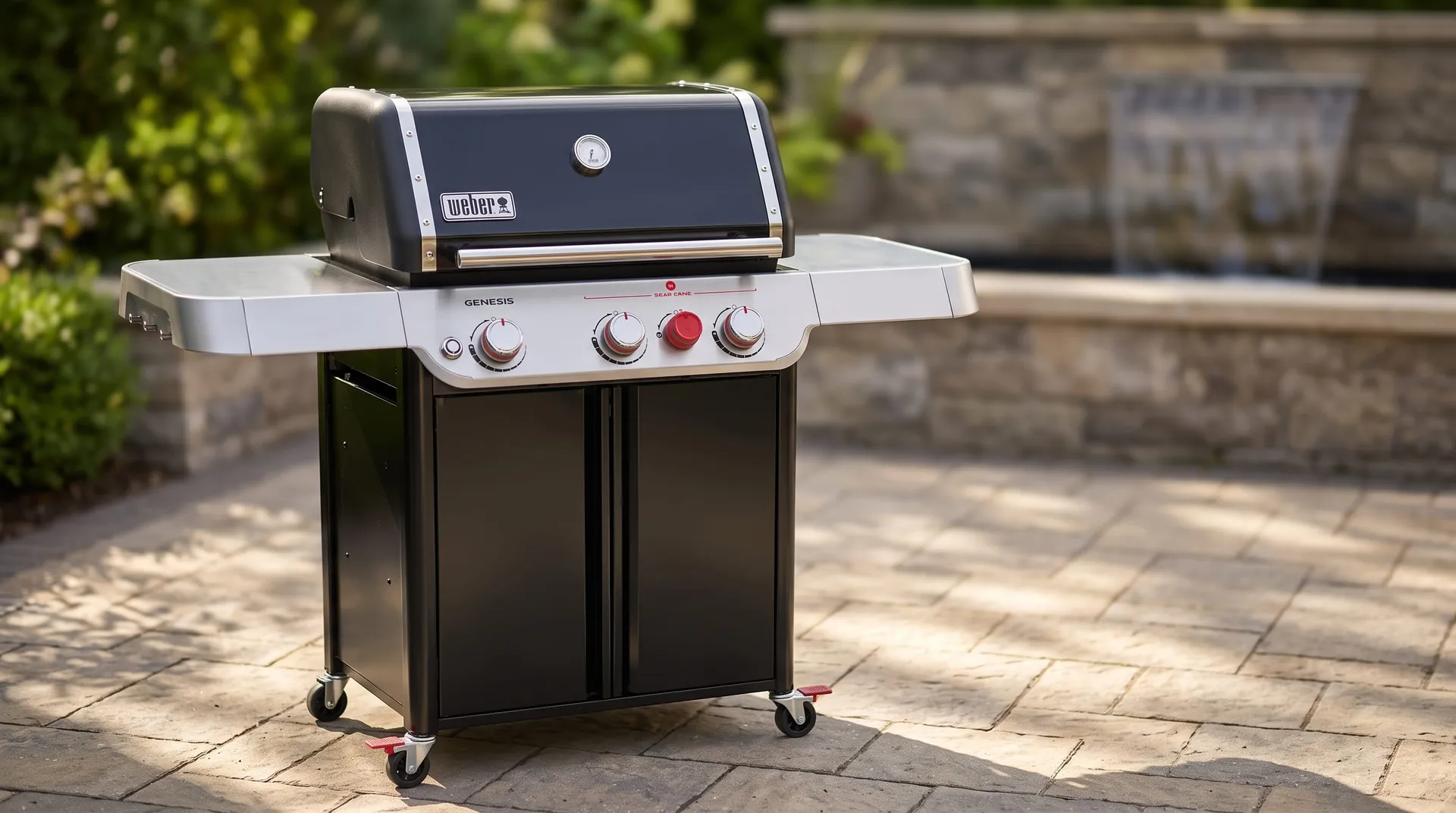
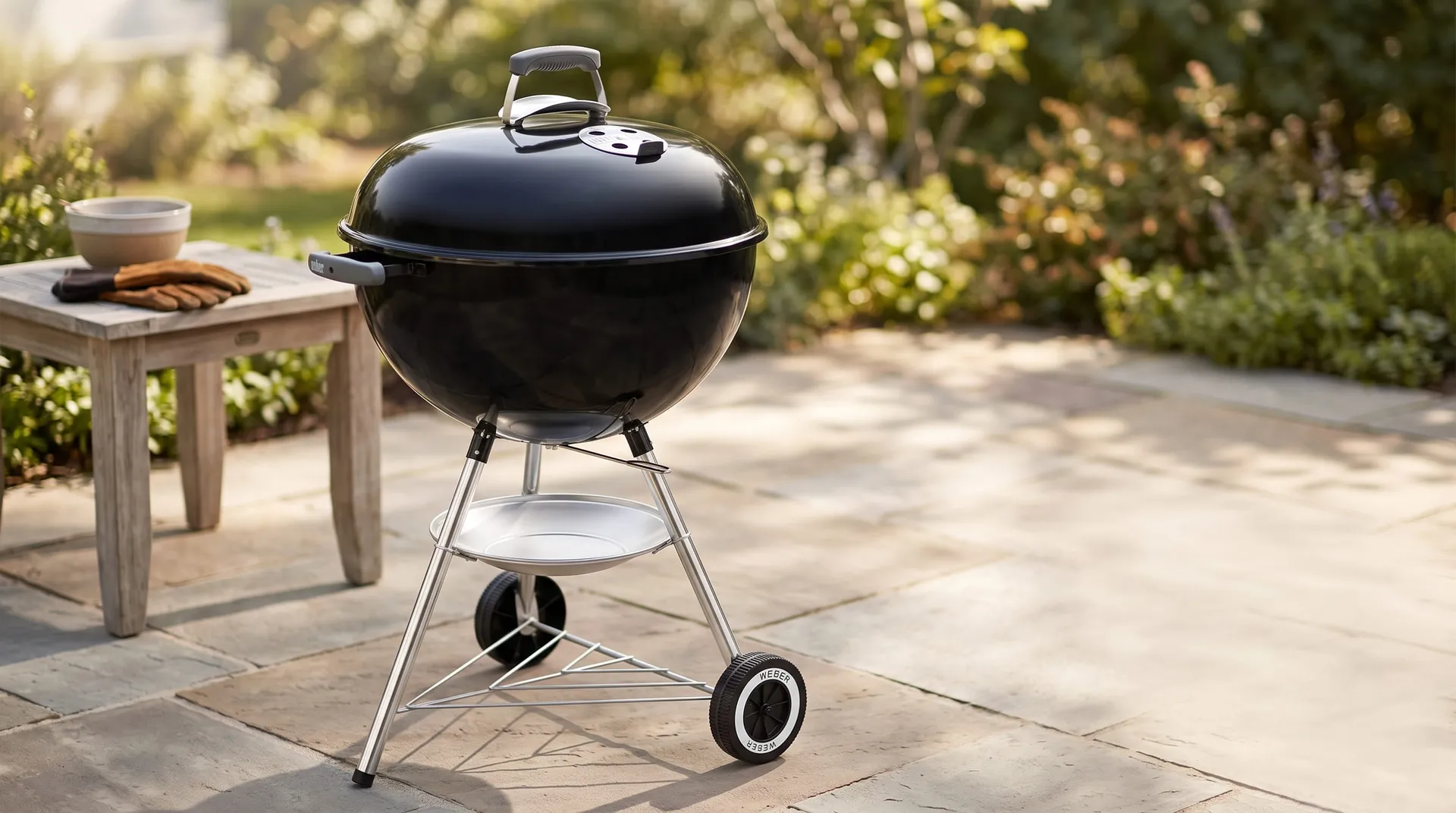
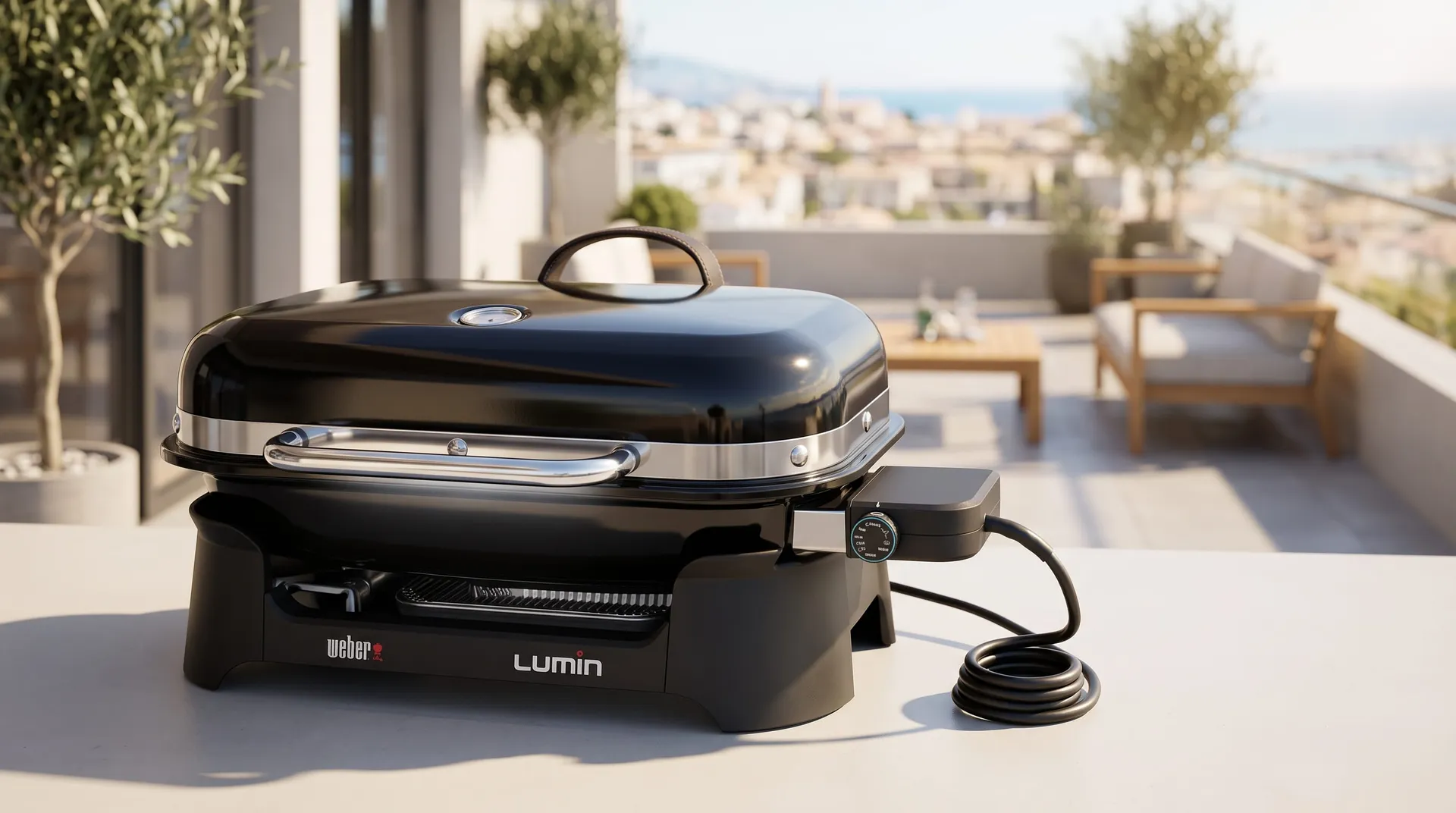
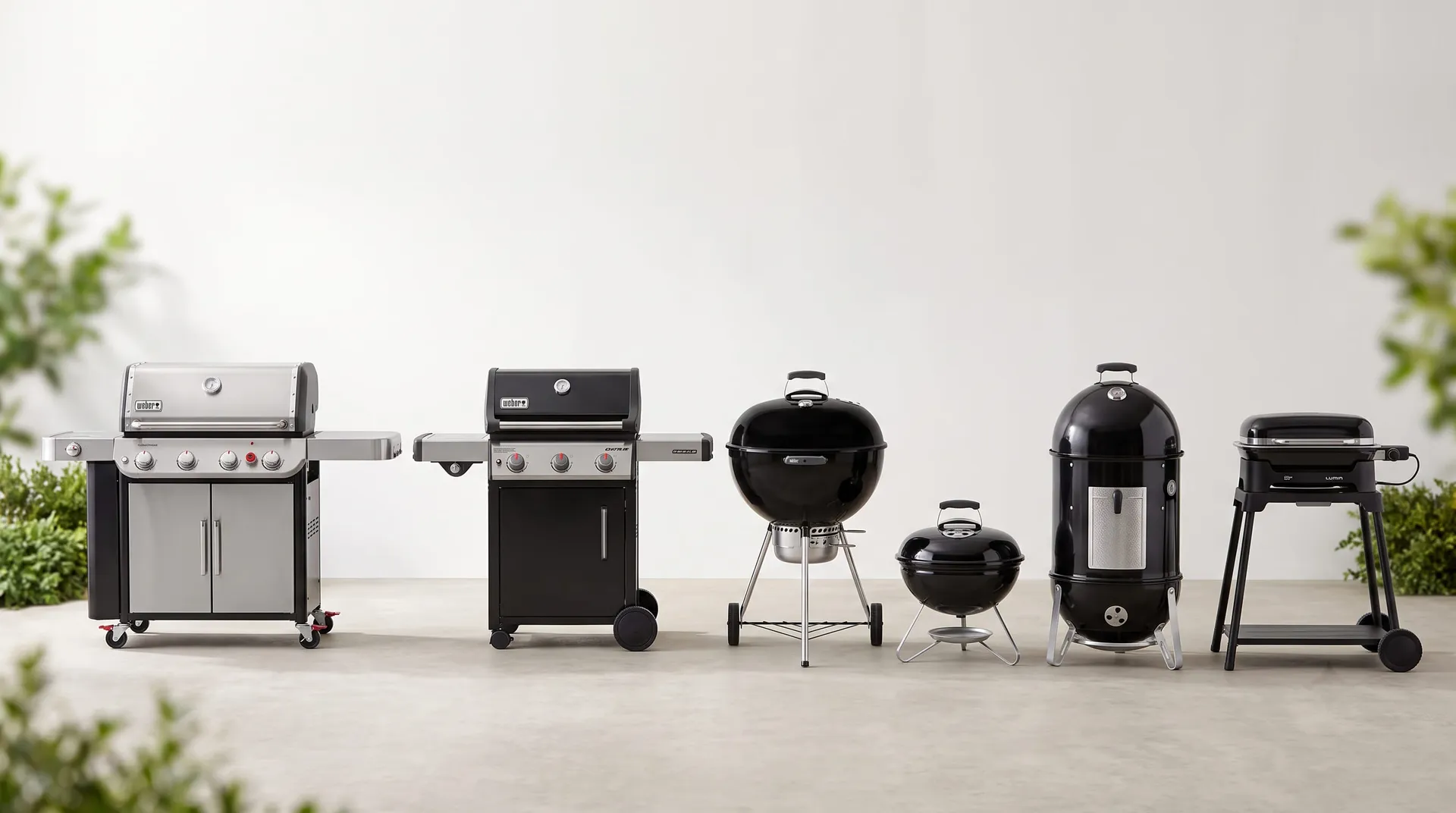
If none of the picks matched you exactly, these are the things that decide which Weber suits you, in the order they matter for most buyers.
Gas, charcoal or electric?
Gas is fastest and easiest. Charcoal gives more flavor and hotter searing for less money. Electric is for places that ban flames. Our guide to gas vs charcoal vs pellet grills walks through the trade-offs.
What makes a Weber a Weber
The round kettle is still Weber's core idea: a lid that seals well and reflects heat evenly, with dampers to control airflow. On charcoal, airflow is heat, so a tight lid gives you real control.
On the gas grills, Flavorizer bars sit between the burners and grates. They shield the burners from drips, spread heat and vaporize juices into smoke, which is where much of a gas grill's flavor comes from.
Weber gas features, decoded
- Sear Zone: burners that run hotter than the rest of the grate, a spot for crusting steaks while other food cooks gently.
- Snap-Jet: Weber's per-burner ignition, so each burner lights from its own knob with no separate button.
- Porcelain-enameled cast-iron grates: heavy iron with a glassy coating that holds heat for marks and resists rust while the coating stays intact.
- Grease management tray: a slide-out tray under the cookbox that you should empty often to prevent grease fires.
Learning curve by model
None of these is hard to learn. The charcoal models simply reward practice.
| Weber | Learning curve | What you'll need to learn |
|---|
| Spirit E-325 | Very easy | Preheating and using the Sear Zone |
| Genesis E-325 | Very easy | Zoning heat across a bigger grate |
| Lumin | Very easy | The mode dial and preheat timing |
| Smokey Joe 14 | Easy | Lighting charcoal and using two dampers |
| Original Kettle 22 | Moderate | Two-zone fires, the snake method and vent control |
| Smokey Mountain 18 | Moderate | The Minion Method, water pan and long-cook timing |
Our guide on how to use a charcoal grill covers lighting and two-zone fires, and charcoal grill temperature control gives vent settings for each target.
Two-Weber setups
Many owners end up with two Webers rather than one expensive one. A gas grill handles quick weeknight meals, while a kettle or Smokey Mountain covers weekend charcoal cooking and smoking.
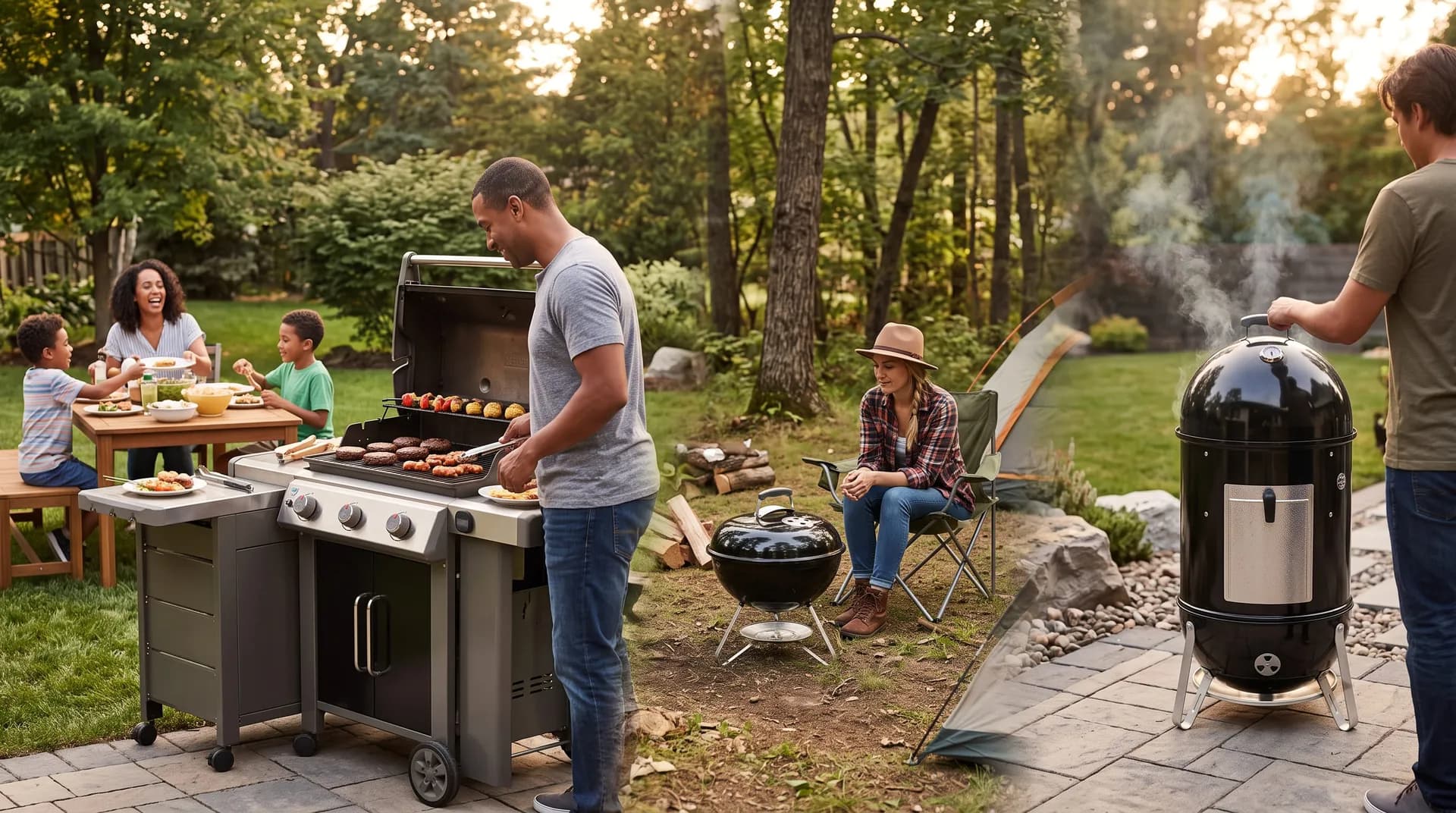 Gas for quick meals, a kettle for flavor, a bullet smoker for low and slow.
If you're torn between a Genesis and a Spirit, price a Spirit plus a kettle. At typical prices that pair still costs less than a Genesis alone and covers more styles of cooking.
Size it to your household
Plan roughly 100 sq in of primary space per two people for burgers and chicken. A couple can live with a kettle; a family of six needs Spirit size or larger.
Weber propane or natural gas?
Weber sells propane and natural gas versions of its gas grills as separate models. Choose the one that matches your fuel, since unsupported conversions can void the warranty.
Weather and small spaces
Cold and wind slow any grill, so keep the lid closed, shield it from gusts and allow a longer preheat. At altitude, water boils below 212°F, so foods with moisture take longer to cook through.
Many apartment buildings bar charcoal and larger propane grills on balconies under local fire codes. That's the case the Lumin exists for, but check your lease or HOA and local fire code first, since some buildings ban electric grills on balconies too.
The real cost of owning a Weber
Gas Webers need propane, and most owners keep a spare tank so a cook never stalls. Charcoal Webers need charcoal, a chimney starter and, for smoking, wood chunks; the Lumin runs on household power.
Over the years you'll replace wear parts like grates, Flavorizer bars and igniters on gas models. That's normal, and Weber's parts support is one of the main reasons its grills stay in service so long.
Accessories worth buying first
- A chimney starter for any charcoal Weber. It lights coals evenly without lighter fluid.
- An instant-read thermometer. Lid gauges read air temperature, not your food.
- A fitted cover to keep rain and debris off between cooks.
- A sturdy grill brush or scraper for hot-grate cleaning.
- A leave-in probe thermometer if you'll smoke on the kettle or Smokey Mountain.
Mistakes Weber buyers make
- Expecting the kettle to babysit itself. It smokes well but needs vent adjustments and fuel planning.
- Buying the Genesis for size you won't use. A bigger cookbox takes longer to heat for a weeknight dinner for two.
- Skipping the manual's clearances. Every Weber here needs space from walls, railings and overhangs.
Assembly and space
Gas Webers ship in big boxes and take the longest to build, so plan an hour or more and a clear floor. Kettles and the Smokey Joe go together much faster, and either gas model is easier with a second person to lift the cookbox onto the cart.
Measure your space with the lid open, not just the footprint. Gas grills also need room for the tank, and smokers need a level, heat-safe spot away from foot traffic.
Other Weber sizes
Weber also makes 18-inch kettles for one or two people and 26-inch kettles for bigger groups, plus a higher Master-Touch trim of the 22-inch bowl. If you look at used grills, the 22-inch kettle was called 22.5-inch before Weber's 2015 update; the grate size didn't change, so older grates and accessories generally fit.
The Smokey Mountain also comes in 14- and 22-inch versions of the same design. The 22-inch is worth the extra money only if you smoke whole packer briskets: it offers 726 sq in across two 21.5-inch grates, and it burns more charcoal per cook.
The Lumin comes in a tabletop Compact, sold without a stand, and a larger full-size model. The Compact suits a couple on a balcony; pick the full size if you regularly cook for four or more. Bundles with a cover and stand come and go, so check the model number before comparing prices.
What about Weber pellet grills?
Weber makes the SmokeFire and Searwood pellet grills, but we haven't reviewed either yet, so we can't recommend one. If you want a pellet grill now, our best pellet grills guide covers the ones we have tested, and our Weber vs Traeger comparison covers how the brands differ.