Skip to contentSkip to content
Best Grills for Steaks and Searing 2026: 7 Tested Picks

Best-Of Buying Guide7 grills compared

Best Grills for Steaks and Searing 2026: 7 Tested Picks

The best grills for steaks and searing, from ceramic kamados to infrared and sear-burner gas grills. Picked by how hot each one got and how good a crust it put on real steaks.

By Marcus ReillyLast updated:19 min read

The best grill for steaks is the Kamado Joe Classic Joe II. Its ceramic body passed 700°F in about 15 minutes in our testing, hotter than any gas grill we've run, and the same fire holds low heat for hours, so a thick ribeye reverse sears without a second cooker.

If you want gas, the Weber Spirit E-325 is the best value for searing, the Weber Genesis E-325 adds a dedicated sear burner for bigger groups, and the Char-Broil Pro Series sears on every burner with infrared. On a budget, the Weber Original Kettle 22 puts a real charcoal crust on a steak for $149–$169. Every grill below has a full SmokyHQ review, and our team seared steaks on each one.

Our top picks at a glance

7 picks
  1. Best overall
    Kamado Joe Classic Joe II 18"
    4.6/5

    Frequent cooks who want one grill for steaks, pizza and overnight smokes.

  2. Best sear burner
    Weber Genesis E-325
    4.6/5

    Households of 6+ and frequent hosts who value even heat.

  3. Best value
    Weber Spirit E-325
    4.5/5

    Households of 1–4 who grill steaks, burgers and chicken often.

  4. Best infrared
    Char-Broil Pro Series 4-Burner Gas Grill
    4.3/5

    Frequent grillers who want steakhouse crust and a griddle option.

  5. Best budget kamado
    Kamado Joe Classic Joe I
    4.5/5

    First-time kamado buyers who want searing and long smokes from one grill.

  6. Best charcoal
    Weber Original Kettle 22"
    4.7/5

    First-time charcoal cooks and households of 2–6.

  7. Best portable
    Weber Smokey Joe 14"
    4.5/5

    Tailgaters, campers and small-patio cooks feeding 1–4.

How to Pick in 30 Seconds

Find the line that sounds like you. If two fit, the first one listed is the safer choice.

Your situationOur pickWhy it fits
You grill steak and also smoke brisket or porkKamado Joe Classic Joe IIOne fire sears past 700°F and smokes overnight
You want kamado heat for less moneyKamado Joe Classic Joe ISame ceramic body and searing range, fewer extras
You grill steak on weeknights after workWeber Spirit E-325Push-button start and a boosted Sear Zone
You cook steaks for six or moreWeber Genesis E-325Big, even grate plus a separate sear burner
You want every burner to searChar-Broil Pro Series 4-BurnerInfrared across the whole cookbox
You want charcoal flavor on a tight budgetWeber Original Kettle 22An easy two-zone fire for a fraction of a kamado
You grill for one or two away from homeWeber Smokey Joe 14About 9.5 lb and still sears hard

Charcoal banned where you live? Go straight to the Spirit E-325. Love thick-cut reverse sears? Either Kamado Joe holds low heat for hours, then sears hard on the same load of lump.

Best Overall: Kamado Joe Classic Joe II 18"

1Best overall
Kamado Joe
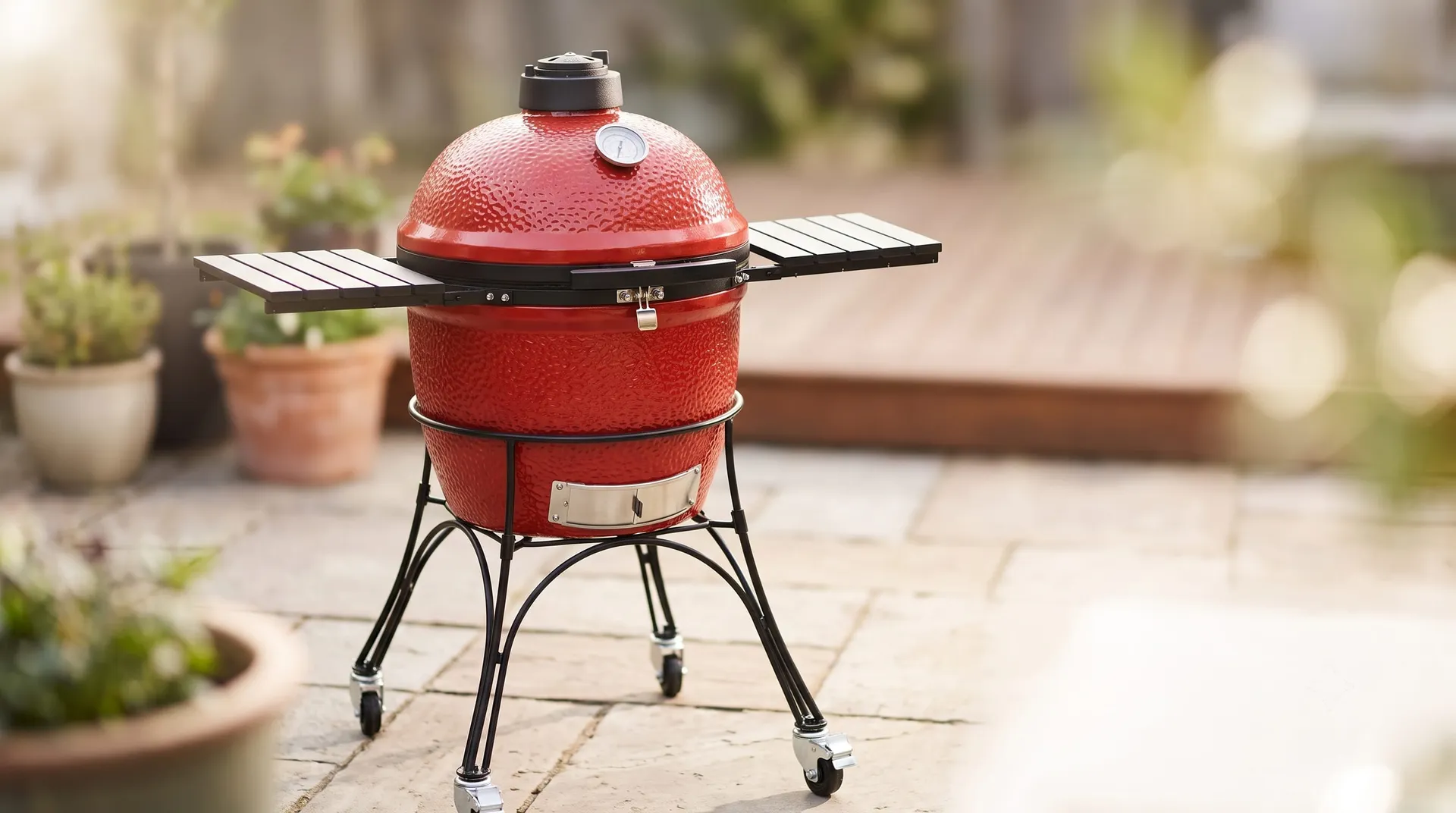
Kamado Joe Classic Joe II 18"
4.6/5

Best for: Frequent cooks who want one grill for steaks, pizza and overnight smokes

Why we picked it: Ceramic walls store a huge amount of heat, so the grate stays scorching when cold steaks land on it. The Kamado Joe Classic Joe II passed 700°F in about 15 minutes from a cold start, and the ribeye we seared took a deep, even crust before the center overcooked.

The same fire held 225°F for over 12 hours on one load of lump, so the slow half of a reverse sear costs you nothing extra. Divide & Conquer racks let you sear over open coals on one side and cook indirect on the other, and the Kontrol Tower top vent stays set when you open the dome. Those two upgrades, plus the Air Lift hinge that takes the weight off the heavy lid, are most of what you pay for over the Classic Joe I.

Who it's for: Steak cooks who also want to smoke pork shoulder or bake pizza, and can give a 227.7 lb grill a permanent spot on the patio. It suits Ray, the cook moving into low-and-slow, better than anyone else on this list.

Skip it if: You want steak on a weeknight with no fire to build, or the 250 sq in grate is too small for your crowd. The Weber Spirit E-325 lights with a button.

What we liked
Held 225°F for over 12 hours on one load of lump in our overnight pork shoulder test
Passed 700°F in about 15 minutes from a cold start, hot enough for a hard steak crust and pizza
Two-tier Divide & Conquer racks let you sear on one side and cook indirect on the other
What could be better
List price is $1,399–$1,499, and even sale prices are several times a kettle
Kamado Joe lists the grill at 227.7 lb, so it is effectively a permanent fixture once built
The 18-inch, 250 sq in main grate is small next to steel smokers at the same price
Kamado Joe Classic Joe II 18"
Scored 4.6/5 in our hands-on test

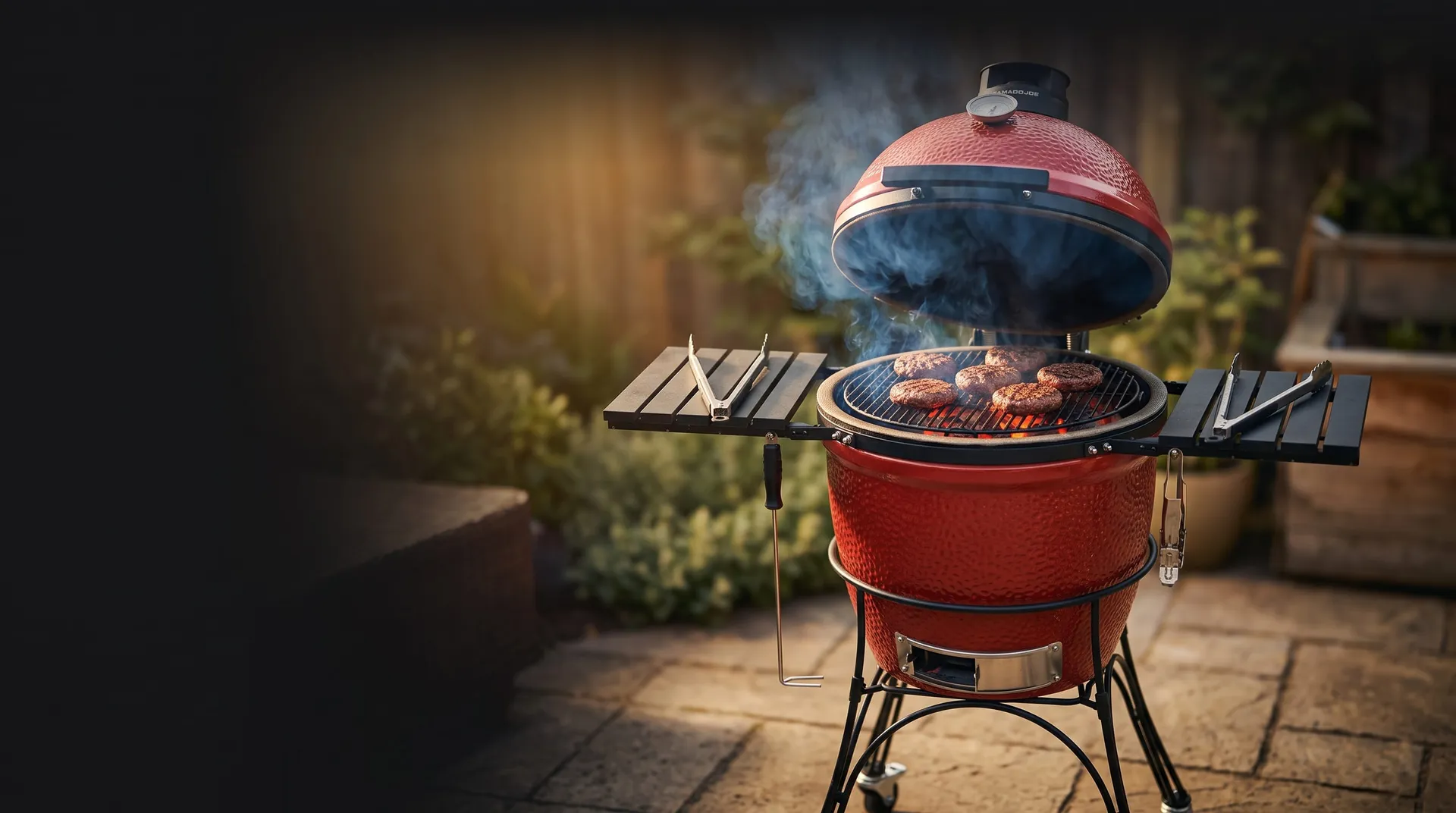
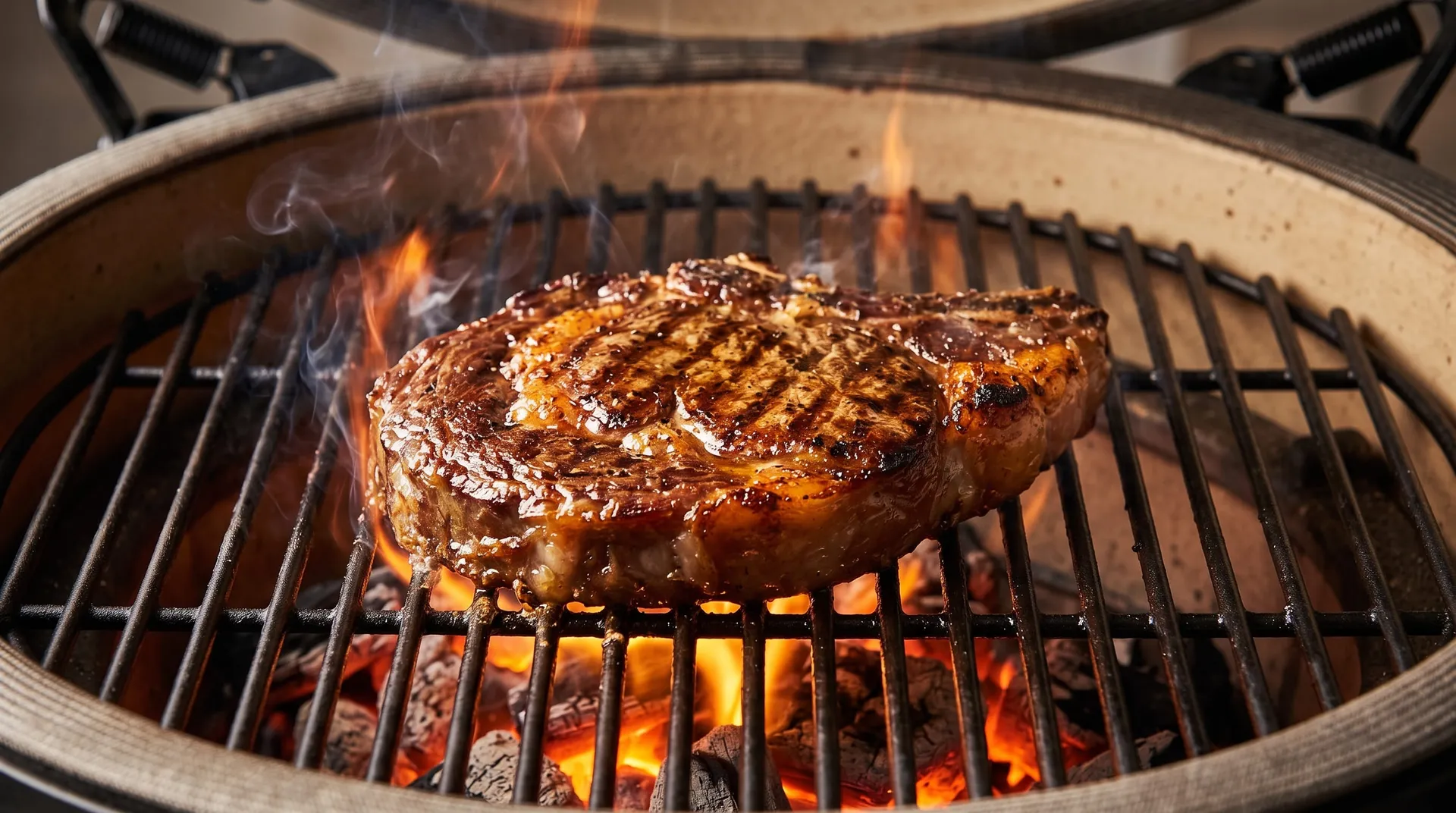
Thick ribeye with grill marks searing over flaming lump charcoal inside a red Kamado Joe ceramic grillAt searing heat, crack the dome an inch before opening it fully to avoid a flare-up.

Best Sear Burner Gas Grill: Weber Genesis E-325

2Best sear burner
Weber
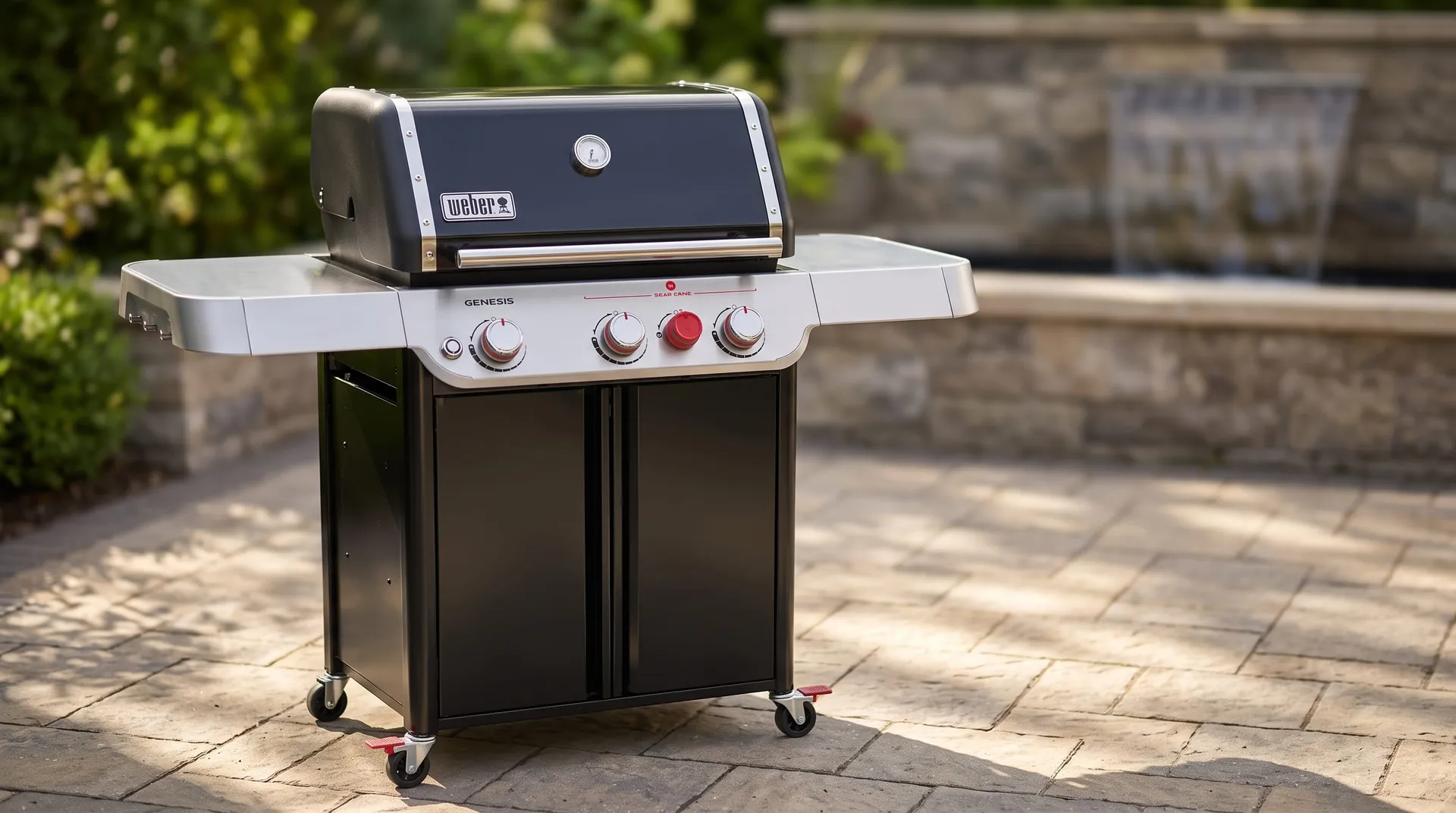
Weber Genesis E-325
4.6/5

Best for: Households of 6+ and frequent hosts who value even heat

Why we picked it: It adds a separate 13,000 BTU sear burner to three main burners rated at 39,000 BTU. When we tested the Weber Genesis E-325, four ribeyes each built a deep crust in under 2.5 minutes per side, a little faster than on the Spirit.

Heat was also the most even we've measured on a gas grill, within 12°F edge to edge across five probe points. A steak at the edge finishes like one in the middle, and 513 sq in of porcelain-enameled cast-iron grate feeds six or more in one batch. Every burner lit on the first try in all eight sessions, including sustained 16 mph gusts, and the sear burner plus one main burner gives you a ready-made reverse sear layout.

Who it's for: Hosts who grill steaks for six or more most weekends and want gas convenience with a dedicated sear station. It's the steak grill for Dave, the upgrade buyer who wants a grill that lasts; the cookbox, lid and burner tubes carry a 12-year limited warranty.

Skip it if: You cook for four or fewer, or your patio is tight; it's about 162 lb and nearly 58 inches wide. The Spirit E-325 sears nearly as fast for several hundred dollars less.

What we liked
The grate stayed within 12°F edge to edge in our five-point temperature mapping
Separate 13,000 BTU sear burner crusted ribeyes in under 2.5 minutes per side
Every burner lit first try in all eight sessions, including 16 mph gusts
What could be better
Costs much more than the Spirit E-325 for more space and steadier heat, not a different class of grill
At about 162 lb and nearly 58 in wide, it needs patio room and a helper to move
No Wi-Fi or app control; that is reserved for Smart Genesis models
Weber Genesis E-325
Scored 4.6/5 in our hands-on test

Man searing steak on a black Weber Genesis E-325 gas grill beside a patio dining tableEven heat across the big grate means a full batch of steaks finishes together.

Best Gas Grill for Steaks on a Budget: Weber Spirit E-325

3Best value
Weber
Weber Spirit E-325
4.5/5

Best for: Households of 1–4 who grill steaks, burgers and chicken often

Why we picked it: Two Boost knobs push extra gas to the Sear Zone. On the Weber Spirit E-325, that section ran 90–110°F hotter than the standard burners, and four ribeyes in a row each built an even, deep crust in under 3 minutes per side.

To finish, slide the steaks to the gentler burners; the main grate stayed within about 15°F edge to edge. Snap-Jet ignition lit every burner on the first press in all eight sessions, including a 41°F morning. Next to the Genesis you give up about 150 sq in of grate and the separate sear burner, and because the Sear Zone covers only part of the grate, you sear 2–3 steaks at a time.

Who it's for: Weeknight steak cooks feeding up to four who want a fast, dependable sear without charcoal. If a button decides whether steak happens on a Tuesday, this is the grill that gets used.

Skip it if: You want charcoal flavor, or you regularly sear for six. The Original Kettle 22 gives you flavor for much less, and the Genesis gives you room.

What we liked
Sear Zone ran 90–110°F hotter than the standard burners and crusted ribeyes in under 3 minutes per side
Snap-Jet ignition lit every burner first press in all eight sessions, cold and windy days included
Main grate stayed within about 15°F edge to edge
What could be better
360 sq in of primary grate gets tight past four people
The Sear Zone covers only part of the grate, so you sear 2–3 steaks at a time
Folding side tables flexed under a full sheet pan
Weber Spirit E-325
Scored 4.5/5 in our hands-on test

Man grilling skewers on a black Weber Spirit E-325 gas grill while friends chat on a patioThe Spirit fits a typical patio with room left over for a table and chairs.

Best Infrared Grill for Searing: Char-Broil Pro Series 4-Burner

4Best infrared
Char-Broil
Char-Broil Pro Series 4-Burner Gas Grill
4.3/5

Best for: Frequent grillers who want steakhouse crust and a griddle option

Why we picked it: Amplifire infrared runs across the whole cookbox, so any burner can sear instead of one small zone. On the Char-Broil Pro Series 4-Burner, grate-surface readings went above 550°F, and thick ribeyes built a dark crust in under 2 minutes per side while their centers stayed at 130–135°F.

That's the fastest gas sear we've timed, and it holds across 535 sq in of primary grate, so several thick steaks can go on together. Radiant heat also means fewer flare-ups from dripping fat. A side burner and griddle insert come in the box, so a pan sauce or smash burgers don't need a second appliance.

Who it's for: Frequent steak grillers who want to sear several thick cuts at once on gas and like a griddle option.

Skip it if: You want a 10-year grill or perfectly even heat. Heat varied about ±15°F edge to edge, the firebox, lid, grates and emitters get 3 years of coverage, and at about 187 lb and 61 inches wide it needs a big patio. The Spirit E-325 sears a few steaks at a time with a longer track record.

What we liked
Built a dark crust on thick ribeyes in under 2 minutes per side in our testing, with centers still medium-rare
Amplifire infrared cooking runs across the whole grate, so any burner can sear and drippings flare up less
Comes with a side burner and a griddle insert, so one grill handles steaks, smash burgers and sauces
What could be better
Heat varied about ±15°F edge to edge in our 5-point mapping, looser than premium grills
Only 3 years on the firebox, grates and emitters and 1 year on other parts
Too big and heavy for balconies and tight patios
Char-Broil Pro Series 4-Burner Gas Grill
Scored 4.3/5 in our hands-on test

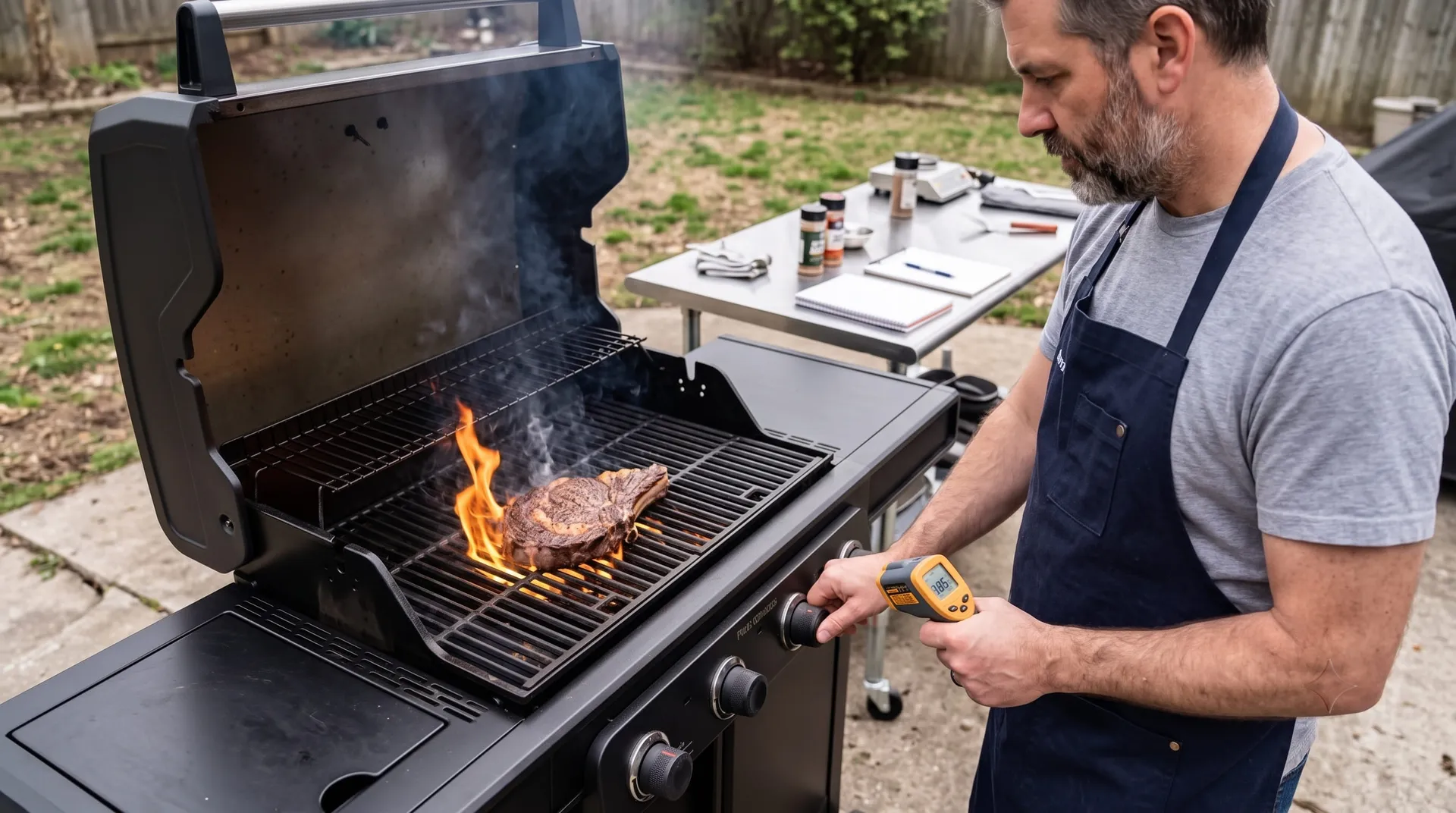
Cook aiming an infrared thermometer at a ribeye searing on a black Char-Broil gas grillInfrared needs a full lid-down preheat before the first steak goes on.

Best Budget Kamado for Steaks: Kamado Joe Classic Joe I

5Best budget kamado
Kamado Joe
Kamado Joe Classic Joe I
4.5/5

Best for: First-time kamado buyers who want searing and long smokes from one grill

Why we picked it: It shares the Classic II's 18-inch ceramic body, 250 sq in grate and two-tier Divide & Conquer racks. Our Classic Joe I passed 700°F in about 15 minutes from cold, the same searing range we saw on the pricier model.

It held 225°F for over 10 hours on one load of lump and used roughly 19 lb of lump across eight sessions. At $549–$999, it's the cheapest way into a grill that both reverse sears and smokes overnight. What you give up is convenience: there's no Air Lift hinge, so you lift the full dome weight, and the cast-iron top vent needs care to stay rust-free.

Who it's for: Steak lovers who want kamado heat and long smokes without paying for the Classic II's hinge and vent.

Skip it if: You'd rather not lift a heavy dome every cook, or you may move house soon. It also weighs 227.7 lb, and ceramic can crack if it's bumped during setup or heated too fast from cold, so keep the first fires gentle.

What we liked
Held 225°F for over 10 hours on one load of lump in our overnight pork shoulder test
Passed 700°F in about 15 minutes from cold, the same searing range we saw on the pricier Classic II
Includes the 2-tier Divide & Conquer racks, so two-zone cooking needs no extra purchase
What could be better
No Air Lift hinge, so the heavy ceramic dome takes more effort to open than on the Classic II
Cast iron top vent is simpler than the Classic II's Kontrol Tower and needs care to stay rust-free
The 18-inch grate is modest for big gatherings
Kamado Joe Classic Joe I
Scored 4.5/5 in our hands-on test

Ribeye with grill marks searing on a round grate over flaming lump charcoal in a kamadoLump charcoal leaves less ash to choke a ceramic grill's airflow mid-sear.

Best Charcoal Grill for Steaks: Weber Original Kettle 22"

6Best charcoal
Weber
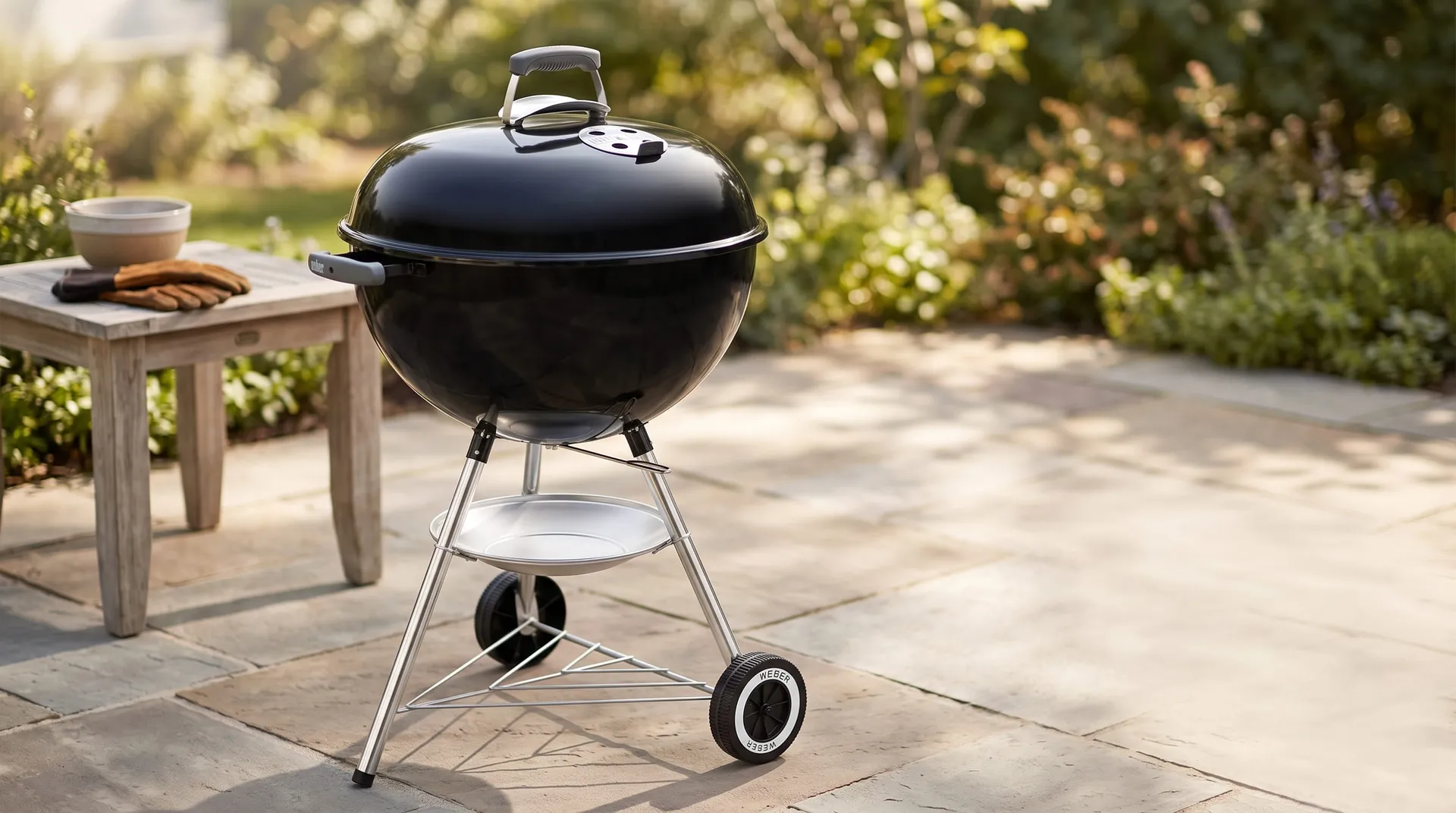
Weber Original Kettle 22"
4.7/5

Best for: First-time charcoal cooks and households of 2–6

Why we picked it: Bank a full chimney of coals on one side and you have a very hot sear zone right next to a cool zone. We seared steaks on the Weber Original Kettle 22 over the fire and finished them on the cool side with no flare-ups, the classic two-zone method that suits every thickness.

The 363 sq in grate fit 8 burgers plus a rack of ribs in a two-zone setup, so a steak dinner for four leaves room for vegetables. One-Touch cleaning swept nearly all the ash into the catcher in one motion, and the porcelain-enameled bowl and lid carry a 10-year warranty. At $149–$169 it costs a fraction of either kamado, and it's the best cheap grill for steak we've tested.

Who it's for: Budget-minded grillers, including first-timers like Jess, who want a real charcoal sear and don't mind lighting a chimney. Add a probe thermometer, because there's no lid gauge.

Skip it if: Lighting charcoal on a weeknight sounds like a chore. The Spirit E-325 lights with a button.

What we liked
Held 250°F for over 4 hours on one snake-method load in our testing, enough for a rack of ribs without refueling
One-Touch cleaning swept nearly all the ash into the catcher in one motion
The 363 sq in grate fit 8 burgers plus a rack of ribs in a two-zone setup
What could be better
No lid thermometer; you'll want a probe thermometer
Vent control takes a few cooks to learn, especially for low-and-slow
No side tables or storage; keep a small table nearby
Weber Original Kettle 22"
Scored 4.7/5 in our hands-on test

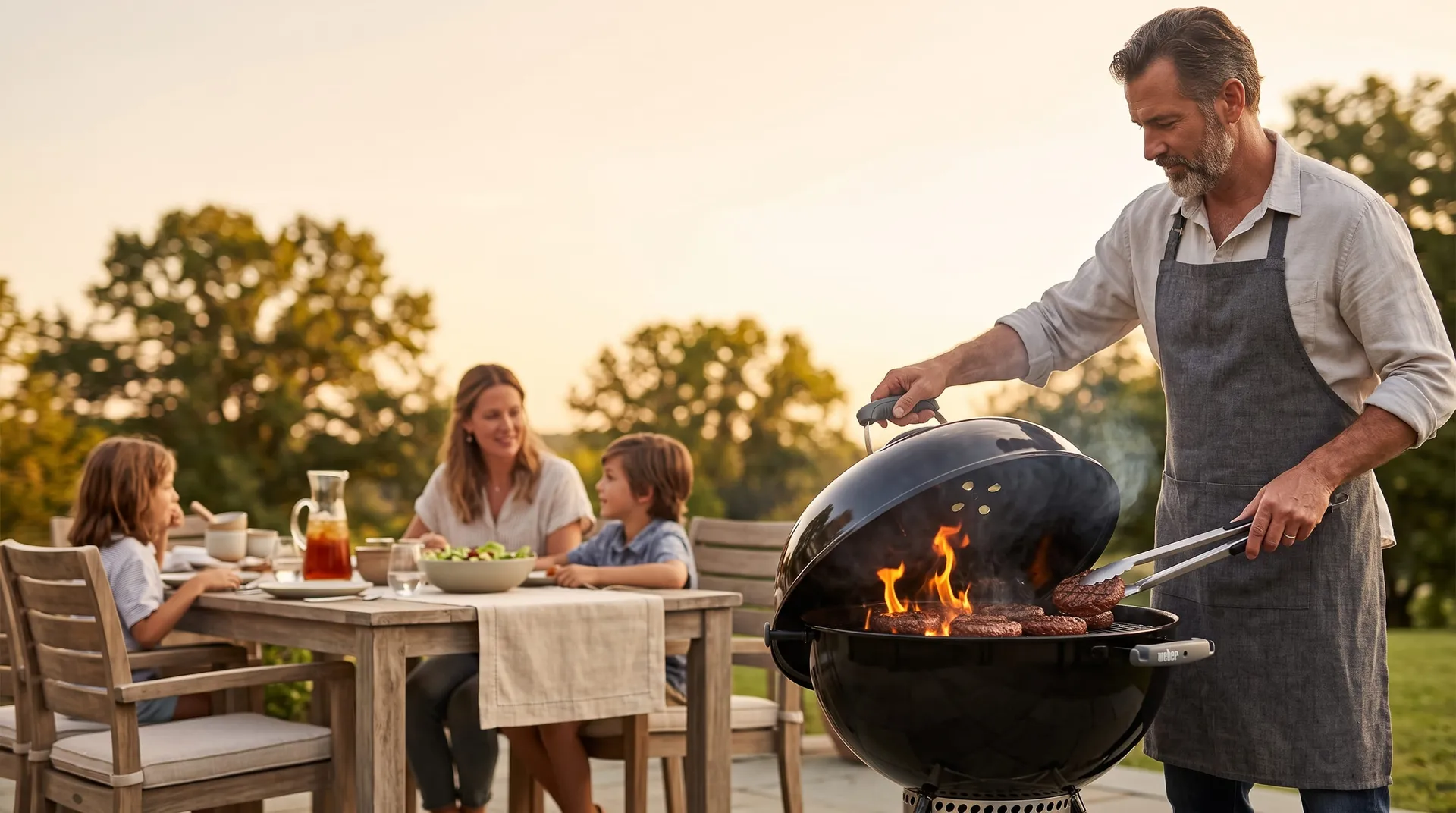
Man grilling over flames on a black Weber Original Kettle 22 as his family sits nearbyLeave half the grate empty so a flaring steak always has somewhere to go.

Best Portable Grill for Steaks: Weber Smokey Joe 14"

7Best portable
Weber
Weber Smokey Joe 14"
4.5/5

Best for: Tailgaters, campers and small-patio cooks feeding 1–4

Why we picked it: The coals sit close to the grate, which makes this small kettle surprisingly good at searing. On the Weber Smokey Joe 14, about 1 lb of briquettes seared burgers with a good crust in under 6 minutes total, and a steak gets the same close, radiant heat.

It weighs about 9.5 lb, so you can carry it one-handed from the trunk to a campsite. The Tuck-N-Carry lid lock kept it shut on every trip, and the lid and bowl dampers let us dial back for gentler cooks. At $45–$65 it's the cheapest grill here.

Who it's for: Tailgaters and campers who want a charcoal-seared steak for one or two people away from home.

Skip it if: You feed more than two or three. The 147 sq in grate fits about 2–4 burgers, two-zone cooking is cramped, and the small fuel bed makes it a searing grill, not a smoker. The Original Kettle 22 has more than twice the grate.

What we liked
About 9.5 lb, light enough to carry one-handed from the trunk to a campsite
Seared burgers with a good crust in under 6 minutes total on about 1 lb of briquettes per cook in our testing
Tuck-N-Carry lid lock kept it shut on every trip, and doubles as a lid holder while you cook
What could be better
147 sq in fits about 2–4 burgers at a time in practice
Small fuel bed makes low-and-slow cooks short and coarse
The legs wobbled on soft grass and loose gravel in our testing
Weber Smokey Joe 14"
Scored 4.5/5 in our hands-on test

Man grilling burgers on a small Weber Smokey Joe kettle on a pickup tailgate beside friendsSet it on a flat, heat-safe surface; the low grate puts your hands close to the coals.

Steak Grills Compared

Use the specs to confirm a pick, not to choose one. The sear method matters more than any single number here.

GrillFuelSear methodTwo-zone setupPrimary area
Kamado Joe Classic Joe IILump charcoalCeramic heat storage, 700°F+ in our testDivide & Conquer racks250 sq inCheck Current Price
Weber Genesis E-325PropaneDedicated 13,000 BTU sear burnerYes513 sq inCheck Current Price
Weber Spirit E-325PropaneBoosted Sear ZoneYes360 sq inCheck Current Price
Char-Broil Pro Series 4-BurnerPropaneInfrared across the grateBy burner setting535 sq inCheck Current Price
Kamado Joe Classic Joe ILump charcoalCeramic heat storage, 700°F+ in our testDivide & Conquer racks250 sq inCheck Current Price
Weber Original Kettle 22CharcoalCoals banked to one sideYes363 sq inCheck Current Price
Weber Smokey Joe 14CharcoalCoals close to the grateLimited147 sq inCheck Current Price

Sear speed in our ribeye tests

GrillCrust time per sideWhat we noticed
Char-Broil Pro Series 4-BurnerUnder 2 minutesAny burner sears; centers stayed medium-rare
Weber Genesis E-325Under 2.5 minutesSeparate sear burner, gentle zone alongside
Weber Spirit E-325Under 3 minutesSear Zone fits 2–3 steaks at a time
Both Kamado JoesFast, deep crustPassed 700°F, the hottest grates we've run

Kamado or gas grill for steak?

Pick a kamado if you'll build a fire for steak and also want to smoke and bake on the same grill. Pick gas if a button decides whether steak happens on a weeknight. Neither choice is wrong; the grill you light more often makes more good steaks.

Spirit or Genesis for steaks?

Both sear well, and the Genesis was only slightly faster in our ribeye test. The real reasons to step up are the bigger grate for six or more and the most even heat we've measured on gas.

Sear burner or infrared?

A boosted sear zone, like the Spirit's, pushes more gas through regular burners under one section. A dedicated sear burner, like the Genesis's, adds a separate burner just for that job. Both put the heat in one spot, so you sear in batches.

Infrared, like the Char-Broil's, spreads radiant heat across the whole cookbox, so you can sear on any burner. The trade-off is looser edge-to-edge heat, and you'll cook delicate foods a notch lower than on a regular gas grill.

Classic Joe I or Classic Joe II?

Same ceramic, same searing range. Pay for the II only if you'll lift the dome often enough to value the Air Lift hinge and the finer Kontrol Tower vent.

Steak Grill Buying Guide

If none of the picks matched you exactly, these are the features that decide how well a grill sears, in the order they matter.

What makes a grill sear well

A crust forms when the steak's surface dries and climbs well above the boiling point of water, which is when the Maillard reaction browns it. A wet steak on a lukewarm grate turns gray because the heat goes into boiling off moisture instead of browning.

Three kinds of heat reach the steak. Radiant heat from coals, flames or infrared emitters browns the surface evenly. The grate conducts heat into the stripes it touches, and hot air under a closed lid cooks the center.

The best steak grills pair intense radiant heat with a heavy grate that doesn't cool off. Charcoal and kamados do this naturally; on gas, a sear zone, sear burner or infrared system closes the gap.
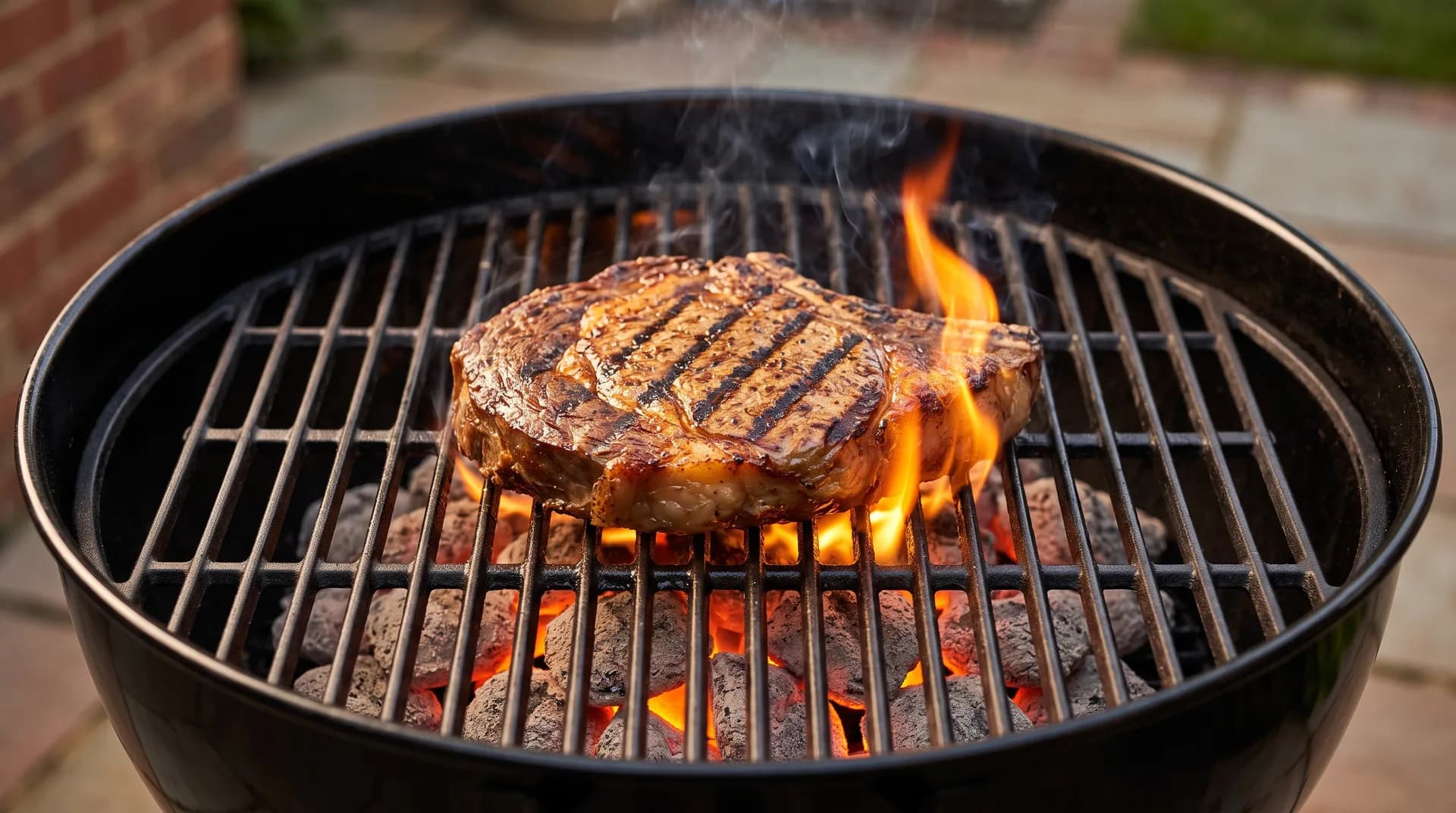
Ribeye with grill marks on a round kettle grate above glowing charcoal briquettes and small flamesCoals a few inches below the grate give a charcoal kettle its radiant punch.

Grate heat, not lid temperature

Aim for 450–550°F at the grate for standard searing, and hotter to crust a thick steak fast. Lid thermometers read air near the dome, not the grate, so judge the sear by the sizzle and an infrared thermometer if you have one.

Preheat with the lid closed for 10–15 minutes so cast-iron grates soak up heat before the first steak goes on. A kamado needs longer: Kamado Joe says to give the ceramic 20–40 minutes after lighting to stabilize.

Heavy grates

Thick cast-iron or heavy stainless grates store heat, so they don't drop when a cold steak lands. Thin wire grates lose heat the moment meat touches them, which is why the kettles here rely on a hot fire close underneath instead.

On cast iron, a light coat of oil after cleaning helps prevent rust. Our guide to how to clean grill grates covers cast iron, stainless and porcelain.

Room for two zones

You need a hot side to sear and a cooler side to finish thick cuts or escape flare-ups. Every pick here can do it, though the Smokey Joe only for a couple of steaks. Our guide to direct vs indirect grilling shows the layouts for gas and charcoal.

Match the method to steak thickness

Steak thicknessBest methodWhy
Under 1 inchHot direct sear, flip oftenThe center cooks before you need indirect heat
1–1½ inchesSear direct, finish indirect if neededCrust first, then gentle heat to target
1½ inches and upReverse searSlow indirect cook, then a hard sear for an even pink center

For the thick end, the reverse sear method works on every grill here. Our guide to how to grill the perfect steak has times by thickness and the full step-by-step.

Charcoal vs gas for steak, in practice

Charcoal puts glowing coals close to the meat, the most intense radiant heat most backyard cooks can get. Fat that drips onto the coals vaporizes into smoke, which adds the flavor people associate with a steakhouse grill.

Gas wins on control and speed. You turn a knob and the heat changes within a minute or two, instead of waiting on vents; our charcoal grill temperature control guide shows what vent work takes on a kettle.

If you grill steak once a month for flavor, charcoal is worth the time, and our best charcoal grills list covers more kettles and smokers. If you grill it every week, convenience usually decides whether you actually do it.
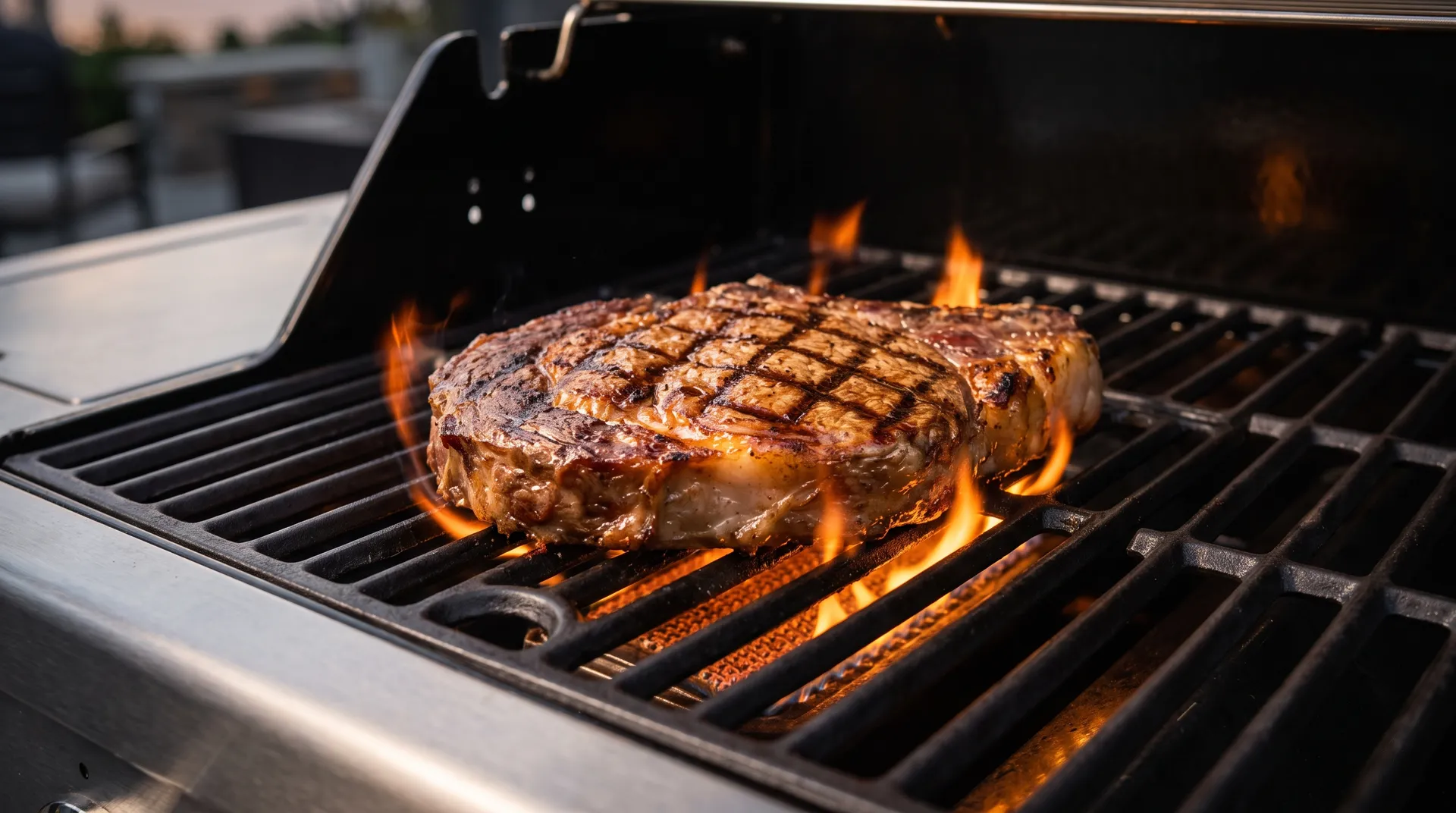
Thick steak with crosshatch grill marks searing over flames on cast-iron grates of a gas grillA dedicated sear burner concentrates heat in one spot, so steaks sear in batches.

Lump, briquettes or propane

Lump charcoal is what kamado makers recommend, since it leaves less ash to clog the airflow. Briquettes are cheaper and burn more consistently, and they suit a kettle.

On gas, keep a spare tank. Running a sear burner or every burner on high drains propane fastest; our guide to how long a propane tank lasts shows how to weigh what's left.

Are pellet grills good for steak?

Pellet grills didn't make this list. Most cook with a baffle between fire and food, so grate temperatures run well below the dial setting and thick steaks brown slowly.

The exception is a direct-flame feature. When we tested the Pit Boss Navigator 850, its Flame Broiler gave a ribeye a charred crust, though the zone fits only a few steaks. If you mostly smoke, see our best pellet grills and finish steaks in cast iron.

Mistakes steak grill buyers make

  • Buying on BTU alone. Total burner output says little about sear strength. Grate material, burner spacing and a dedicated sear area matter more.
  • Buying too much grate. A big grill takes longer to preheat and burns more fuel. Size for a normal night, not the one party a year.
  • Skipping the thermometer. An instant-read thermometer does more for your steak than any grill upgrade.
  • Buying a kamado you'll move. At over 220 lb, both Kamado Joes stay where you build them. If you rent or move often, choose the kettle.

Space, setup and safety

Every grill here is for outdoor use only. Keep it clear of siding, railings and overhangs, and follow the clearances in your manual.

Kamados need a stable, level, heat-safe surface, and moving one is a two-person job. Our comparison of a kamado grill vs a regular grill covers the trade-offs before you commit.

Gas grills need room for the tank and a lid that opens fully without hitting a wall. Charcoal ash holds heat for a long time, so let it cool completely in the grill or a metal can before you dispose of it.

Accessories worth buying on day one

  • An instant-read thermometer. It tells you when to pull the steak, which no grill can.
  • Long tongs. A fork pierces the crust and lets juice run out.
  • A grill brush. Brush the grates hot, before and after each cook; a dirty grate sears worse and sticks more.
  • A chimney starter for charcoal. It lights a full load evenly without lighter fluid.
  • A cast-iron pan. It finishes steaks on a pellet grill or any grill without a sear zone.

Do you need a new grill for better steak?

If your grill already reaches 450°F and has room for a cool side, technique will improve your steak more than a new grill. Dry-brine the steak, preheat fully, clean the grates and use a thermometer before you upgrade. Upgrade when the grill can't get hot enough, loses heat the moment steaks land or has no space for two zones.

Cook to temperature

Pull a steak about 5°F before your target and rest it 5 minutes; carryover heat finishes it. USDA's safe minimum for whole beef steaks is 145°F with a 3-minute rest, and it says to cook ground beef to 160°F. Our meat temperature chart lists pull temps for every cut.


How We Chose These Steak Grills

We started from our hands-on reviews and asked one question first: how hard does this grill sear when a cold steak hits the grate? A grill that couldn't build a dark crust before the center overcooked didn't make the list, however well it did other things.

We ranked what matters in this order:

  1. Sear strength: fast, even browning in our ribeye tests.
  2. Heat recovery: the grate staying hot as more steaks go on.
  3. Two-zone control: room to sear and finish side by side, and to escape flare-ups.
  4. Ease of use: startup time and cleanup, which decide whether you grill steak on a weeknight.
  5. Value: price against what the grill does beyond steak.

We also covered every way a grill sears, from ceramic kamados and infrared gas to a small portable kettle, so each kind of buyer has a tested option.

Frequently Asked Questions

01

What is the best grill for searing steaks?

The Kamado Joe Classic Joe II is the best grill for searing steaks; its ceramic body passed 700°F in about 15 minutes from a cold start. Our ribeye took a deep, even crust before the center overcooked, and the same fire held 225°F for over 12 hours, so one load handles a full reverse sear. The catch is a 227.7 lb grill and a fire to build. On gas, the Char-Broil Pro Series gave the fastest sear we've timed, under 2 minutes per side.

02

What is the best gas grill for steaks?

The Weber Spirit E-325 is the best gas grill for steaks for most households. Its boosted Sear Zone ran 90–110°F hotter than the standard burners, and four ribeyes each built a deep crust in under 3 minutes per side. The limit is space: the zone sears only 2–3 steaks at a time. If you cook for six or more, the Genesis E-325 adds a 13,000 BTU sear burner, a bigger grate and the most even heat we've measured on gas.

03

Is gas or charcoal better for steak?

Charcoal gives more radiant heat and flavor, while gas is faster and easier to control. Glowing coals sit close to the meat, and fat dripping onto them vaporizes into the smoke people associate with a steakhouse grill. Gas answers with a knob that changes heat within a minute or two and no fire to light. If you grill steak once a month for flavor, the Weber Original Kettle 22 is worth the time; if you grill it every week, the Spirit E-325 usually gets used more.

04

How hot should a grill be for steak?

Aim for 450–550°F at the grate for a standard sear, and hotter if you want a fast crust on a thick steak. Lid thermometers read air near the dome rather than the grate, so judge by a loud sizzle the moment the steak lands, or check with an infrared thermometer. Preheat with the lid closed for 10–15 minutes so cast-iron grates soak up heat. A kamado needs longer, since Kamado Joe advises 20–40 minutes after lighting for the ceramic to stabilize.

05

Is a sear burner or infrared better for searing?

Infrared seared fastest in our tests and works on every burner, while a sear burner gives you one hot spot with a gentler zone beside it. The Char-Broil Pro Series crusted thick ribeyes in under 2 minutes per side, but its heat varied about ±15°F edge to edge and its key parts carry 3 years of coverage. The Genesis E-325's sear burner took under 2.5 minutes per side, held the most even heat we've measured and suits reverse sears. Choose infrared to sear several thick steaks at once.

06

What's the best cheap grill for steak?

The Weber Original Kettle 22 is the best cheap grill for steak, usually $149–$169. Bank a full chimney of coals on one side and you get a very hot sear zone next to a cool finishing zone; we seared steaks over the fire and finished them on the cool side with no flare-ups. It has no lid gauge, so add a probe thermometer. If you cook for one or two, or want to grill away from home, the Weber Smokey Joe 14 costs even less and still sears hard.

07

Are kamado grills good for steak?

Yes, kamados are excellent for steak, because ceramic stores heat and the grate stays hot when cold steaks land. Both Kamado Joes we tested passed 700°F in about 15 minutes, the hottest grates we've run. They also smoke, so the slow half of a reverse sear needs no second cooker. The trade-offs are weight, at 227.7 lb, and ceramic that can crack if bumped or heated too fast from cold. The Classic Joe I gives the same searing range for less if you'll do without the Air Lift hinge.

08

Should I use lump charcoal or briquettes for steak?

Either works in a kettle, but use lump in a kamado. Lump lights faster, burns hotter and leaves less ash, which is why kamado makers recommend it: ash buildup can clog a kamado's airflow. Briquettes cost less and burn more consistently, which suits a two-zone kettle fire where you want steady heat for the finish. Light either kind in a chimney starter, which gets a full load going evenly without lighter fluid. On gas, the equivalent tip is to keep a spare propane tank.

The Takeaway

Buy for how often you'll actually grill steak. If you'll build a fire for it, the Kamado Joe Classic Joe II gives the best crust and smokes too. If a button decides whether steak happens on a Tuesday, get the Weber Spirit E-325, the Genesis E-325 for bigger groups, or the Char-Broil Pro Series if you want infrared on every burner.

  • Tightest budget: the Weber Original Kettle 22 and a chimney of coals.
  • Steak on the road: the Smokey Joe 14.
  • Kamado for less: the Classic Joe I.

For every ceramic cooker we have run through a 700°F sear test, see our kamado grill reviews.

Written by

Marcus Reilly

Head Pitmaster & Lead Tester

Marcus Reilly is a KCBS Certified Judge with 15 years of competition barbecue. He leads SmokyHQ’s smoker, pellet, charcoal and kamado testing, so if you’re choosing a cooker for brisket, ribs or overnight smokes, his reviews tell you which ones hold temperature and which ones fall short.

  • Smokers
  • Pellet Grills
  • Charcoal & Kamado
  • Low-and-Slow BBQ
  • Temperature Control

Every grill is bought with our own money and scored on the same tests. How we test