
Skip to contentSkip to content
Kamado Joe Classic Joe II 18" tested by SmokyHQ

Kamado GrillsHands-on review

Kamado Joe Classic Joe II Review 2026: Sear and Smoke

Held 225°F for 12+ hours on one load of lump and passed 700°F in about 15 minutes. The 18-inch ceramic kamado for cooks who want steaks, pizza and overnight pork shoulder from one grill, and can spend for it.

By Marcus ReillyLast updated:14 min read

Excellent

Top rated · 5 kamado grills tested

Best for: Frequent cooks who want one grill for steaks, pizza and overnight smokes

  • Heat retention10.0
  • Temperature range9.9
  • Build quality9.8
  • Fuel efficiency9.5
  • Ease of use and assembly7.8
  • Value for money7.9

Hands-on · 4 weeksHow we score

4.6

Our verdictExcellent

The 18-inch ceramic kamado that sears hot and smokes all night on one load of lump, if you can pay for it and park it for good.

Kamado Grill · Charcoal · hands-on tested

Brand
Kamado Joe
Cooking area
250 sq in
Fuel
Charcoal
Tested for
4 weeks

What we liked

  • Held 225°F for over 12 hours on one load of lump in our overnight pork shoulder test
  • Passed 700°F in about 15 minutes from a cold start, hot enough for a hard steak crust and pizza
  • Two-tier Divide & Conquer racks let you sear on one side and cook indirect on the other

What could be better

  • List price is $1,399–$1,499, and even sale prices are several times a kettle
  • Kamado Joe lists the grill at 227.7 lb, so it is effectively a permanent fixture once built
  • The 18-inch, 250 sq in main grate is small next to steel smokers at the same price

Buy it if

Frequent cooks who want one grill for steaks, pizza and overnight smokes

Skip it if

Tight budgets, small balconies, or anyone who moves the grill around

The Kamado Joe Classic Joe II is the ceramic grill to buy if you want steak night and overnight smokes from one fire, and you have a permanent patio spot for it. In our Kamado Joe Classic Joe II review (often searched as the Kamado Joe Classic 2) it scored 4.6 out of 5: it passed 700°F in about 15 minutes and held 225°F for over 12 hours on one load of lump. Skip it on a tight budget or if the grill needs to move; it's expensive, and Kamado Joe lists it at 227.7 lb.

Cook lifting a seared ribeye off a red kamado grill beside a set dinner table in a gardenSteak off the grate, dinner on the table: the same fire can run a slow cook afterward.

Our kamado reviews hub compares it with every other kamado we have tested.

How We Tested

Four weeks, eight sessions on lump charcoal, a probe in every cook.

Marcus Reilly cooked on the Classic Joe II for four weeks on a concrete patio, across eight sessions on lump charcoal.

  • Food: a ribeye sear, a 12-hour pork shoulder, two whole chickens on the indirect setup and pizza on a stone.
  • Weather: a 37°F morning start and 16 mph gusts, the conditions that expose thin-walled cookers.
  • Measurements: a probe on every cook, plus lump weighed in and out to track fuel use.
  • Specs: checked against Kamado Joe and retailer listings.

Each grill gets a score out of 10 in six categories: heat retention, temperature range, build quality, fuel efficiency, ease of use and assembly, and value for money. They roll up into the overall score out of 5 in the Final Score.

Four weeks can't show gasket life, ceramic wear or how parts hold up after several seasons. We list the parts that wear first under durability and update this review if problems show up.
Test log · category ranking

How it ranks against rivals

#1 of 5

kamado grills rank

4.6/5

avg 4.3 in category

4 of 6

tests above avg

Where it ranks

Overall score out of 5

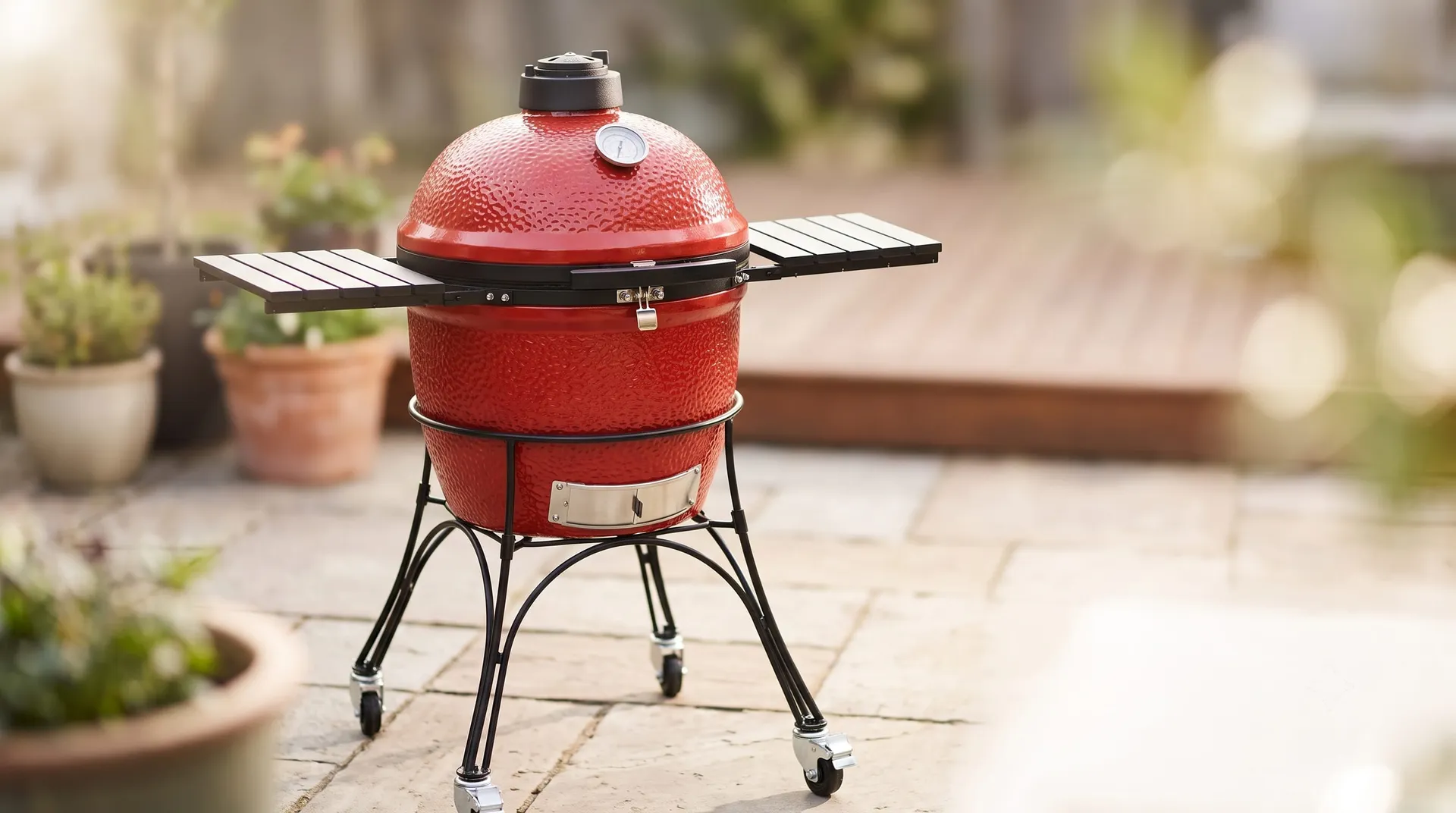
  1. 1Kamado Joe Classic Joe II 18"Kamado Joe Classic Joe II 18"This review4.6
  2. 2Kamado Joe Classic Joe IKamado Joe Classic Joe IKamado4.5
  3. 3VEVOR 18-Inch Ceramic KamadoVEVOR 18-Inch Ceramic KamadoKamado4.2
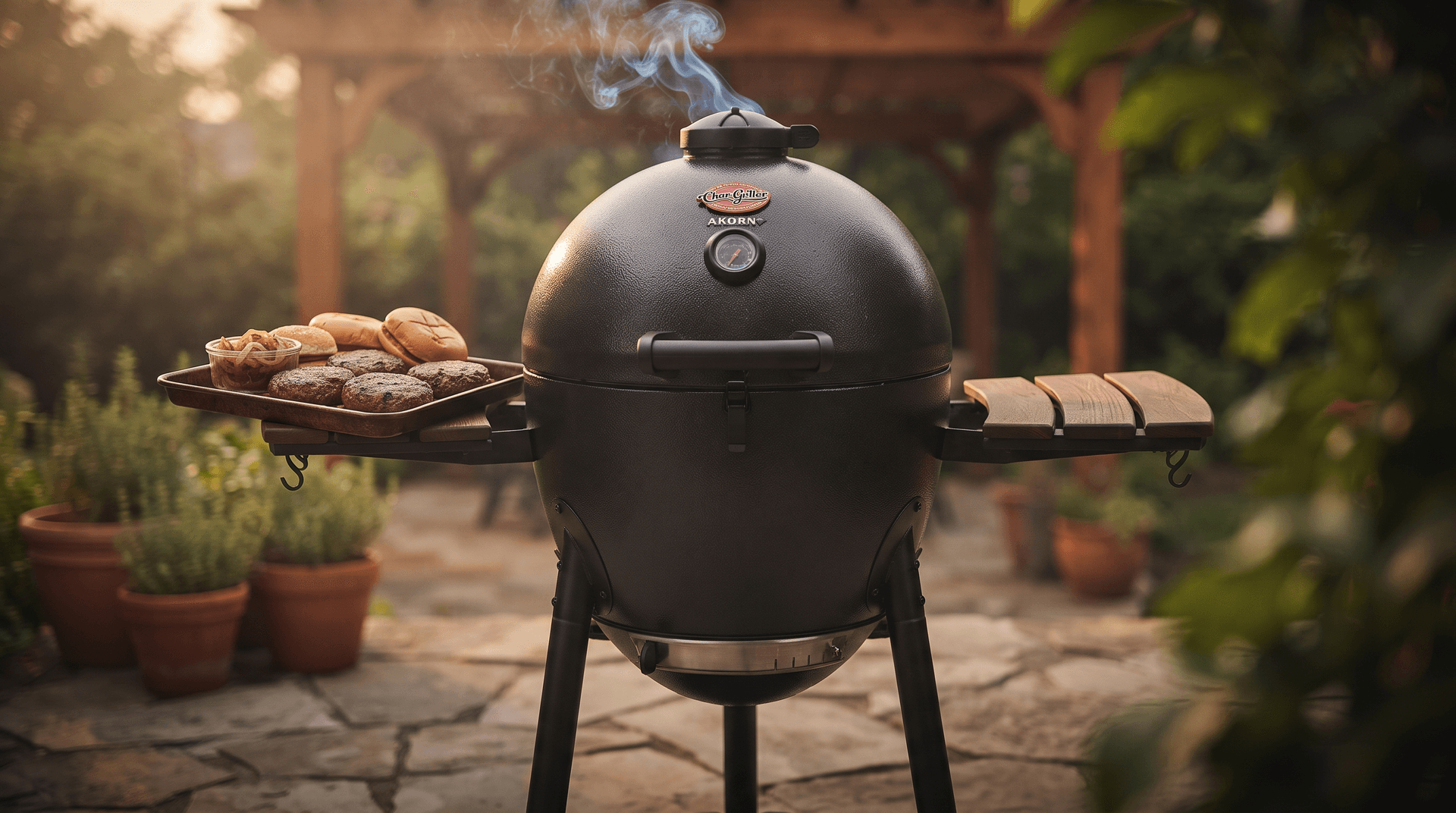
  4. 4Char-Griller AKORN 20-Inch KamadoChar-Griller AKORN 20-Inch KamadoKamado4.1
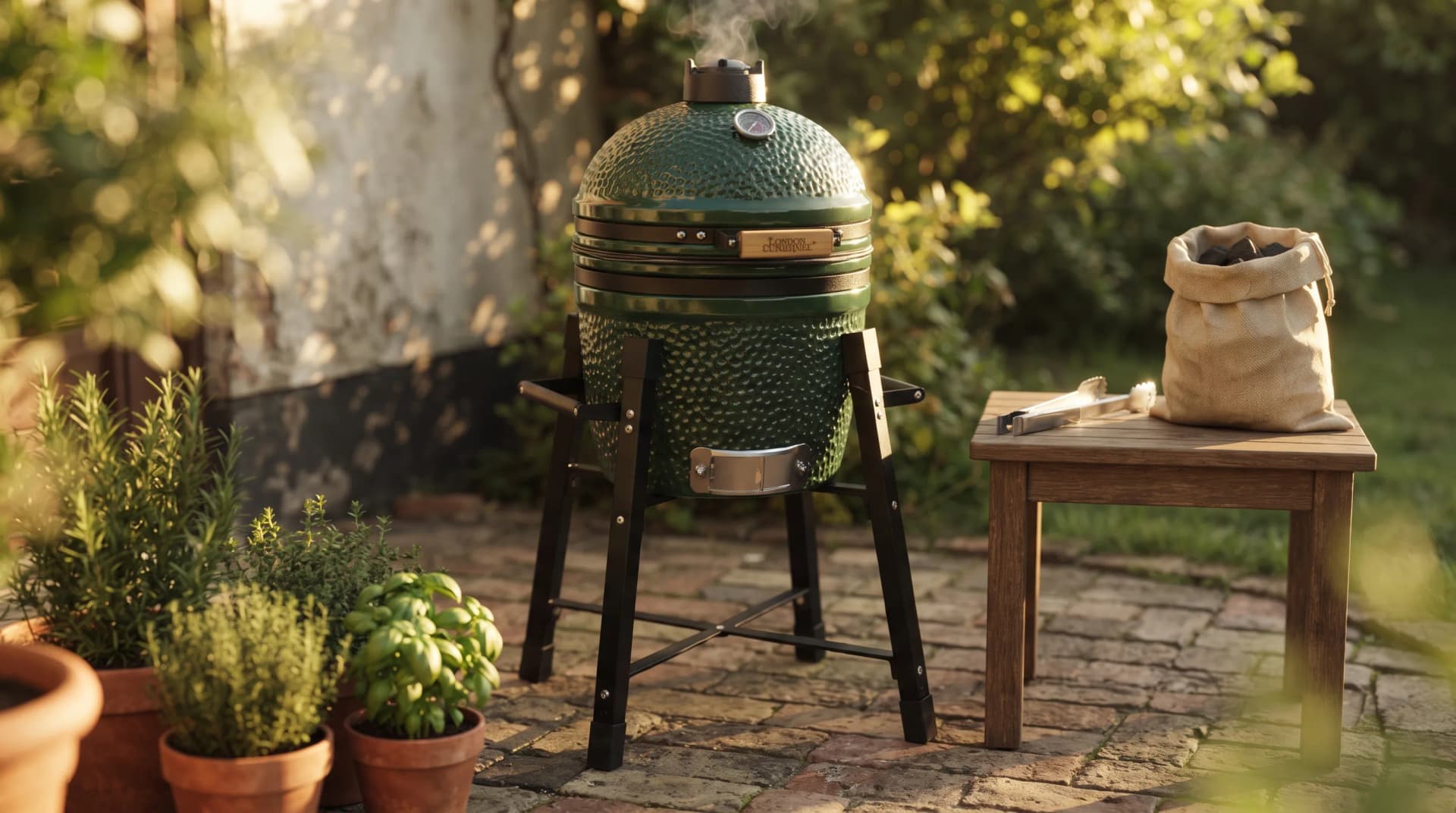
  5. 5London Sunshine 15-Inch Ceramic KamadoLondon Sunshine 15-Inch Ceramic KamadoKamado4.0

Key Specs

SpecKamado Joe Classic Joe IIWhat it means for you
Grate18 in, 250 sq in, stainless steelAbout 8 burgers or one pork shoulder plus sides
Cooking system2-tier Divide & Conquer half racksDirect and indirect zones at the same time
Temperature range225–750°F (maker spec)Low-and-slow through pizza heat
Top ventKontrol Tower (cast aluminum)Fine airflow control that stays set when you open the dome
HingeAir LiftThe heavy dome lifts with little effort
FireboxAMP multi-panel ceramicPanels flex with heat, so less risk than a cracked one-piece firebox
GasketDouble-thick wire mesh fiberglassLonger seal life than felt
AshSlide-out ash drawerClean out without removing the internals
Footprint46.2 in wide x 47.6 in tall with shelves (Kamado Joe)Plan a spot about 4 ft wide
Weight227.7 lb (Kamado Joe); some retailers list 188 lb netTwo people to assemble; hard to move
WarrantyLimited lifetime ceramic; 5 yr metal; 3 yr deflectors; 2 yr gasket and thermometerCeramic coverage is the headline

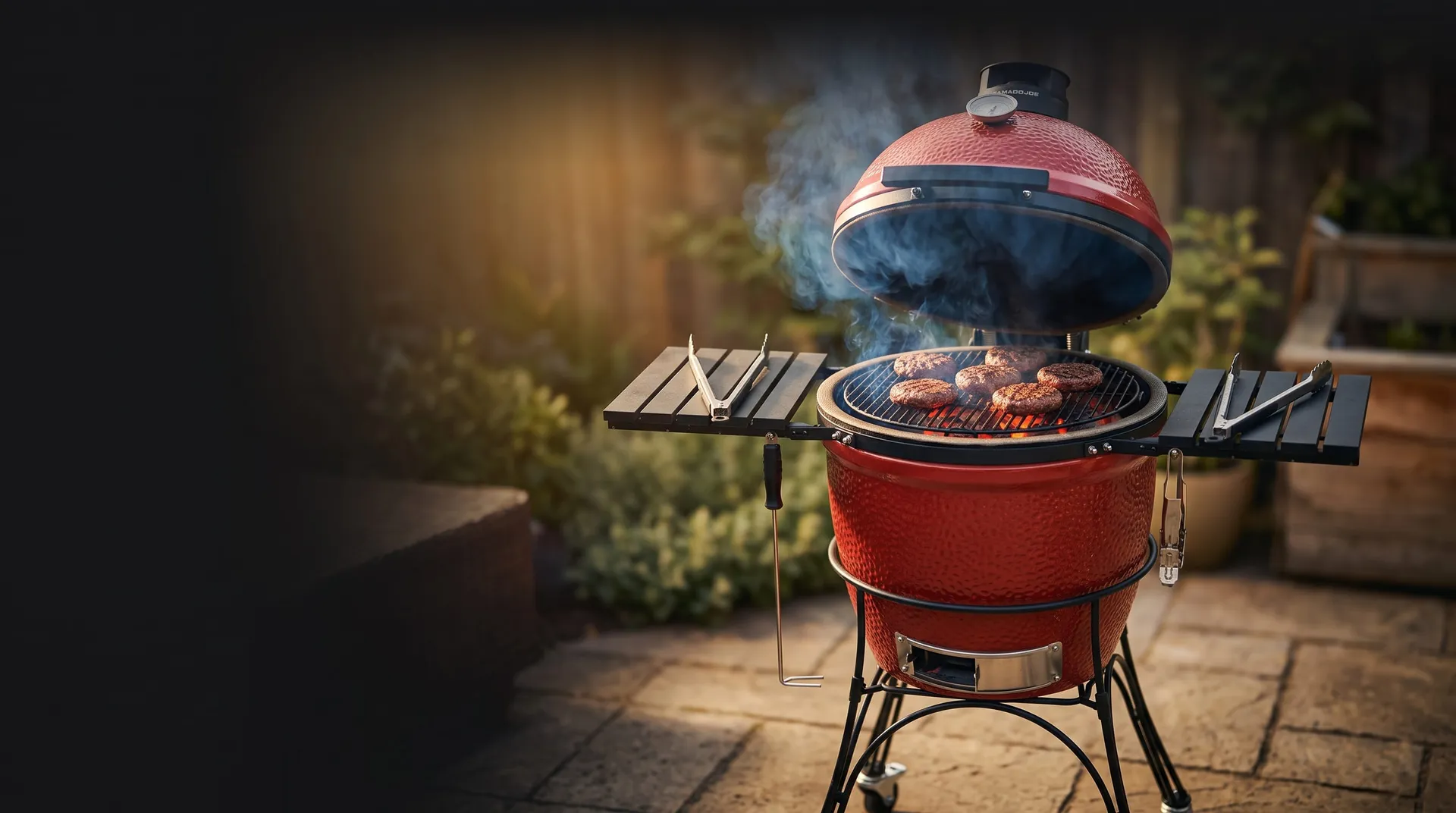
Red 18-inch ceramic kamado with its dome open, burgers on the grate and side shelves folded out on a patioThe Classic Joe II on its rolling cart: 250 sq in of main grate, with a second tier above.

Check Current PricePrices change often, so check the retailer for today’s price.

Can It Sear Hot Enough for Steakhouse Steaks and Pizza?

Yes: it passed 700°F in about 15 minutes from a cold start.

That heat is why the Classic Joe II sits among our best grills for steaks. Ceramic walls hold and reflect heat, so a full load of lump with the vents wide open gets very hot, very quickly.

The ribeye in our test took a deep crust. Pizza on a stone at 600°F+ was easy to hold, which is the other high-heat job most owners buy a kamado for.

Thick ribeye with grill marks searing over glowing lump charcoal inside a ceramic kamadoA full load of lump with the vents open puts a fast crust on a thick ribeye.

Searing and two-zone cooking with Divide & Conquer

Divide & Conquer is a set of half racks and half-moon heat deflectors on two tiers. Put a deflector under one half and a grate over open coals on the other, and you can sear on one side while roasting on the other.

The reverse sear method suits this layout well: start thick steaks on the deflected side with the dome closed, then move them over the coals to finish. Our how to grill the perfect steak guide covers thinner cuts.

Watch out: opening the dome at high heat lets in a rush of oxygen, which can cause a flashback. Crack the dome for a few seconds before you open it fully.

Will It Hold 225°F All Night, and How Hard Are the Vents?

It held 225°F for over 12 hours on one load of lump, but it corrects slowly, so creep up on your target.

This is the result that matters most for low-and-slow cooks. In our overnight pork shoulder test, the Classic Joe II held 225°F for over 12 hours without a refuel. The ceramic rode out the 37°F start and the wind without trouble.

Fuel use backs it up. Across all eight sessions we burned roughly 18 lb of lump, versus 22–30 lb on steel offsets for comparable cooking.

What this means for you: you can start a shoulder at bedtime and sleep. Our pork shoulder guide and brisket guide translate directly.

Temperature control: steady, but slow to correct

Once settled, it's steady. The trade-off is that the vents respond slowly, so an overshoot takes a long time to bring back down.

  • Close early: start closing the vents partway about 25–50°F before your setpoint.
  • Wait between changes: give it several minutes before you read the thermometer again.
  • Big vs small moves: use the draft door for big changes and the Kontrol Tower for small ones.

Our charcoal grill temperature control guide covers the airflow basics, and direct vs indirect grilling explains the deflector setups.

Vent Settings by Temperature

Kamado Joe publishes a starting point for the draft door and Kontrol Tower. Treat it as a baseline and adjust for wind and fuel.

TargetBottom draft doorKontrol TowerGood for
225–275°FAbout 1 in openWheel open, slider closed; fine-tune near targetRibs, shoulder, brisket
325–450°FAbout halfwaySlider slightly openChicken, wings, turkey
500°F+Fully openFully open; start closing near 450°FPizza, steaks

Kamado Joe's fundamentals guide says to start closing the top vent once you're within about 50°F of your target, a slightly earlier cue than ours. Either works if you go slowly.

Man in an apron adjusting the bottom draft door of a red kamado while reading a probe thermometerAdjust the draft door first, then wait several minutes before reading the probe again.

Lighting, fuel and smoke wood

Kamado Joe's guidance is hardwood lump only, and no lighter fluid, which can taint the ceramic and the food. A natural fire starter cube or an electric starter tucked into the lump works best.

  • How much lump: for most cooks, fill the firebox until the mound reaches the top of the fire ring. For high heat, Kamado Joe recommends a full load, with large chunks at the bottom and smaller pieces on top so air can move through.
  • Let it establish: leave the dome open for about 10 minutes after lighting, then close it and start adjusting. Kamado Joe says to give the ceramic 20–40 minutes after lighting to stabilize before cooking.
  • Smoke wood: bury two or three fist-sized wood chunks in the lump rather than scattering chips on top. Chips burn out early in a sealed kamado; see our wood chips for smoking guide for flavor pairings.
  • Clean smoke: wait until the smoke from the Kontrol Tower turns thin and pale blue before the meat goes on. Thick white smoke tastes acrid.
  • Reuse leftovers: stir the old charcoal to knock ash through, empty the ash drawer and top up with fresh lump.

Cold-weather cooking

Ceramic is at its best when it's cold out, which is the main reason kamados beat thin steel for year-round smoking. Give the ceramic extra time to come up to temperature on cold days, and don't rush it with a big fire: rapid heating from a deep chill stresses ceramic.

In freezing weather, check that the gasket hasn't frozen to the base before you lift the dome.

What Is It Like to Own Day to Day?

Built to last, light to clean, and heavy enough that it never moves once built.

Assembly: plan on about 2.5 hours and a helper

Assembly took about 2.5 hours solo in our testing, plus a seasoning burn and cooldown. Get a helper for lifting the ceramic base and dome; setup is when the ceramic is most at risk. The cart has locking casters for short moves on a flat patio only.

Man tightening hardware on a red ceramic kamado base set in its wheeled cart in a garageThe ceramic base drops into the steel cart; this lift is the step that needs a second person.

Pick a level, stable spot clear of siding and overhangs before you start, because once it's built you won't want to move it far.

Go easy for the first few cooks. Keeping early fires moderate, rather than chasing pizza heat on day one, gives the gasket adhesive time to cure and lets you learn how the vents respond before the stakes are high.

What to cook first

Begin with mid-temperature cooks before you try extremes. Spatchcocked chicken on the indirect side teaches you the deflector setup and the vent rhythm in about an hour; our smoked chicken guide has the method.

Next, try a steak night with the reverse sear, then pizza on a stone once you're comfortable opening the dome at high heat. Save the overnight shoulder for when you know how the vents respond on your patio.

  • Best uses: steaks, pizza, whole birds and long smokes for a family.
  • Limits: feeding a big crowd at once, and large briskets, which fit an 18-inch grate only when trimmed.

Cleaning and care

Day-to-day cleaning is light:

  • Grates: brush while warm.
  • Ash: empty the drawer once cold, and always before a long smoke.
  • Exterior: wipe with a damp cloth.
  • Interior: run the grill empty at high heat for a while to burn off grease and residue. Never use water or chemical cleaners on hot ceramic, and skip soap inside, since the ceramic is porous.

Kamado Joe sells a heavy-duty cover ($99.99 on its site). Use it, but let the grill dry out first, and crack the vents in humid weather so moisture can escape. Wet ceramic can grow mold between cooks; a short, hot burn clears it.

Warranty fine print

The lifetime ceramic coverage applies only to the original purchaser and requires registration, per Kamado Joe's terms. Kamado Joe chooses whether to repair or replace and covers parts, not labor.

Normal wear, cosmetic chips and damage from misuse aren't covered. Kamado Joe's warranty document also says buying from an unauthorized dealer can void coverage, so check the retailer before chasing a deep discount.

Which Accessories and Size Make Sense?

The box has what you need for day one; a cover is the first add-on worth buying.

The Classic Joe II comes with the deflectors, ash tool and grate gripper. These add-ons expand what it does:

AccessoryWhy it helps
Heavy-Duty Grill CoverProtects the gasket, thermometer and cart
JoeTisserieRotisserie ring that lets you close the dome
Cast iron wokStir-fry over open coals
Big Block XL Lump CharcoalLarge pieces for long, steady burns

A pizza stone, extra probes and heat-resistant gloves round out a starter kit; check compatibility for 18-inch Classic models.

Joe Jr., Classic or Big Joe?

Kamado Joe builds the same idea at three sizes, and the Classic is the middle one. The Joe Jr. is a small portable kamado, and the Big Joe uses a 24-inch grate for larger families.

For most buyers who cook for four to six, the Classic is the right size. Pick the Big Joe only if you regularly cook several large cuts at once.

Classic Series I, II or III?

Within the 18-inch Classic line, the Series I, II and III share the ceramic body, grate size and heat range. The series number tells you the hardware: hinge, vent, firebox and gasket.

Kamado Joe's own site lists the Series I and II with identical width, height and weight, so moving up doesn't get you a bigger or heavier grill. The III adds the SloRoller insert and a third rack tier (more in the FAQ).

Who Should Buy the Kamado Joe Classic Joe II (and Who Shouldn't)

A long-term grill for frequent cooks, not a budget or movable one.

Buy it if you

  • Want one grill instead of a smoker plus a searing grill

  • Cook often enough that fuel savings and a long warranty matter

  • Have a permanent patio spot

  • Want the Air Lift hinge and Kontrol Tower over the Classic I's cast iron vent

Look elsewhere if you

  • Are on a tight budget (a Weber Original Kettle does most jobs for far less)

  • Need to move or store the grill often

  • Want the most grate space for your money

  • Only smoke and never sear (a Weber Smokey Mountain costs less)

Match two or more points on either side and you have your answer.

Kamado Joe Classic Joe II vs. Alternatives

Most shoppers are choosing between this, the cheaper Classic I, a dedicated smoker, or a big fan-fed steel cooker.

Cheaper or smaller kamados

If you're still weighing the style itself, our kamado grill vs regular grill guide explains what ceramic buys you, and our best charcoal grills ranks the field side by side.

When to pick an alternative instead

Common Problems and Fixes

Most Classic Joe II complaints trace back to airflow or the gasket.

ProblemLikely causeFix
Temperature overshootsVents left open too longFollow the vent settings and close down early
Overheats at low temperaturesToo much lit charcoalLight one small spot, close down early, let the ceramic settle
Smoke leaking at the domeWorn or compressed gasketReplace the gasket; check band alignment
Dome doesn't seal evenlyLoose hinge or band boltsRe-tighten bolts each season
Temperature drifts on long cooksAsh choking airflowEmpty the ash drawer before every long smoke
Flare-up when opening at high heatFlashback from sudden oxygenCrack the dome for a few seconds before opening fully
Mold inside after storageMoisture trapped under the coverDry it out, crack the vents, run a short hot burn
Cracked ceramicDropped in setup or heated fast from coldLift with two people; bring cold ceramic up gently

Is the Kamado Joe Classic Joe II Worth the Money?

Yes, if you cook several times a week and want one grill for everything.

Value verdict

The math favors heavy users. A grill that replaces both a smoker and a searing grill, burns less fuel and carries lifetime ceramic coverage costs less per cook the more you use it. Occasional grillers won't get there.

  • Searing heat past 700°F

    A lot of money, even on sale

  • Overnight smokes on one load of lump

    Portability

  • Two-zone cooking with Divide & Conquer

    Grate space next to steel cookers

  • Lifetime ceramic coverage

    Quick temperature corrections

List price is $1,399–$1,499, and sales bring it down; the Classic I gets you the same ceramic for less if the hinge and vent upgrades don't matter to you.

Final Score

SmokyHQ score

Excellent

Best at Heat retention
Weakest at Ease of use and assembly

  • Heat retention10.0/10
  • Temperature range9.9/10
  • Build quality9.8/10
  • Fuel efficiency9.5/10
  • Ease of use and assembly7.8/10
  • Value for money7.9/10

Scores settled? See today’s price on the Kamado Joe Classic Joe II 18".

For frequent cooks who want to sear and smoke on one fire, the Classic Joe II is a long-term grill, ideally bought on sale. If the price stings, the Classic I keeps the same ceramic for less.

Next steps: read our Classic Joe I review or compare the field in our best charcoal grills guide.

Ranked in our buying guides

Durability

What to watch over time

Fiberglass mesh gasket
The main wear item on any kamado; replace it when it flattens, frays or leaks smoke.
Ceramic shell and firebox
Very durable, but cracks if dropped or shocked with fast heat from cold.
Hinge and band bolts
Check them each season so the dome stays aligned and the seal stays tight.

Based on the materials, design and warranty we documented during testing. Long-term ownership results are added to reviews as our testers log them.

Frequently Asked Questions

01

Is the Kamado Joe Classic Joe II worth it?

Yes, for frequent cooks. It passed 700°F in about 15 minutes, held 225°F for over 12 hours on one load of lump, and carries a limited lifetime warranty on the ceramic. Occasional grillers get more value from a kettle.

02

Kamado Joe Classic 2 or Classic 3: which should I choose?

The II, unless you smoke often. The III adds the SloRoller insert, designed to even out low-and-slow heat and smoke, plus a third rack tier, at a higher price.

03

Do I need the heat deflectors for smoking?

Yes. Without them, the food sits over open coals and the outside of a long cook burns. Use both half-moon deflectors for full indirect heat, or one for a two-zone setup.

04

How do I put the fire out on a Kamado Joe?

Close the bottom draft door and the Kontrol Tower fully. Starved of air, the lump goes out, but the ceramic stays hot for hours, so leave the cover off until it's cool to the touch.

05

How long does the Classic Joe II take to assemble?

About 2.5 hours solo in our test, plus a seasoning burn and cooldown. Get a helper for lifting the ceramic base and dome.

06

How much does the Kamado Joe Classic II weigh?

Kamado Joe lists it at 227.7 lb, though some retailers list 188 lb net. Either way, it's a permanent fixture once built.

07

Can you use briquettes in a Kamado Joe?

You can, but lump is recommended. Briquettes leave more ash, which can choke airflow on long cooks.

08

How long does a Kamado Joe last?

The ceramic carries a limited lifetime warranty for the original, registered buyer, and metal parts get 5 years. The gasket is the main wear item and the one you'll replace along the way.

Written by

Marcus Reilly

Head Pitmaster & Lead Tester

Marcus Reilly is a KCBS Certified Judge with 15 years of competition barbecue. He leads SmokyHQ’s smoker, pellet, charcoal and kamado testing, so if you’re choosing a cooker for brisket, ribs or overnight smokes, his reviews tell you which ones hold temperature and which ones fall short.

  • Smokers
  • Pellet Grills
  • Charcoal & Kamado
  • Low-and-Slow BBQ
  • Temperature Control

Every grill is bought with our own money and scored on the same tests. How we test