Assembly
Plan about an hour. The AKORN ships mostly built; you attach the cart, shelves, casters and ash pan.
- Build it near where it will live, on a flat surface.
- Lock the casters before lifting the body onto the cart.
- Two people make lifting the body easier, though it is much lighter than ceramic.
- Check that the lid closes evenly and the gasket meets all the way round before the first fire.
- Run a moderate first fire to burn off manufacturing oils and let the paint cure before searing.
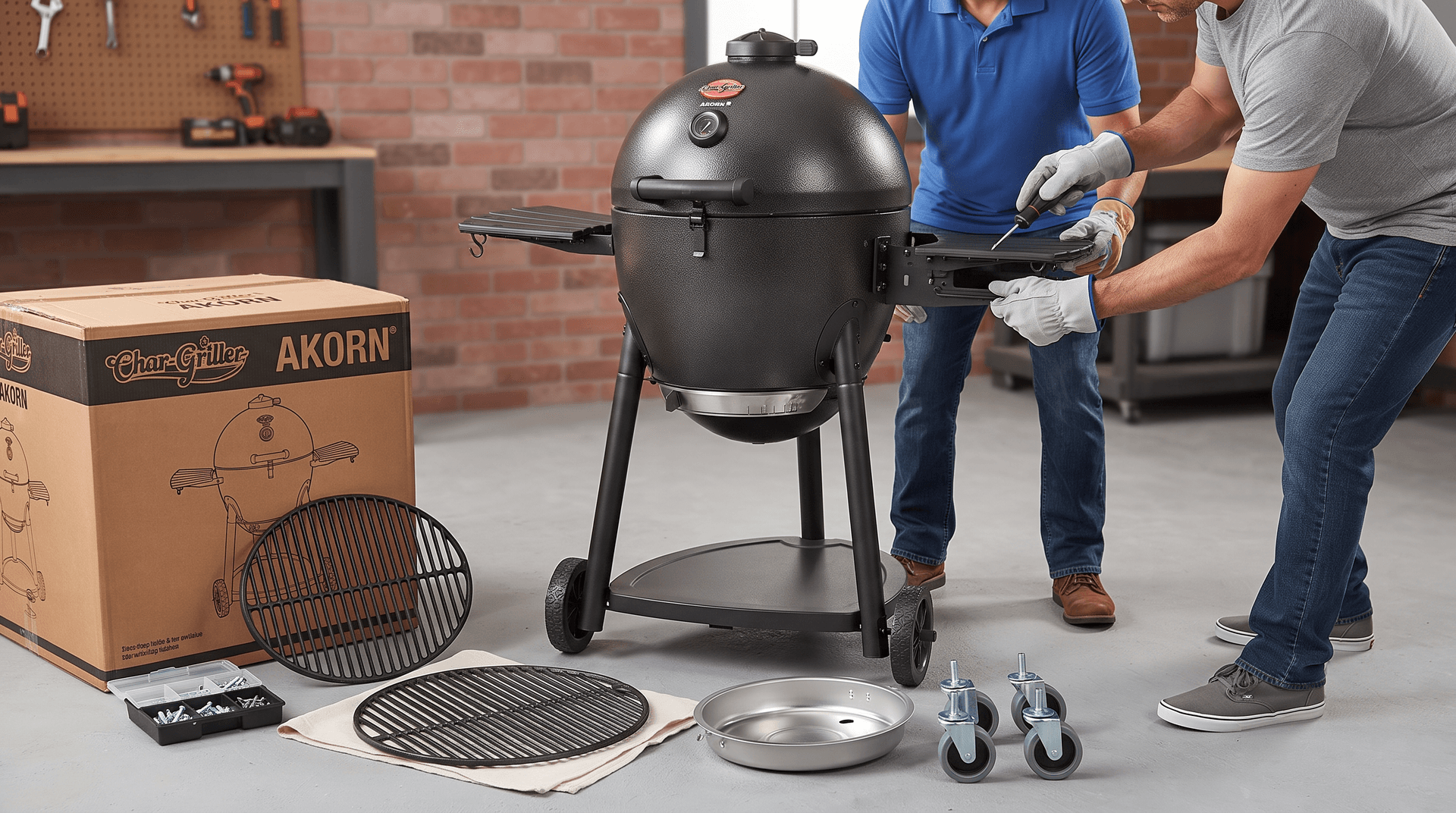 Assembly is mostly the cart, shelves and casters; the body arrives built.
Lighting and fuel
Use hardwood lump with a natural starter cube or an electric starter. Skip lighter fluid, which leaves off flavors. Briquettes work in a pinch but make more ash, which can choke airflow on long cooks.
Loading and lighting the lump
- Load: fill the firebox well for long cooks, big pieces at the bottom so air can flow.
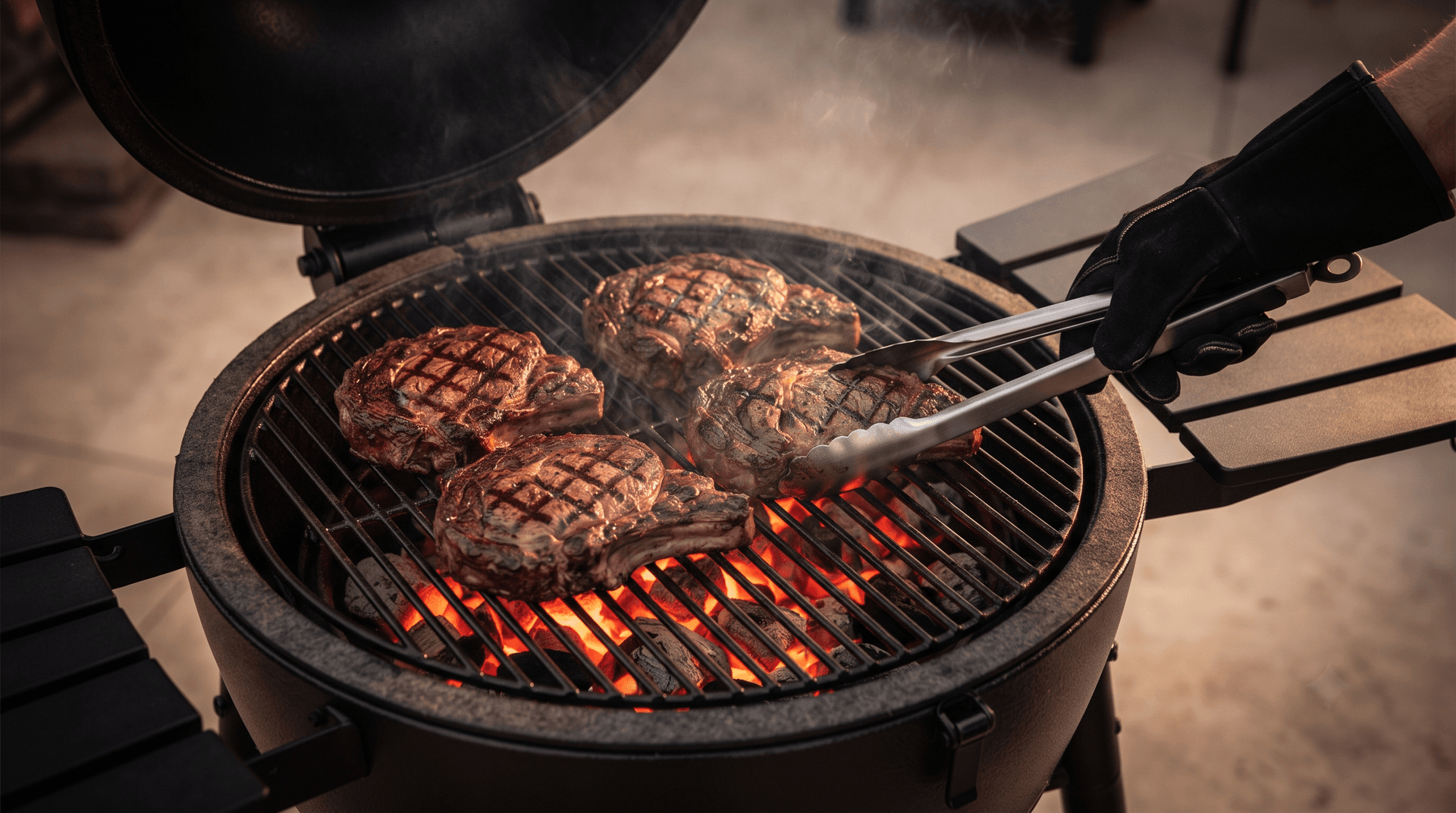
- Light: one spot in the center for low and slow, two or three spots for searing or pizza.
- Settle: leave the lid open for about 10 minutes after lighting, then close it and let the grill stabilize before cooking.
Adding smoke wood
Bury two or three fist-sized wood chunks in the lump before lighting for long cooks. Chunks give steadier smoke than chips, which burn up quickly in a kamado. Our wood chips and chunks guide covers which wood suits which meat.
Shutting down
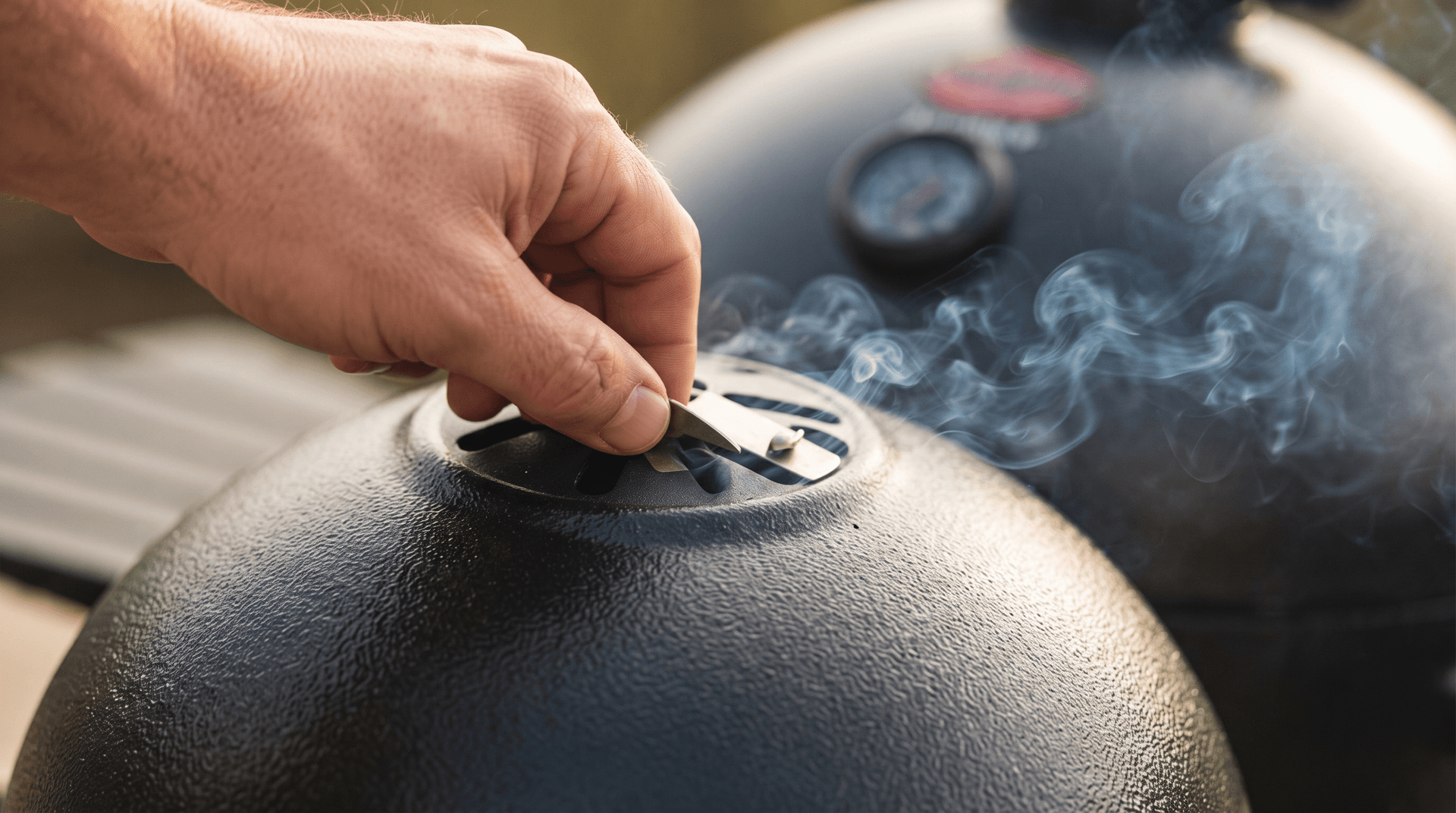
Close both dampers fully. The fire starves and goes out, and leftover lump relights next time. Once cold, empty the EasyDump ash pan so damp ash doesn't sit against the steel.
Cleaning and care
- Grate: brush the cast iron while warm, then wipe it with a little oil (see how to clean grill grates).
- Ash: empty the ash pan after every cook, once cold.
- Shell: wipe it down and touch up any paint chips with high-heat grill paint before rust starts.
- Cover: none is included. A fitted AKORN cover is the single best thing you can buy for this grill's lifespan.
For cold months, follow our winterizing checklist.
What to cook first
Start with something short at a moderate heat, like a spatchcocked chicken. It teaches you how the dampers behave before you risk an expensive cut.
- First week: chicken or sausages at a moderate temperature, to learn the dampers.
- Second cook: a steak night with the reverse sear, to learn how fast the fire climbs.
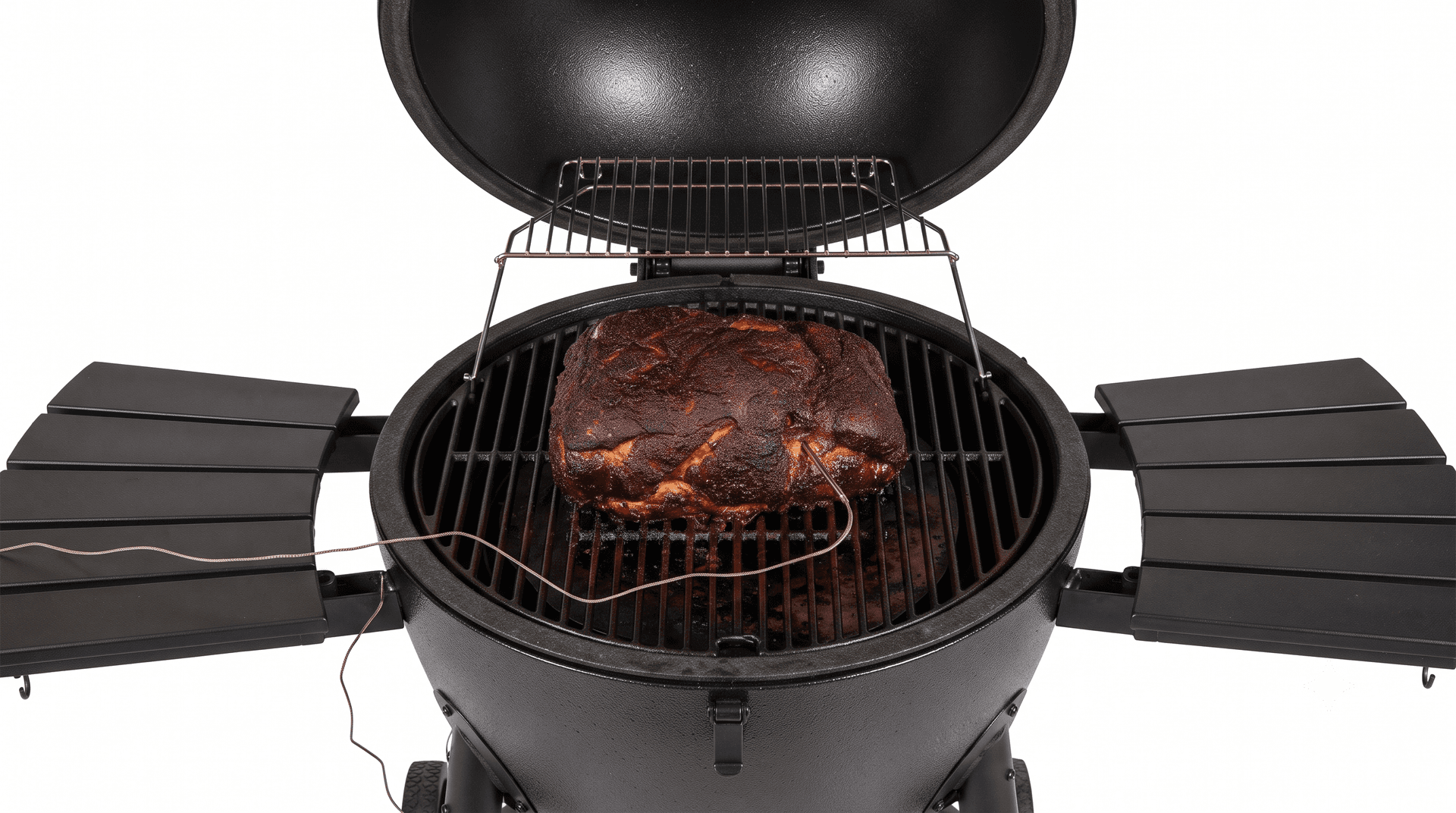
- Then: pizza on a stone, and only after that an overnight pork shoulder.
Accessories worth buying
The box holds the basics, so plan for a few extras. Buy parts sized for the 20-inch AKORN; 18-inch ceramic kamado parts may not fit.
| Accessory | Why it helps |
|---|
| Heat deflector (Smokin' Stone or similar) | Needed for indirect smoking and roasting |
| Fitted AKORN cover | Keeps rain off the steel shell and dampers |
| Two-probe thermometer | Reads the grate and the food, not the dome air |
| Replacement gasket kit | Restores the seal when the original wears |
| Heat-resistant gloves | Lets you move a hot stone or grate |
Running costs and warranty
Lump charcoal is the main ongoing cost, and the insulated walls keep fuel use low for a steel grill. Because you shut the dampers to put the fire out, leftover lump relights next time. Budget for a replacement gasket and some high-heat paint every few seasons, especially if the grill lives outside.
Char-Griller lists its warranty terms on its own warranty page rather than the product listing. Register the grill, keep your order record, and check the body for dents or paint damage when it arrives.
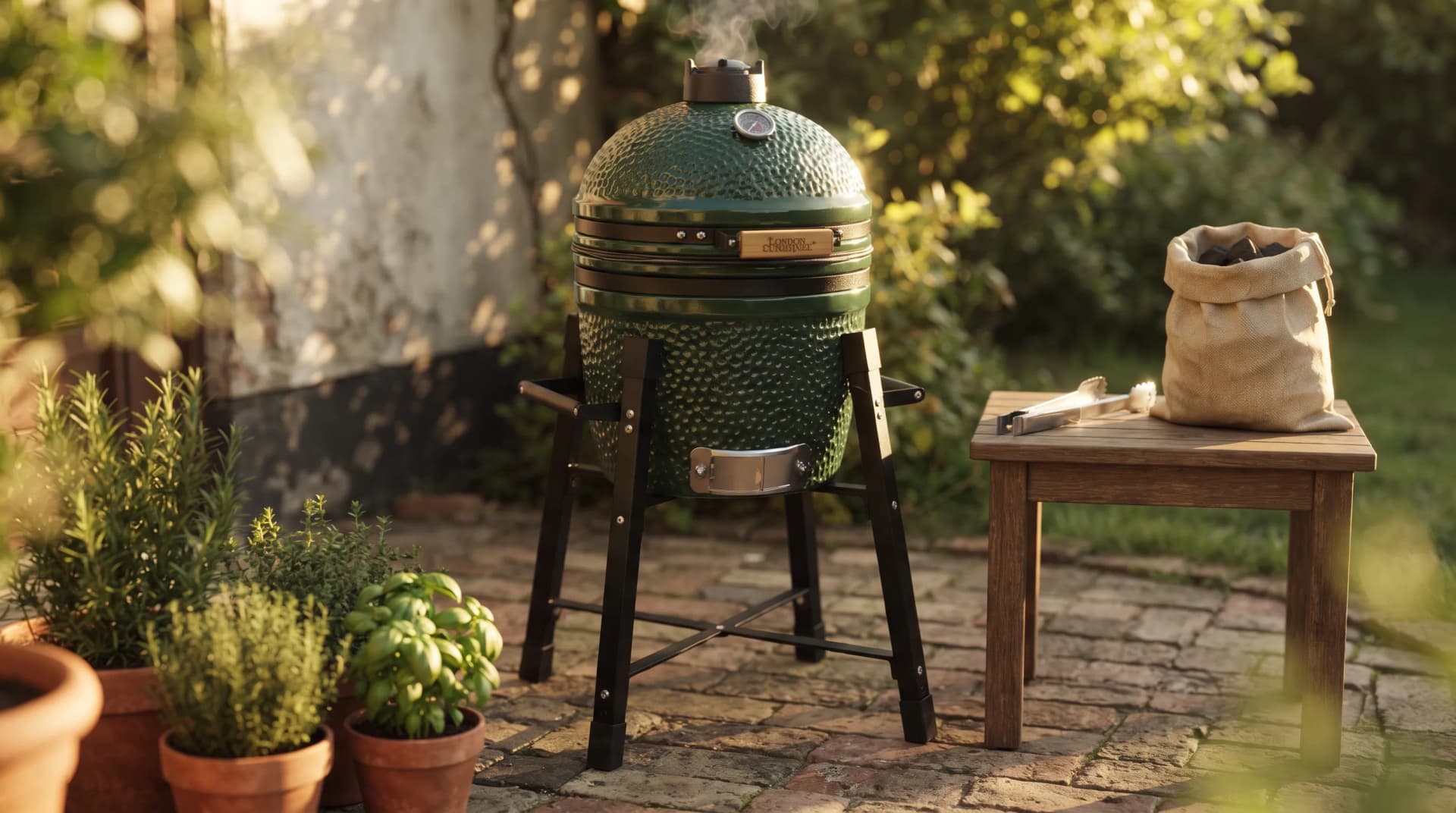
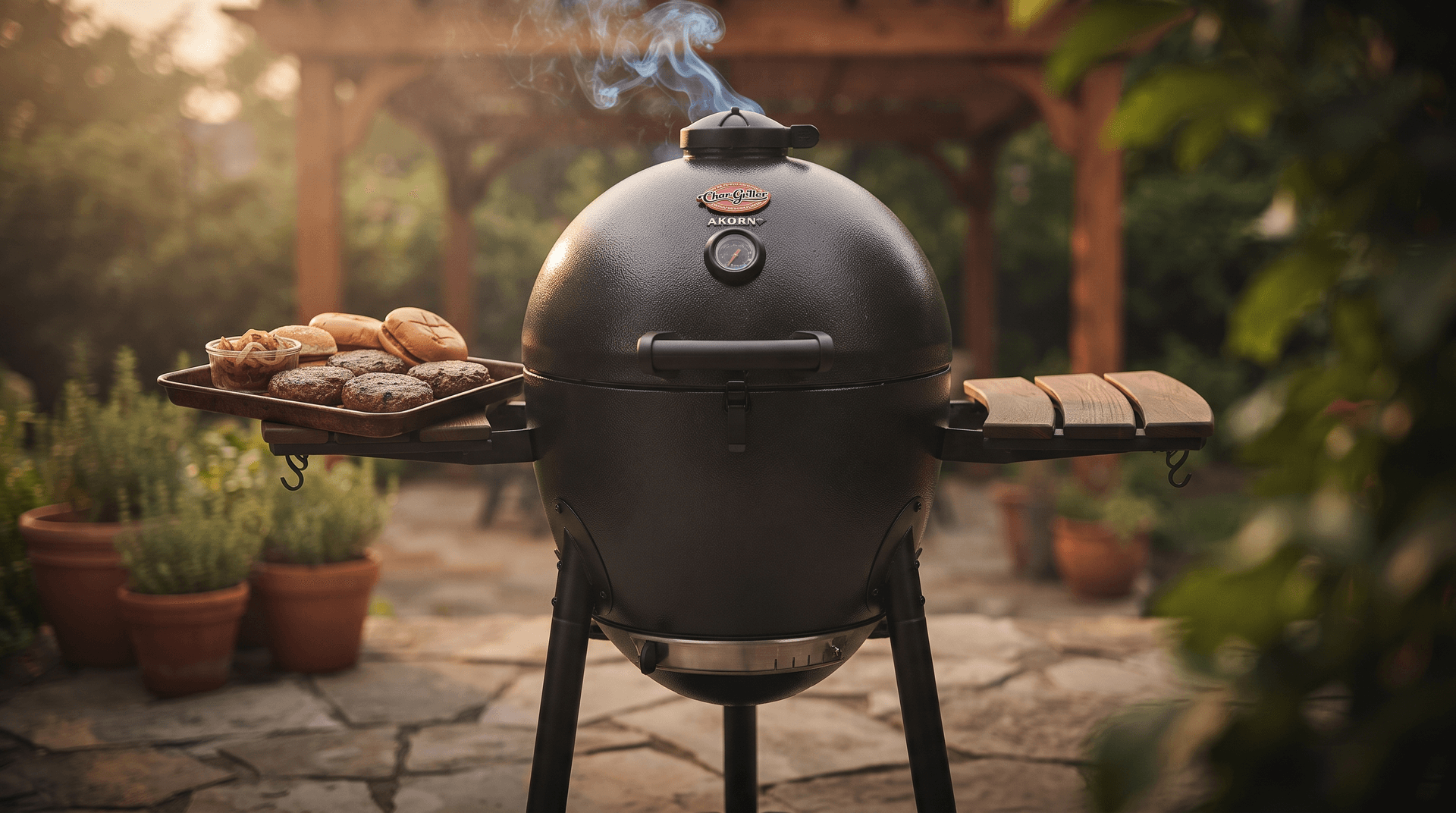 The AKORN 20-inch kamado in graphite on its cart with both side shelves up.