Meat & Grilling Temperature Chart 2026
Meat and grilling temperature chart: internal temps for steak, chicken, pork, burgers, fish, and brisket, plus USDA safe minimums and real pull temps.
The One Chart That Ends the Guesswork
Cutting into meat to check doneness releases juice you can't get back, and judging by touch takes years to get reliably right. An internal thermometer removes both problems, but only if you know what number you're actually targeting for each cut. This chart covers every major category — beef, poultry, pork, ground meat, fish, and smoked barbecue — with both USDA food-safety minimums and the pull temperatures our testing has found actually produce the best result once carryover cooking is factored in.
Quick Answer: Master Temperature Chart
| Meat | Pull Temp | Rest Temp (Final) | Notes |
|---|---|---|---|
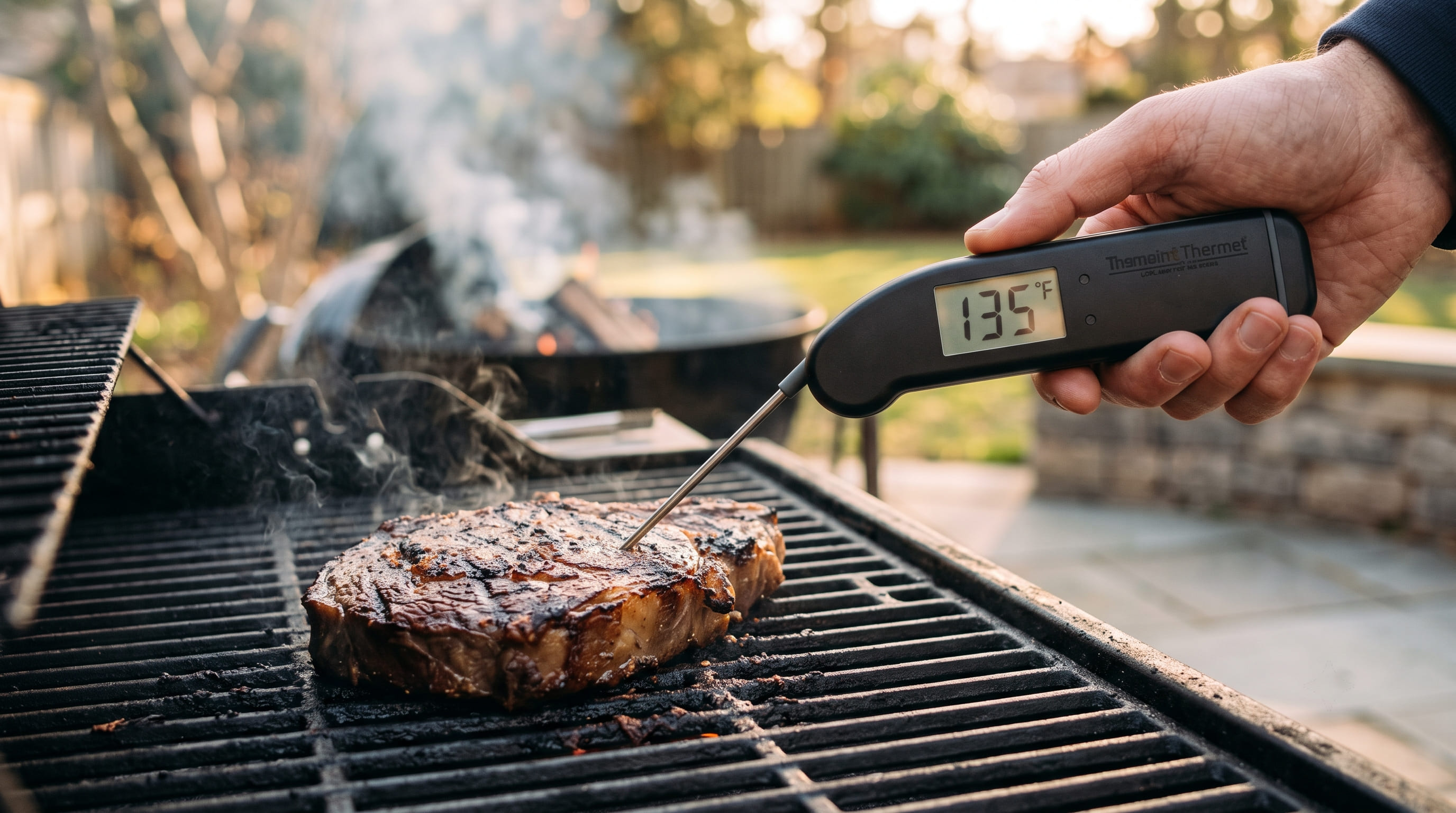
| Beef Steak (Rare) | 120°F | 125°F | Bright red center |
| Beef Steak (Medium-Rare) | 125°F | 130–135°F | Most commonly requested doneness |
| Beef Steak (Medium) | 135°F | 140–145°F | Pink center |
| Beef Steak (Well Done) | 155°F+ | 160°F+ | No pink |
| Ground Beef / Burgers | 155°F | 160°F | USDA safe minimum: 160°F |
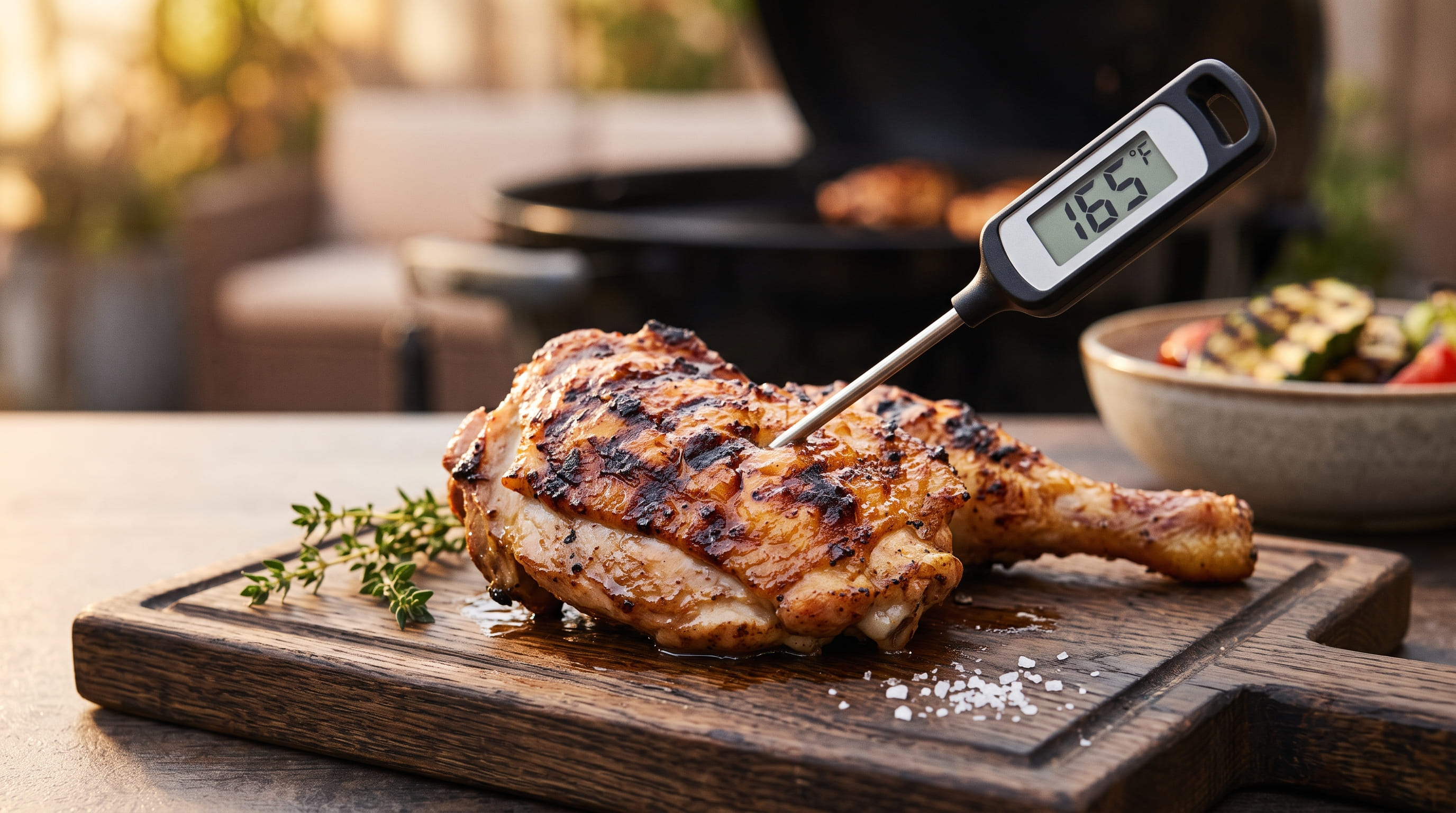
| Chicken (Breast/Thigh) | 160°F | 165°F | USDA safe minimum: 165°F |
| Whole Turkey | 160°F | 165°F | Check thickest part of thigh |
| Pork Chops/Tenderloin | 140°F | 145°F | Slight pink is safe and normal |
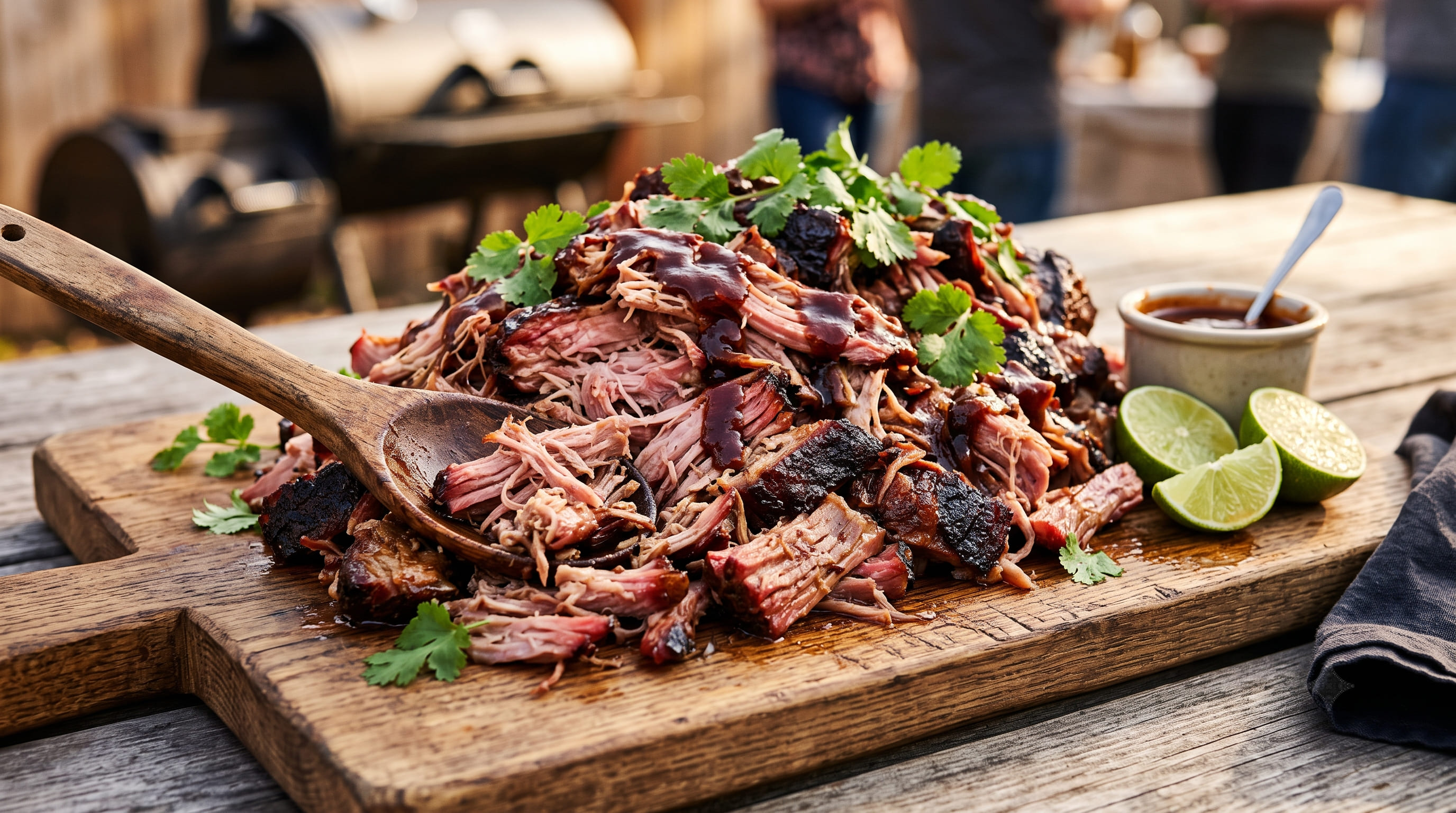
| Pork Shoulder/Butt (Pulled) | 195°F | 195–205°F | Texture target, not just safety |
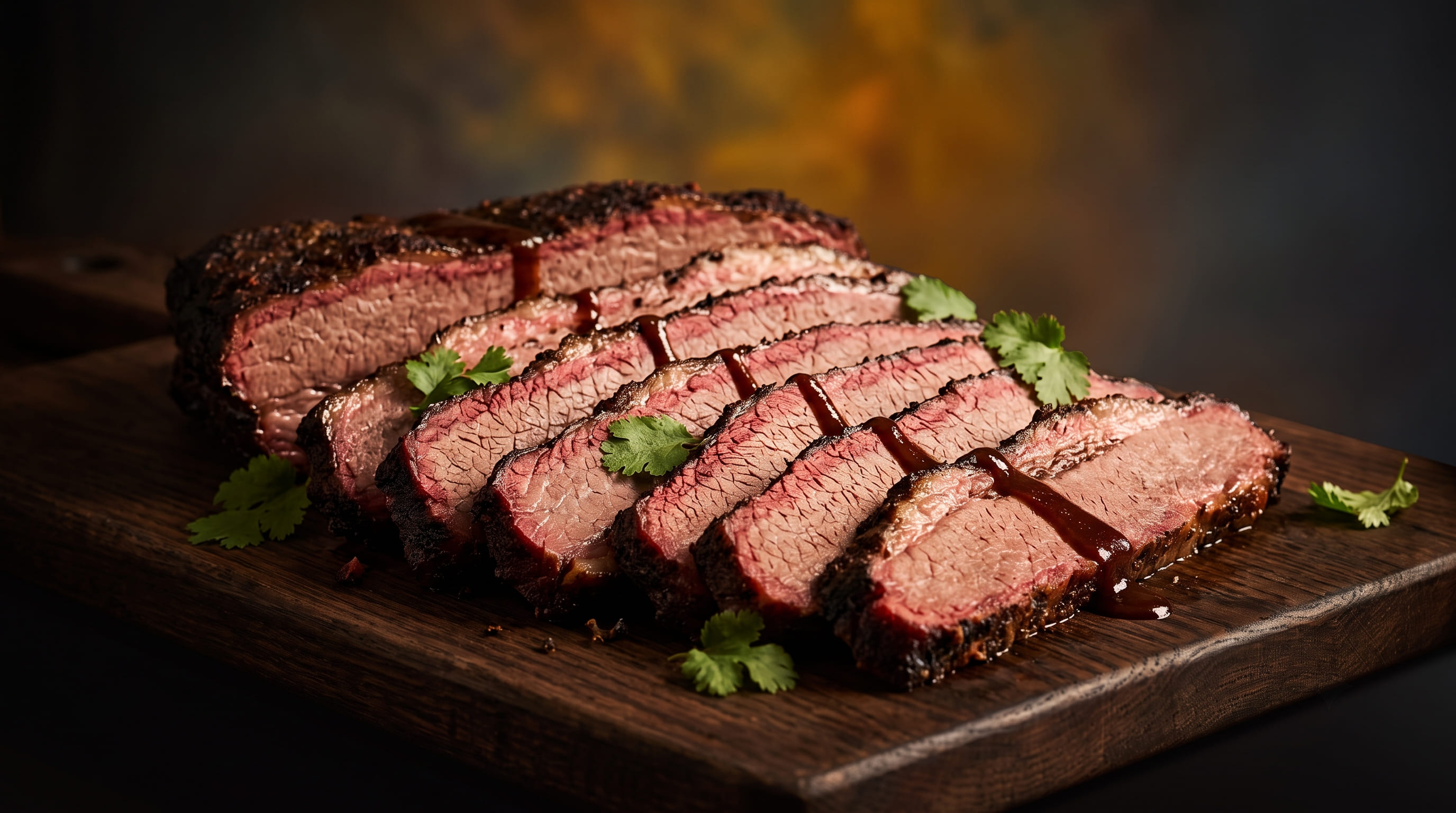
| Beef Brisket | 195°F | 195–205°F | Probe should slide in like butter |
| Fish (Most Species) | 130°F | 135–140°F | USDA safe minimum: 145°F |
| Salmon | 120°F | 125–130°F | Medium-rare center, widely preferred |
If you remember one rule from this entire chart: pull meat roughly 5°F below your final target for anything under 2 lbs, and let carryover cooking finish the job during rest. For large cuts like brisket and pork shoulder, the target is a texture, not a strict safety minimum — more on that below.
Why "Pull Temperature" and "Final Temperature" Are Different Numbers
Carryover Cooking Is Real
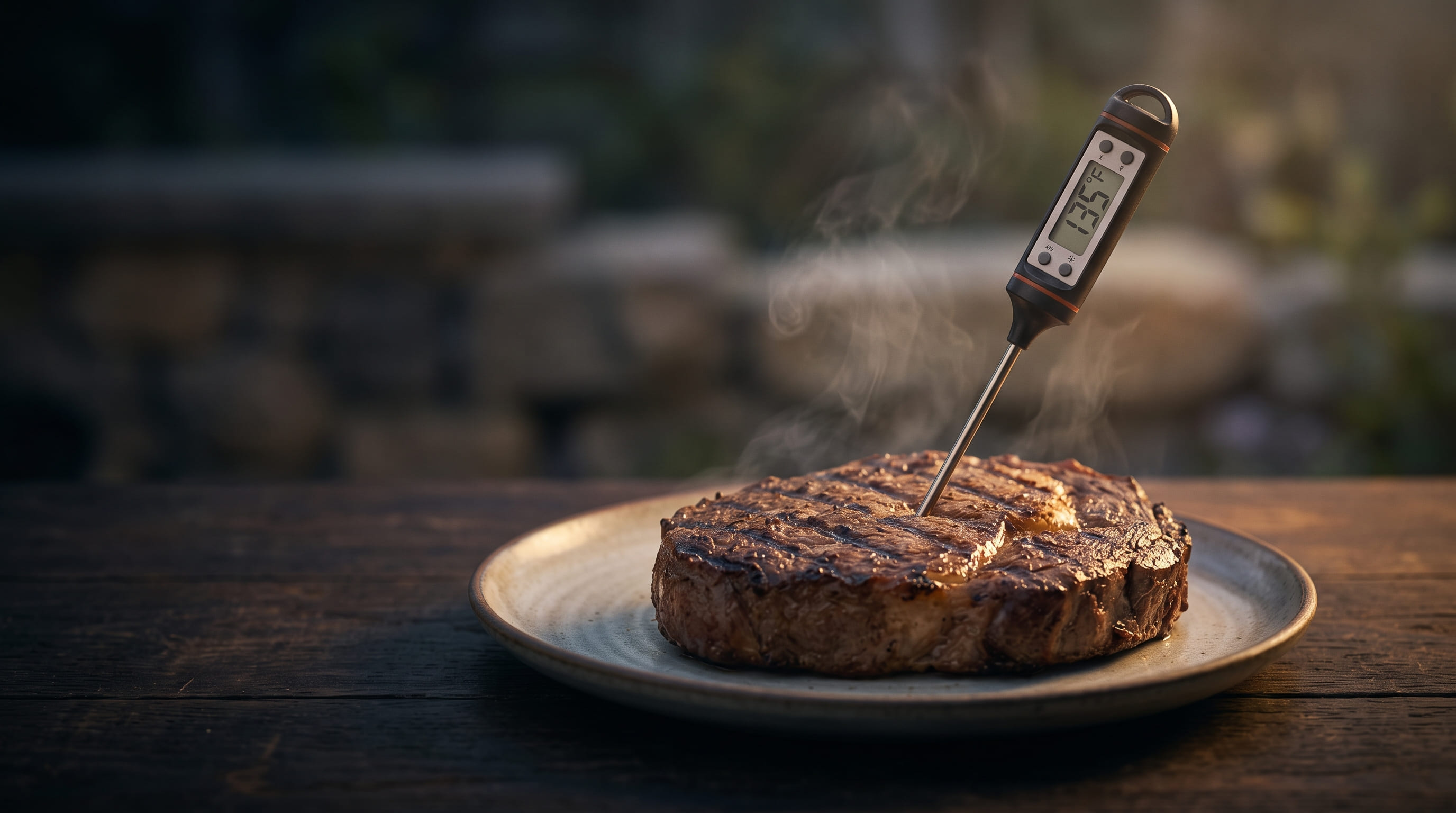
Meat continues cooking after it leaves direct heat, because the outer layers are still hotter than the center and that heat keeps migrating inward for several minutes. A steak pulled at exactly 135°F will often read 140–142°F by the time you cut into it after resting — meaning if you wanted medium (140–145°F), pulling at 135°F rather than 140°F gets you there without overshooting.
Why This Matters More on Thicker Cuts
Carryover rise is more pronounced on thicker cuts and larger roasts, since they hold more residual heat overall. A thin burger patty barely carries over at all; a thick roast or a whole turkey can rise 5–10°F after coming off the heat. See our how to grill the perfect steak guide for the full breakdown on steaks specifically.
Beef: Steaks and Roasts
| Doneness | Pull Temp | Final Temp | Center Appearance |
|---|---|---|---|
| Rare | 120°F | 125°F | Bright red, cool center |
| Medium-Rare | 125°F | 130–135°F | Warm red center |
| Medium | 135°F | 140–145°F | Pink throughout |
| Medium-Well | 145°F | 150–155°F | Slight pink |
| Well Done | 155°F+ | 160°F+ | No pink, firm |
The USDA safe minimum for whole-muscle beef (steaks, roasts) is 145°F with a 3-minute rest, but that's a food-safety floor, not a flavor recommendation — most steakhouses and our own testing favor medium-rare (130–135°F final) for the best balance of tenderness and flavor on a well-marbled cut like ribeye or strip.
Ground Meat: A Different Set of Rules
Why Ground Beef Needs a Higher Minimum Than Steak
Grinding meat mixes surface bacteria throughout the entire mass, rather than leaving it isolated to the exterior the way it is on a whole steak. That's why ground beef has a hard 160°F USDA safe minimum — well above medium-rare steak temperatures — regardless of how you prefer a whole cut cooked. There's no safe "medium-rare" for a ground beef burger the way there is for a steak.
Ground Poultry
Ground chicken and turkey carry the same 165°F minimum as whole poultry cuts, for the same cross-contamination reason as ground beef.
Poultry: Chicken and Turkey
| Cut | Safe Minimum | Recommended Pull |
|---|---|---|
| Chicken Breast | 165°F | 160°F (carries to 165°F) |
| Chicken Thighs/Legs | 165°F | 165–175°F for best texture |
| Whole Chicken | 165°F | Check thickest part of thigh |
| Whole Turkey | 165°F | Check thickest part of thigh, away from bone |
| Ground Chicken/Turkey | 165°F | 165°F, no lower |
Why Dark Meat Tolerates Higher Temperatures Better
Chicken breast dries out quickly past 165°F since it's lean with little connective tissue to render. Thighs and legs contain more connective tissue and fat, so pushing them to 175°F or even a bit higher actually improves texture by breaking down that connective tissue, rather than just drying the meat out the way it would on a breast.
Pork: Chops, Tenderloin, and Low-and-Slow Cuts
Modern Pork Doesn't Need to Be Well Done
USDA guidance for whole-muscle pork (chops, tenderloin, roasts) has been 145°F with a 3-minute rest since 2011 — meaningfully lower than the well-done standard many people still cook to out of habit. At 145°F, pork chops and tenderloin retain a slight pink blush in the center, which is safe and, in our testing, noticeably juicier than pushing to full well-done.
Pork Shoulder and Ribs: A Texture Target, Not Just Safety
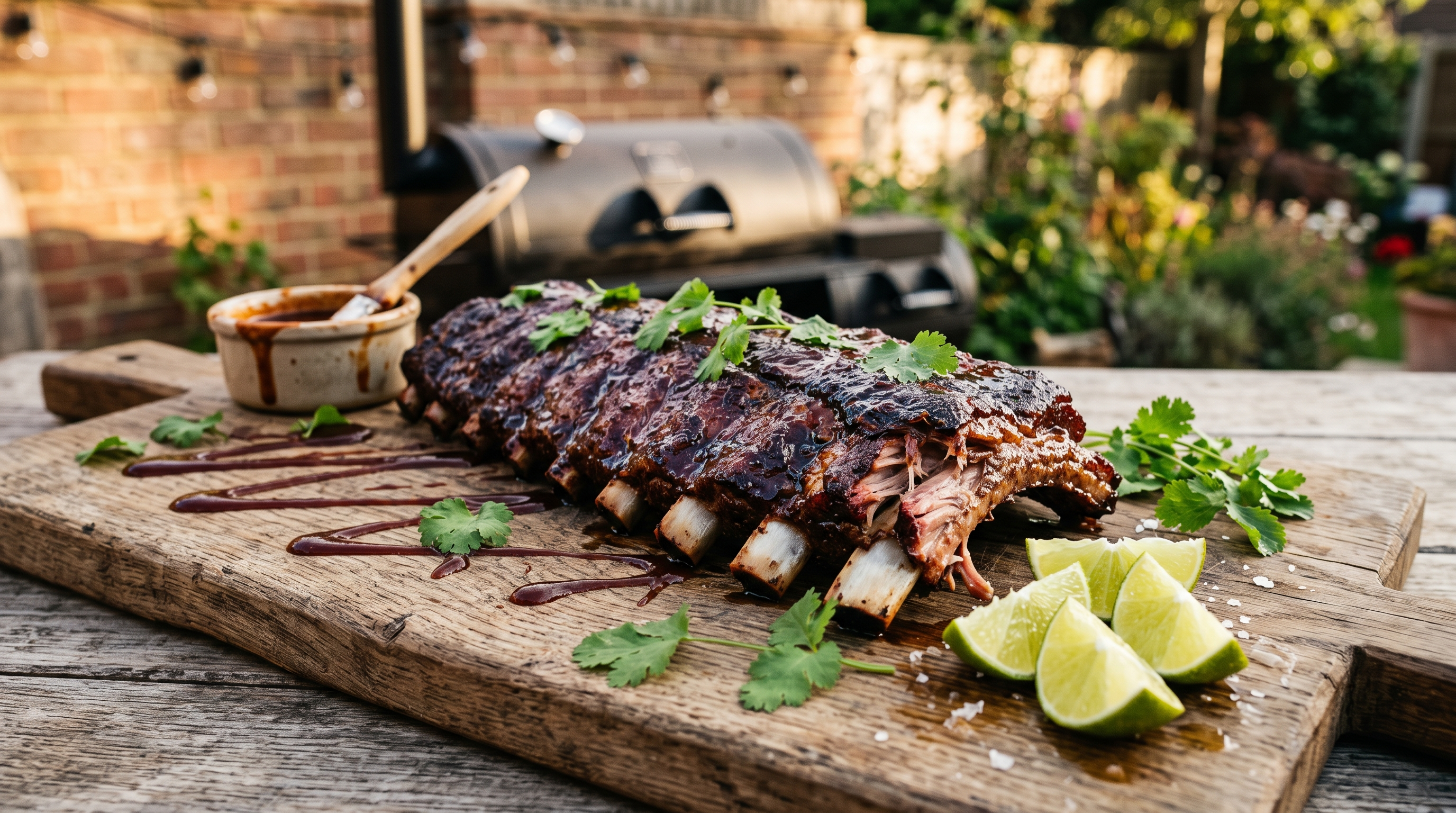
Pulled pork and ribs are technically safe to eat well below 195°F, but the actual target — 195–205°F — exists for texture, not food safety. That range is where collagen and connective tissue fully break down into gelatin, which is what makes pulled pork shred easily instead of staying tough. Pulling a pork shoulder at a merely "safe" 145°F would be technically fine to eat but nearly impossible to shred.
Fish and Seafood
| Type | Safe Minimum | Recommended Pull |
|---|---|---|
| Most Fin Fish | 145°F | 130–140°F, widely preferred |
| Salmon (Medium-Rare) | 145°F (USDA) | 120–125°F, common preference |
| Shrimp | N/A (visual) | Opaque and firm, curled into a "C" |
| Scallops | N/A (visual) | Opaque throughout, firm |
Why Salmon Is Often Pulled Below the USDA Minimum
The USDA safe minimum for fish is 145°F, but a large share of home cooks and restaurants pull salmon meaningfully earlier — commonly in the 120–130°F range — for a moister, more translucent center that many people specifically prefer. This is a personal-preference and informed-choice situation rather than a safety recommendation; if you want a guaranteed-safe result, especially for anyone in a higher-risk group (pregnant, immunocompromised, very young or elderly), cook to the full 145°F.
Smoked Barbecue: Brisket, Ribs, and Pork Shoulder
Why These Cuts Use Much Higher Targets
Unlike a steak or chicken breast, brisket and pork shoulder are tough cuts loaded with connective tissue that needs to break down through extended time at high internal temperature before the meat becomes tender. Our tested Traeger Pro 34 held temperature within 15–18°F of target across an 11-hour overnight brisket cook, consistently reaching the 195–205°F internal range that produces the right texture; the premium Traeger Ironwood 885 tightened that further to 8–12°F thanks to its double-wall insulation; and the Masterbuilt Gravity Series 1050's DigitalFan-controlled airflow held a comparable 225°F target within 10–14°F across a 12-hour overnight smoke — a "probe like butter" feel when a thermometer slides in with minimal resistance is the real doneness signal across all three, more reliable than the number alone.
The Stall
Large cuts often plateau in internal temperature for hours during a long smoke, typically somewhere in the 150–170°F range, as moisture evaporating from the surface cools the meat faster than the smoker can add heat. This is normal, not a sign anything is wrong — pushing through it with patience (or wrapping in foil or butcher paper to speed past it) is standard technique, not a fix for a problem.
Choosing the Right Thermometer
Instant-Read vs. Leave-In Probe
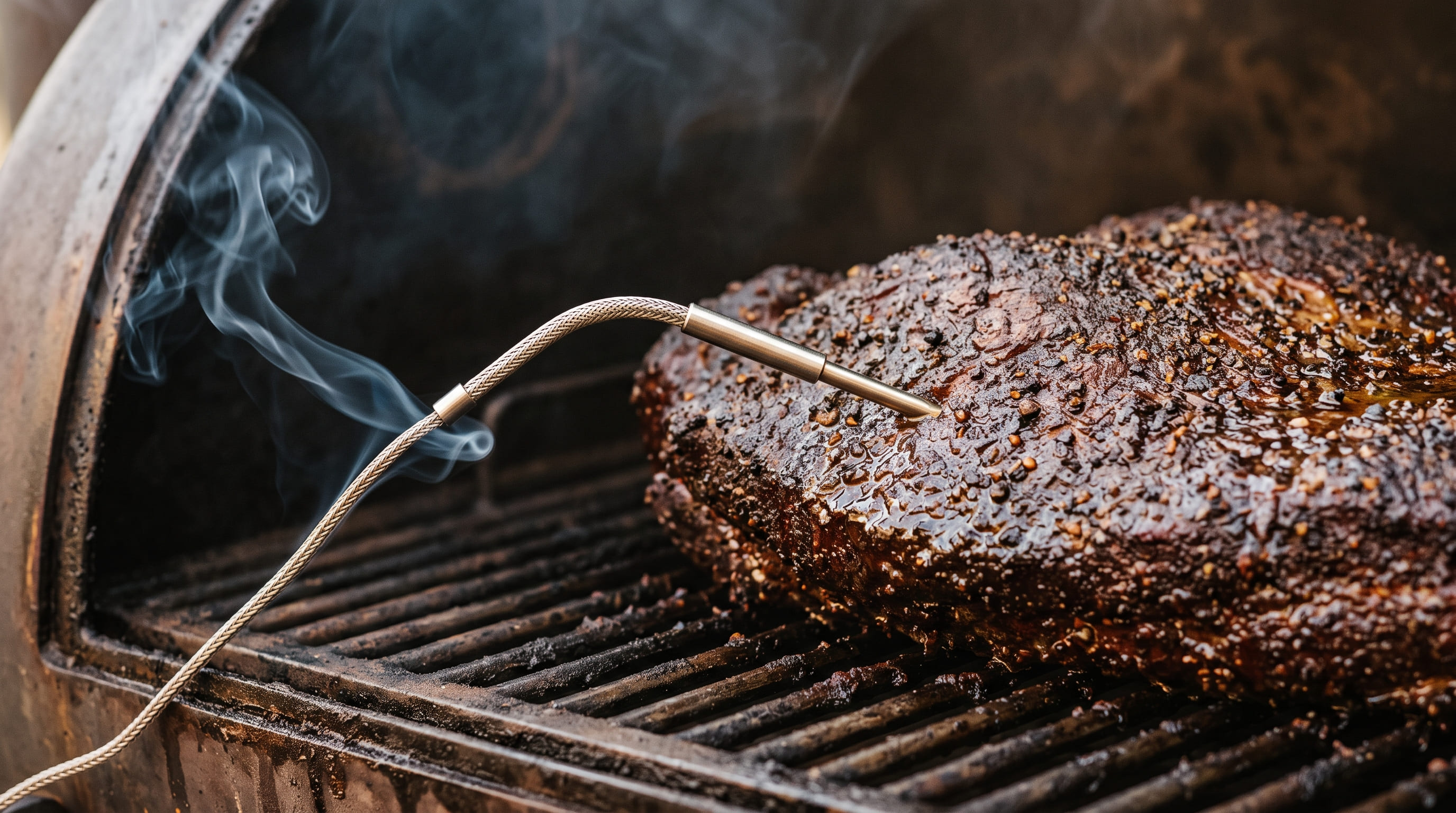
An instant-read thermometer gives a fast spot-check reading and is ideal for quick cuts like steaks and chicken breasts. A leave-in probe thermometer stays inserted throughout a long cook, which matters more for brisket, pork shoulder, and whole turkey, where you're tracking a slow rise over hours rather than checking once near the end — our tested Traeger Pro 34 integrates exactly this kind of leave-in probe directly into its Digital Pro Controller, so you're reading real internal meat temperature, not just ambient grill temperature, throughout a long smoke.
Built-In Smart Thermometers
Some grills now integrate thermometer probes directly into the cooking system. Our tested Ninja Foodi Smart XL 6-in-1 uses 5 built-in doneness presets that pulled meat at the exact target internal temperature across our testing, and the Masterbuilt 40-Inch Digital Electric Smoker's built-in meat probe held within 8–10°F of target — both remove a separate thermometer from the equation entirely, though a standalone probe is still worth having as an independent check. App-connected grills take this a step further: the Pit Boss 850 Navigator Series' LCD Digital Controller and the Masterbuilt Gravity Series 1050's free companion app both let you monitor probe temperature remotely from a phone, which we found genuinely useful for exactly the kind of long, multi-hour cooks covered in the smoked barbecue section above.
Where to Insert the Thermometer
Always probe the thickest part of the cut, away from bone, fat pockets, or the grill grate itself — any of those will give a false reading. For a whole chicken or turkey, that means the thickest part of the thigh, not the breast, since dark meat is typically the last part to reach a safe temperature.
Common Mistakes That Throw Off Your Reading
Touching Bone or the Grate
A thermometer tip resting against bone or the grill grate reads that surface's temperature, not the meat's — always confirm the tip is centered in the thickest muscle, not brushing against anything else.
Not Accounting for Carryover
Pulling exactly at your final target temperature, rather than 5°F below it, is one of the most common reasons a "perfectly cooked" steak or roast ends up slightly overdone once rested. See the carryover section above for the reasoning.
Judging Large Cuts by Time Alone
Brisket and pork shoulder cook times vary meaningfully based on ambient temperature, wind, and the individual cut's fat content and shape — "an hour per pound" is a rough starting estimate, not a substitute for actually checking internal temperature and probe feel.
Frequently Asked Questions
What temperature should I pull chicken off the grill?
Pull at 160°F and let it rest — carryover cooking brings it to the 165°F USDA safe minimum. Always check the thickest part of the meat, away from bone.
Why does pulled pork need to reach 195–205°F when 145°F is already safe?
145°F is the food-safety minimum for whole-muscle pork, but pulled pork and ribs need much higher internal temperatures to break down tough connective tissue into gelatin — that's a texture requirement, not a safety one. Without it, the meat would be safe to eat but too tough to shred.
Is it safe to eat medium-rare steak?
Yes. The USDA safe minimum for whole-muscle beef is 145°F with a 3-minute rest, but that's a food-safety floor — medium-rare (130–135°F final) is a widely preferred doneness that's below that number and is a personal choice, not a safety violation, for whole cuts specifically. Ground beef is a different case and needs the full 160°F minimum.
What internal temperature is safe for salmon?
The USDA safe minimum is 145°F, though many cooks and restaurants pull salmon around 120–130°F for a more translucent, medium-rare-style center, which is an informed personal preference rather than a food-safety recommendation.
Why did my steak overcook even though I pulled it at the right temperature?
You likely pulled it at your final target instead of 5°F below it. Carryover cooking continues raising the internal temperature for several minutes after the steak leaves the grill, so pulling at the exact final number usually results in slight overcooking by the time you cut into it.
Do I need a different thermometer for grilling versus smoking?
Not necessarily, but an instant-read thermometer is best for quick spot-checks on steaks and chicken, while a leave-in probe thermometer is more practical for long smokes like brisket or pork shoulder, where you're tracking a slow multi-hour rise rather than checking once near the end.
Final Takeaway
Internal temperature is the single most reliable doneness signal across every type of meat, but the right number depends heavily on what you're cooking — a texture target for brisket looks nothing like a safety minimum for chicken, and ground meat always needs a higher number than the equivalent whole cut. Bookmark the master chart at the top of this guide, always probe the thickest part away from bone, and remember to pull most cuts under 2 lbs about 5°F below your final target to account for carryover cooking.
For the full technique behind getting a great sear to go with the right internal temperature, see our how to grill the perfect steak guide. New to smoking large cuts like brisket or pork shoulder? Our best smokers for beginners guide covers equipment, and our charcoal grill temperature control guide covers holding a stable smoking temperature for hours.
Ready to shop? Browse our top-rated grill picks to find your perfect match.