Pellet Grill vs Traditional Smoker 2026
Pellet grill vs traditional smoker compared: flavor, hands-on effort, learning curve, and price, tested head to head to help you pick the right one.
The Real Question Isn't Which Is "Better"
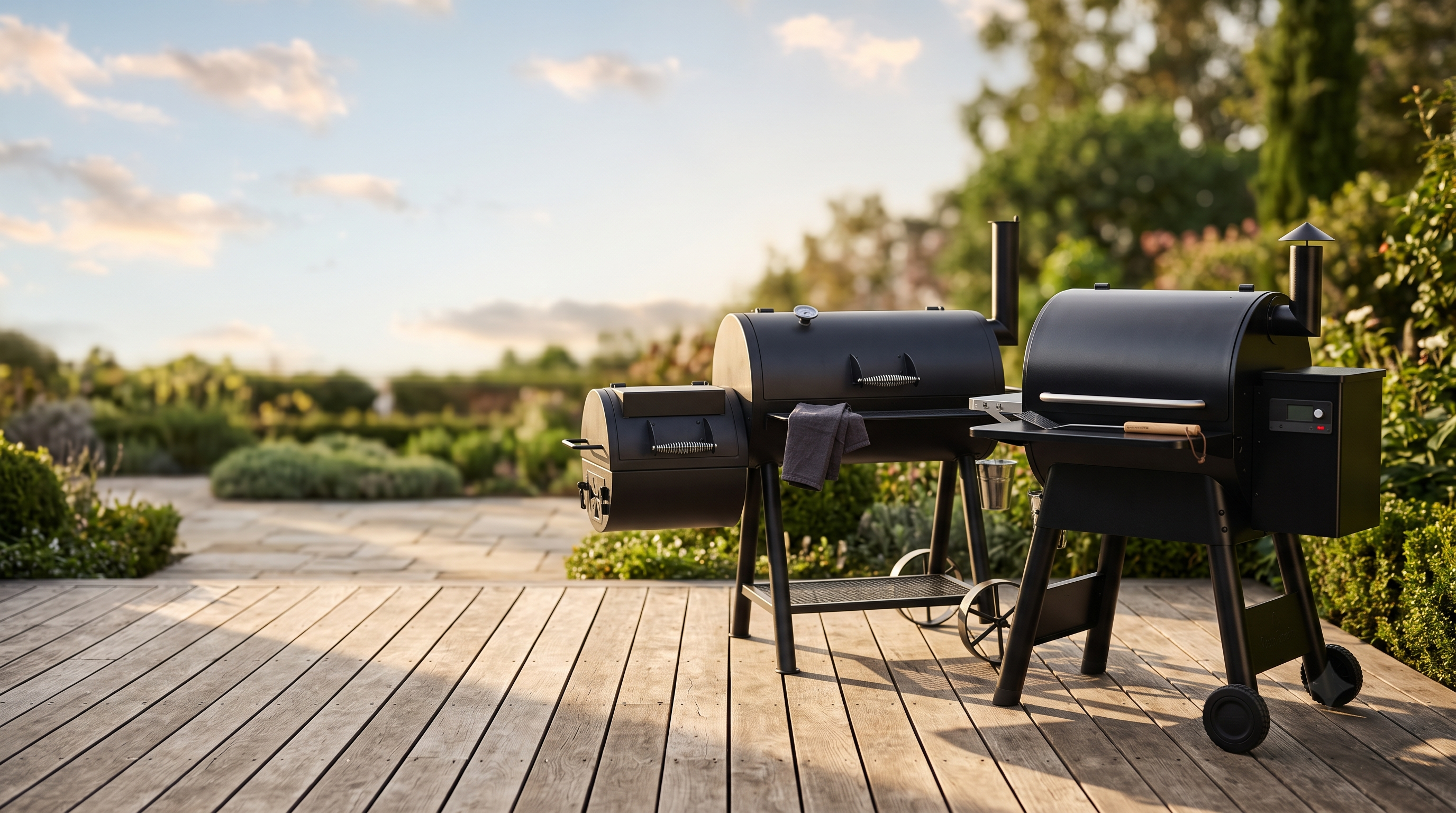
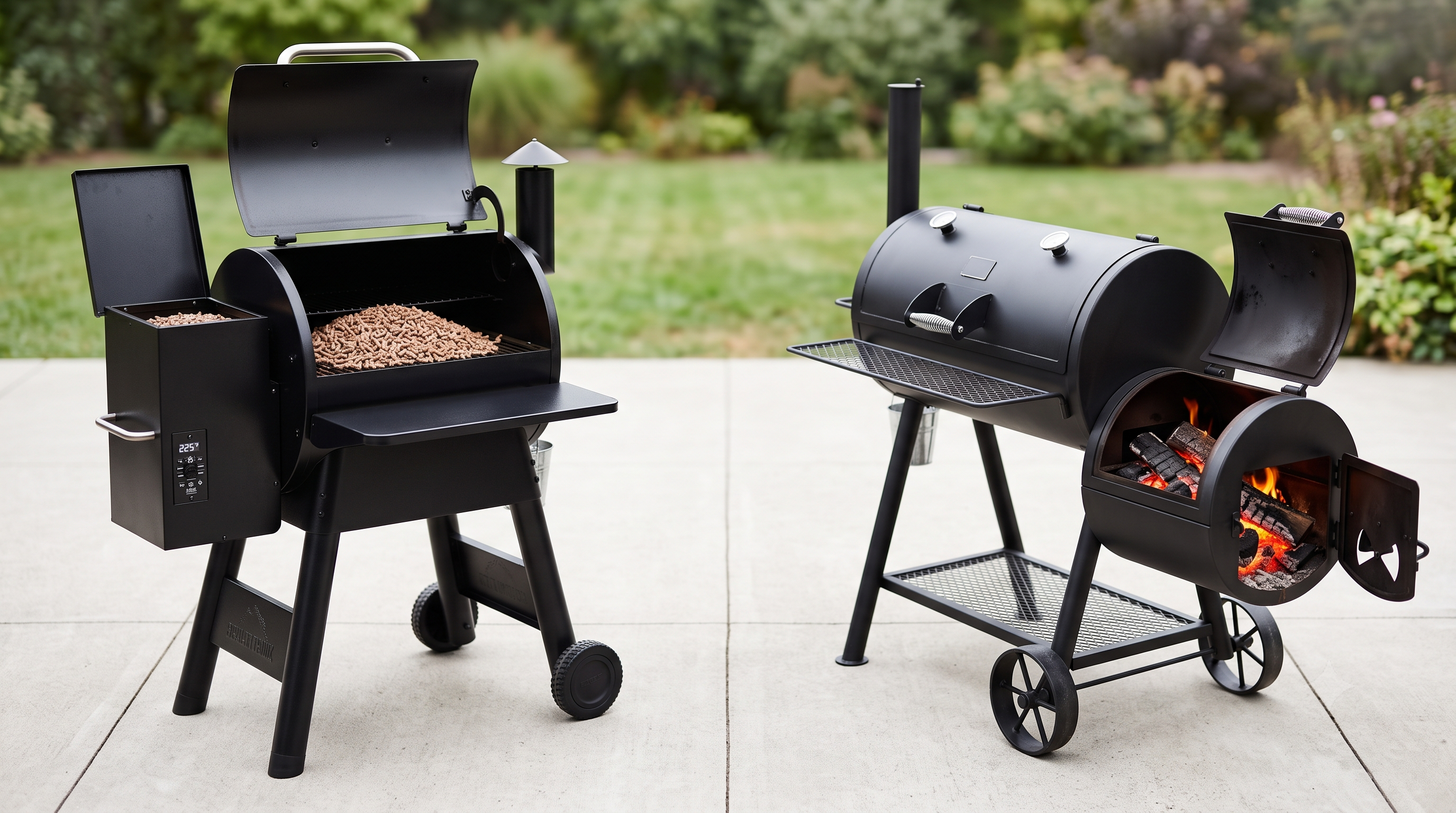
Pellet grills and traditional smokers — offset, charcoal, and stick burners — both produce genuinely smoked food, but they get there through almost opposite approaches: one automates the fire, the other demands you master it. The debate over which is "real" smoking misses the more useful question, which is which tradeoff between convenience and hands-on control actually fits how you want to spend your cook time. This guide compares them head to head on flavor, effort, learning curve, and price using our own tested models.
Quick Answer: Which Should You Buy?
| If You Want... | Choose | Our Pick | Price |
|---|---|---|---|
| Set-and-forget consistency, minimal babysitting | Pellet grill | Traeger Pro 34 | $559–$579 |
| WiFi monitoring on top of automation | Pellet grill | Traeger Woodridge | $869–$899 |
| The most authentic wood-fired flavor | Traditional (offset) | Royal Gourmet CC1830S | $143–$153 |
| Longest unattended charcoal run time | Traditional (vertical charcoal) | Weber Smokey Mountain 18-Inch | $409–$429 |
| Budget entry into traditional smoking | Traditional (kettle) | Weber Original Kettle 22-Inch | $147–$157 |
If you want to load a hopper, set a target temperature, and walk away for hours with genuinely close results — pellet wins. If you want the most intense, authentic wood-fired flavor and don't mind tending a fire every 45–60 minutes, traditional wins. Most competition pitmasters still run traditional stick burners for flavor; most home cooks who want consistent results without a steep learning curve land on pellet.
Pellet Grill vs Traditional Smoker: Head-to-Head Comparison
| Feature | Pellet Grill | Traditional Smoker (Offset/Charcoal) |
|---|---|---|
| Fire Management | Fully automated via auger and digital controller | Fully manual — you manage airflow and fuel |
| Temperature Consistency | Tight, typically ±15–18°F of target | Wider, depends heavily on operator skill |
| Smoke Flavor Intensity | Moderate, consistent throughout the cook | Stronger, more variable, considered more authentic |
| Learning Curve | Low — most of the skill is pre-built into the controller | Steep — airflow, fuel timing, and fire behavior take real practice |
| Unattended Run Time | Hours, limited mainly by hopper capacity | Requires fuel additions every 45–60 minutes on most designs |
| Startup Time | 10–15 minutes for auger priming | 15–30 minutes to establish a stable fire |
| Power Requirement | Needs electricity for auger and controller | No electricity required |
| Price Range Tested | $559–$899 | $143–$429 |
Flavor: The Biggest Real Difference
Why Traditional Smokers Edge Ahead on Intensity
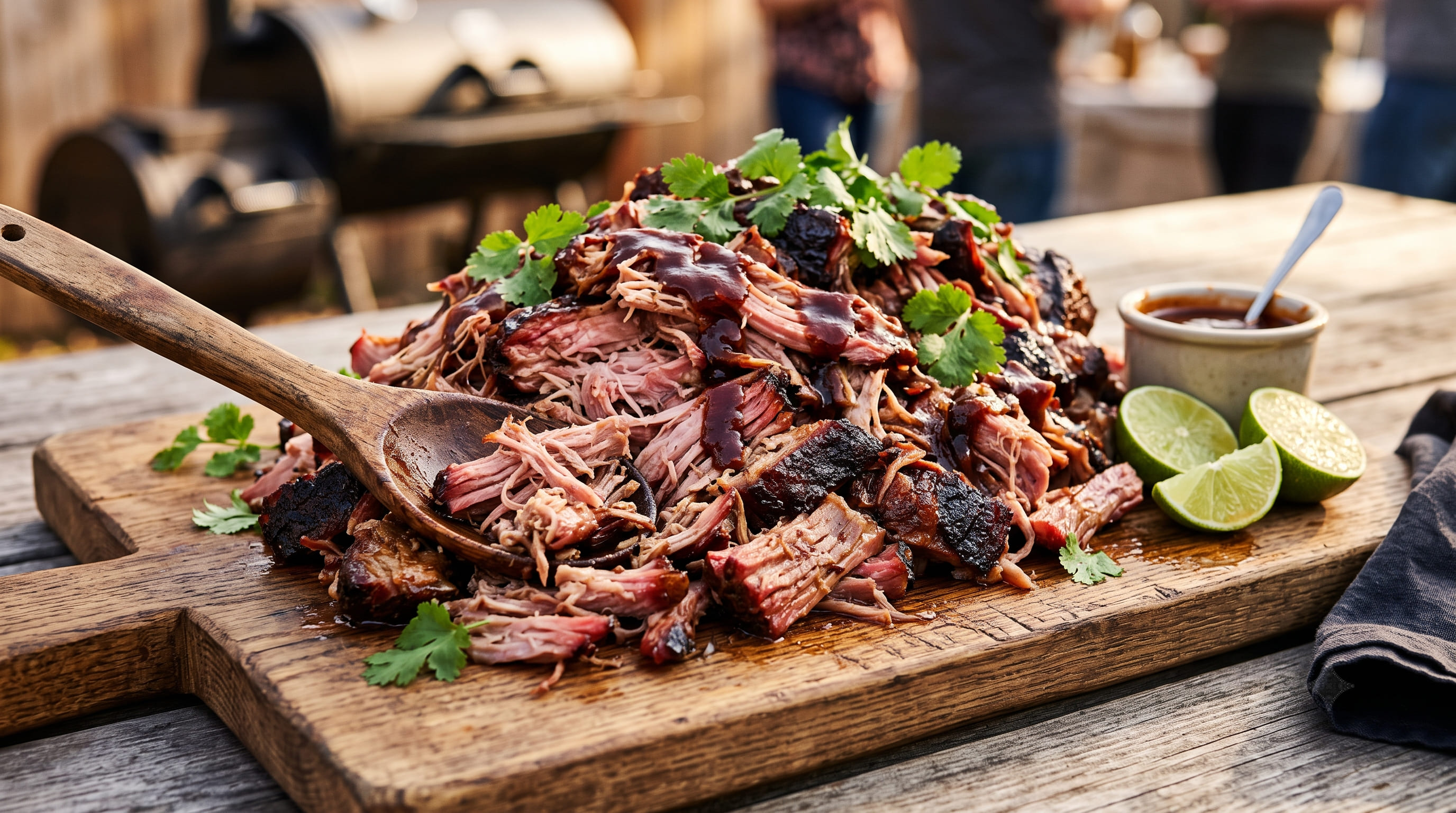
An active wood or charcoal fire produces a more complex, intense smoke profile than a pellet auger feeding a controlled burn, largely because live combustion generates more variation in smoke composition over the course of a cook. Our tests on the Royal Gourmet CC1830S offset combo produced a noticeably deeper smoke ring and more pronounced bark on pork shoulder compared to pellet-cooked equivalents, even at similar target temperatures and cook times.
Why Pellet Flavor Is Still Genuinely Good
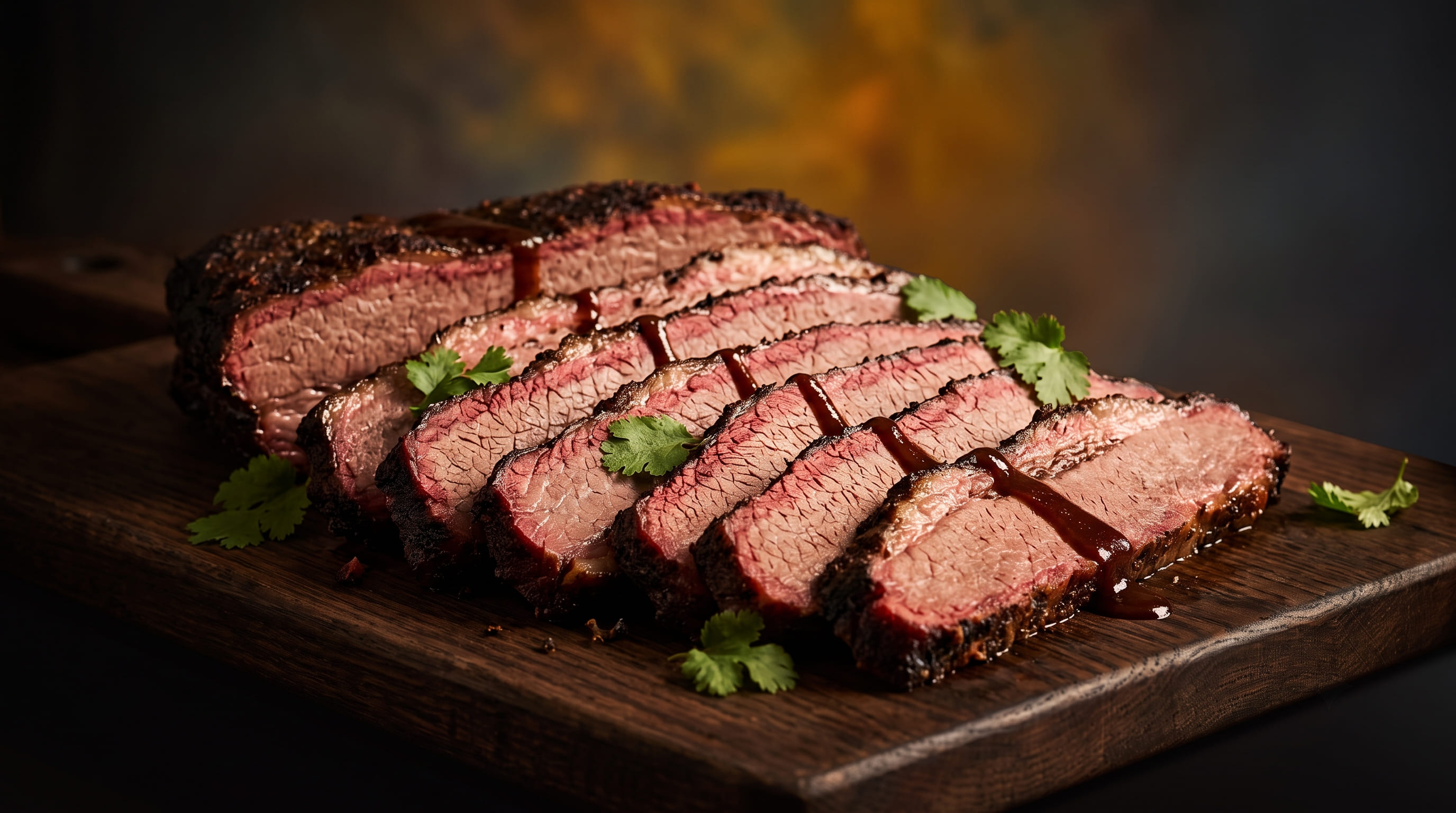
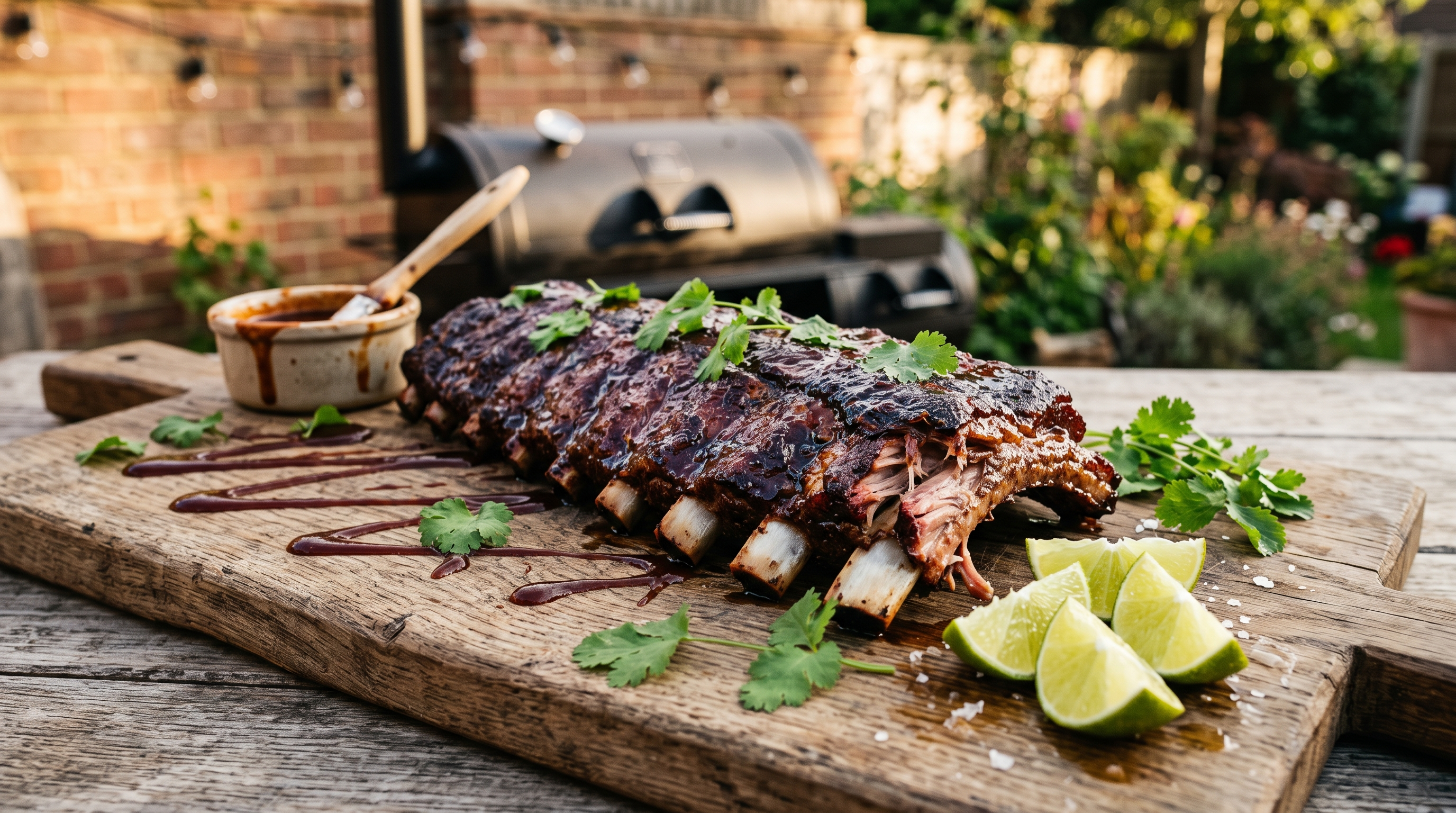
Pellet grills aren't a flavor compromise so much as a different, milder point on the same spectrum — our tested Traeger Pro 34 still produced a visible, consistent smoke ring on brisket and ribs without any additives, something a gas grill can't replicate at all. For most home cooks, the flavor difference between pellet and traditional is noticeable but not dramatic enough to outweigh the convenience gap, especially once you factor in that inconsistent fire management on a traditional smoker can just as easily under-smoke a cook as over-deliver on flavor.
Effort and Learning Curve
Pellet: Minimal Hands-On Skill Required
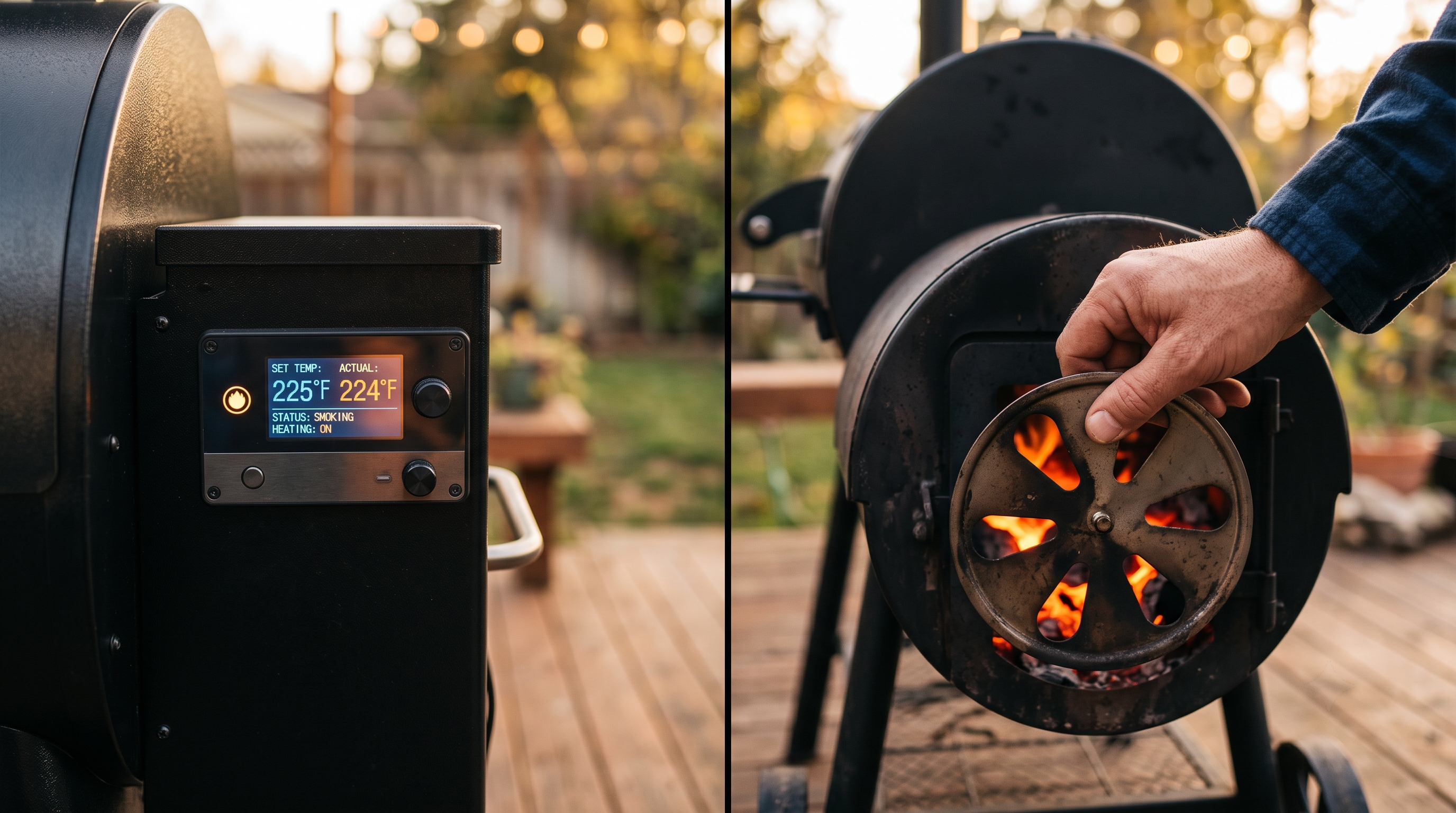
The entire appeal of a pellet grill is that most of the skill is built into the controller. Set a target temperature, and the auger and fan handle the rest — our testing on the Traeger Pro 34 held within 15–18°F of target across an unattended 11-hour overnight brisket cook, a result that would take a beginner years of fire-management practice to reliably replicate on a traditional smoker.
Traditional: A Real Skill to Develop
Offset and charcoal smoking require learning to read fire behavior, manage vent airflow, and time fuel additions — typically every 45–60 minutes on a live fire, according to our testing on the Royal Gourmet CC1830S. This is a genuinely rewarding skill for cooks who enjoy the process itself, but it's also the single biggest reason beginners struggle with inconsistent results on their first several cooks. See our charcoal grill temperature control guide for the fundamentals.
Best for Hands-Off Consistency: Traeger Pro 34
The tightest, most beginner-forgiving temperature consistency in this comparison — the pick if you'd rather focus on meat prep than fire management.
Best for Learning Traditional Technique: Royal Gourmet CC1830S
The most affordable entry point into real fire management, combining an offset smoker chamber with a full charcoal grill for under $150.
Unattended Run Time
Pellet grills generally offer longer genuinely unattended run time, limited mainly by hopper capacity — an 18–20 lb hopper typically covers 18–20 hours of low-and-slow cooking without a refill. Traditional smokers require periodic attention regardless of design: our tested Weber Smokey Mountain 18-Inch held a steady 225°F for over 9 hours using the Minion Method, the longest unattended stretch we've measured on any charcoal unit, but that still required careful setup beforehand that a pellet grill's auger handles automatically throughout the entire cook.
Price and Power Requirements
Traditional smokers generally cost less upfront in our tested lineup, from $143–$153 for the Royal Gourmet CC1830S combo up to $409–$429 for the dedicated Weber Smokey Mountain 18-Inch. Pellet grills start higher, at $559–$579 for the Traeger Pro 34, since the auger, hopper, and digital controller add real manufacturing cost that a simpler charcoal or offset design doesn't carry.
Pellet grills also require a nearby power outlet to run the auger and controller, which matters if you're smoking somewhere without easy electrical access — a genuine limitation traditional charcoal and offset smokers don't share.
Who Should Buy a Pellet Grill
- You want set-and-forget consistency on long cooks without babysitting a fire — the Traeger Pro 34 held within 15–18°F of target across an 11-hour unattended brisket in our testing
- You're relatively new to smoking and want to focus on learning meat prep and timing rather than fire management
- You want WiFi monitoring so you can check your cook remotely — the Traeger Woodridge adds this
- You have reliable access to electrical power near where you'll be cooking
Who Should Buy a Traditional Smoker
- You want the most authentic, intense wood-fired flavor — our testing found traditional offset and charcoal setups consistently produced a deeper smoke ring and bark than pellet equivalents
- You enjoy the hands-on process of fire management as part of the cooking experience, not just a means to an end
- You want the lowest-cost entry point into real smoking — the Royal Gourmet CC1830S starts under $150
- You want to cook somewhere without electrical access, since traditional smokers need no power source
Maintenance Differences Worth Knowing
Pellet Grills
Pellet grills need periodic firepot and ash cleaning — our testing across the Traeger Pro 34 recommends vacuuming out the firepot and emptying the ash bucket every 3–4 cooks to maintain consistent airflow and accurate temperature readings. Pellets themselves also need dry storage, since moisture exposure causes swelling that can jam the auger, a real failure point across pellet grill ownership generally.
Traditional Smokers
Charcoal and offset smokers require ash management after nearly every cook, plus periodic checks on vent dampers and firebox seals for wear. There's no auger or electronic controller to maintain, which is a genuine long-term simplicity advantage for traditional designs — fewer mechanical components generally means fewer things that can fail over years of regular use. See our full maintenance guide for the complete routine across both categories.
Frequently Asked Questions
Is a pellet grill considered a real smoker?
Yes. Pellet grills burn actual wood pellets and produce genuine smoke flavor and a visible smoke ring — our testing confirmed this on both the Traeger Pro 34 and Traeger Woodridge. The debate over "authenticity" is really about flavor intensity and the hands-on process, not whether real smoking is happening.
Does a traditional smoker really taste better than a pellet grill?
Our testing found traditional offset and charcoal smokers produced a somewhat more intense smoke flavor and deeper bark than pellet equivalents at similar cook times, but the difference is noticeable rather than dramatic — pellet-smoked food is still genuinely well-flavored, not a compromise.
Which is easier for a beginner: pellet grill or traditional smoker?
Pellet grill, by a wide margin. The digital controller automates fire management and temperature control — the two hardest skills to learn on a traditional smoker — letting beginners focus on meat selection and timing instead.
Do pellet grills need electricity?
Yes. The auger that feeds pellets and the digital controller both require a nearby power outlet, unlike traditional charcoal or offset smokers, which need no electrical connection at all.
Which is cheaper: a pellet grill or a traditional smoker?
Traditional smokers are generally cheaper upfront in our tested lineup — the Royal Gourmet CC1830S starts around $150, versus $559+ for an entry pellet smoker like the Traeger Pro 34, since the auger and digital controller add real manufacturing cost.
Can I get a smoke ring on a pellet grill?
Yes. Our testing on the Traeger Pro 34 and Traeger Woodridge showed a visible, consistent pink smoke ring on brisket and ribs, comparable in appearance though generally slightly less pronounced than what we measured on traditional offset and charcoal smokers.
Final Takeaway
Pellet grills and traditional smokers both produce real, genuinely smoked food — the decision comes down to whether you'd rather automate the fire management or master it yourself. If consistency and minimal hands-on effort matter most, the Traeger Pro 34 is the strongest pick in this comparison. If you want the deepest, most authentic wood-fired flavor and don't mind tending a fire, the Royal Gourmet CC1830S or Weber Smokey Mountain 18-Inch will get you there for genuinely less money than a comparable pellet setup.
For more on getting started, see our or by category.
Ready to shop? Browse our top-rated grill picks to find your perfect match.