What does your building allow?
Most U.S. jurisdictions adopt the International Fire Code or NFPA 1. Both bar charcoal and other open-flame cooking devices on combustible balconies, or within 10 feet of combustible construction, in apartment and condo buildings.
The usual exceptions are one- and two-family homes, buildings protected by fire sprinklers, and LP-gas grills that use a cylinder no bigger than a nominal 1 lb. Natural gas grills count as open flame too. Electric grills are generally allowed.
| Your situation | Usually allowed | Best fit here |
|---|
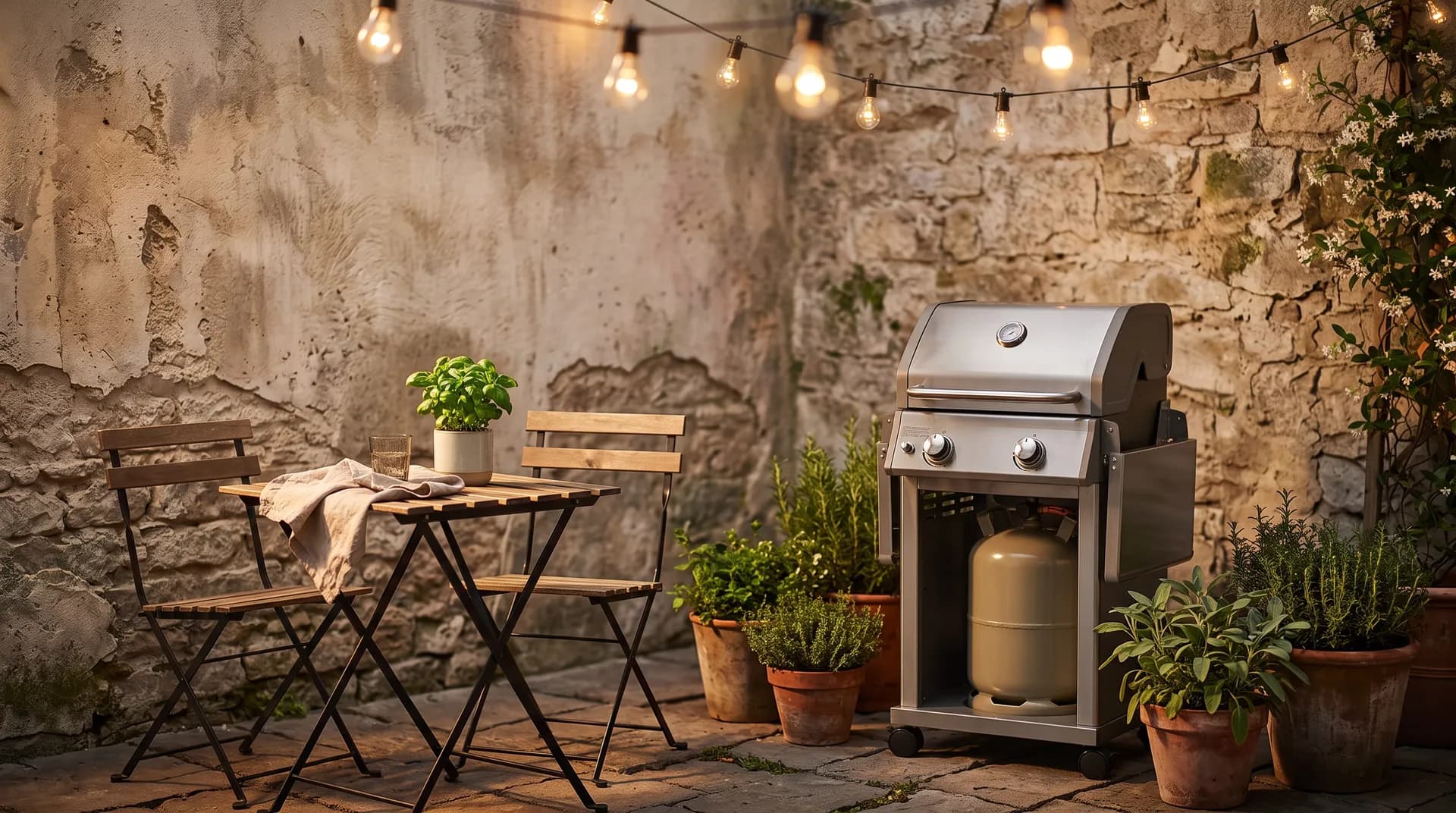
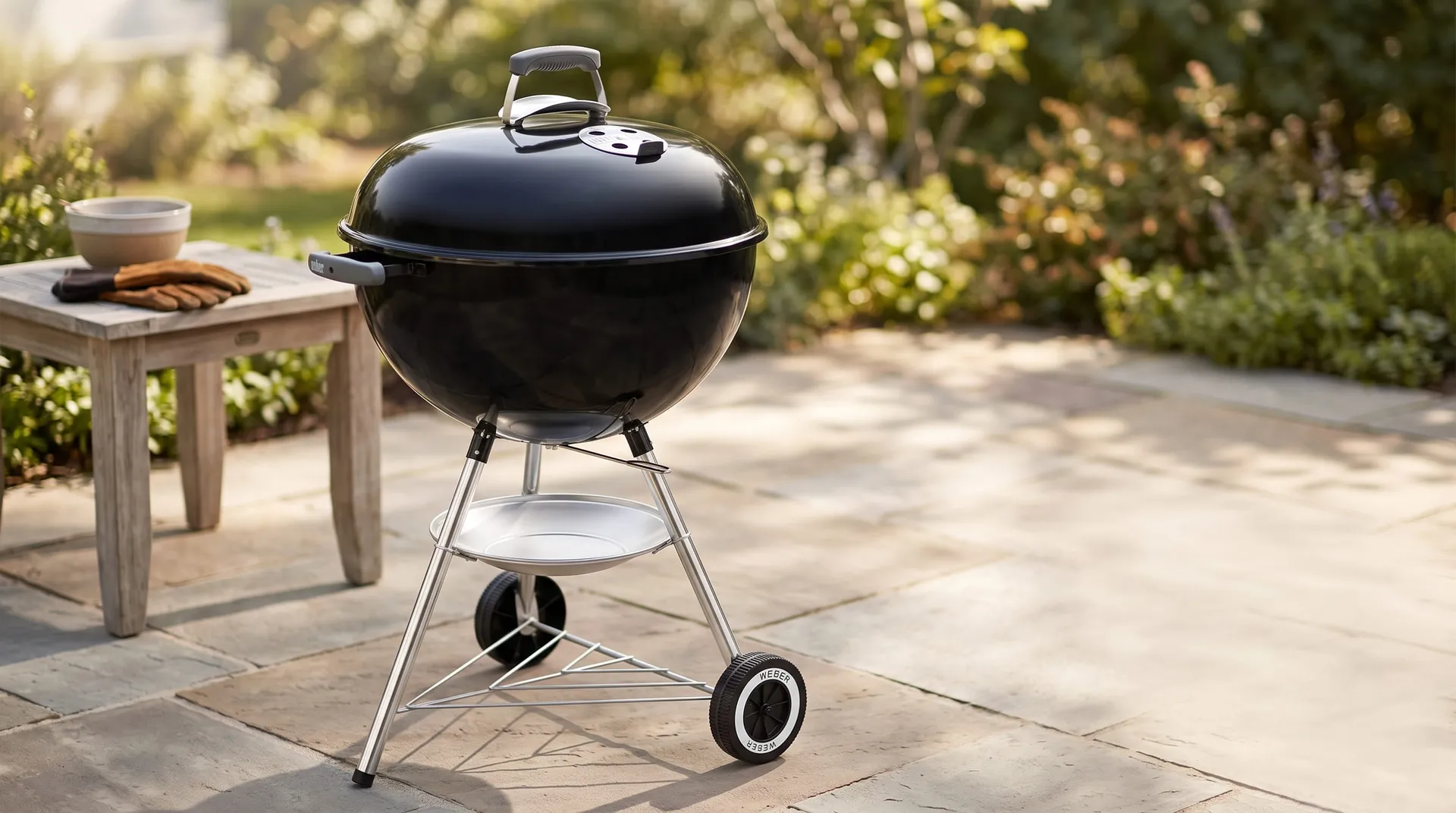
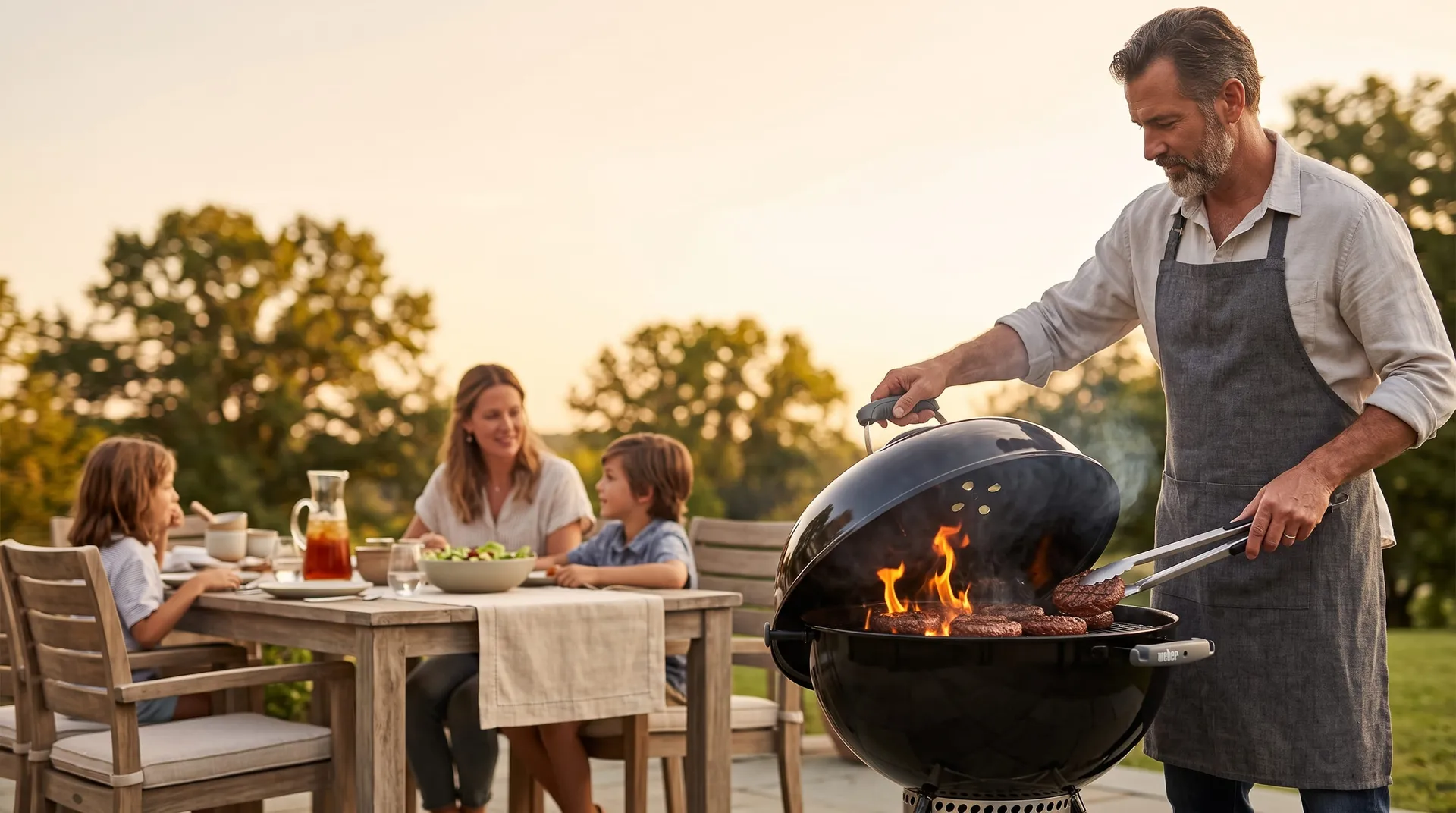
| Detached house or townhome patio | Gas, charcoal, electric | Spirit E-325 or Kettle |
| Ground-level condo patio | Depends on the HOA | Check the rules, then gas or electric |
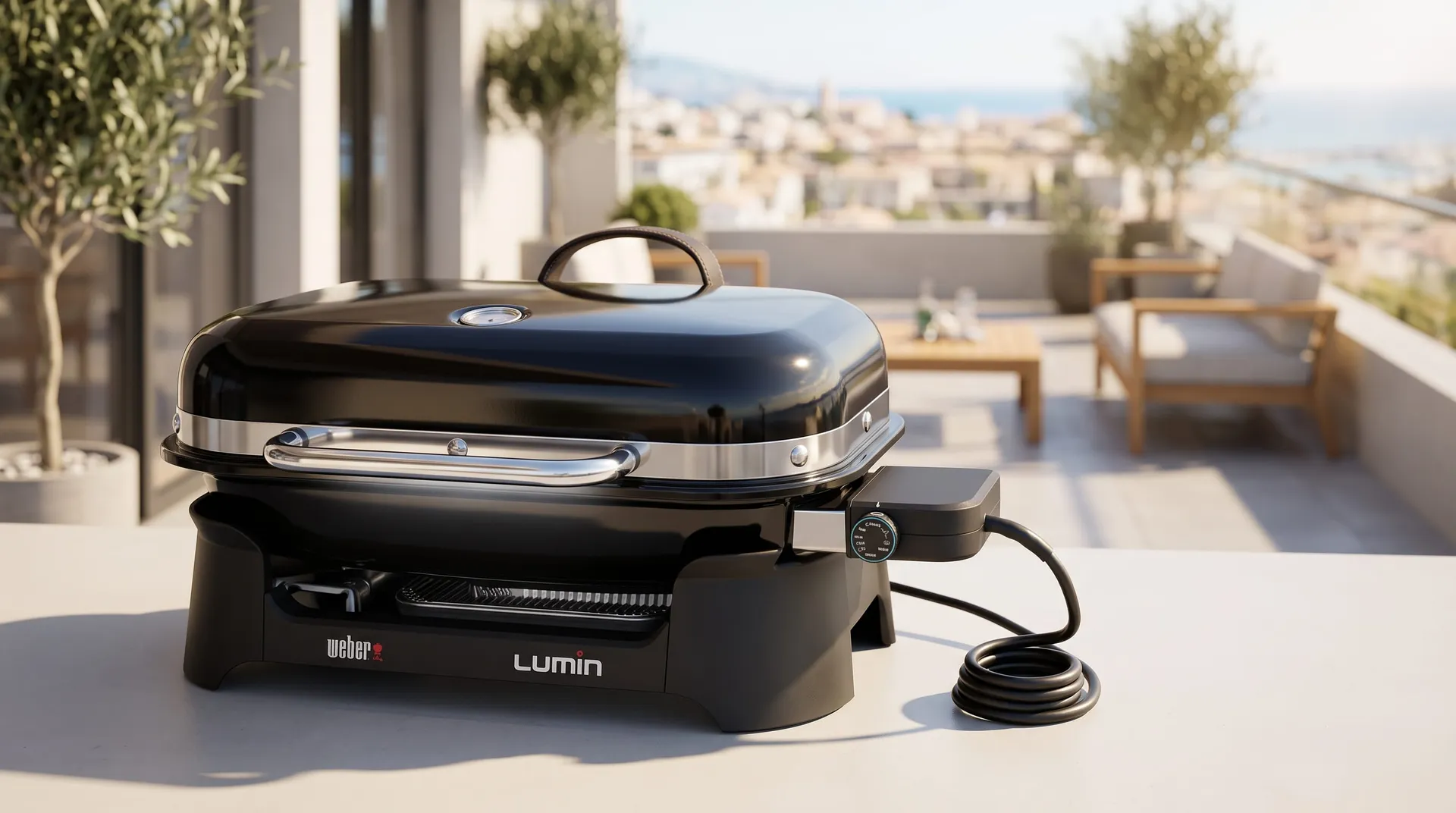
| Combustible balcony, apartment building | Electric, maybe 1 lb propane | Weber Lumin |
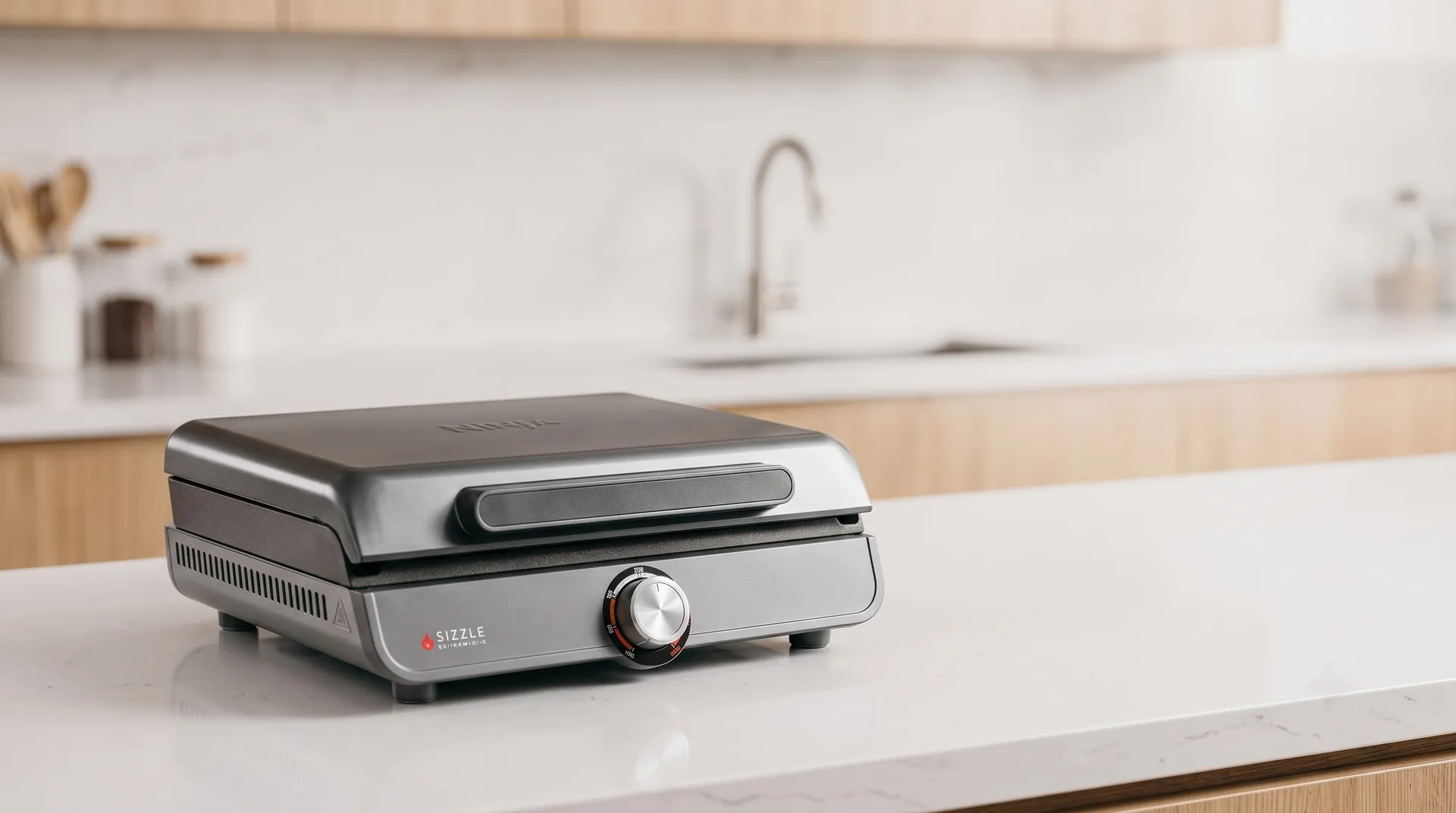
| No outdoor space | Indoor electric only | Ninja Sizzle |
Leases and HOA rules can be stricter than the code, so get the answer in writing. If your lease is vague, your local fire marshal's office can tell you which code edition your city enforces.
How much space does a grill really need?
Measure the floor, then add room for the lid to swing open, for the side tables to go up and for you to stand and turn with a loaded tray. A grill that fits with its lid shut can still be too tight to cook on.
 Measure with the lid open: the hood swings back several inches past the cart.
Follow the clearance to combustible walls and railings printed in your grill's manual, and pull the grill out to that distance every time you cook. The Cuisinart manual, for example, asks for at least 36 inches at the back and sides. Keep grills out from under eaves, awnings and covered porches unless the manual allows it; heat and grease smoke damage ceilings, and covered spaces trap carbon monoxide.
On a wood or composite deck, a grill mat catches grease drips and stray embers. Check your decking maker's guidance too, since some composite boards are more heat sensitive than wood.
How big a grill do you need?
For one or two people, about 150–200 sq in of cooking area is plenty. Two to four people need roughly 200–300 sq in, and four to six need 300–400 sq in. Lean toward the top of each range if you like leaving one side of the grate empty as a cool zone.
On a small grill, two-zone cooking matters more than raw area. Two independent burners, or coals banked to one side, let you sear and then finish thick food without burning it. Our guide to direct vs indirect grilling shows both setups.
 Sear over the coals, then slide food to the empty side: two zones make a small grate work harder.
Size for your usual crowd, not the biggest party of the year. A grill bought for one holiday cookout dominates the patio the other fifty weekends, and batch cooking handles the occasional crowd.
How do you keep smoke away from the neighbors?
Charcoal smokes most while it lights, so light the chimney at the point farthest from shared walls and windows, then move the coals into the grill. With gas, most smoke comes from fat dripping onto hot parts, not the fuel.
A clean grease tray does more for the neighbors than any fuel choice. It's also a safety issue: NFPA data names failure to clean as the leading contributing factor in home grill fires.
Wind matters more on balconies than at ground level. Upper floors catch stronger, gustier wind that pulls heat from a thin lid, slams lids shut and carries embers. Place the grill where a wall breaks the prevailing wind, never closer than your manual's clearance, and downwind of where people sit.
Where do you store the grill and the fuel?
Tabletop grills lift away; cart grills don't. If the patio doubles as a seating area, folding side tables or a grill you can lift into a closet buy back a lot of space.
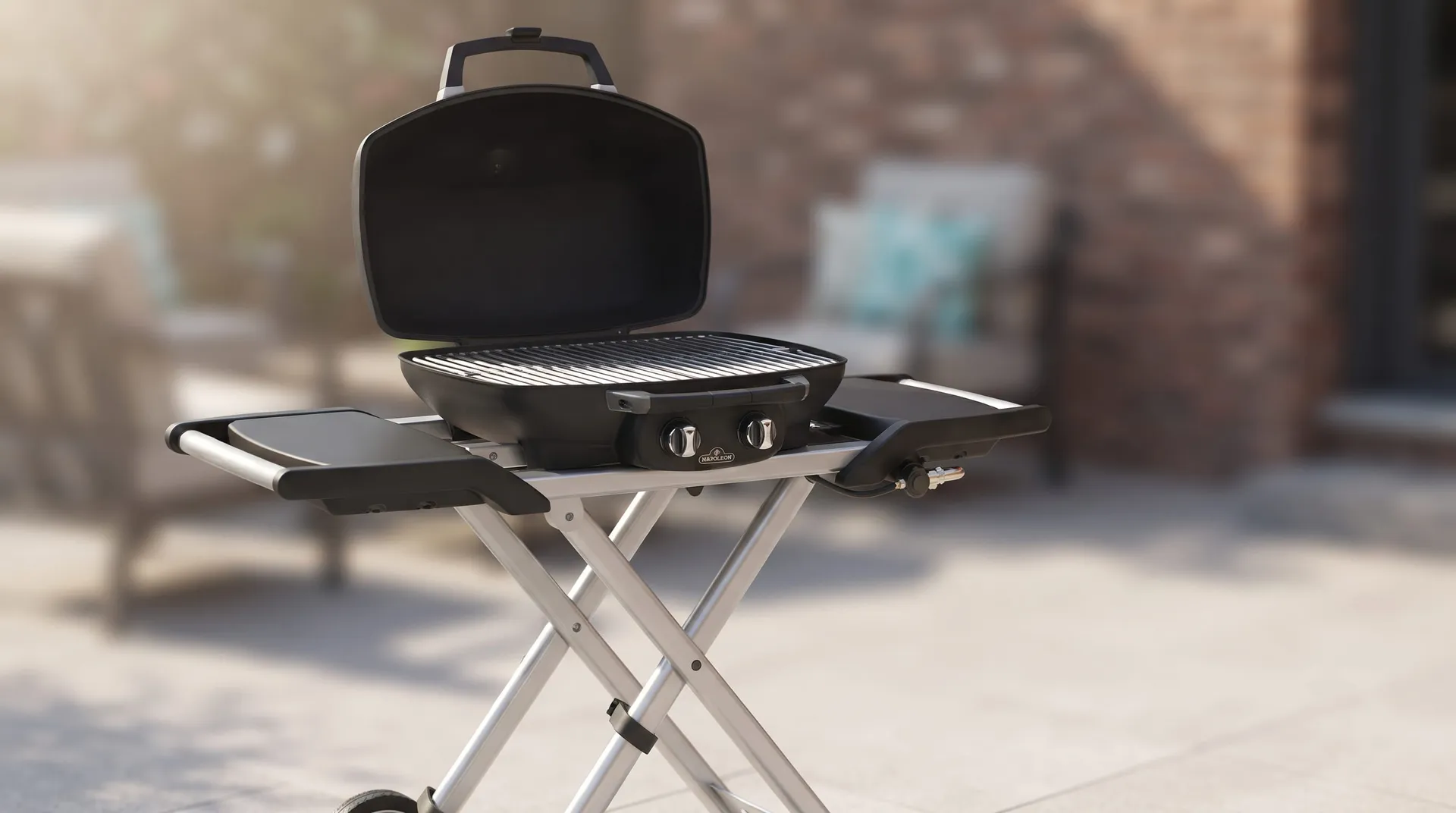
 All three of these fit on a closet shelf, which a cart grill never will.
Propane tanks must be stored outdoors and upright, never in a home, garage or closet. Electric grills need an outdoor GFCI-protected outlet close enough to reach; many makers advise against extension cords, so check the manual before you count on one.
Charcoal needs a sealed bin, since briquettes that soak up humidity are hard to light. Keep a lidded metal can for ash as well, and let ash cool completely, which can take a day, before it goes in.
A fitted cover is the cheapest upgrade for any outdoor grill on a small patio. It keeps rain, pollen and bird droppings off a grill that sits a few feet from your chairs, and it slows rust on coastal patios. For cold months, our guide on how to winterize your grill covers tanks, ash and covers.
What will it cost to own?
The sticker price is only part of it. Gas grills need tank refills and, over time, replacement burners, igniters and grates. Charcoal grills have few parts to fail, but you'll keep buying fuel and fire starters.
Electric grills have the lowest fuel cost on most utility rates, but their plates or grates are the wear item. Nonstick indoor plates last longer if you avoid metal tools and harsh scrubbers.
Parts support decides how long a grill lasts. A grill whose maker sells burners, grates and igniters by model number can be kept running for years; a no-name grill often can't, which makes it cheaper only on day one.
How do you keep a small-patio grill clean and safe?
On a small patio, the grill is never far from your chairs. Brush the grates while they're warm, empty the grease tray or ash catcher on a set schedule and wipe the lid before guests arrive. Our grill cleaning and maintenance guide lays out what to do after each cook and a few times a season.
- Never grill inside a garage, enclosed porch or tent; charcoal and gas both make carbon monoxide.
- Keep a clear zone around the grill for kids and pets.
- Check propane connections for leaks after every tank swap, following your manual.
- Keep a fire extinguisher or a bucket of sand within reach, and never use water on a grease fire.
- Turn off the propane at the tank, not just the knobs, when you finish.
Which mistakes cost small-patio owners the most?
- Measuring the grill, not the cooking zone: the lid hits the wall or railing and there's no room to stand. Measure with the lid open and the tables up.
- Parking it against vinyl siding: radiant heat warps siding and grease smoke stains it. Pull the grill out to the manual's clearance before you light it.
- Buying a wide barrel smoker or a big pellet grill: both cook well but eat the patio and send smoke over the fence for hours.
- Buying the cheapest cart grill: thin fireboxes and burners rust out fast and parts are hard to find.