Skip to contentSkip to content
Weber Spirit E-325 tested by SmokyHQ

Gas GrillsHands-on review

Weber Spirit E-325 Review 2026: The Sear Zone Earns Its Keep

A compact three-burner gas grill whose Sear Zone ran 90 to 110°F hotter and crusted ribeyes in under 3 minutes a side, with ignition that never missed. The best gas grill for households of one to four.

By Tom BrickerLast updated:12 min read

Excellent

Ranked #4 · 8 gas grills tested

Best for: Households of 1–4 who grill steaks, burgers and chicken often

  • Searing9.2
  • Heat Evenness8.8
  • Ignition and Reliability9.2
  • Build Quality8.5
  • Assembly and Cleanup8.8
  • Value for Money9.0

Hands-on · 4 weeksHow we score

4.5

Our verdictExcellent

A compact 3-burner propane grill whose boosted Sear Zone actually crusts steaks. Best for households of 1–4.

Gas Grill · Propane · hands-on tested

Brand
Weber
Cooking area
450 sq in
Fuel
Propane
Tested for
4 weeks

What we liked

  • Sear Zone ran 90–110°F hotter than the standard burners and crusted ribeyes in under 3 minutes per side
  • Snap-Jet ignition lit every burner first press in all eight sessions, cold and windy days included
  • Main grate stayed within about 15°F edge to edge

What could be better

  • 360 sq in of primary grate gets tight past four people
  • The Sear Zone covers only part of the grate, so you sear 2–3 steaks at a time
  • Folding side tables flexed under a full sheet pan

Buy it if

Households of 1–4 who grill steaks, burgers and chicken often

Skip it if

Regular hosts of 6+ or anyone who wants a side burner

The Weber Spirit E-325 is the gas grill to buy if you cook for one to four people and want real steak crust without paying Genesis prices. In our Weber Spirit E-325 review it scored 4.5 out of 5: the boosted Sear Zone ran 90–110°F hotter than the standard burners and crusted ribeyes in under 3 minutes a side, and every burner lit first press in all eight sessions. Skip it if you host six or more regularly or want a side burner.

The trade-off is space: the 360 sq in main grate gets tight past four people. For bigger options, start at our gas grills hub.

Man grilling skewers on a black Weber Spirit E-325 three-burner gas grill while friends chat on a patioThe Spirit's compact footprint fits a typical patio and feeds a small group in one batch.

How We Tested

Four weeks, eight sessions, one tester, the same routine we run on every gas grill.

Tom Bricker cooked on the Spirit E-325 for four weeks on a concrete patio, across eight sessions.

  • Food: burgers, four ribeyes on the Sear Zone, an indirect whole chicken, and shrimp and vegetable skewers.
  • Weather: from a 41°F morning to 15 mph gusts.
  • Measurements: grate temperatures at five positions, every ignition attempt, propane use and assembly time.
  • Specs: checked against Weber retailer listings.

Man standing beside a closed black three-burner Weber Spirit gas grill on a modern patioWe mapped grate temperature at five positions with the lid closed between readings.

Each grill gets a score out of 10 in six categories: searing, heat evenness, ignition and reliability, build quality, assembly and cleanup, and value for money. Those roll up into the overall score out of 5 in the Final Score.

A few weeks can't show long-term rust, igniter life or how parts hold up after several seasons. We list the parts that wear first under durability and update this review if problems show up.
Test log · category ranking

How it ranks against rivals

#2 of 8

gas grills rank

4.5/5

avg 4.4 in category

0 of 2

tests above avg

Key Specs

SpecWeber Spirit E-325What it means for you
Burners3 main burners, 2 with Boost knobs for the Sear ZoneBoost adds power under one section for searing
Output31,000 BTU/hrPlenty for a grate this size
Cooking area360 sq in primary + 90 sq in warming rackThe rack holds buns and finished food
GratesPorcelain-enameled cast ironHold heat for grill marks; oil to avoid rust
IgnitionSnap-Jet, per burnerLight only the burners you need, one-handed
CookboxCast aluminumWon't rust through
StorageEnclosed cabinet, 2 folding side tablesTidy on a small patio
ThermometerBuilt-in lid gauge (AJ Madison)Reads dome air, not food
Smart featuresNone listedAdd a wireless probe for app alerts
WeightAbout 98–103 lb (sources vary)Rolls easily; one person can move it
Fuel20 lb propane tank, sold separatelyBuy or exchange one before the first cook
Warranty10-year limitedCheck Weber's terms for part-by-part coverage
Check Current PricePrices change often, so check the retailer for today’s price.

Does the Spirit E-325 Sear Zone Really Sear a Steak?

Yes: four ribeyes in a row each built a deep, even crust in under 3 minutes a side.

The Sear Zone is the reason to buy this grill, and it works. Weber's two red Boost knobs push extra gas through the burners under that section (AJ Madison's listing says 40% more power), and the cast-iron grates store the heat. In our testing that section ran 90–110°F hotter than the standard burners.

Thick ribeye with grill marks searing on cast-iron grates beside the Spirit Sear Zone labelCast iron over the boosted burners built this crust in under 3 minutes a side.

You get a steakhouse-style crust without a cast-iron pan or a separate sear burner. The limit is size: the Sear Zone covers only part of the grate, so you sear 2–3 steaks at a time and slide finished ones to the cooler side.

How to use it:

  • Boost only for searing. It wastes gas on chicken or vegetables.
  • Thick steaks: cook indirect first, then finish over the Sear Zone. Our reverse sear method guide has the temperatures.
  • Thin steaks: straight onto the Sear Zone; see how to grill the perfect steak.

Watch out: fatty cuts flare over boosted burners. Trim excess fat and keep the lid open while searing so you can move food fast.

How Even Is the Heat, and Does It Light Every Time?

About 15°F edge to edge, and every burner lit first press in all eight sessions.

Heat evenness and zones

The main grate stayed within about 15°F edge to edge. A full load of burgers finished together, with no real cold spots. An indirect whole chicken, with the center burner off and the lid closed, browned evenly without turning.

With three burners, the common layouts are:

  • All on: burgers, hot dogs, skewers and anything fast.
  • Two on, one off: chicken pieces, sausages and thick chops that need a gentle finish.
  • Outer burners low, center off: whole chicken or a small pork roast over indirect heat.

Our direct vs indirect grilling guide shows more layouts. Treat the lid gauge as a guide to the dome air; for doneness, use a probe and our meat temperature chart.

Ignition

Snap-Jet ignition lit every burner first press in all eight sessions, cold and windy days included. Each burner has its own igniter, so you light only the burners you need, one-handed.

Igniters on any gas grill weaken when grease coats the electrode. If yours starts clicking without lighting, see our gas grill ignition troubleshooting guide.

Wind, cold and placement

Open-cart gas grills lose heat to wind, and the Spirit is no exception.

  • Wind: set the back of the cookbox toward the prevailing wind, and keep the lid closed except when turning food.
  • Cold: give it a longer preheat and expect the tank to run down faster, since propane pressure drops as the temperature falls.
  • Clearance: follow Weber's manual for walls, railings and overhangs, and never use it in a garage or under a covered porch roof.
  • Level ground: so grease drains toward the tray instead of pooling in a corner.

What Is the Spirit E-325 Like to Set Up and Use?

Solo assembly took 55 minutes with a power drill; daily use is preheat, cook, burn off.

Assembly and first use

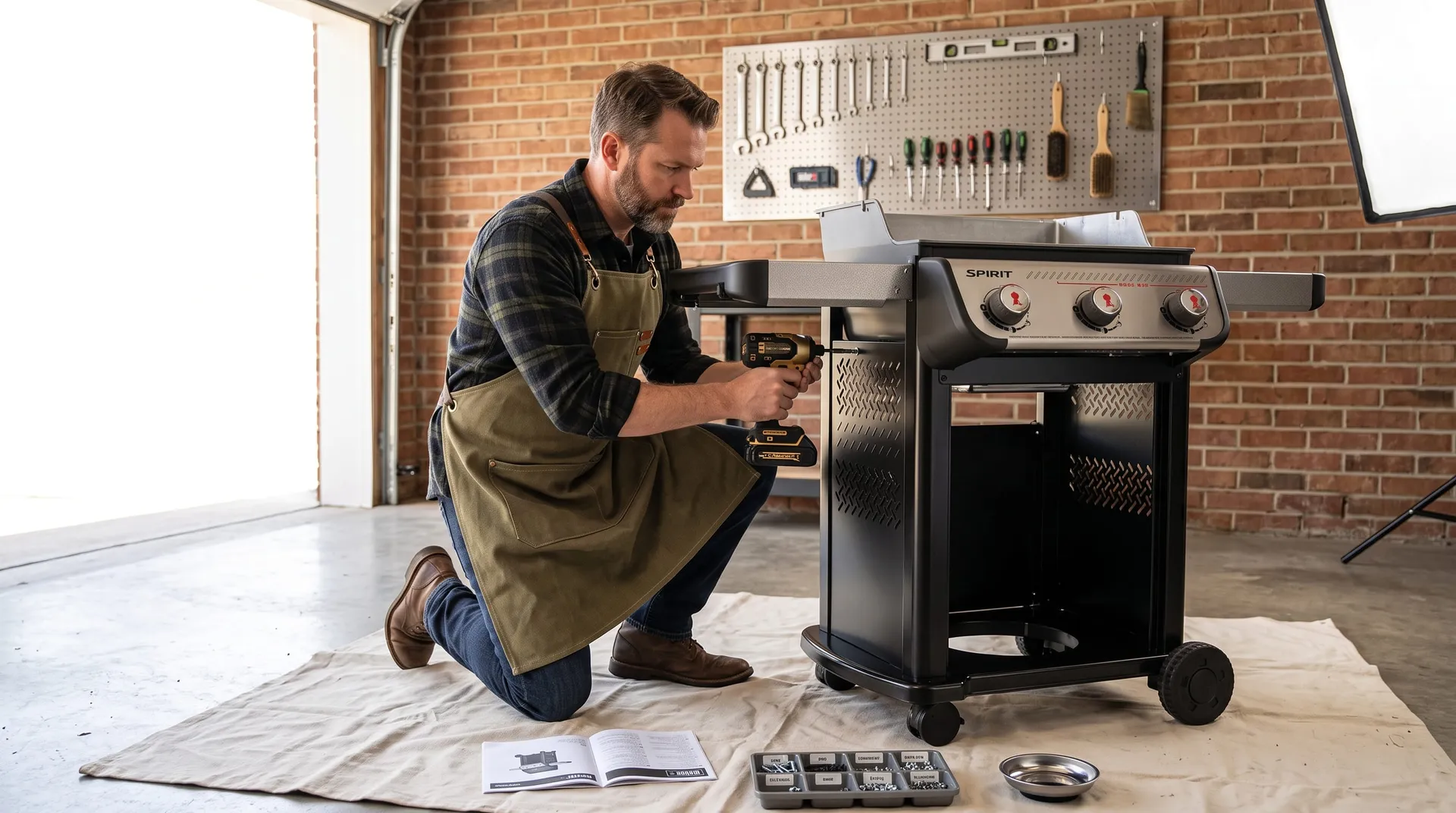
The Spirit arrives as a large box of cart panels, a pre-built cookbox and loose grates, bars and burners. There were no missing parts. The heaviest step is lifting the cookbox onto the finished cart; a second person makes that safer, even if the rest goes fine alone.

Man using a power drill to assemble a Weber Spirit gas grill cart in a garageA power drill got the cart built in 55 minutes; the cookbox lift is the only awkward step.

Before the first cook:

  1. Connect a full 20 lb tank and hand-tighten the regulator fitting.
  2. Brush soapy water on the hose and fittings, then open the tank valve. Growing bubbles mean a leak; shut the tank off and refit before lighting.
  3. Light each burner in turn to confirm all three igniters work.
  4. Run all burners on high with the lid closed for a short burn-off to clear factory oils.

Tip: open the tank valve slowly. Opening it fast can trip the regulator's safety bypass and leave you with a weak, low flame.

Day to day

  • Preheat with the lid closed: all burners on high until the grate is fully hot; cast iron needs time to store heat. Our how long to preheat a grill guide covers timing.
  • Turn down once hot: medium holds well on cast iron.
  • Shut down: burners on high for a few minutes to burn off residue, brush the grates warm, wipe on a thin coat of oil, then turn off the burners and close the tank valve.

The folding side tables flexed under a full sheet pan, so use them for plates and tools, not heavy pans.

What to cook first (and the limits)

  1. Steaks: the Sear Zone is this grill's best feature, so learn it early. Thick ribeyes, strip steaks and pork chops benefit most.
  2. A whole chicken: spatchcocking shortens the cook and crisps the skin.
  3. Fish and vegetables: oil the food, not the grates; cook salmon skin-side down on medium, and use a basket for small vegetables.

Smoking: possible with a smoker box of wood chips over a lit burner, but the grill isn't sealed like a smoker. Expect light smoke flavor, not deep bark. Our wood chip guide covers which wood to use, and Weber vs Traeger weighs gas against pellet.

Limits: a party means cooking in rounds, and sauces or corn go on the kitchen stove.

What Does the Spirit E-325 Cost to Run, and Which Version Fits?

A 20 lb tank lasted roughly 18–20 hours at medium heat in our testing.

Propane use

A household that grills a few nights a week will go through a tank every few weeks in summer. Running the Sear Zone or all burners on high shortens that. Our how long does a propane tank last guide explains how to check the level.

  • Preheat with the lid closed so heat isn't lost.
  • Turn burners to medium once the grate is hot.
  • Keep a spare tank so you don't run out mid-cook.

Propane, natural gas and the Spirit range

  • Propane vs natural gas: separate models. AJ Madison lists propane as model 1500789 and natural gas as model 1500844. Unsupported conversions can void the warranty.
  • Spirit E-325 vs E-425: the four-burner Spirit adds grate space; better if you cook for five or six regularly at a Spirit-level price.
  • Spirit E-325 vs the older Spirit II: the Spirit II E-310 was the previous three-burner generation. The E-325 adds the boosted Sear Zone and Snap-Jet per-burner ignition. Older parts don't all fit, so check the model number before ordering spares.

Accessories worth buying

  • Fitted cover: sized for the Spirit 300 series; the cheapest way to protect grates and igniters from rain.
  • Weber Works side rails: sold separately; they take tool holders, trays and bins.
  • Probe thermometer: for accurate doneness on thick steaks.
  • Grill brush or scraper: see our grate cleaning guide for safe tools.
  • Smoker box: for light smoke flavor.
  • Drip pans: Weber's disposable pans fit the grease tray and speed cleanup.

Durability and care

The cast-aluminum cookbox is the most durable part, since aluminum doesn't rust through. Most care goes into the grates, bars and igniters.

  • Grease tray: empty it every few cooks, before it fills.
  • Flavorizer Bars and cookbox: lift the grates every few months and scrape them. Replace bars when they're rusted through, flaking or holed.
  • Storage: keep it covered and the tank valve closed between cooks; before winter, follow how to winterize your grill.
  • Seasonal safety check: inspect the hose for cracks or chew marks, repeat the soapy-water leak test, and look into the burner tubes for spider webs or nests. Blocked tubes show up as yellow, lazy flames or a burner that won't stay lit.

What wears first: the Flavorizer Bars and igniter electrodes. Both are inexpensive and need only a screwdriver to replace.

Who Should Buy the Weber Spirit E-325 (and Who Shouldn't)

A compact searing grill for small households, not a party grill.

Buy it if you

  • Cook for 1–4 people most of the time

  • Want properly seared steaks from a gas grill

  • Are upgrading from a cheap big-box grill and want Weber reliability

  • Have a smaller patio and like a cabinet that hides the tank (more compact picks in best grills for small patios)

Look elsewhere if you

  • Host 6 or more people regularly

  • Want a side burner included

  • Want the most grate space per dollar

  • Want to switch between propane and natural gas later

Match two or more points on either side and you have your answer.

Man slicing steak beside a black Weber Spirit three-burner gas grill as a woman holds a wine glassSized for couples and small families who grill several nights a week.

Weber Spirit E-325 vs. Alternatives

Most shoppers weigh it against bigger four-burner grills or the Genesis E-325.

Our best Weber grills and best gas grills $500 to $1,000 guides compare more options, and a charcoal smoker like the Weber Smokey Mountain is the better tool for real barbecue.

When to pick an alternative instead

Common Problems and Fixes

Most Spirit complaints come down to grease, the regulator or unoiled grates.

ProblemLikely causeFix
Burner clicks but won't lightGrease on the igniter electrodeClean the tip; see how to replace grill igniters
Flare-upsFull grease tray or caked Flavorizer BarsEmpty the tray; scrape the bars
Rust spots on gratesStored wet or unoiledScrub off light rust, then oil and heat to reseason
Weak heat late in a cookTank nearly empty or regulator in bypassSwap the tank; reset the regulator per grill not heating up properly
Food sticksGrates not preheated or oiledPreheat 10–15 minutes; see why food sticks
Yellow, lazy flamesInsects or webs in the burner tubesClear the tubes before the season starts

Is the Weber Spirit E-325 Worth the Money?

Yes, if you cook for four or fewer and care about crust.

Value verdict

You pay for searing, reliability and a durable cookbox rather than grate size and extras like a side burner.

  • A Sear Zone that crusts steaks in under 3 minutes a side

    Grate space for groups

  • First-press ignition every time in our tests

    A side burner

  • A cast-aluminum cookbox that won't rust through

    Sturdy side tables

  • A cabinet that hides the tank

    Natural gas conversion

Bigger households get more for their money from the Mesa or Char-Broil, or should save for the Genesis; our premium gas grills guide weighs that step up.

Final Score

SmokyHQ score

Excellent

Best at Searing
Weakest at Build Quality

  • Searing9.2/10
  • Heat Evenness8.8/10
  • Ignition and Reliability9.2/10
  • Build Quality8.5/10
  • Assembly and Cleanup8.8/10
  • Value for Money9.0/10

Scores settled? See today’s price on the Weber Spirit E-325.

For small households that want Weber reliability and real steak crust, the Spirit E-325 is the gas grill we'd buy at its price. If you regularly cook for six or more, step up to the Genesis E-325.

Next steps: pick up a 20 lb propane tank and a fitted cover, and make a reverse-seared ribeye your first cook.

Ranked in our buying guides

Durability

What to watch over time

Igniter electrodes
Grease on the tips weakens the spark; wipe them when you clean the cookbox.
Cast-iron grates
Surface rust appears if they're stored wet; brush warm and oil lightly.
Flavorizer Bars
They take the most heat and grease; scrape them every few months and replace when they thin.
Folding side tables
Thin hinges; don't lean on them or load them with heavy pans.

Based on the materials, design and warranty we documented during testing. Long-term ownership results are added to reviews as our testers log them.

Frequently Asked Questions

01

Is the Weber Spirit E-325 worth it?

Yes, for households of one to four. Its Sear Zone crusted ribeyes in under 3 minutes a side, every burner lit first press in all eight sessions, and the grate stayed within about 15°F edge to edge. Bigger groups should look at the Genesis.

02

Is the Weber E325 a Spirit or a Genesis?

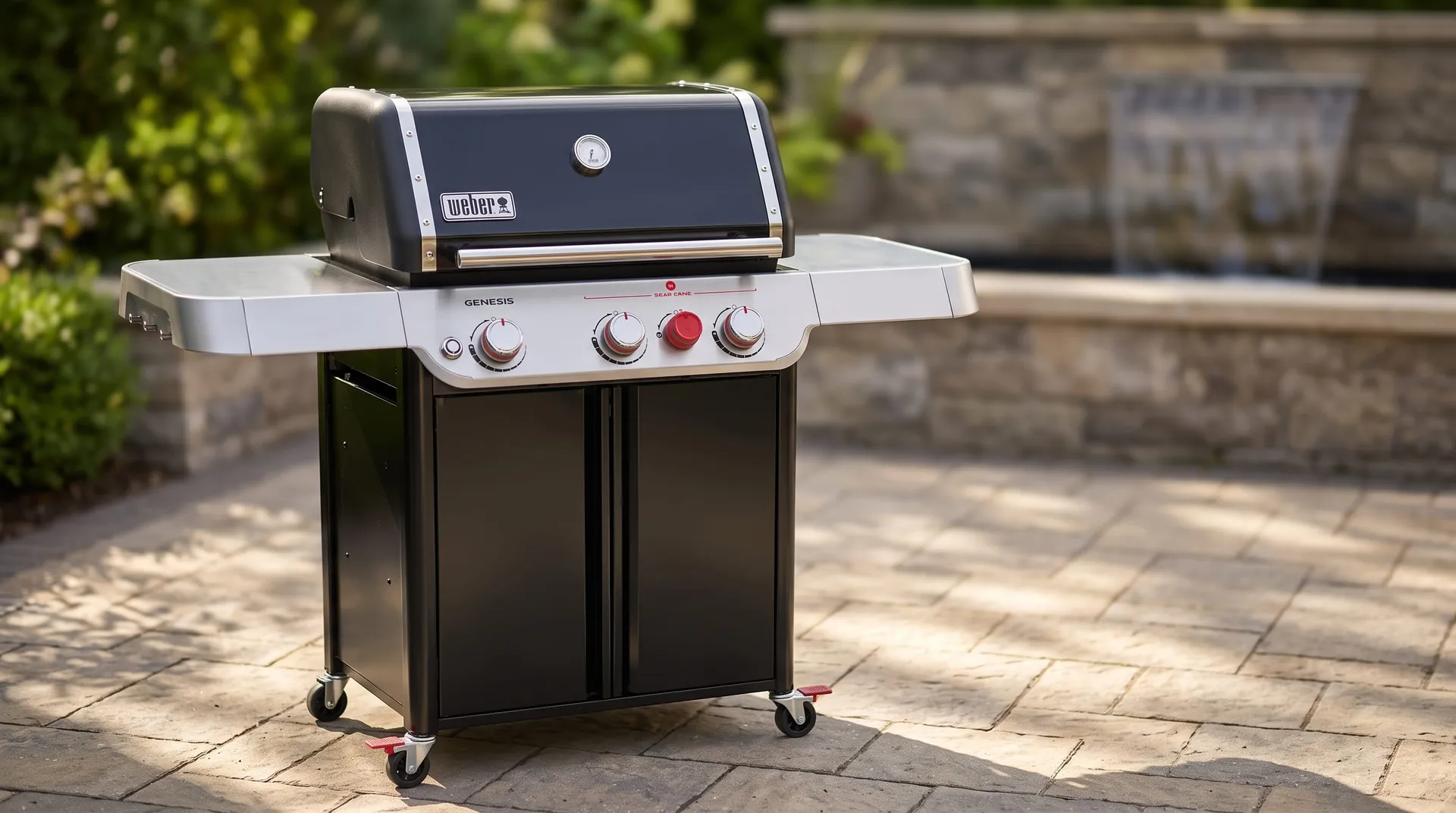
Both names exist: the three-burner Spirit E-325 reviewed here and the larger Genesis E-325. The Genesis's extra grate and dedicated sear burner matter mostly if you regularly cook for six or more.

03

How many people can the Spirit E-325 feed?

One to four comfortably. The 360 sq in main grate gets tight past four people, so larger groups mean cooking in rounds.

04

How long does the Weber Spirit E-325 take to assemble?

About 55 minutes solo with a power drill in our test. A second person helps with lifting the cookbox onto the cart.

05

How long does a propane tank last on the Spirit E-325?

Roughly 18–20 hours at medium heat in our testing. Running the Sear Zone or all burners on high shortens that.

06

Does the Spirit E-325 have a side burner?

No. The Char-Broil Pro Series and Monument Mesa both include one.

07

Can I convert the propane Spirit E-325 to natural gas?

No. Propane and natural gas are separate models, and unsupported conversions can void the warranty.

08

Can I put a griddle on the Spirit E-325?

Yes. Cast-iron or carbon-steel griddle inserts sit on the grates; match the insert's dimensions to the Spirit 300-series cookbox and preheat it with the lid closed.

Written by

Tom Bricker

Consumer Research Analyst & Lead Tester

Tom Bricker has 10+ years of grilling on every fuel type and a consumer-research background. He leads SmokyHQ’s gas, portable, electric and flat-top testing, so if you’re weighing price against how long a grill will last, his reviews show which ones are worth the money.

  • Gas Grills
  • Portable Grills
  • Electric & Indoor Grills
  • Griddles
  • Value & Durability

Every grill is bought with our own money and scored on the same tests. How we test