Kamado Grill vs Regular Grill: Worth It?
Kamado grill vs regular gas or charcoal grill compared: versatility, fuel efficiency, price, and searing power, tested to see if the upgrade is worth it.
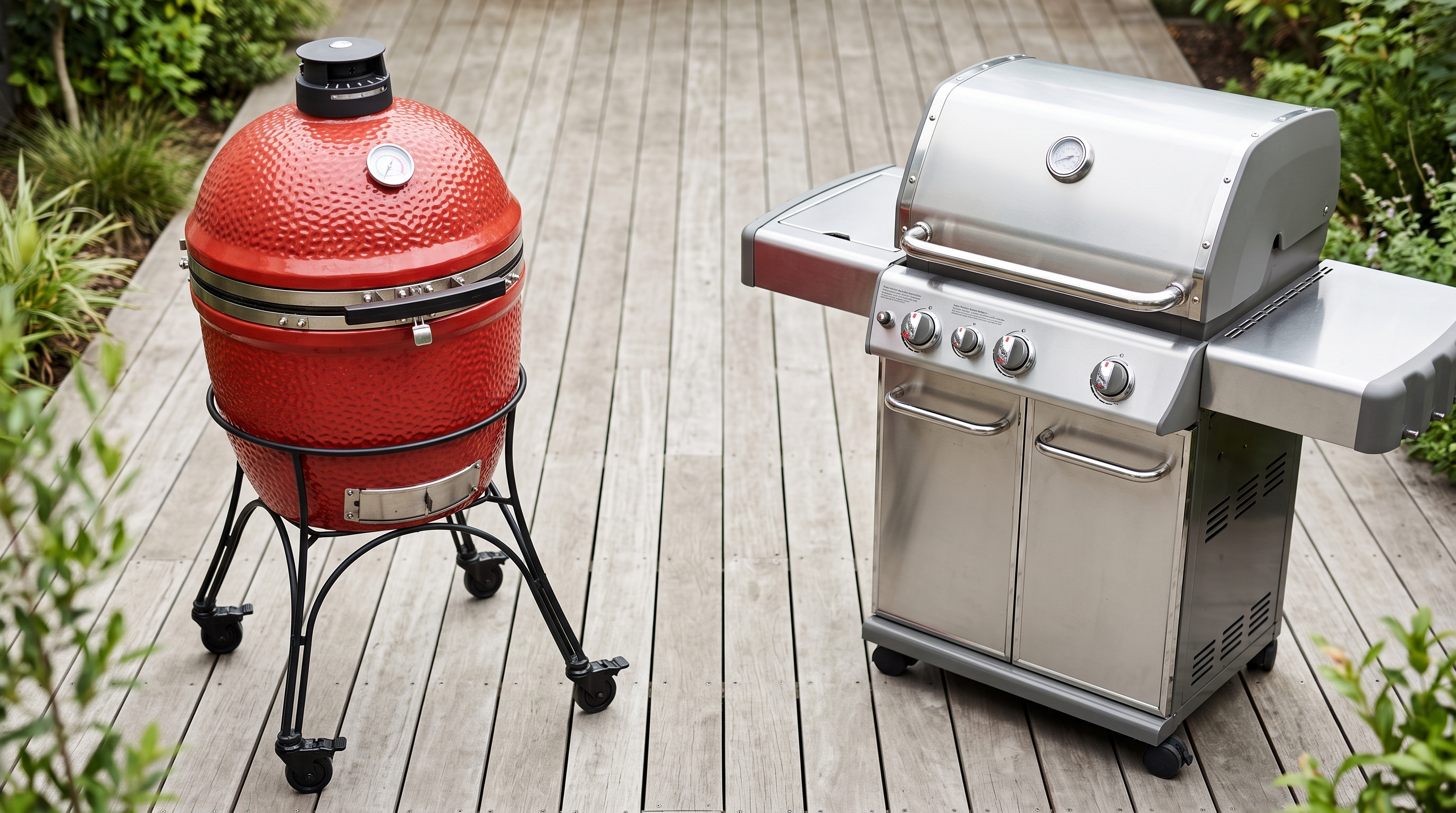
A Kamado Isn't Really Competing With Your Gas Grill
A kamado grill and a regular gas or charcoal grill solve overlapping but genuinely different problems. A regular grill is optimized for one job — fast, direct-heat cooking — and does it efficiently and affordably. A kamado is a ceramic, egg-shaped multi-tool that sears, smokes, roasts, and bakes on the same unit, at a significantly higher price and weight. Whether that versatility is "worth it" depends entirely on how many of those cooking styles you'd actually use. This guide breaks down the real tradeoffs using our own tested models.
Quick Answer: Is a Kamado Worth It for You?
| If You Want... | Choose | Our Pick | Price |
|---|---|---|---|
| Fast weeknight grilling on a budget | Regular gas grill | Weber Spirit E-325 | $499–$529 |
| Premium gas grilling, larger cooking area | Regular gas grill | Weber Genesis E-325 | $949–$999 |
| Cheapest genuine charcoal grilling | Regular charcoal grill | Weber Original Kettle 22-Inch | $147–$157 |
| One grill that sears, smokes, and roasts | Kamado | Kamado Joe Classic Joe Series II | $1,350–$1,450 |
| Kamado versatility at a lower entry price | Kamado | Kamado Joe Classic Joe I Premium | $999–$1,099 |
If your cooking is mostly quick weeknight meals — burgers, chicken, vegetables — a regular gas grill delivers that faster and for a fraction of the price. If you regularly want to sear a steak and smoke a pork shoulder on the same piece of equipment, and you're willing to pay a real premium for it, a kamado genuinely earns its price. It's not a strict upgrade over a regular grill; it's a different tool for a broader job.
Kamado vs Regular Grill: Head-to-Head Comparison
| Feature | Kamado (Ceramic) | Regular Gas Grill | Regular Charcoal Grill |
|---|---|---|---|
| Temperature Range | ~200°F to 750°F+ | Up to ~600°F | Up to ~600°F+ |
| Versatility | Sears, smokes, roasts, bakes on one unit | Direct/indirect grilling only | Direct/indirect grilling and basic smoking |
| Fuel Efficiency | Very high — thick ceramic insulation | N/A (propane/natural gas) | Moderate — steel loses heat faster |
| Unattended Run Time | 12+ hours on a single charcoal load | N/A (continuous fuel supply) | Several hours with vent management |
| Startup Time | ~15 minutes to full sear heat | Instant | ~15–20 minutes (chimney) |
| Weight | 200+ lbs, not easily repositioned | Moderate, often has wheels | Light to moderate |
| Breakage Risk | Real — ceramic can crack if bumped or dropped | Low — steel shrugs off minor impacts | Low |
| Price Range Tested | $999–$1,450 | $499–$999 | $147–$157 |
What Makes a Kamado Different
Ceramic Construction and Heat Retention
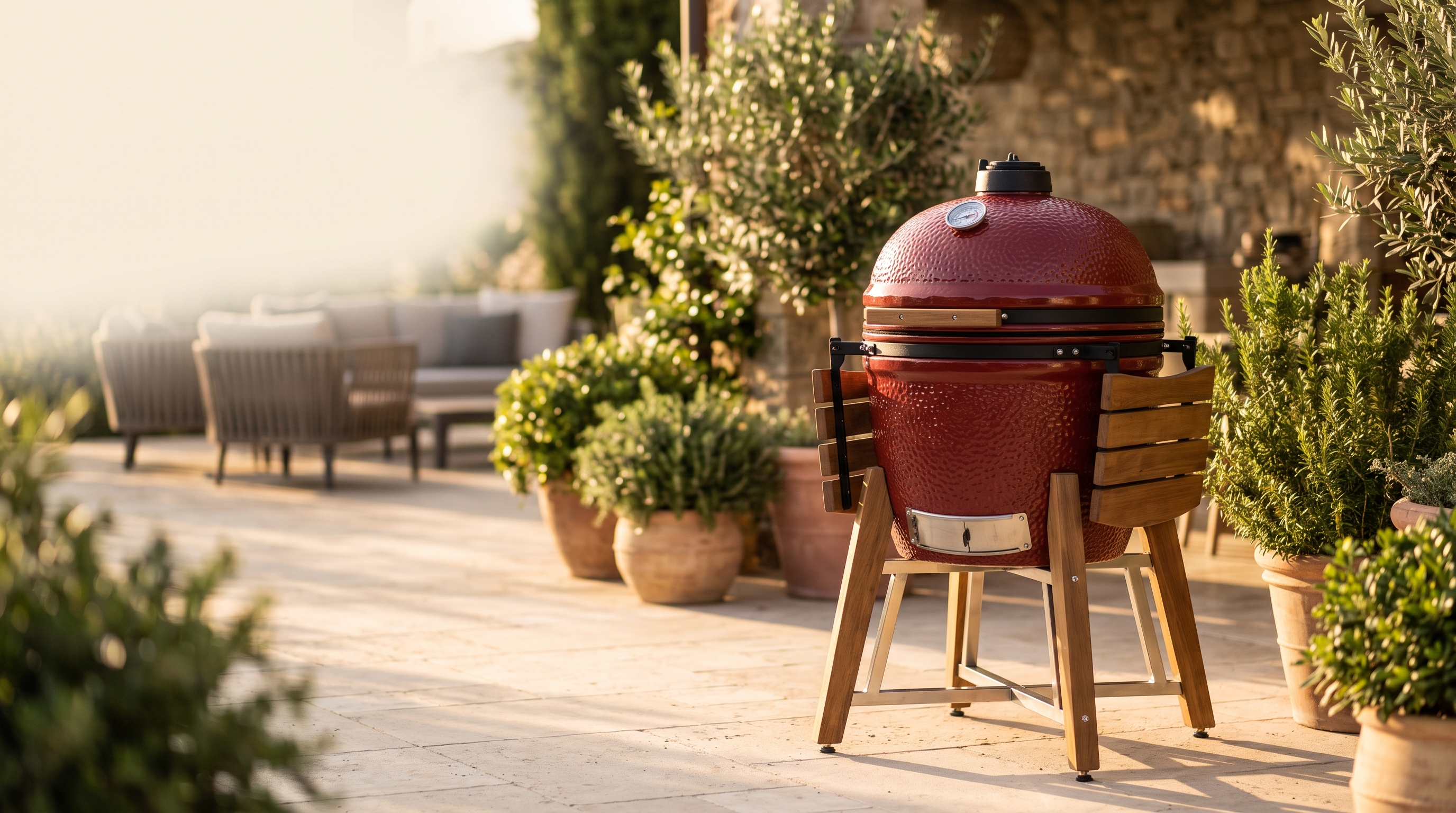
A kamado's thick ceramic walls retain heat dramatically better than steel, which is the source of nearly every advantage it has over a regular grill. Our tested Kamado Joe Classic Joe Series II held a rock-steady 225°F for over 12 hours on a single load of lump charcoal during an overnight pork shoulder smoke — the longest unattended run we've measured on any charcoal grill, roughly using half the charcoal a steel offset smoker burned for a comparable cook.
True Temperature Range in One Unit
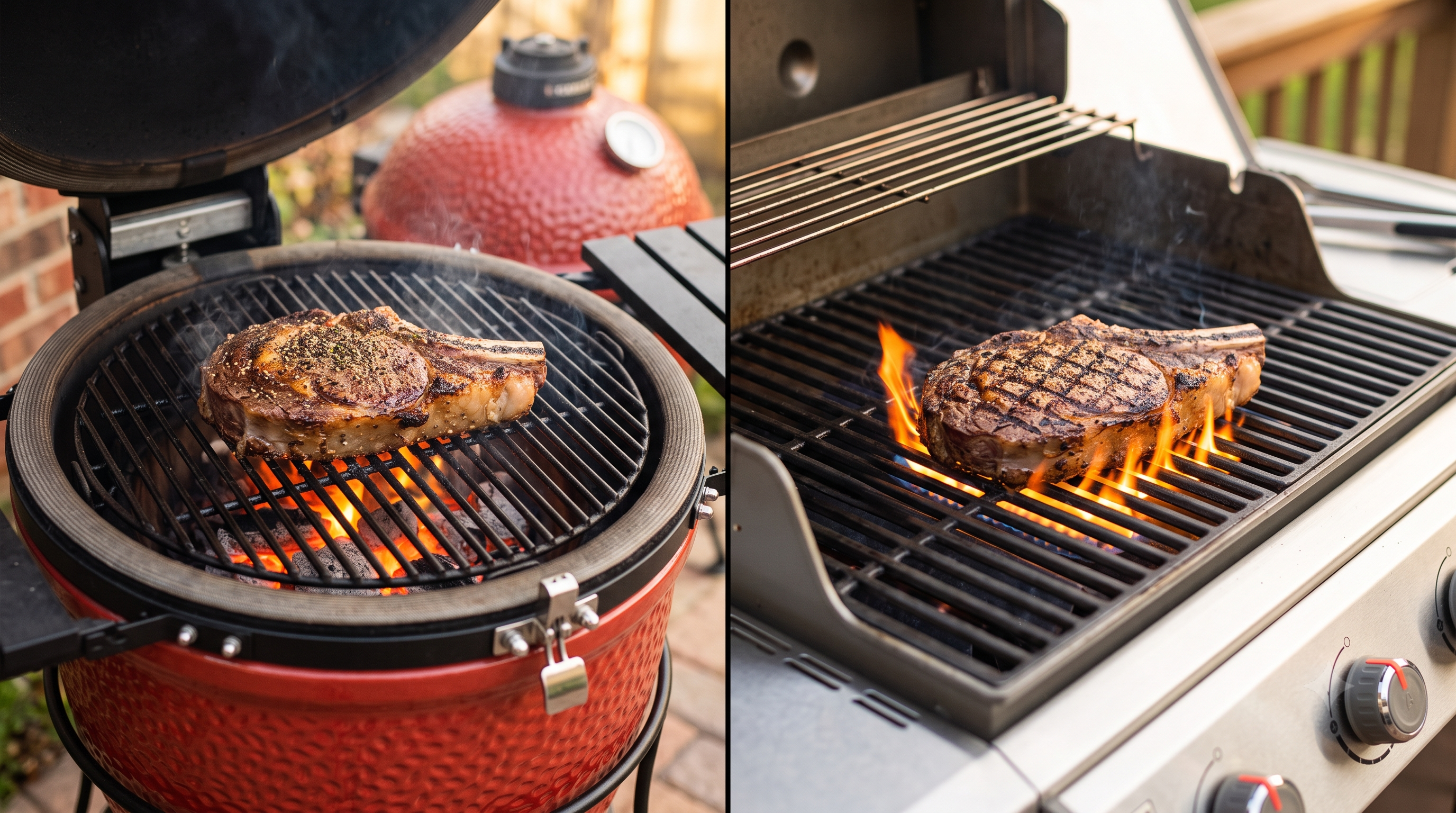
That same insulation lets a kamado swing from low-and-slow smoking territory up to genuine searing heat without changing equipment. The Classic Joe Series II hit 750°F+ for hard searing in about 15 minutes from a cold start in our testing, letting us produce both a steakhouse-quality crust and slow-smoked barbecue on the exact same grill — something no regular gas or charcoal grill in our lineup can match without significantly more effort or additional equipment.
Where a Regular Grill Still Wins
Speed and Simplicity
Nothing beats a gas grill for weeknight speed. Our tested Weber Spirit E-325 lit on the first push across all 8 test cooks and produced steakhouse-quality sear marks on a ribeye in under 3 minutes per side using its Sear Zone burners — food on the grate in minutes, with zero setup ritual. A kamado's ~15-minute warm-up to full sear heat, while fast for a charcoal-fueled unit, still can't match a gas grill's instant ignition.
Price and Weight
A kamado is a serious financial and physical commitment — the Classic Joe Series II runs $1,350–$1,450 and weighs over 200 lbs assembled, meaning repositioning it once set up isn't realistic without real effort. A regular gas grill like the Spirit E-325 costs a third of that, and a basic charcoal kettle like the Weber Original Kettle 22-Inch costs a tenth of it, at $147–$157.
Best Budget Pick: Weber Original Kettle 22-Inch
The cheapest way to get genuine charcoal flavor and basic two-zone versatility, without anywhere near the kamado price tag or weight.
No Breakage Risk
Ceramic construction, while excellent for insulation, means a genuine risk of cracking if the grill is bumped or dropped during setup, transport, or a careless move — a risk steel grills simply don't carry. If you're not confident in careful, permanent placement, that's a real factor to weigh.
Versatility: The Core of the Kamado Argument
One Unit, Multiple Cooking Styles
The single biggest reason people upgrade to a kamado is consolidation — instead of owning a gas grill for weeknights and a separate smoker for weekend barbecue, a kamado aims to do both jobs on one unit. The Kamado Joe Classic Joe Series II's Divide & Conquer system let us run true two-zone cooking — searing on one side, indirect roasting on the other — without swapping accessories mid-cook, something that typically requires either two separate grills or significant manual reconfiguration on a regular grill.
A Lower-Cost Way Into the Category
If the price of a flagship kamado is the sticking point, the Kamado Joe Classic Joe I Premium offers the same core ceramic versatility at $999–$1,099 — still a real investment, but a meaningfully lower entry point than the Series II's $1,350–$1,450 for buyers who want to try the format without the top-tier price.
Cooking Area Tradeoff
Kamado grills often have smaller primary cooking areas than comparably priced steel grills — the Classic Joe Series II's 254 sq in primary area (up to 447 sq in with Divide & Conquer accessories) is smaller than several offset smokers costing a third of the price. If raw cooking capacity for large groups matters more to you than versatility, a larger steel grill or offset smoker may serve you better dollar for dollar.
Who Should Buy a Kamado
- You want one grill that genuinely sears, smokes, and roasts without owning multiple pieces of equipment
- You value fuel efficiency and long unattended run times — the Classic Joe Series II held 225°F for 12+ hours on a single charcoal load in our testing
- You're prepared for a serious price and weight commitment, and have a permanent, careful spot for it
- You cook both quick high-heat meals and long low-and-slow barbecue regularly enough to justify one versatile unit
Who Should Buy a Regular Grill
- You mostly cook quick weeknight meals and want instant ignition and minimal setup — a gas grill like the Weber Spirit E-325 wins here
- You want the lowest possible cost of entry into grilling — a basic charcoal kettle starts under $200
- You need maximum cooking area for the price, since kamados generally offer less primary grate space per dollar than steel alternatives
- You'd rather not risk ceramic breakage during setup, transport, or repositioning
Assembly and Setup
A kamado's assembly and initial high-heat seasoning burn is a genuinely bigger undertaking than a regular grill's — our testing on the Kamado Joe Classic Joe Series II took considerably longer than any other grill we've reviewed, closer to half a day including cooldown, largely because the ceramic components require careful handling and the initial seasoning burn takes hours to complete properly. A regular gas or charcoal grill is typically ready to cook on within an hour of unboxing, making the kamado's setup investment a real factor to plan around before your first cook, not just at purchase.
Frequently Asked Questions
Is a kamado grill worth the extra money over a regular grill?
If you regularly want both hard searing and long low-and-slow smoking from the same piece of equipment, yes — our testing found a kamado is the only format in this comparison that genuinely does both well. If you mostly cook quick weeknight meals, a regular gas grill delivers that faster and for a fraction of the price.
Can a kamado grill sear as well as a gas grill?
Yes, and arguably better in some respects — our tested Kamado Joe Classic Joe Series II hit 750°F+ in about 15 minutes from a cold start, exceeding the typical ceiling of most gas grills, though gas still wins on speed to first food since there's no charcoal to light.
Why are kamado grills so much more expensive than regular grills?
The thick ceramic shell, heavy cast-iron hardware, and cart with locking casters all add real manufacturing cost that a simple steel gas or charcoal grill doesn't carry — that construction is also exactly what delivers the fuel efficiency and heat retention that justify the price for buyers who use the full range of what a kamado can do.
Is a kamado grill harder to use than a regular grill?
The learning curve is closer to a charcoal grill's than a gas grill's, since you're still managing vent airflow to control temperature. It's more forgiving than a basic charcoal kettle in most respects, though, thanks to the ceramic's heat retention smoothing out minor vent adjustment mistakes.
Can I move a kamado grill around my patio easily?
Not really. At over 200 lbs assembled, repositioning a kamado once set up takes real effort — plan your placement carefully before final assembly rather than expecting to move it casually like a lighter gas grill.
Is ceramic construction fragile?
It's more fragile than steel in one specific way — a hard bump or drop during setup or transport carries a genuine cracking risk that steel grills simply don't have. Once properly assembled and placed in a permanent spot, normal cooking use doesn't pose a meaningful risk.
Final Takeaway
A kamado grill isn't a straight upgrade over a regular grill — it's a versatility play that costs real money and weight in exchange for genuinely combining searing, smoking, and roasting into one unit. If that combination matches how you actually cook, the Kamado Joe Classic Joe Series II or the more affordable Kamado Joe Classic Joe I Premium are both strong picks. If you mostly want fast, affordable, no-fuss grilling, a regular grill like the Weber Spirit E-325 or Weber Original Kettle 22-Inch remains the smarter buy.
For more on getting the most from a ceramic grill, see our or by category.
Ready to shop? Browse our top-rated grill picks to find your perfect match.