Skip to contentSkip to content
Pit Boss 3-Series Vertical Gas Smoker tested by SmokyHQ

Gas GrillsHands-on review

Pit Boss 3-Series Gas Smoker Review 2026: Easy Propane Smoke

A tall propane smoker that reached 225°F in about 12 minutes and kept all three rack levels within 10°F of each other. Easy one-dial smoking for beginners and big batches, with less smoke flavor than charcoal.

By Marcus ReillyLast updated:13 min read

Good fit

Ranked #8 · 8 gas grills tested

Best for: Beginners and big-batch cooks who want dial control

  • Temperature Control9.2
  • Heat-Up Speed9.4
  • Capacity8.8
  • Smoke Flavor7.2
  • Build Quality7.8
  • Value8.0

Hands-on · 3 weeksHow we score

4.2

Our verdictGood fit

Set-the-dial propane smoking with a big cabinet and steady racks. Milder smoke than charcoal, and getting hard to find.

Gas Grill · Propane · hands-on tested

Brand
Pit Boss
Cooking area
About 884 sq in across porcelain-coated racks
Fuel
Propane
Tested for
3 weeks

What we liked

  • Reached 225°F about 12 minutes after ignition, the fastest dedicated smoker in our tests
  • Top, middle and bottom racks stayed within 10°F of each other
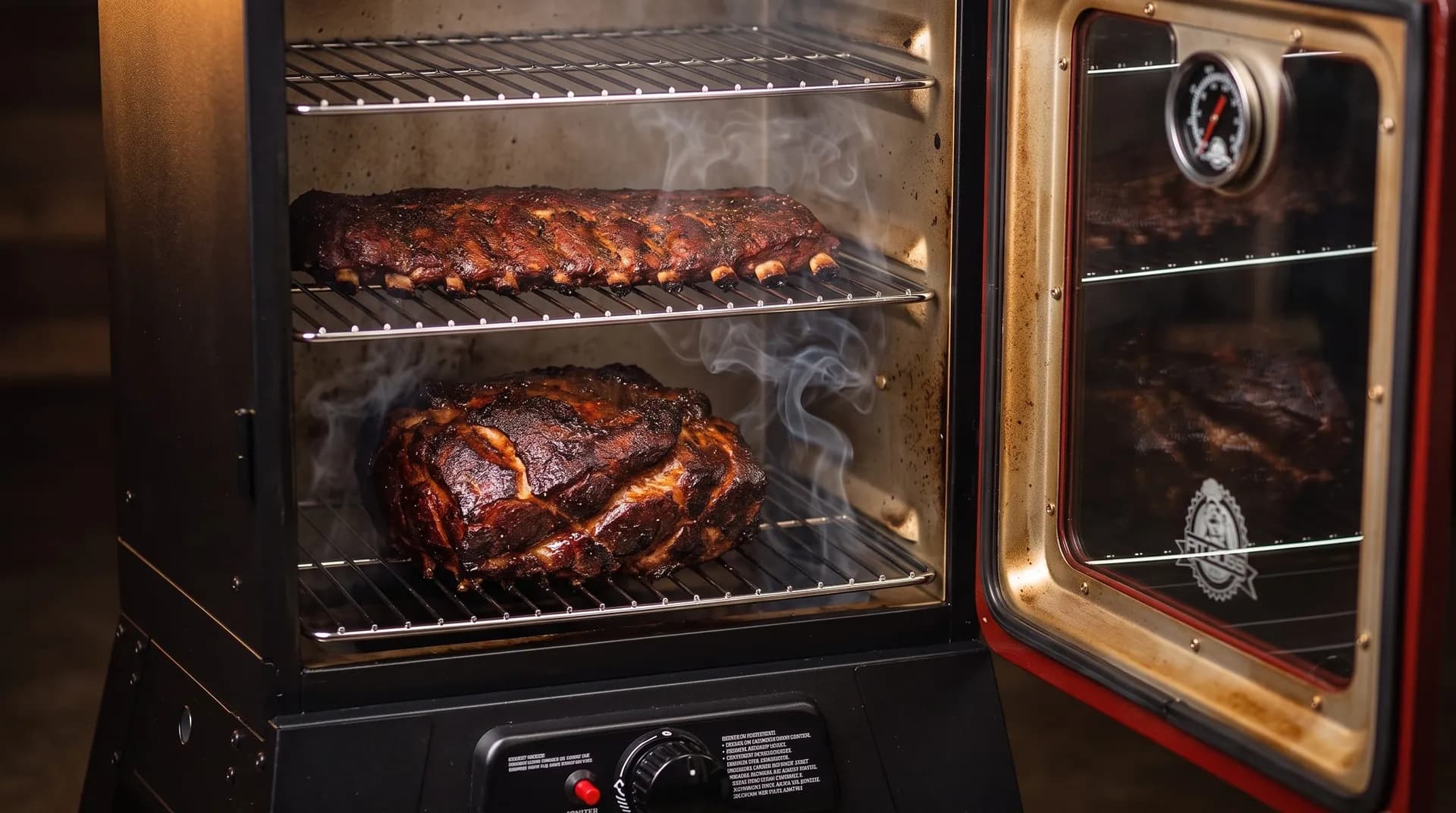
  • Fit two pork shoulders and a rack of ribs at once without crowding

What could be better

  • Smoke is milder than charcoal or an offset
  • Chips needed topping up every 45–60 minutes
  • Tops out around 350°F, so it can't sear or crisp skin well

Buy it if

Beginners and big-batch cooks who want dial control

Skip it if

Flavor chasers, or anyone who wants to sear on the same cooker

The Pit Boss 3-Series Vertical Gas Smoker is the smoker to buy if you're new to barbecue, cook big batches, and want smoking to be as simple as turning a stove knob. In our Pit Boss 3-Series review it scored 4.2 out of 5: it reached 225°F about 12 minutes after ignition, kept all three rack levels within 10°F of each other, and fit two pork shoulders plus a rack of ribs at once. Skip it if smoke flavor comes first or you want to sear on the same cooker, and note that it's getting hard to find new.

Red vertical propane smoker with a glass door and a propane tank on a stone patioA tall cabinet, one dial and a big window: propane smoking kept simple.

How We Tested

Three weeks, overnight cooks, probes at three rack heights, cold and wind included.

Marcus Reilly smoked on the 3-Series (model 10773, Red Hammertone) for three weeks on a concrete patio.

  • Food: two overnight pork shoulders, baby back ribs and chicken thighs at 250°F.
  • Weather: a 38°F morning start and sustained 14 mph gusts, because cold and wind are what knock propane cabinets off target.
  • Measurements: probes on the top, middle and bottom racks, heat-up time from ignition, and how often the chips needed topping up.
  • Specs: checked against Pit Boss retailer listings.

Tester checking a probe receiver beside a red vertical smoker with probe wires run through the doorProbes at three rack heights are how we measured the 10°F top-to-bottom spread.

Each smoker gets a score out of 10 in six categories: temperature control, heat-up speed, capacity, smoke flavor, build quality and value. Those roll up into the overall score out of 5 in the Final Score, so it compares directly with the propane cookers in our gas grill reviews and the other smokers we test.

Three weeks can't show long-term rust, igniter life or how parts hold up after several seasons. We list the parts that wear first under durability and update this review if problems show up.
Test log · category ranking

How it ranks against rivals

#7 of 8

gas grills rank

4.2/5

avg 4.4 in category

2 of 4

tests above avg

Where it ranks

Overall score out of 5

  1. 1Weber Genesis E-325Weber Genesis E-325Gas4.6
  2. 2Broil King Regal S 420 ProBroil King Regal S 420 ProGas4.5
  3. 3Monument Denali 605Pro 6-Burner Gas GrillMonument Denali 605Pro 6-Burner Gas GrillGas4.5
  4. 4Weber Spirit E-325Weber Spirit E-325Gas4.5
  5. 5Monument Grills Mesa Series 4+1 Burner Gas GrillMonument Grills Mesa Series 4+1 Burner Gas GrillGas4.4
  6. 7Pit Boss 3-Series Vertical Gas SmokerPit Boss 3-Series Vertical Gas SmokerThis review4.2

Also ranked among gas grills: Char-Broil Pro Series 4-Burner Gas Grill (4.3), Ninja FlexFlame ProConnect (PG305) (4.2).

Key Specs

SpecPit Boss 3-Series Vertical Gas SmokerWhat it means for you
Cooking areaAbout 884 sq in (some listings say 800)Two pork shoulders plus a rack of ribs
RacksPorcelain-coated, adjustable (listings say 3 or 4)Move racks for tall cuts
Burners2 stainless: 10,000 BTU cabinet + 3,500 BTU chip burnerOne dial runs both
Temperature range100–350°FSmoking only; no searing
Heat-upAbout 12 minutes to 225°F in our testDecide at lunch, smoke by early afternoon
Smoke sourceFront-loading wood chip trayAdd chips without opening the door
WindowLarge high-temp glassCheck food without losing heat
IgnitionPiezo, push-buttonNo matches needed
Size and weight21.5 x 31.2 x 46.9 in; about 54 lbSmall footprint, easy to move
Fuel20 lb propane tank (not included)Keep a spare for overnight cooks
Warranty5 yearsRegister with Pit Boss
Check Current PricePrices change often, so check the retailer for today’s price.

Does It Hold a Steady 225°F for Low-and-Slow?

Yes: the top, middle and bottom racks stayed within 10°F of each other, and it hit 225°F about 12 minutes after ignition.

Steady, fast and easy is the whole point of this smoker. The dial replaces vent and fuel management, and the racks cooked evenly enough that we never had to rotate food. Temperature control and heat-up speed were its two highest scores, and it was the fastest dedicated smoker to reach 225°F in our tests.

What this means for you: you can decide to smoke at lunchtime and have meat on shortly after.

How the dual-burner system works

The two burners split the work. The larger 10,000 BTU burner heats the cabinet, while the 3,500 BTU burner sits under the wood chip tray to keep chips smoldering. A dual valve system means one knob controls both, so you never adjust the chip burner separately.

That's the main advantage over older single-burner propane smokers. On a single-burner cabinet, running low for a 225°F cook can leave the chips too cool to smoke well. Here the chip burner keeps doing its job even when the cabinet burner is turned down.

The trade-off: you can't fine-tune smoke output on its own. If you want more smoke, the lever is the wood, not the burner.

What the water pan does

The water pan sits between the burners and the racks. Water can't get much hotter than its boiling point, so a full pan acts as a heat sink that soaks up spikes and smooths out swings. That's part of why a gas cabinet holds so steady.

It also adds humidity, and our overnight shoulder came out noticeably moister than a dry cook. Check the level on long cooks and top it up with hot water, since a pan that boils dry stops buffering.

Cold and windy weather

The 38°F morning and the 14 mph gusts showed the cabinet holds up, but the burner works harder in those conditions.

  • Shield from wind: gusts push heat out of the cabinet. Turn the back toward the wind or use a solid windbreak at a safe distance.
  • Keep a spare tank: cold weather increases propane use, and a tank running low can lose pressure in the cold.
  • Allow extra preheat: cold steel takes longer to warm, so light it earlier than in summer.
  • Use the window and front loader: each door opening costs more heat on a cold day.

Never wrap the smoker in blankets or set it in a garage to escape the cold. Propane cookers need open air.

How Much Smoke Flavor Does a Propane Smoker Give?

Real but mild: chicken thighs and pork shoulders came out with visible smoke rings, but lighter flavor than charcoal or an offset.

Smoke flavor was the 3-Series' lowest score, and it's the trade-off for one-dial control. You get a smoke ring and a clear wood taste, but not the depth of a live fire. Chips also needed topping up every 45–60 minutes, which is the main chore on a long cook.

Ribs and a pork shoulder with dark bark on the racks inside an open vertical smokerRibs on top and a pork shoulder below, with room to spare on the racks.

How to get more smoke flavor

  • Start meat cold and dry: a cold, dry surface collects more smoke than a warm, wet one.
  • Use stronger woods: hickory, oak and mesquite come through more clearly than fruitwoods in a gas cabinet. Our wood for smoking guide ranks them.
  • Keep the smoke clean: you want thin, blue smoke, not thick white billows. If the chips flame up or pour white smoke, they're too hot or starved of air.
  • Refill chips on a timer: set a phone timer for the first hours, when meat takes on most of its smoke.
  • Don't soak the chips: soaked chips steam before they smoke. Use dry chips, or small chunks that sit flat in the tray.
  • Don't wrap too early: let the bark set through the stall before wrapping in foil or butcher paper.

A little smoked salt or a dark, peppery rub also helps the bark taste more like a live-fire cook.

Will It Fit Two Pork Shoulders and Ribs at Once?

Yes: two pork shoulders and a rack of ribs fit without crowding.

The cabinet holds more than its 21.5 x 31.2 in footprint suggests, which is why capacity scored well. Listings disagree on whether it has 3 or 4 racks and whether the area is about 884 or 800 sq in, so count the racks in the box before you plan a big cook.

Loading the racks

A tall cabinet cooks best when you think about what drips onto what.

  • Long cooks low: put the largest, longest cooks on the lower racks so you rarely move them, and quick items like chicken or sausages higher up, where they're easy to pull early.
  • Watch the drips: pork under pork is fine, but keep raw poultry on the bottom so it never drips onto other food.
  • Leave gaps: smoke and heat move up through the cabinet, so leave space around each piece and between pieces and the walls.
  • Set racks cold: set the spacing for tall cuts like pork shoulder or a whole chicken before you light it.

A full cabinet takes longer to recover after the door opens, so keep spritzing to a minimum. The chip tray loads from the front, so refills don't need the door at all.

What to cook first

  • Chicken thighs: short and forgiving, and they show off the smoke ring. Finish them on a hot grill for crisp skin. Our smoked chicken guide walks through it.
  • Pork shoulder: the big cabinet and steady heat make it an easy overnight cook. It's safe at 145°F, but for pulled pork keep going until the collagen breaks down, usually around 195–205°F; see our pork shoulder guide.
  • Baby back ribs: a good test of chip timing, since ribs take on most of their smoke early. Our rib guide has the method.

Brisket is possible, but bark depends on strong smoke and good airflow, which favor charcoal smokers. Use our brisket guide and expect a softer crust than on a Weber Smokey Mountain.

How Hard Is It to Set Up and Run?

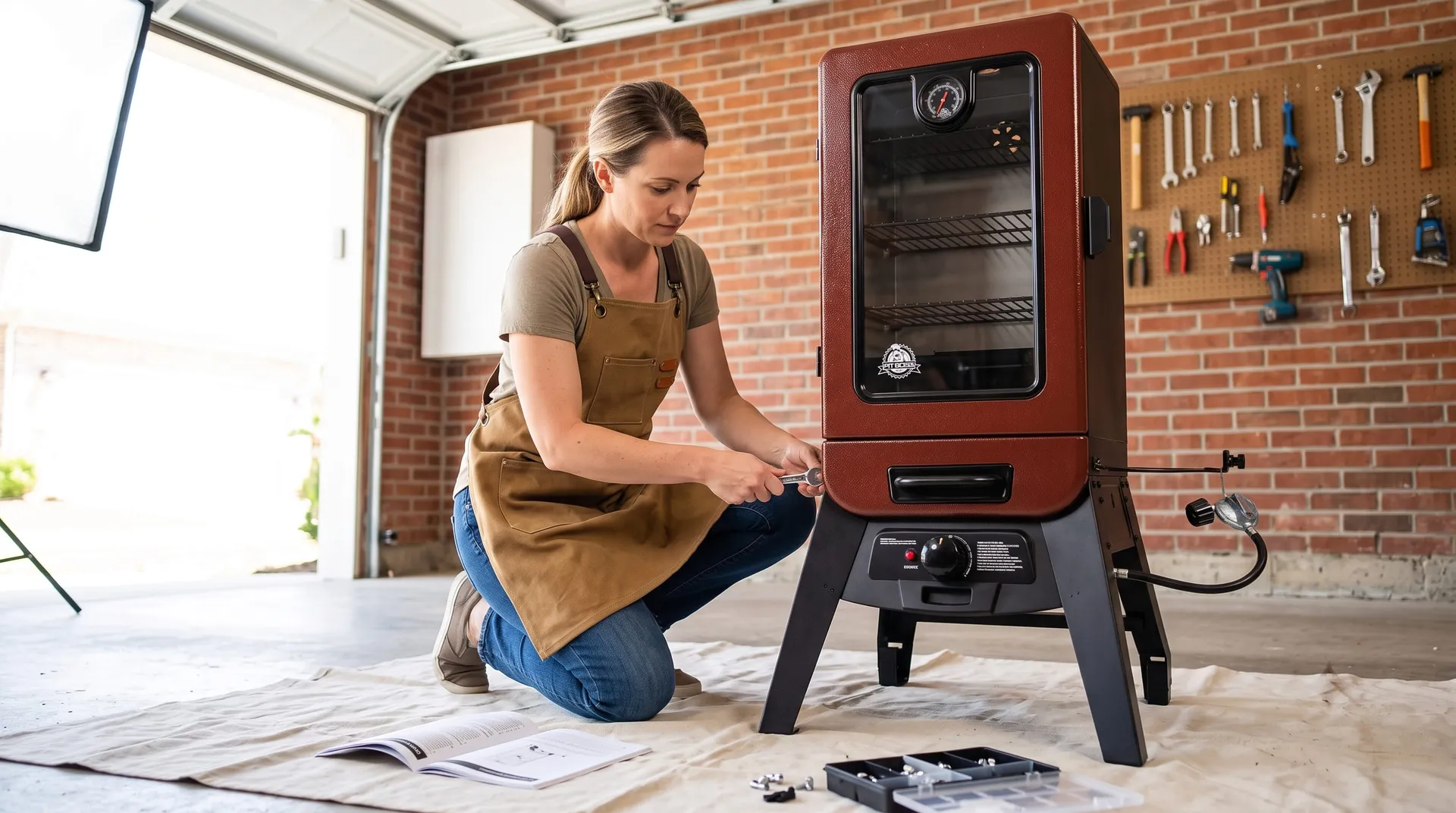
Easy: one person can assemble it with a wrench, and lighting is push-button.

Assembly is solo work. Follow it with a seasoning burn, running it empty to clear manufacturing residue before the first cook.

Tester assembling a red vertical smoker in a garage with tools hanging on the wall behind herOne person and a wrench can build it; run an empty seasoning burn before the first cook.

Where to set it up

Pick a level, hard surface like concrete or pavers, since a tall, narrow cabinet tips more easily than a grill on soft or sloped ground. Keep it out in the open with the clearances your manual lists, never under a covered patio, and stand the propane tank upright beside it with the hose clear of the hot cabinet walls. A spot within view of a kitchen window makes overnight checks easier.

A typical cook, step by step

  1. Check the tank and connections. Open the tank valve slowly and do a soapy-water leak check on the hose after any tank swap.
  2. Fill the water pan. Hot water helps the cabinet come up to temperature faster than cold.
  3. Light and preheat. Open the door while lighting, then close it and bring the cabinet up to temperature.
  4. Load chips. Fill the chip tray once the cabinet is warm, so the chips start smoking right away.
  5. Add meat. Biggest cuts on the lower racks, smaller items above.

If the burner won't light, turn the knob off, wait for any gas to clear, then try again. Repeated failures usually point to the igniter or a dirty burner port; our igniter replacement guide covers the fix.

What it costs to run

Propane: smoking uses far less than grilling. A full 20 lb tank holds about 430,000 BTU. Even with both burners wide open, they'd burn 13,500 BTU an hour (10,000 + 3,500), which works out to roughly 30 hours from one tank. Low-and-slow runs the cabinet burner well below full, so real cooks use less, while cold and wind push usage up. See how long a propane tank lasts.

Wood: chips are the other consumable, and an overnight shoulder uses far more than a short chicken cook. Buy chips by the larger bag if you smoke often.

Who Should Buy the Pit Boss 3-Series Gas Smoker (and Who Shouldn't)

A set-the-dial smoker for beginners and big families, not for flavor chasers.

Buy it if you

  • Are new to smoking and want one-dial control

  • Smoke big batches for groups

  • Want a cooker that's ready in minutes

  • Will trade some smoke depth for ease

Look elsewhere if you

  • Want the strongest smoke flavor (see pellet grill vs traditional smoker)

  • Want to sear on the same unit

  • Don't want to top up chips during a cook

  • Want a model that's easy to find and support long term

Match two or more points on either side and you have your answer.

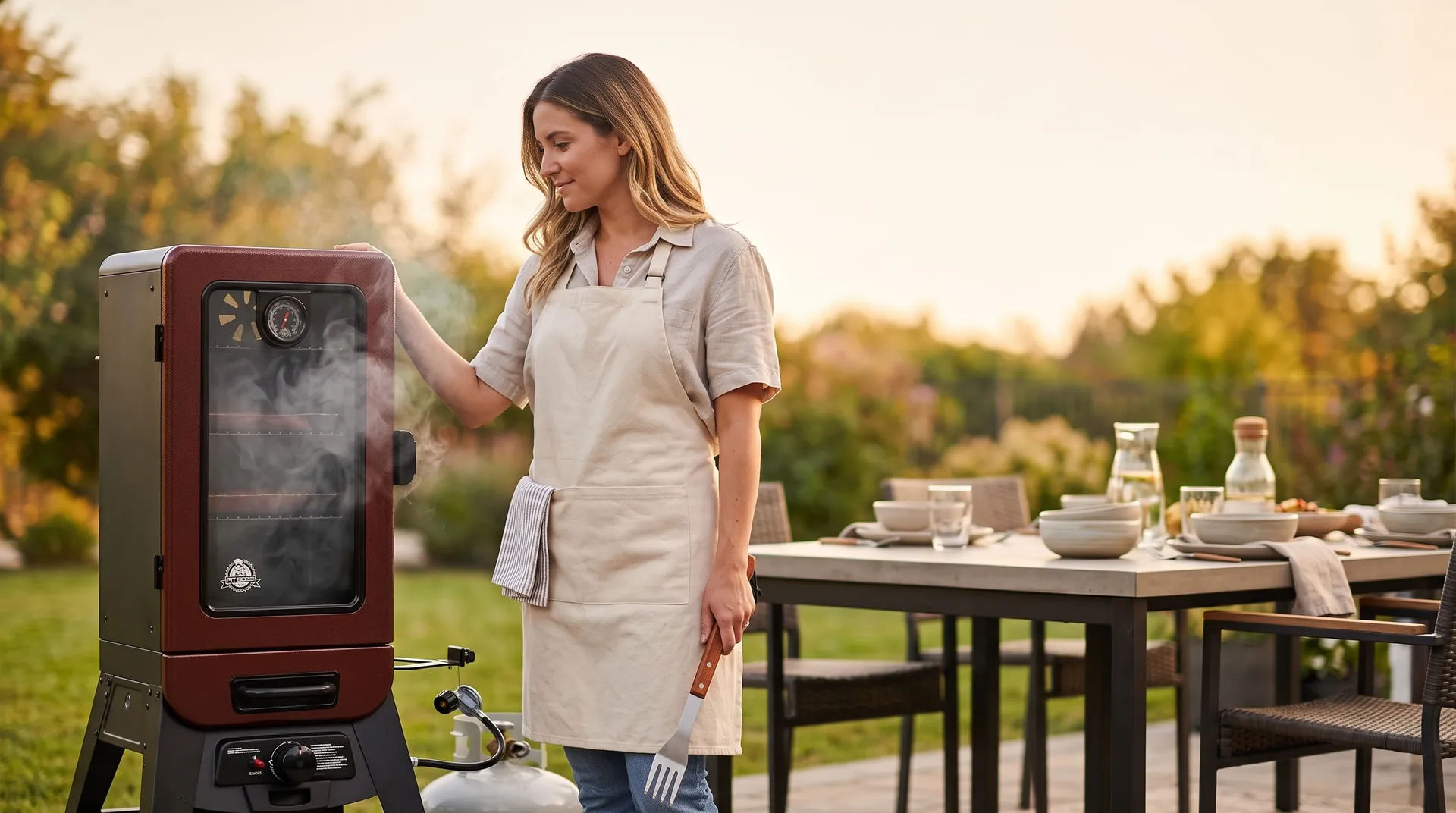
Woman in an apron beside a red vertical propane smoker near a set patio dining tableOne-dial control leaves the cook free to set the table while the meat smokes.

Pit Boss 3-Series Gas Smoker vs. Alternatives

Start with your fuel, then your batch size.

Propane makes sense if you don't have an outdoor outlet and don't want to manage charcoal. Our gas vs charcoal vs pellet guide lays out the trade-offs, and best smokers for beginners compares all three styles.

When to pick an alternative instead

Common Problems and Fixes

Most 3-Series problems come from grease, wind, an empty water pan or burned-out chips.

ProblemLikely causeFix
Smoke leaks at the doorAging sealReplace the door gasket
Weak or yellow flameGrease near the burner or clogged portsClean the chip tray and burner; see grill not heating up properly
Burner won't lightEmpty tank or ignitionCheck the tank; see gas grill ignition troubleshooting
Temperature dropsWind or coldShield from wind; keep the door shut
Temperature swingsWater pan boiled dryRefill with hot water
Weak smoke flavorChips burned outRefill on a timer; try small chunks

How long will it last?

Most wear comes from grease and moisture, and the parts to watch are the racks, door seal and burners.

  • After each cook: empty the water pan, brush the racks warm with a soft brush (the porcelain chips if scrubbed hard) and clear the chip tray.
  • Grease tray: empty the front-access tray after every cook so grease doesn't reach the burner area.
  • Burner ports: clear them with a soft brush or a pipe cleaner if flames look uneven or yellow.
  • Rust: keep it covered, and touch up paint scratches with high-heat paint before rust spreads.
  • Winter: disconnect the tank and store it outdoors, never in a garage or shed. Our winterizing guide covers the rest.

Because this model is fading from retail, register it with Pit Boss right away. Door gaskets, igniters and burners are generic enough that replacements are usually easy to source, but confirm with Pit Boss for your model number.

Is the Pit Boss 3-Series Gas Smoker Worth the Money?

Yes, if you find one at a good price and milder smoke suits you.

Value verdict

For a beginner who wants to smoke two shoulders for a party without learning fire management, it's hard to beat. You give up some flavor depth and the ability to sear, and you get a cooker that's on temperature in minutes and stays there.

  • About 12 minutes to 225°F

    Live-fire smoke depth

  • Racks within 10°F of each other

    Searing and crisp skin

  • A big cabinet for batch cooks

    Chip refills every 45–60 minutes

  • One dial and a 5-year warranty

    An easy-to-find current model

If stock is gone or the price has climbed, compare Pit Boss's 30-inch Gas Vertical Smoker, or a charcoal option from our best charcoal grills guide if flavor matters more.

Final Score

SmokyHQ score

Good fit

Best at Heat-Up Speed
Weakest at Smoke Flavor

  • Temperature Control9.2/10
  • Heat-Up Speed9.4/10
  • Capacity8.8/10
  • Smoke Flavor7.2/10
  • Build Quality7.8/10
  • Value8.0/10

Scores settled? See today’s price on the Pit Boss 3-Series Vertical Gas Smoker.

For beginners who want easy, roomy propane smoking, the 3-Series earns its 4.2 if you can still find one and milder smoke suits you.

Next steps: count the racks in the box, fill the water pan, and start with chicken thighs before your first overnight shoulder.

Ranked in our buying guides

Durability

What to watch over time

Racks
Porcelain-coated wire racks chip if scrubbed hard; use a soft brush.
Door seal
Watch for smoke leaks as the seal ages and replace the gasket if gaps appear.
Burners and chip tray
Grease drips can reach the burner area; clean the tray and burner after cooks.

Based on the materials, design and warranty we documented during testing. Long-term ownership results are added to reviews as our testers log them.

Frequently Asked Questions

01

Is the Pit Boss 3-Series gas smoker worth it?

Yes, for beginners and big-batch cooks who find one at a good price. It reached 225°F in about 12 minutes and held its racks within 10°F, which earned it 4.2 out of 5. Smoke flavor is milder than charcoal.

02

How often do I need to add wood chips?

Every 45–60 minutes in our testing. The first hours matter most, since meat takes on most of its smoke early.

03

Should I soak wood chips for a propane smoker?

No. Soaked chips steam before they smoke. Use dry chips, or small chunks that sit flat in the tray.

04

How long will a 20 lb propane tank last in the 3-Series?

Roughly 30 hours even with both burners wide open, based on 13,500 BTU an hour from a tank holding about 430,000 BTU. Real low-and-slow cooks use less, though cold and wind push usage up.

05

Can I sear steaks or crisp chicken skin in it?

No. It tops out around 350°F. Smoke the meat here, then finish it on a hot grill, which is the reverse sear method.

06

Can I use the Pit Boss vertical smoker on a covered patio?

No. Like any propane cooker, it needs open air with clearance from walls, eaves and anything combustible. Follow the clearances in your manual.

07

Is the Pit Boss 3-Series better than the Weber Smokey Mountain?

For ease, yes; for flavor, no. The Smokey Mountain scored 4.7 out of 5 with deeper charcoal smoke, but you manage a fire and get less space.

08

What do I put in the water pan?

Plain hot water. Some cooks add apple juice or beer, but the flavor that reaches the meat is faint, so it isn't worth the extra cleanup.

Written by

Marcus Reilly

Head Pitmaster & Lead Tester

Marcus Reilly is a KCBS Certified Judge with 15 years of competition barbecue. He leads SmokyHQ’s smoker, pellet, charcoal and kamado testing, so if you’re choosing a cooker for brisket, ribs or overnight smokes, his reviews tell you which ones hold temperature and which ones fall short.

  • Smokers
  • Pellet Grills
  • Charcoal & Kamado
  • Low-and-Slow BBQ
  • Temperature Control

Every grill is bought with our own money and scored on the same tests. How we test