
Skip to contentSkip to content
Traeger Pro 34 tested by SmokyHQ

Pellet GrillsHands-on review

Traeger Pro 34 Review 2026: Simple Smoking, No App

A big, app-free pellet smoker that held within about 15°F on every cook, including an 11-hour overnight brisket. Simple, steady smoking for four to eight people; skip it if you want Wi-Fi alerts or a hard sear.

By Marcus ReillyLast updated:13 min read

Good fit

Ranked #6 · 7 pellet grills tested

Best for: App-free, hands-off smoking for four to eight people

  • Temperature Consistency8.9
  • Smoke Flavor9.5
  • Searing6.3
  • Build Quality7.9
  • Ease of Assembly8.7
  • Value for Money8.9

Hands-on · 4 weeksHow we score

4.2

Our verdictGood fit

A big, simple, app-free Traeger that smokes well overnight. Buy it on sale; skip it if you want Wi-Fi or a hard sear.

Pellet Grill · Wood Pellets · hands-on tested

Brand
Traeger
Cooking area
884 sq in
Fuel
Wood Pellets
Tested for
4 weeks

What we liked

  • The controller held within about 15°F of target on every cook in our testing, including an unattended 11-hour overnight brisket.
  • Ribs built a smoke ring about 1/4 inch deep after 5 hours, with no liquid smoke.
  • 884 sq in fits two full racks of ribs plus a tray of vegetables.

What could be better

  • No Wi-Fi or app
  • Tops out at 450°F, so thick steaks brown slowly.
  • The blue LED display is hard to read in direct sun.

Buy it if

App-free, hands-off smoking for four to eight people

Skip it if

Anyone who wants Wi-Fi alerts or a hard sear

The Traeger Pro 34 is the pellet grill to buy if you want set-and-forget brisket and ribs with no app to learn, and you can find it on sale. In our Traeger Pro 34 review it scored 4.2 out of 5: the controller held within about 15°F of target on every cook, including an unattended 11-hour overnight brisket, and ribs built a smoke ring about 1/4 inch deep. Skip it if you want phone alerts or a hard sear; it has no Wi-Fi, tops out at 450°F and carries only a 3-year warranty.

Traeger's Woodridge line has replaced the Pro Series as its entry Wi-Fi pellet grill, and our Traeger Woodridge review covers that current equivalent.

How We Tested

Four weeks, eight sessions, five grate probes and an unattended overnight brisket.

Marcus Reilly cooked on the Pro 34 for four weeks on an open concrete patio, across eight sessions with hickory and competition-blend pellets.

  • Food: everyday grilling, spare ribs, a whole chicken and an unattended 11-hour overnight brisket.
  • Conditions: including a 38°F morning start.
  • Measurements: probes at five grate positions, pellets weighed before and after, and a timed solo assembly.
  • Specs: checked against Traeger listings and support pages.

Man checking pellet grill grates with an infrared thermometer, the digital controller lit in blueGrate readings cross-check the controller; on our cooks it held within about 15°F of target.

Each grill gets a score out of 10 in six categories: temperature consistency, smoke flavor, searing, build quality, ease of assembly and value for money. Those roll up into the overall score out of 5 in the Final Score, so you can compare it with every pellet grill we have reviewed.

A few weeks can't show long-term rust, igniter life or how parts hold up after several seasons. We list the parts that wear first in the durability notes and update this review if problems show up.
Test log · category ranking

How it ranks against rivals

#6 of 7

pellet grills rank

4.2/5

avg 4.3 in category

3 of 6

tests above avg

Where it ranks

Overall score out of 5

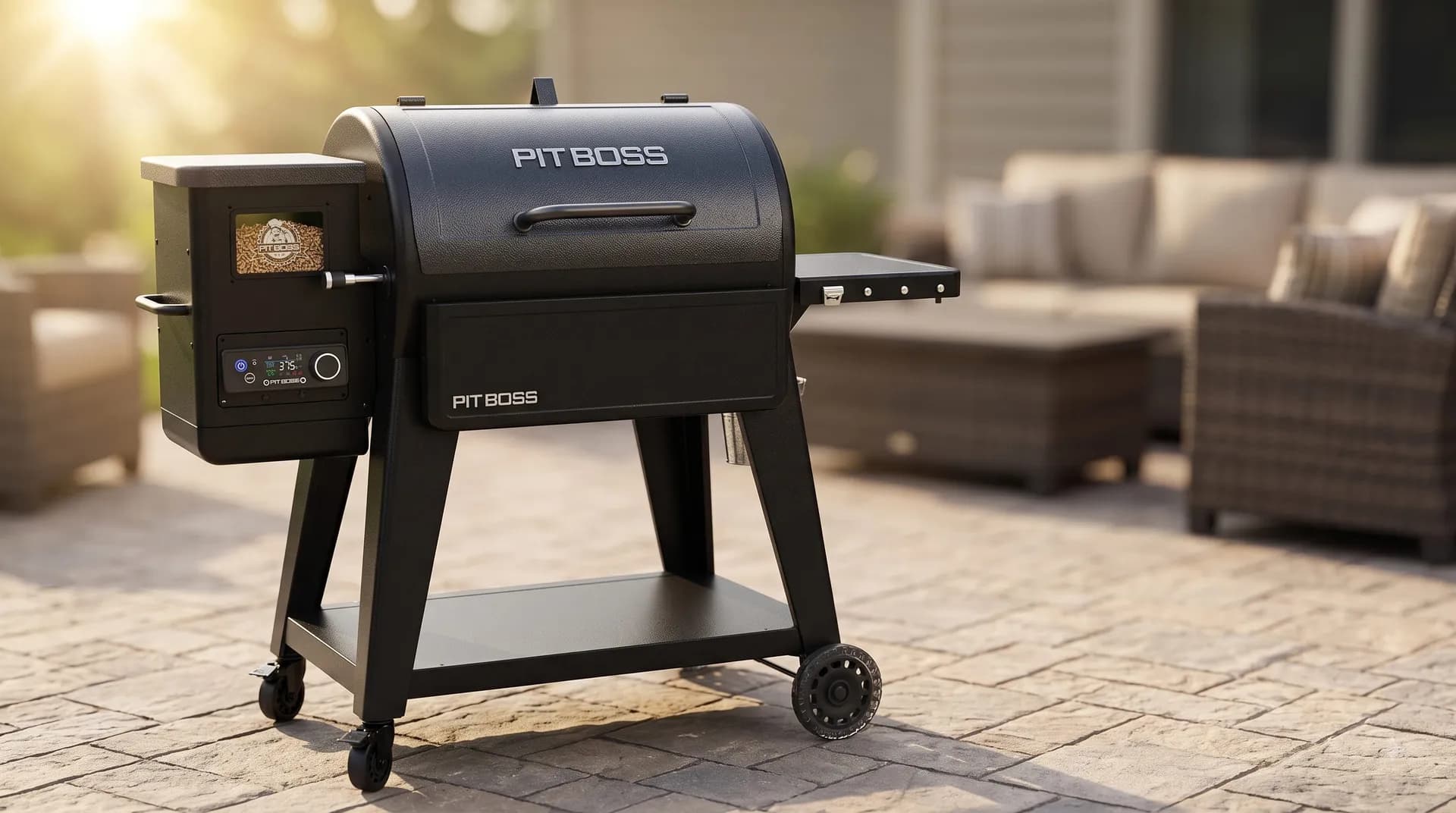
  1. 1Pit Boss Navigator 850 Pellet GrillPit Boss Navigator 850 Pellet GrillPellet4.5
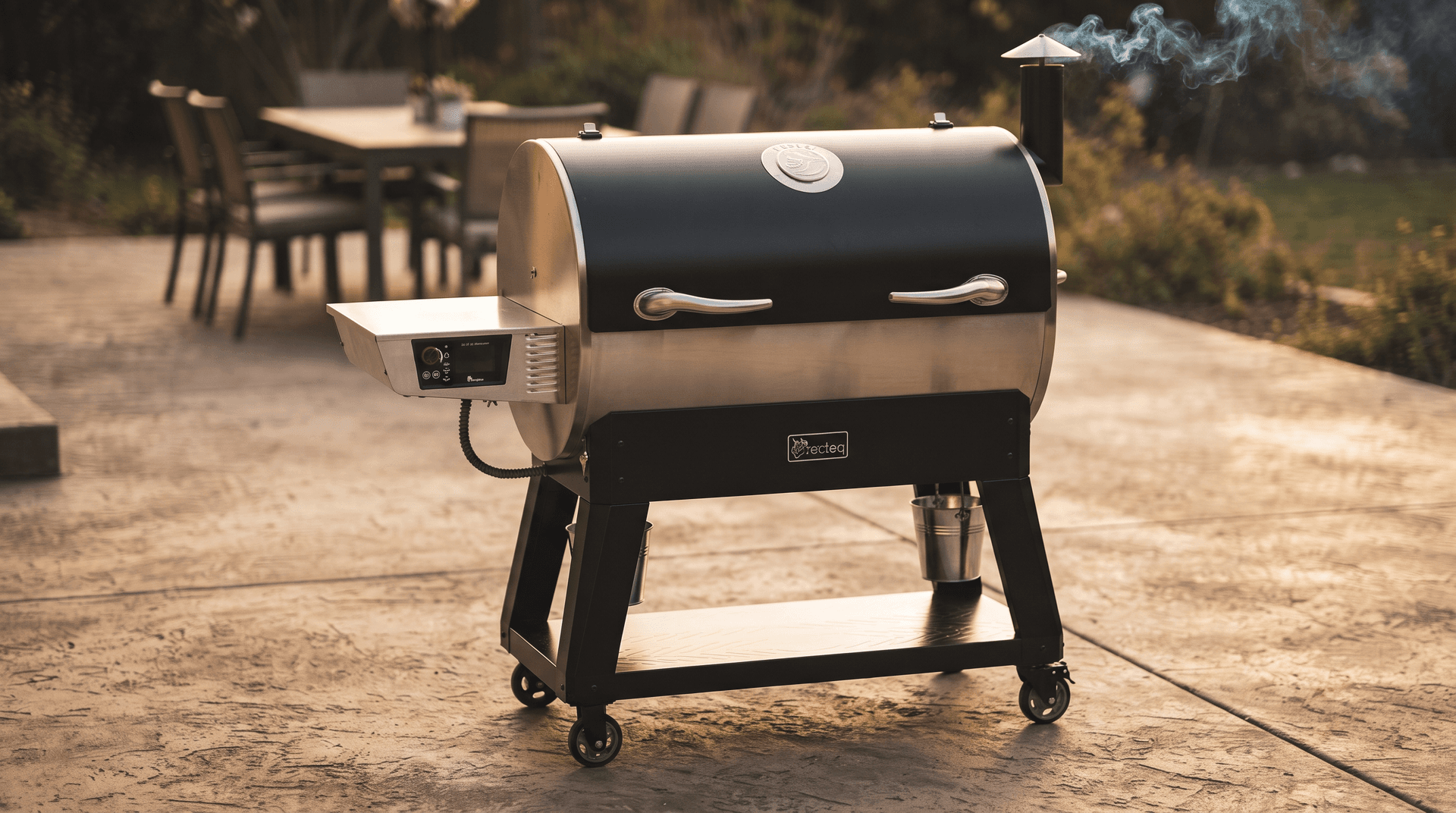
  2. 2recteq Flagship 1600recteq Flagship 1600Pellet4.5
  3. 3Traeger Ironwood 885Traeger Ironwood 885Pellet4.4
  4. 4Traeger WoodridgeTraeger WoodridgePellet4.4
  5. 5Traeger Woodridge ProTraeger Woodridge ProPellet4.3
  6. 6Traeger Pro 34Traeger Pro 34This review4.2

Also ranked among pellet grills: Pit Boss 150 PPS Tabletop Pellet Grill (3.9).

Key Specs

Plenty of grate and a simple dial, with no connectivity.

SpecTraeger Pro 34What it means for you
Cooking area884 sq in (646 main + 238 upper)Two racks of ribs plus sides
Temperature rangeAbout 180°F to 450°FLow enough for jerky; slow for searing
Hopper18 lbEnough for an overnight smoke
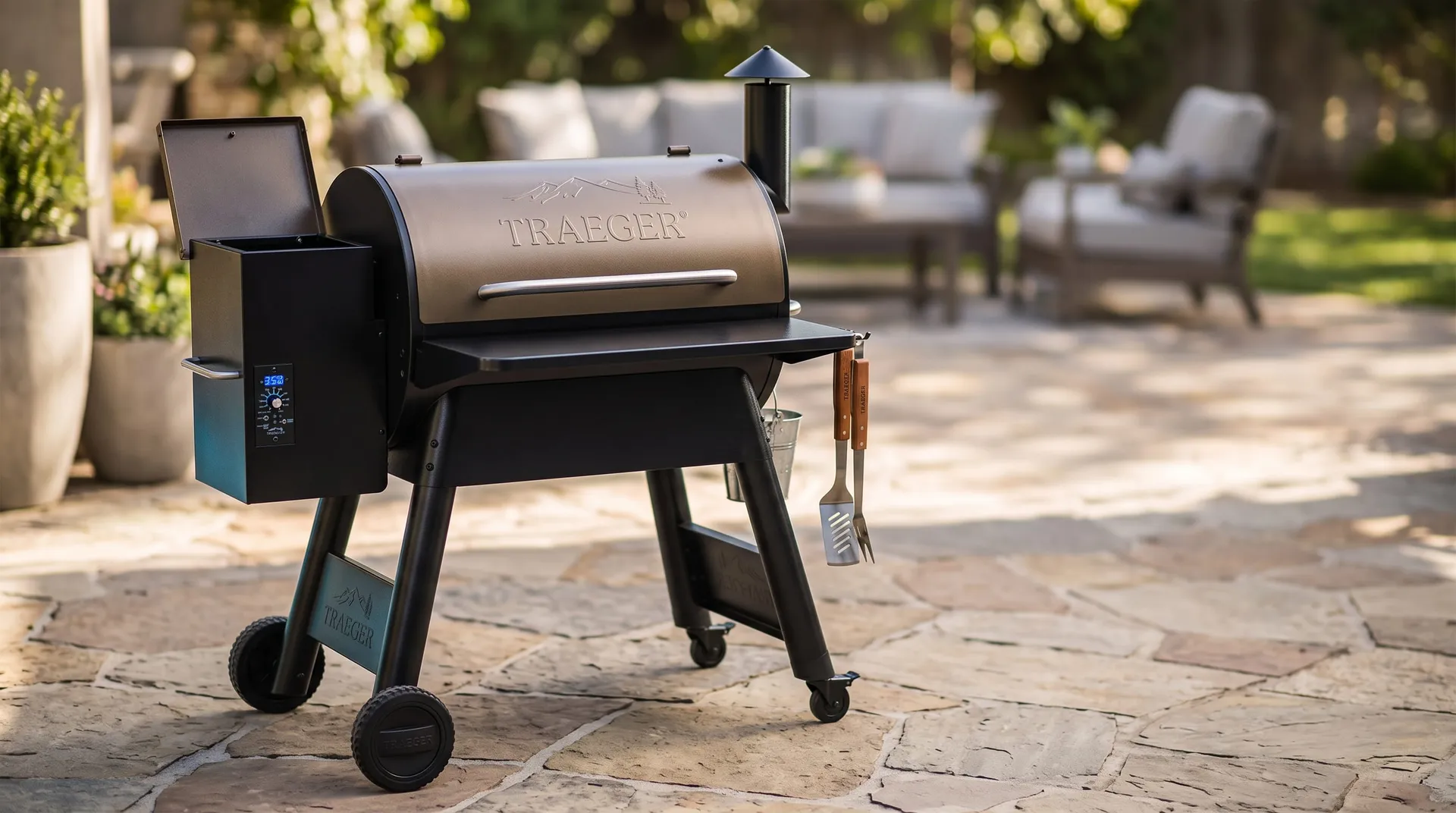
ControllerUniversal AGL dial with digital readout and meat probe portSet a temperature and walk away
ConnectivityNoneCheck it in person or add a wireless probe
Weight135.8 lb assembled; 168.1 lb shipping (Traeger)One person can roll it, but the box needs two
Dimensions53 x 27 x 49 in (L x W x H)Needs a mid-size patio spot
Warranty3-year limitedShort by today's Traeger standards

Can You Trust It With an Overnight Brisket?

Yes: we adjusted nothing during an unattended 11-hour cook, and it stayed within about 15°F.

This is what the Pro 34 does best. We set it, probed the brisket and went to bed. The controller held within about 15°F of the setpoint all night, and about 6 lb of pellets were still in the 18 lb hopper in the morning. In a same-day test, the insulated Traeger Ironwood 885 held tighter, but the Pro 34 was steady enough to sleep through.

Our how to smoke a brisket guide suits this grill well.

How the controller works

Traeger lists the Pro 34 with its Universal AGL controller, a simple dial with a digital readout. It does one job: hold a set temperature by feeding pellets. The low end sits at about 180°F, low enough for jerky and gentle salmon or sausage smokes.

  • No pellet sensor: look at the hopper on long cooks.
  • No Super Smoke: run the first hours low for more smoke instead.
  • Probe count depends on age: Traeger says grills built before May 2022 shipped with two meat probes and later ones with one.
  • Display: the blue LED readout is hard to read in direct sun.

A typical cook, start to finish

Without an app, a good routine replaces the alerts newer grills send.

  1. Check the hopper and fire pot. Top up pellets and look for ash piled in the pot.
  2. Start with the lid closed and set your temperature; the controller lights the fire.
  3. Load the meat once the grill settles and probe the thickest part.
  4. Set a phone timer for hopper checks, every few hours on a long cook.
  5. Trust the probe, not the clock. Our meat temperature chart has pull temperatures.
  6. Run the shutdown cycle and switch off only after it ends; cutting power leaves unburned pellets in the pot.

A wireless thermometer is the most useful upgrade: remote readings for a fraction of the cost of moving to a Wi-Fi model.

How Much Smoke Flavor Does It Give?

Plenty: ribs built a smoke ring about 1/4 inch deep after 5 hours, with no liquid smoke.

Wood smoke is the Pro 34's strength. The thin barrel and simple controller let pellets smolder on low settings, and our ribs and brisket both came out with dark bark and a clear smoke ring. Hickory and competition blends suit beef and pork; apple and cherry suit chicken.

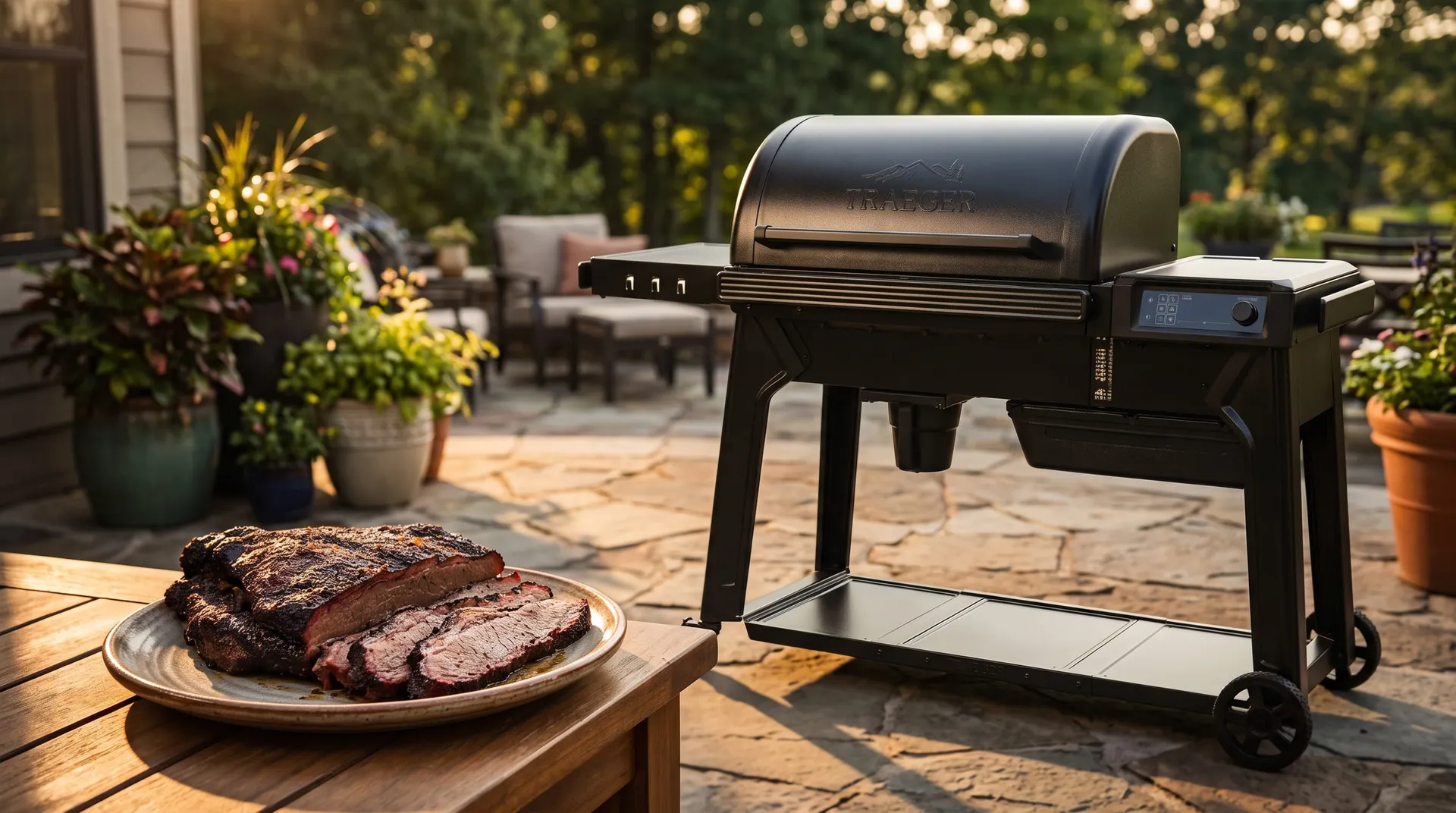
Sliced smoked brisket with dark bark and a pink smoke ring on a cutting boardOur overnight brisket: dark bark and a clear smoke ring from a long, low cook.

Choosing pellets

Most flavored pellets are blends: a base wood such as oak or alder carries the fire, and a smaller share of hickory, cherry or mesquite adds flavor. "100% hickory" labels mean the flavor wood is the whole fuel, which gives stronger smoke. Blends burn more consistently; single woods taste more distinct. Our wood guide pairs woods with meats.

  • More smoke on long cooks: run the first hour or two at around 180–225°F, where pellets smolder and make more smoke.
  • A smoke tube: filled with pellets and set on the grate, it adds smoke without changing the controller's job.
  • Other brands: any food-grade hardwood pellets sized for pellet grills will feed the auger, as long as they are dry.

Will It Feed Your Family, and Can It Sear?

Room for two full racks of ribs plus vegetables; searing is slow with a 450°F ceiling.

With 646 sq in on the main grate and 238 sq in on the upper rack, the 884 sq in total fit two full racks of ribs plus a tray of vegetables. Per Traeger's specs, its main grate is bigger than the Woodridge's main rack, so there's more room for full spare-rib racks on the lower level, where heat is steadiest.

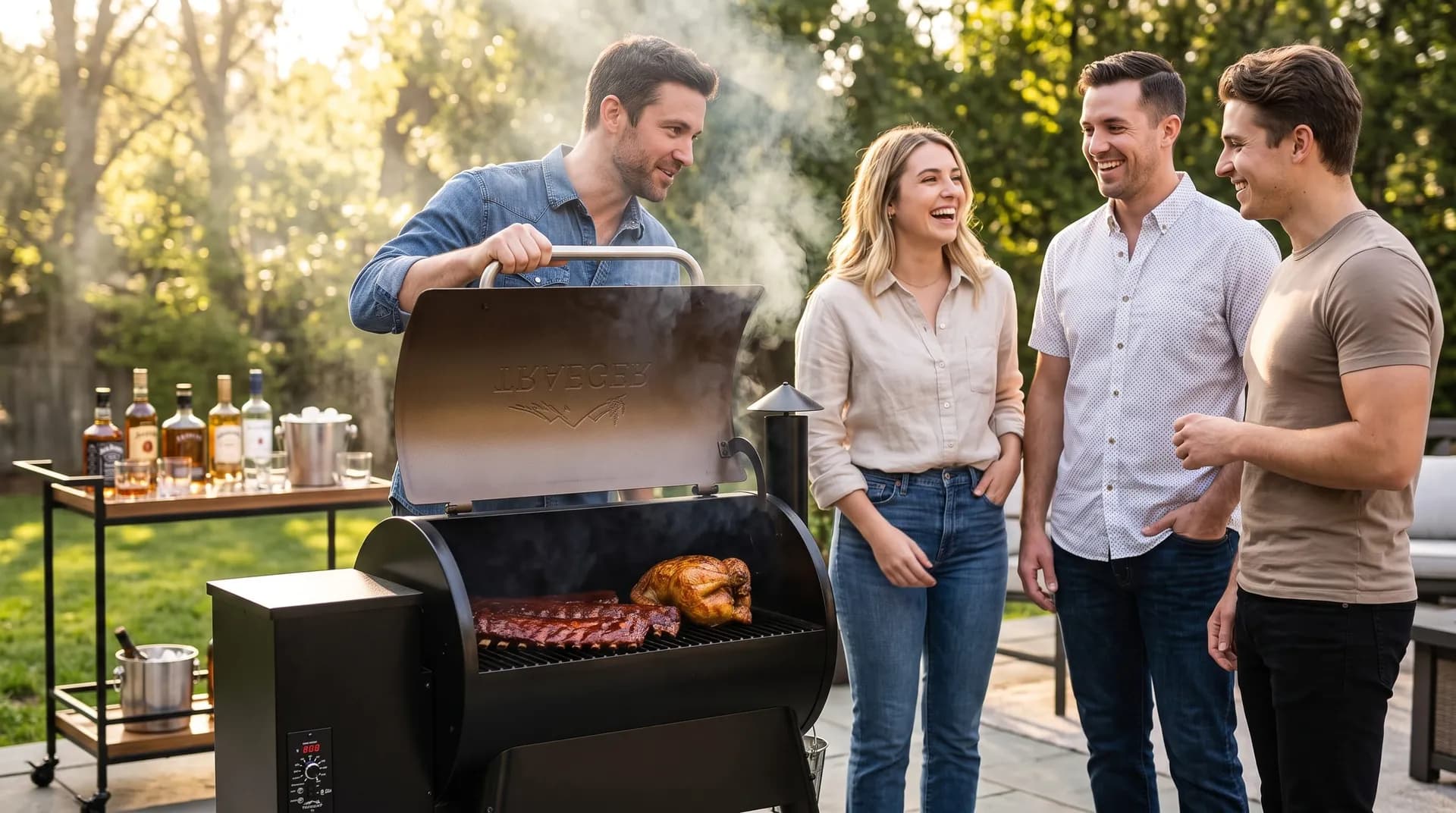
Friends talking beside the Traeger pellet grill loaded with ribs and a whole chickenRibs and a whole chicken side by side on the main grate, with room to spare.

What to cook first

Start with pork butt or spare ribs. Both forgive the controller's swings and reward the strong smoke. Whole chickens, wings, salmon and baked beans also suit it, and the top setting gives crisp chicken skin and roasted vegetables. Brisket is a good second or third cook once you know how the grate runs.

A starting plan for spare ribs:

  • Set the grill to 225–250°F and cook bone-side down on the lower grate.
  • Spritz occasionally once the bark sets.
  • Wrap partway if you like (the popular 3-2-1 method uses three hours unwrapped, two wrapped and one sauced).
  • Judge by feel: the rack bends and the surface cracks when lifted from one end. Probe readings around 195–203°F between the bones usually line up with tender ribs.

Our how to smoke ribs guide covers the details.

Searing

With no direct flame and a 450°F top end, thick steaks brown slowly. Searing scored 6.3 out of 10. Use the reverse sear method: smoke low, then finish in a hot cast-iron pan.

For turkey, smoke it unstuffed (the USDA advises against stuffing poultry that's smoked or cooked slowly) and run 275–325°F so the skin renders. Check for 165°F in the thickest part of the breast, thigh and wing.

Is It Easy to Set Up and Keep Running?

Yes: 70 minutes to build solo, about an hour to burn in, and no firmware to update.

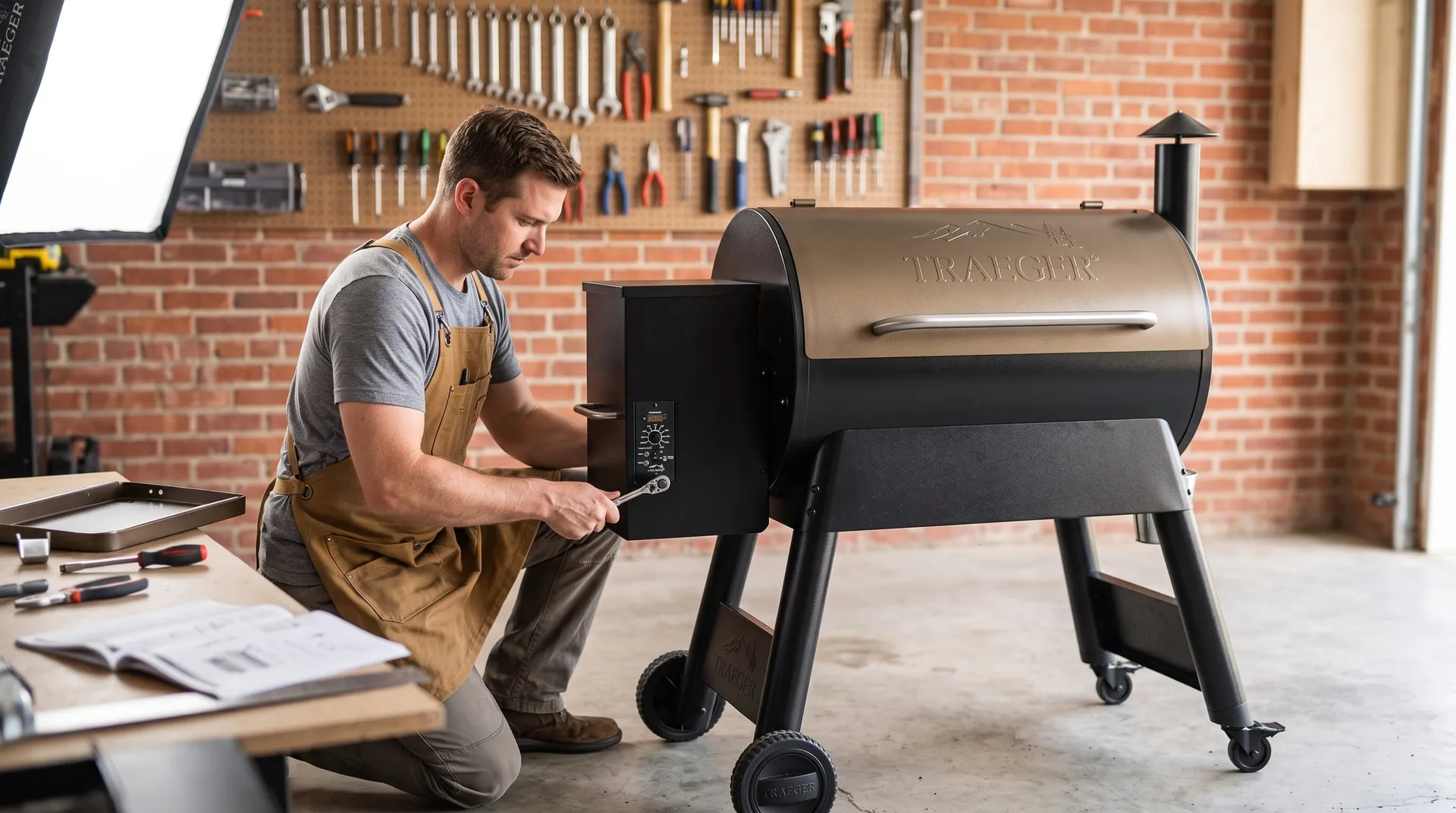
Assembly took 70 minutes solo with a drill. It's simple to build but feels dated, and the sawhorse-style legs feel less sturdy than Traeger's newer carts. With no app account or Wi-Fi to set up, a new owner can run a first cook within minutes of the burn-in.

Man assembling the bronze Traeger pellet grill in a garage workshopA solo build with a drill took us 70 minutes; the legs and hopper go on first.

First burn-in

The Pro 34 uses Traeger's non-connected burn-in, which takes about an hour and starts with priming the auger by hand.

  1. Fill the hopper. Open the lid and remove the grate, drip tray and heat baffle.
  2. Set the dial to High for 2–5 minutes, until pellets fall into the fire pot.
  3. Run the shutdown cycle, switch off, and reinstall the heat baffle, drip tray and grates. Traeger issued a manual correction on this point, so don't skip it.
  4. Turn it on, close the lid and set it to Smoke. Wait about 15 minutes, until thick white smoke turns thin and slightly blue.
  5. Set it to High for about 30 minutes, then run the shutdown cycle (about 25 minutes) before switching off.

Keeping the sensor and igniter healthy

Two small parts cause most "it won't heat right" calls.

  • RTD temperature sensor: a thin rod inside the barrel near the controller. Grease and smoke film make it read wrong, so wipe it gently during deep cleans.
  • Hot rod igniter: sits in the fire pot. Ash around it slows startup, and a weak one shows up as long, smoky starts before it fails outright.

Cleaning schedule

WhenWhat Traeger recommends
After each cookWipe spills and scrape the grates
Every 2–3 cooks (20–24 hours)Deep clean inside and vacuum the fire pot
MonthlyEmpty the hopper and vacuum out sawdust
Every 3 monthsClean the exterior, sooner without a cover
Every 6 monthsClean the grease chute

Vacuum ash only when the grill is cold, and seat the fire pot so its lip doesn't catch on the auger tube. Skip wire brushes: Traeger warns bristles can break off into food. Line the drip tray with foil and empty the grease bucket before long cooks. Our grill cleaning and maintenance guide covers the how-to.

Through the seasons

The thin, single-wall barrel is fine in summer and needs help in winter. Place it level, a few feet from siding or fences, with its back to the wind. In cold months, add Traeger's insulation blanket and expect longer starts.

At season's end, empty the hopper, vacuum the fire pot and hopper, and cover the grill. Traeger advises checking for mold before the first cook after storage; how to winterize your grill covers the rest.

Who Should Buy the Traeger Pro 34 (and Who Shouldn't)

For families who want hands-off smoking without an app, at a sale price.

Buy it if you

  • Want set-and-forget brisket and pulled pork without an app

  • Cook for four to eight people

  • Can find it on sale

  • Prefer a short learning curve with no firmware or pairing

Look elsewhere if you

  • Want phone alerts and remote control

  • Sear steaks often

  • Want a long warranty

  • Smoke often through cold winters

Match two or more points on either side and you have your answer.

Man lifting the lid of the bronze Traeger with ribs inside while his family sits at a deck tableWeekend ribs for the family: the hands-off smoking this grill is built for.

Traeger Pro 34 vs. Alternatives

Newer pellet grills add Wi-Fi and searing; a charcoal bullet saves money.

Our best pellet grills, best grills and pellet grill vs traditional smoker guides put it in context.

When to pick an alternative instead

Common Problems and Fixes

Most Pro 34 problems are ash, damp pellets or a worn igniter.

ProblemLikely causeFix
Won't ignite or long smoky startsWorn hot rod igniter or ash around itVacuum the pot, then replace the igniter; see how to replace grill igniters
Auger jamDamp pellets left in the hopperStore pellets sealed; empty the hopper monthly and before long breaks
Slow heat, drifting temps or high pellet useAsh in the fire potVacuum it cold; see grill not heating up properly
Temperature reads offDirty RTD sensorClean the sensor inside the barrel
Display hard to readDirect sunShade the controller or use a wireless probe
Grease on the patioOverflowing grease bucketEmpty it before every long cook

Is the Traeger Pro 34 Worth the Money?

On sale, yes; at full price, a Wi-Fi grill gives more for the money.

Value verdict

If a discounted Pro 34 plus a wireless thermometer costs about the same as a Navigator 850 on sale, the Navigator gives you more grill.

  • Steady overnight smoking

    Wi-Fi and app control

  • Room for a family cook

    A hard sear

  • A simple, proven controller

    A long warranty

  • A short learning curve

    A sturdier modern cart

  • Model

    Version · Status (Traeger support)

  • TFB88PZB

    Bronze, US · Active

  • TFB88PZBO

    Bronze, Amazon exclusive · Active

  • TFB88PUB

    Blue, US · Discontinued

  • TFB88PUBC

    Blue, Canada · Active

What it costs to run

Pellets are the only fuel. The Pro 34 typically burns about half a pound per hour when smoking, 1 lb per hour on medium and 2 lb per hour on high, more on cold or windy nights. Other consumables are cheap: drip tray liners, grease bucket liners and eventually a hot rod igniter.

Versions, parts and accessories

Traeger still lists replacement augers, controllers, fans, fire pots, hot rods, grates and RTD probes, but marks the frame as end of life. Treat rust on the legs and frame as what ends this grill's life, and keep it covered. A cover and the bottom shelf are the add-ons that give the most for the money.

Buying on sale: check the model number against the table, ask whether it's newer or older stock (which sets the probe count), inspect open-box units for hopper dents or a cracked controller, and plan two people for the box.

Final Score

SmokyHQ score

Good fit

Best at Smoke Flavor
Weakest at Searing

  • Temperature Consistency8.9/10
  • Smoke Flavor9.5/10
  • Searing6.3/10
  • Build Quality7.9/10
  • Ease of Assembly8.7/10
  • Value for Money8.9/10

Scores settled? See today’s price on the Traeger Pro 34.

If you can live without Wi-Fi and a hard sear, a discounted Pro 34 still smokes like a much pricier grill.

Next steps: pair it with a wireless thermometer, or compare current models in our best pellet grills guide.

Ranked in our buying guides

Durability

What to watch over time

Steel body
Scratches are where rust starts; touch them up and keep it covered.
Hot rod igniter
A common pellet-grill wear part; inexpensive to replace.
Auger
Store pellets dry; damp pellets swell and can jam the feed.

Based on the materials, design and warranty we documented during testing. Long-term ownership results are added to reviews as our testers log them.

Frequently Asked Questions

01

Is the Traeger Pro 34 worth it?

Yes, on sale. It held within about 15°F through an 11-hour overnight brisket in our testing. At full price, a Pit Boss Navigator 850 adds Wi-Fi and a flame broiler.

02

Is the Traeger Pro 34 discontinued?

Partly. Traeger's Woodridge line has replaced it as the entry pellet grill, and the blue US version (TFB88PUB) is discontinued, but the bronze TFB88PZB is still listed as active.

03

What is the max temperature of the Traeger Pro 34?

450°F. That's fine for roasting and crisp chicken skin, but thick steaks brown slowly.

04

Does the Traeger Pro 34 have Wi-Fi?

No. There's no app or Wi-Fi, so add a wireless thermometer if you want remote readings.

05

How long does the Traeger Pro 34 take to assemble?

About 70 minutes solo with a drill in our test, followed by a burn-in of about an hour.

06

How many pellets does the Traeger Pro 34 burn?

About half a pound per hour smoking, 1 lb on medium and 2 lb on high. Our overnight brisket left about 6 lb in the 18 lb hopper.

07

Is the Traeger Pro 34 good for beginners?

Yes. You set a temperature and the controller holds it, and there's no app to learn. Our best smokers for beginners guide lists other options.

08

Can I use the Traeger Pro 34 in the rain?

Light rain is fine with the lid closed, but keep water out of the hopper, since wet pellets swell and jam the auger.

Written by

Marcus Reilly

Head Pitmaster & Lead Tester

Marcus Reilly is a KCBS Certified Judge with 15 years of competition barbecue. He leads SmokyHQ’s smoker, pellet, charcoal and kamado testing, so if you’re choosing a cooker for brisket, ribs or overnight smokes, his reviews tell you which ones hold temperature and which ones fall short.

  • Smokers
  • Pellet Grills
  • Charcoal & Kamado
  • Low-and-Slow BBQ
  • Temperature Control

Every grill is bought with our own money and scored on the same tests. How we test