Assembly and build
Plan most of an afternoon with two people. The barrel is heavy, and lifting it onto the cart is the hardest step.
- Unbox it close to where it will live; at about 218 lb, moving it later is hard.
- Have two people lift the barrel and hopper together, and never lift by the hopper alone.
- Check every bolt is tight before the first fire, and level the grill so grease drains to the bucket.
The stainless steel body and cart feel solid, and the lid closes evenly. That build quality is a big part of what you pay for.
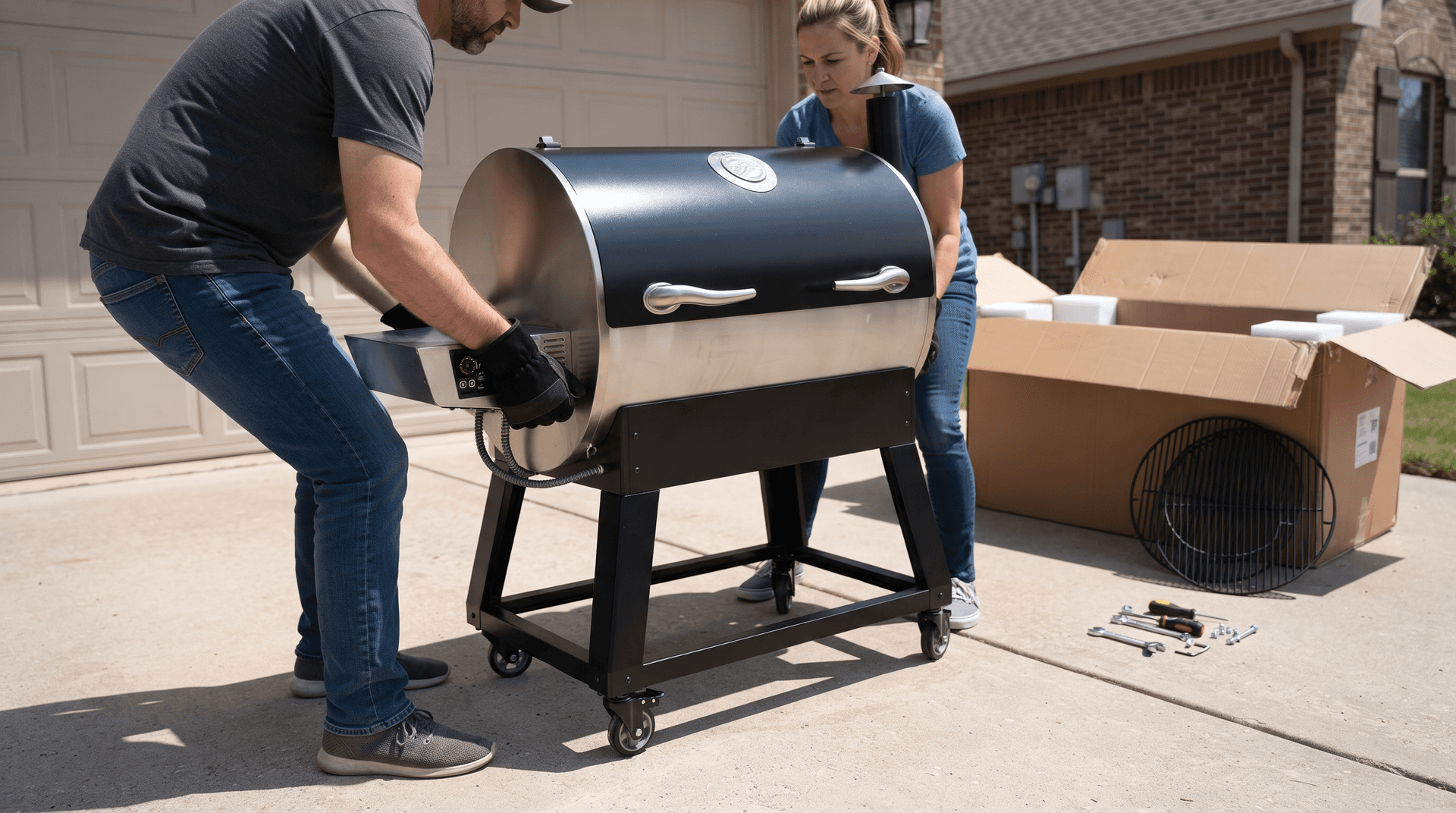 Two people make lifting the heavy barrel onto the cart safer.
First burn-in and shutdown
Run a burn-in before cooking food. Fill the hopper, start the grill, hold a moderate temperature for a while, then run it hot to burn off manufacturing oils. Follow the steps in recteq's manual for exact times.
To shut down, use the controller's shutdown cycle so it burns off the pellets left in the fire pot. Don't pull the power cord mid-cycle.
Day-to-day use
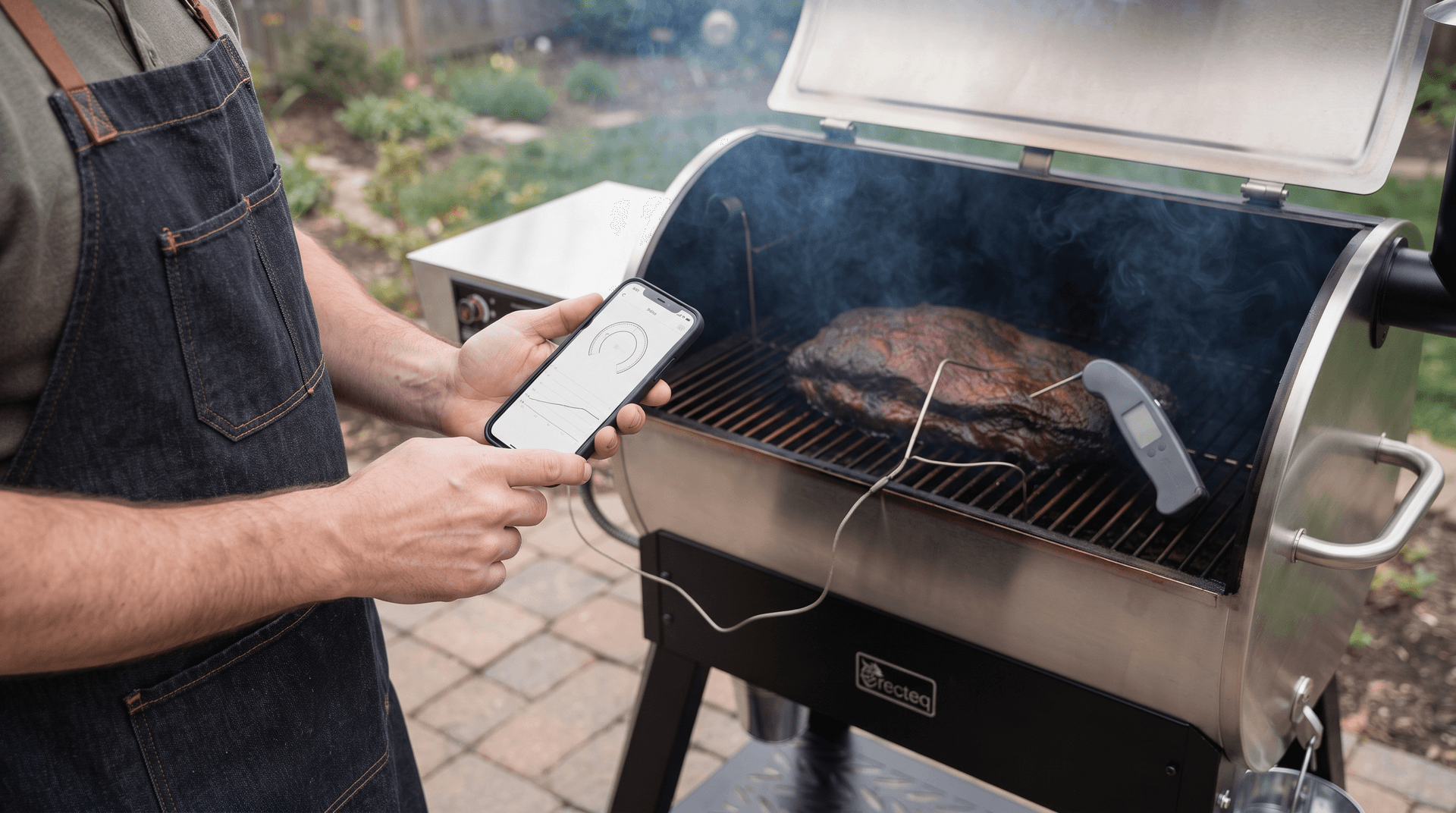
Once it's seasoned, a typical cook is fill, set and walk away. A few habits help:
- Match pellets to the meat and keep two or three flavors on hand; our wood pellet and chip pairing guide helps.
- Use only what you need: on small cooks, a huge chamber burns more pellets than a mid-size grill.
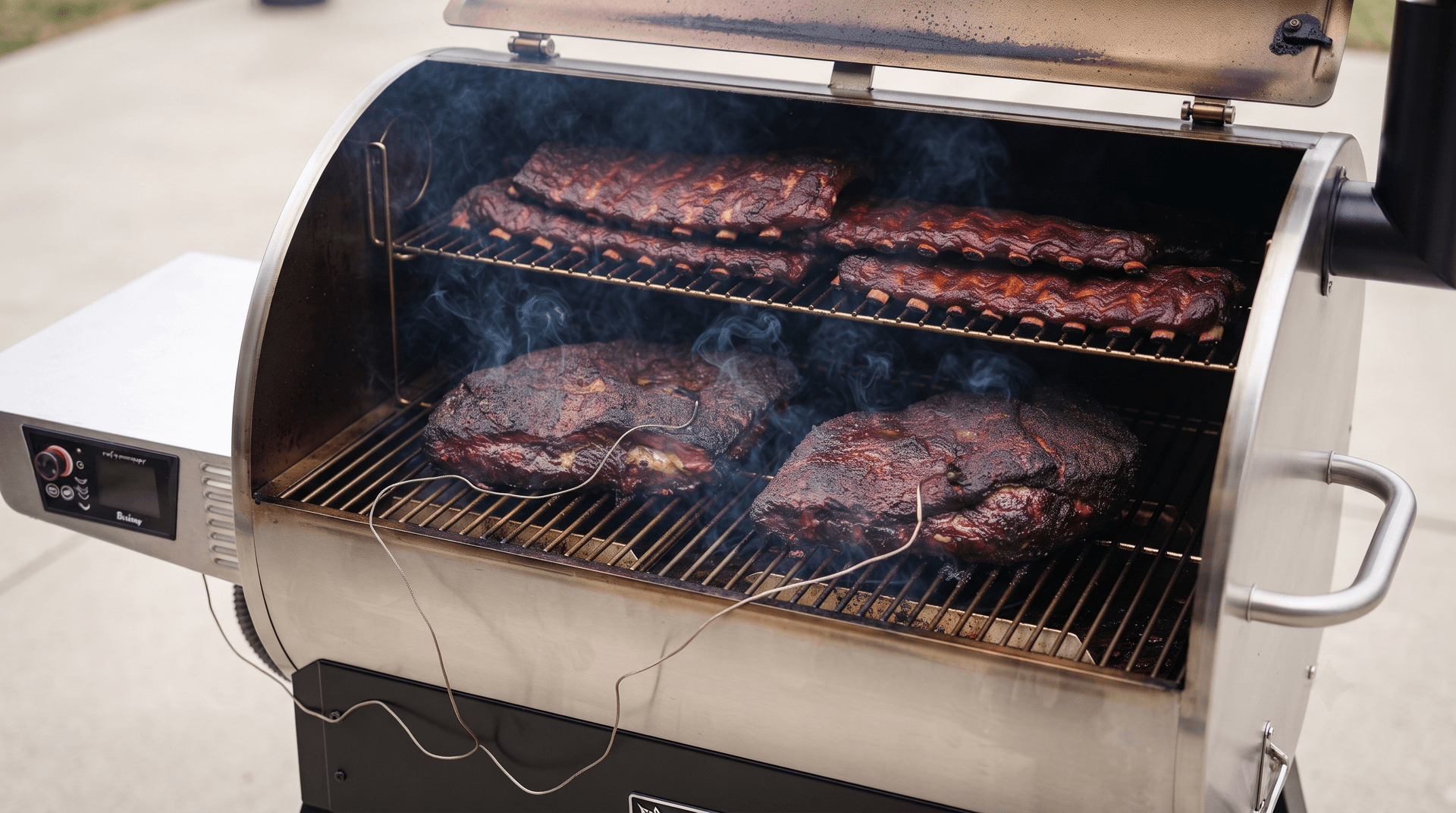
- Plan your racks so big cuts go on the main grate and sides go above.
- Pick a level, sheltered spot a few feet from siding and fences.
What to cook first
Start with a couple of pork butts or racks of ribs. They're forgiving and teach you where the main grate runs hot and cool. Save the full-load party cook for once you know the grill.
Cooking for a crowd
recteq rates the grill for about 15 pork butts, 16 racks of ribs or 6 briskets. Treat those as maximums with every rack in use, and leave space for airflow. For a party, smoke the big cuts overnight, hold them wrapped, then use the space for wings and sides in the afternoon.
Is it too big for you?
Size is the main question with this grill. A large chamber takes longer to heat and burns more pellets on small cooks, so the Flagship shines only when you fill it.
- Good fit: you host often, cook for six or more, batch-smoke for the freezer or cater family events.
- Borderline: you cook for four most nights but host a few big parties a year. A mid-size grill plus a second, cheaper smoker for big days may suit you better.
- Poor fit: you cook for one or two and mainly want weeknight dinners.
Measure your space too. With the lid open and the side shelf in use, give it clear room on all sides, and keep it a few feet from siding, fences and anything that can catch heat.
Pellet use and running costs
Pellets are the main running cost. A pellet grill burns more at high heat than at smoking temperatures, and a chamber this large burns more than a mid-size grill at the same setting. The 40 lb hopper means two standard bags fit in one fill.
For overnight cooks, start with a full hopper and check the level before bed. Keep pellets dry in a sealed bin, because damp pellets swell and can jam the auger.
Cleaning schedule
Pellet grills fail from neglect more often than from defects. A simple routine keeps this one running:
| When | What to do |
|---|
| After each cook | Scrape the grates and wipe spills |
| Every few cooks | Vacuum ash from the fire pot and barrel, once cold |
| After long cooks | Scrape the grease tray and empty the bucket |
| Monthly | Empty the hopper and clear sawdust |
| Each season | Check the hot rod, auger and gasket areas |
Our grill cleaning and maintenance guide has the full routine, and how to clean grill grates covers the grates.
Seasons and storage
A fitted cover keeps rain off the controller and out of the hopper. In wet months, empty the hopper if the grill will sit for weeks. Our winterizing guide covers off-season care.
Warranty and parts
The 6-year limited warranty covers defects in materials and workmanship for home use, not labor or damage from neglect. Register the grill and keep your order record. recteq sells common parts like hot rods, fire pots and probes directly.
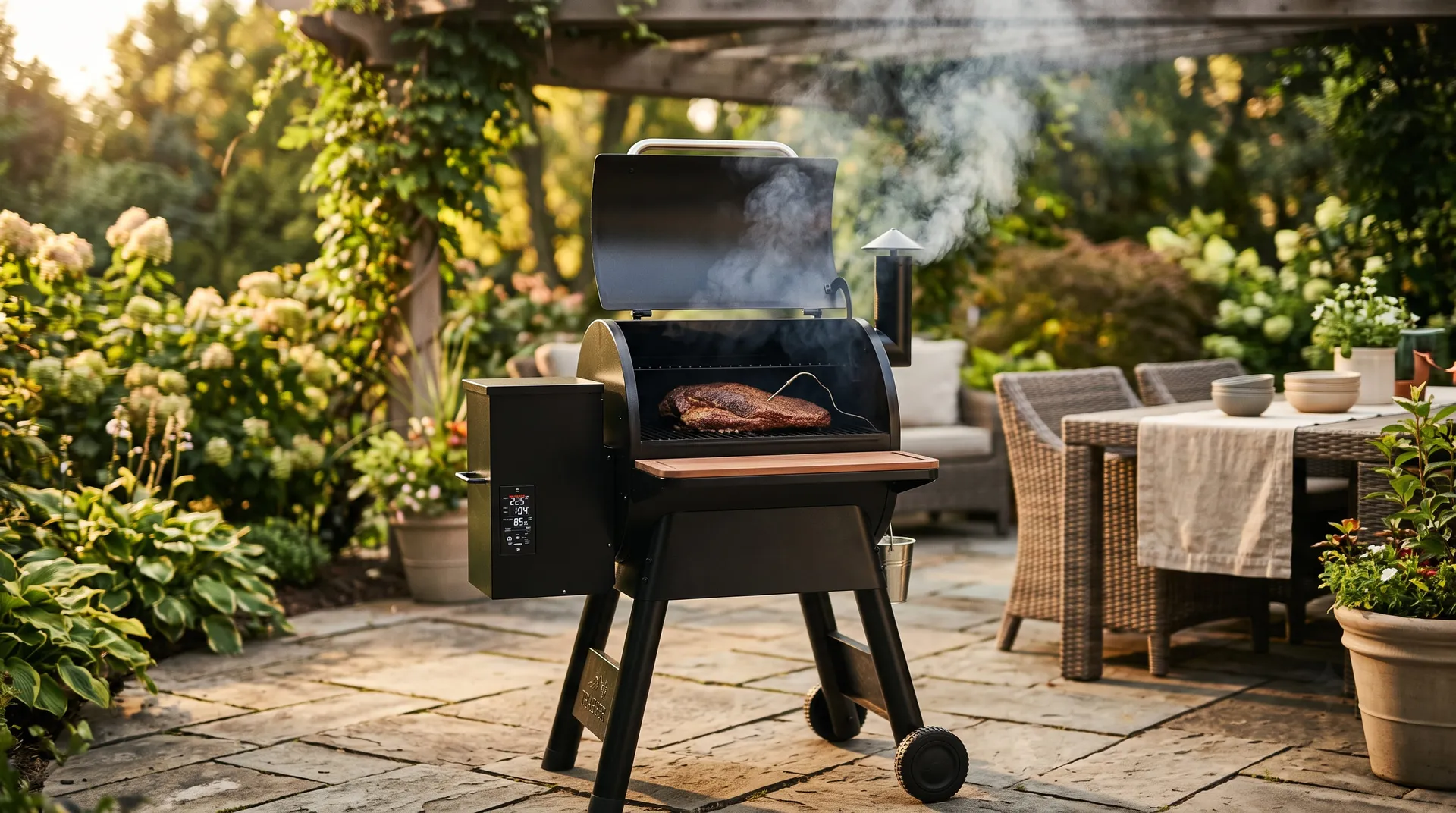
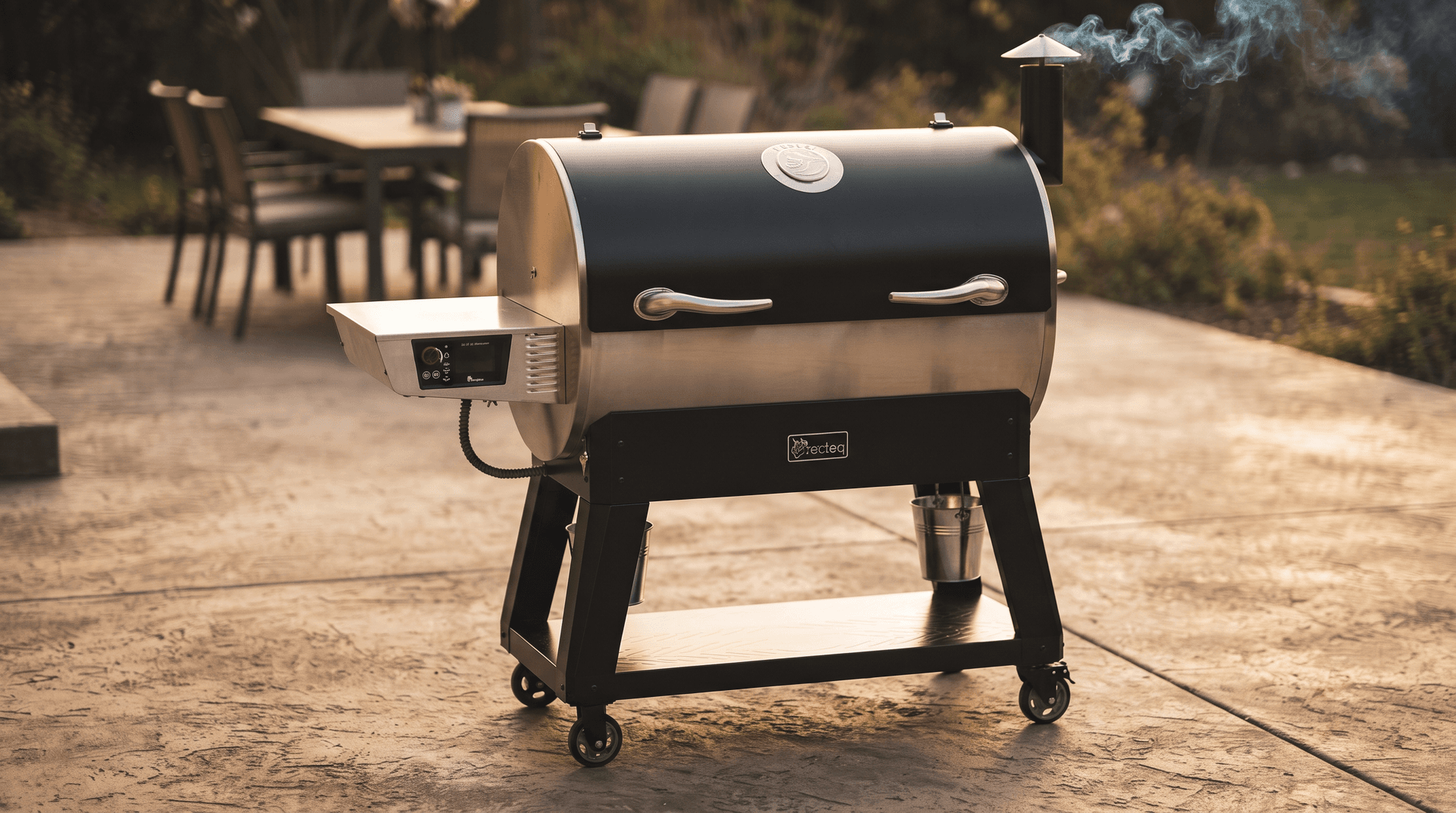 The recteq Flagship 1600 needs a permanent spot about 4 ft wide.