
Skip to contentSkip to content
Blackstone 2364 Camping Griddle with Side Burner tested by SmokyHQ

Portable GrillsHands-on review

Blackstone 2364 Review 2026: Camp Griddle Plus Pot Burner

A flat-top camp griddle and a side burner in one latching case: pancakes browned edge to edge while coffee boiled beside them. Right for car campers feeding two to four, wrong for big groups or anyone chasing grill marks.

By Tom BrickerLast updated:14 min read

Good fit

Ranked #3 · 6 portable grills tested

Best for: Car campers and tailgaters cooking for 2–4 who want breakfast and coffee at once

  • Griddle performance8.8
  • Versatility (griddle + burner)9.2
  • Build and durability7.8
  • Setup and portability8.8
  • Cleanup8.2
  • Value8.4

Hands-on · 3 weeksHow we score

4.3

Our verdictGood fit

A compact griddle and a coffee burner in one latching case, for car campers who cook two things at once.

Portable Grill · Propane · hands-on tested

Brand
Blackstone
Cooking area
168 sq in
Fuel
Propane
Tested for
3 weeks

What we liked

  • Side burner runs coffee or beans while breakfast cooks on the plate
  • Pancakes and smash burgers browned evenly across the whole plate
  • Latching hood and handle close it like a briefcase

What could be better

  • The griddle top is ceramic-titanium nonstick, so metal spatulas and scrub pads are off-limits
  • The side burner is for simmering and boiling, not searing
  • A 12 x 14 in plate feeds 2–4 people per batch

Buy it if

Car campers and tailgaters cooking for 2–4 who want breakfast and coffee at once

Skip it if

Big groups, hike-in camping, or anyone who wants grill marks

The Blackstone 2364 is the camp cooker to buy if you feed two to four people and want breakfast and coffee going at the same time. In our Blackstone 2364 review it scored 4.3 out of 5: the 12 x 14 in nonstick plate browned pancakes and smash burgers edge to edge, the side burner boiled coffee alongside, and both burners lit first try on all 8 cooks. Skip it if you cook for six or more or only ever use one surface; a simpler tabletop grill does that job for less.

This is a car-camping and tailgating kit, not a backyard flat top. If you are still choosing a style of travel cooker, our portable grill reviews hub lays out every one we have tested.

How We Tested

Three weeks, 8 cooks, a patio and two camping trips, all on 1 lb cylinders.

Tom Bricker used the 2364 for three weeks, splitting time between a home patio and two car-camping trips. Every cook ran on 1 lb propane cylinders, the way most buyers will use it at a campsite.

  • Food: smash burgers, pancakes and eggs, stir-fry, and coffee and beans on the side burner.
  • Weather: patio and campsite cooks across 8 sessions, including a 41°F morning start.
  • Measurements: surface heat at several points on the plate, ignition success on every start, and setup time.
  • Specs: every number in this review was checked against Blackstone and retailer listings.
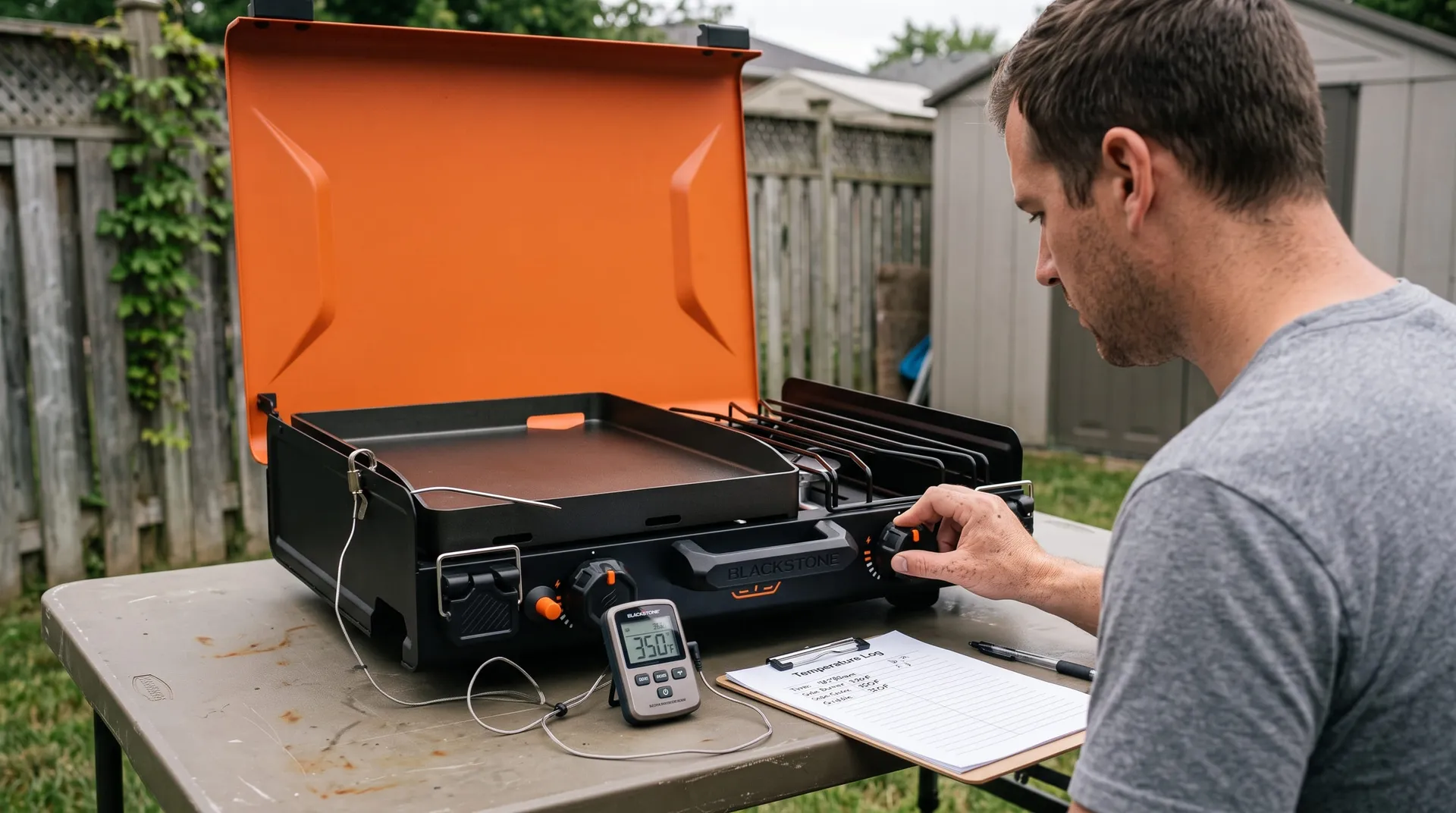
Tester turning the burner knob on a Blackstone camp griddle beside a probe thermometer and a notepad on a backyard tableSurface readings across the plate tell us when it is truly preheated, not just how long the burner has been on.

Each cooker gets a score out of 10 in six categories: griddle performance, versatility, build and durability, setup and portability, cleanup, and value. Those roll up into the overall score out of 5 in the Final Score, so you can compare it with every other portable we have reviewed.

Three weeks can't show long-term rust, igniter life or how the coating holds up after several seasons. We list the parts that wear first under durability and update this review if problems show up.
Test log · category ranking

How it ranks against rivals

#3 of 6

portable grills rank

4.3/5

avg 4.3 in category

9.2/10

best test score

Where it ranks

Overall score out of 5

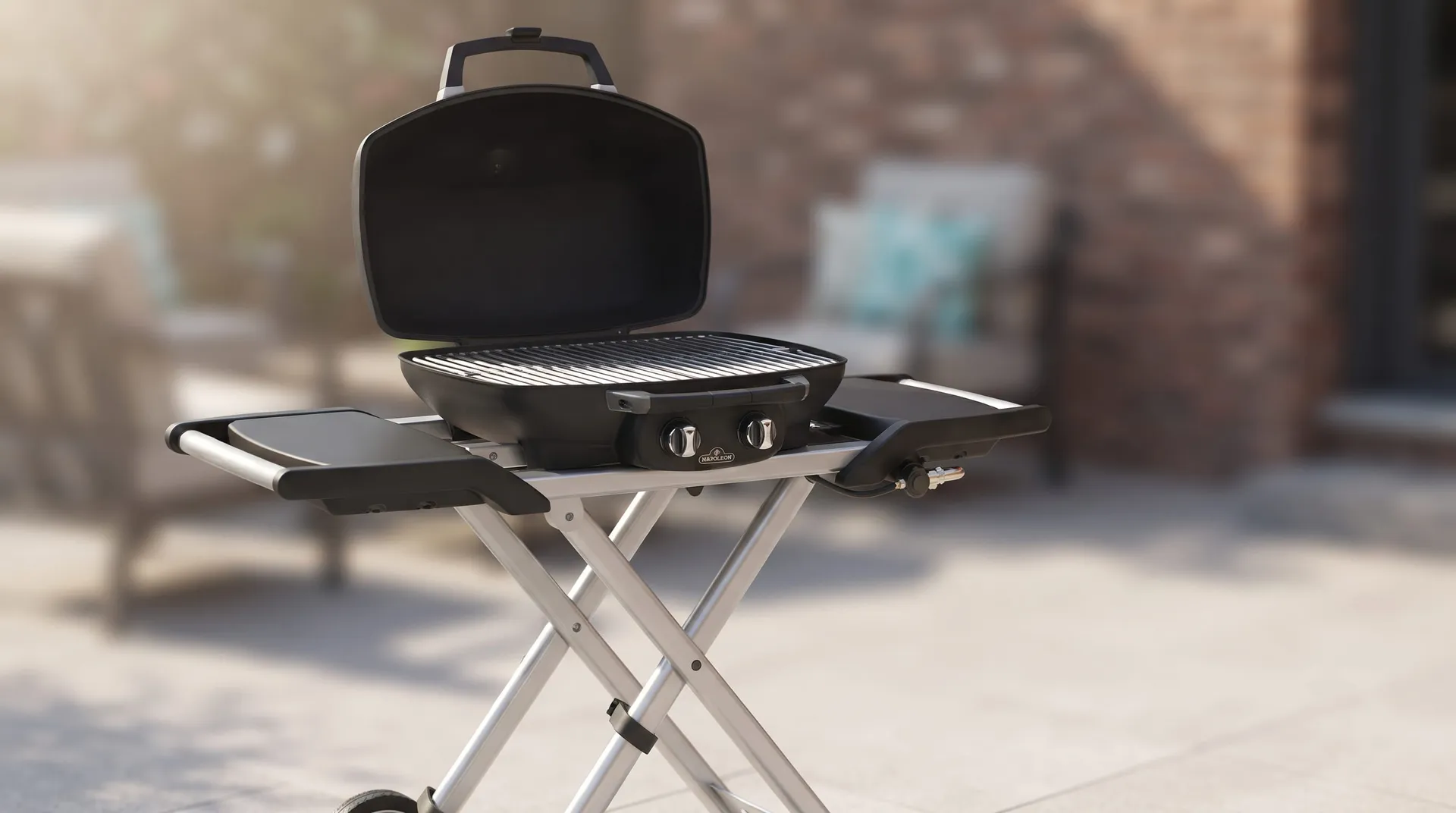
  1. 1Napoleon TravelQ PRO285XNapoleon TravelQ PRO285XPortable4.5
  2. 2Weber Smokey Joe 14"Weber Smokey Joe 14"Portable4.5
  3. 3Blackstone 2364 Camping Griddle with Side BurnerBlackstone 2364 Camping Griddle with Side BurnerThis review4.3
  4. 4Cuisinart Portable Propane GrillCuisinart Portable Propane GrillPortable4.3
  5. 5Cuisinart Petite Gourmet Portable Gas GrillCuisinart Petite Gourmet Portable Gas GrillPortable4.0
  6. 6Megamaster Tabletop 1-Burner Gas GrillMegamaster Tabletop 1-Burner Gas GrillPortable4.0

Key Specs

SpecBlackstone 2364What it means for you
Griddle plate12 x 14 in (168 sq in)About 4 smash burgers or 6 pancakes per batch
Griddle surfaceCeramic-titanium nonstick coatingNo seasoning, but no metal tools
Side burnerFits pots up to 8 in wideCoffee, beans, oatmeal water
Burners2, independentPlate and pot run at different heats
Output14,400 BTU combined (Blackstone figure)Modest; fine for a small plate and one pot
IgnitionPush-buttonNo matches needed on a normal morning
FootprintAbout 21 x 17 inFits a picnic table with room to spare
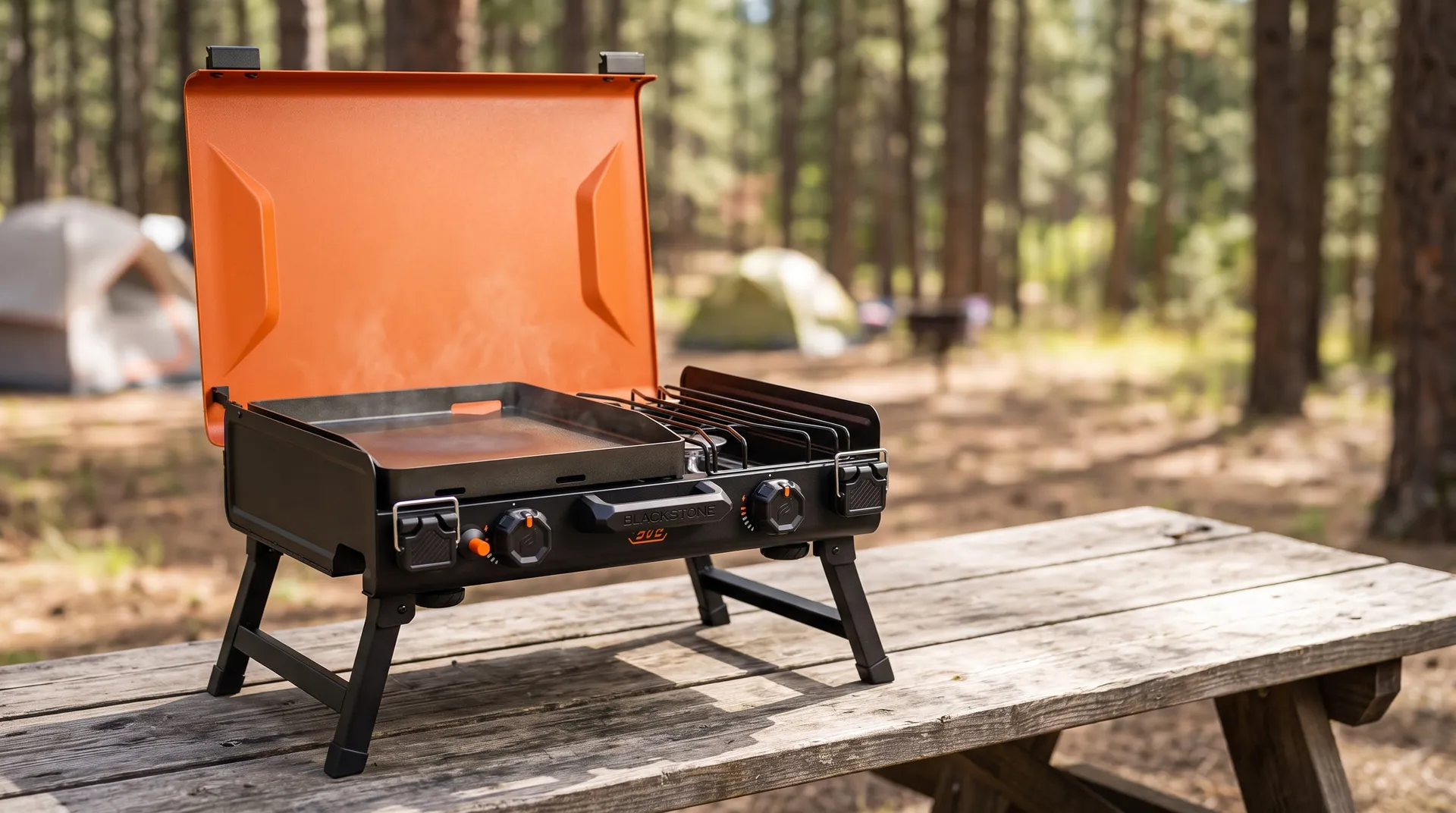
CaseLatching hood, carry handle, leveling feetCloses like a briefcase for the car
Fuel1 lb propane; 20 lb with adapter hose (sold separately)The adapter cuts fuel cost on long trips
Warranty1 year (per Blackstone)Shorter than the three years some tabletop grills carry

Blackstone's own listing quotes a 280 sq in cooking area. The plate itself is 12 x 14 in, so that bigger figure appears to count the side burner too. Plan your batches around the plate, not the listing.

How Well Does the Griddle Plate Cook?

Evenly enough to fill edge to edge, with heat that responds fast to the knob.

Pancakes and smash burgers browned across the whole plate in our tests, so you can load every inch instead of hunting for a hot spot. That matters on a plate this size. With room for about four smash burgers or six pancakes, you cannot afford a dead corner.

The plate also responded quickly when we turned the burner up or down during a stir-fry. That suits fast cooking, but it cuts both ways: a distracted cook can scorch eggs. Turn the heat down early for eggs and back up for burgers.

Three smash burgers and sliced onions on a dark nonstick camp griddle next to a steel pot heating on the side burnerBurgers fill the plate while a pot heats on the side burner, the two-station setup this kit is built for.

Steak, burgers and what the plate can't do

You can cook a steak on the plate. Pat it dry and preheat fully for a crust, but you will not get grill marks or char flavor, because there is no open grate.

Smash burgers are where the plate shines. Press the patty hard right away, leave it alone until the edge goes lacy, then flip once. A nylon or silicone-edged spatula is mandatory, since metal tools damage the coating.

What the modest heat output means

The rated 14,400 BTU is small next to a full-size flat top. It is spread over a small plate and one pot, though, so it goes further than the number suggests. You will notice it in two places:

  • Preheat takes patience. Give the plate several minutes with the burner on high before the first pancake. A cold plate is the most common reason food sticks.
  • Wind steals heat. An open griddle loses more heat to wind than a closed grill. Turn the back of the unit into the breeze, or set up in the lee of the car.

What this means for you: this is a breakfast-and-burgers plate for a small group. It will not sear a stack of thick steaks for six, and it is not trying to.

Is the Side Burner Actually Useful at Camp?

Yes, if you cook two things at once; it is a camp stove bolted to a griddle.

The side burner is the reason to pick the 2364 over a plain tabletop griddle. In our tests it ran coffee and beans while breakfast cooked on the plate, and the two burners never fought each other because each has its own knob.

  • Good uses: kettle or moka-pot coffee, beans or chili, water for oatmeal, warming tortillas in a small skillet.
  • Poor uses: cast-iron searing or a fast wok stir-fry. Do those on the plate.
  • Pot size: up to 8 in wide. Bring a pot with a lid; covered water boils noticeably faster.

Man cooking pancakes on an orange-lidded camp griddle with a coffee pot on the side burner at a forest campsitePancakes on the plate and coffee on the burner: the morning routine that justifies the side burner.

If you never cook two things at once, you are paying for a feature you won't use. In that case, a single-surface tabletop grill or griddle costs less and packs smaller.

A camp breakfast workflow

This is the meal the 2364 is built for. Here is an order that keeps everything hot and finished together:

  1. Start the side burner first. Put the kettle or coffee pot on so water heats while you prep.
  2. Light and preheat the griddle. Let it heat fully while you crack eggs and mix batter.
  3. Bacon or sausage goes on first. It takes longest, and its fat helps the next round.
  4. Move cooked meat off, then pancakes. Push excess grease toward the rear grease cup with a soft scraper first.
  5. Eggs last, on lower heat. The plate's quick response makes it easy to drop the heat.
  6. Use the side burner for warming. Once coffee is done, a small skillet keeps tortillas or toast warm.

Keep one squeeze bottle of oil and one of water handy. A splash of water under a lid steams cheese melts and helps clean the plate at the end.

Is It Easy to Set Up, Pack and Use Safely?

Setup took under 10 minutes without tools, and nothing came loose on two car trips.

There is nothing to assemble at camp beyond connecting the cylinder. Out of the box, setup took us under 10 minutes without tools. The latching hood keeps the plate covered on the road, and the carry handle makes it pack like a briefcase in the trunk.

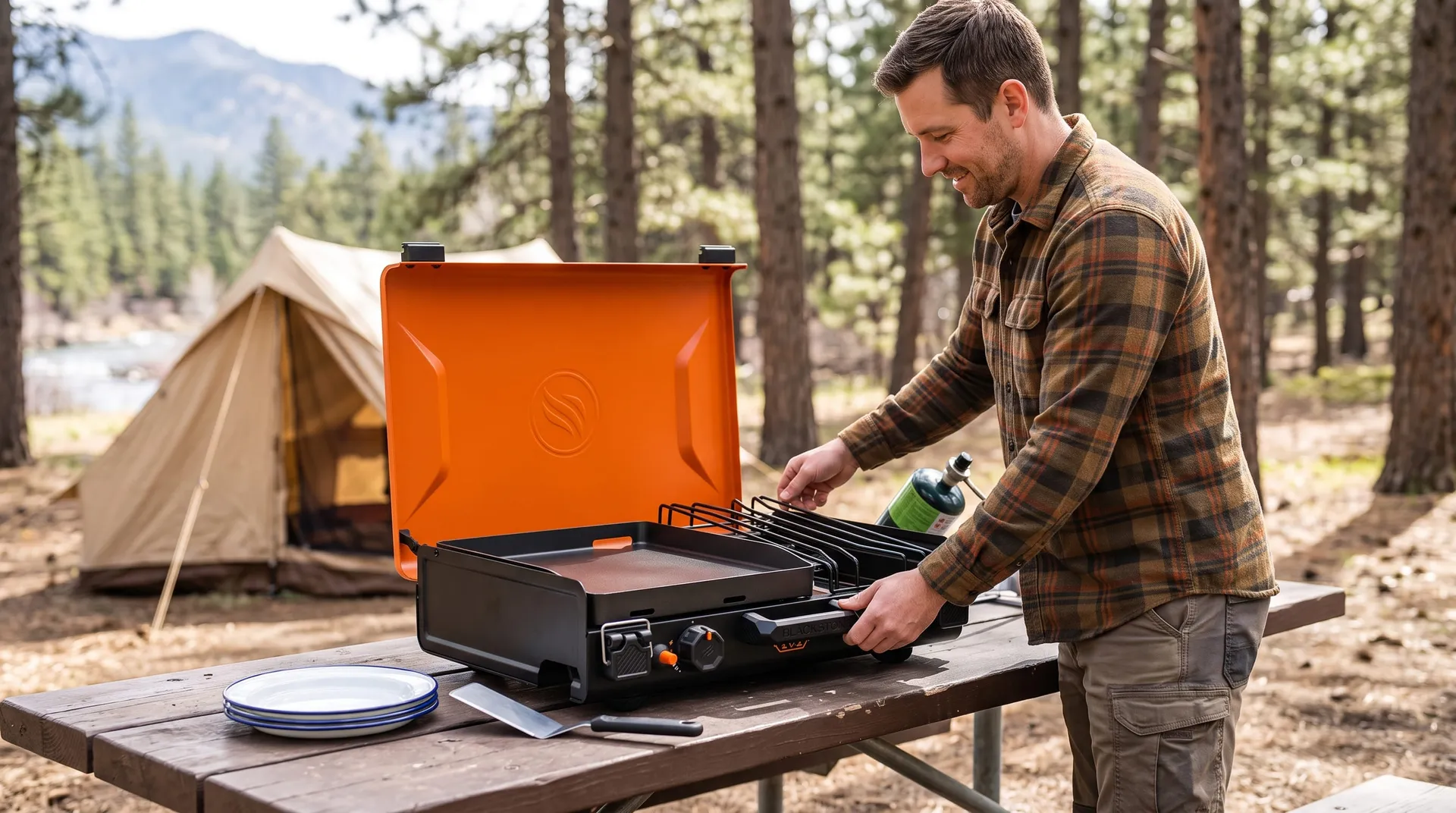
Man setting up an open camping griddle with side burner on a picnic table next to a green 1 lb propane cylinderUnlatch, level and screw in a 1 lb cylinder: setup at the picnic table needs no tools.

The leveling feet help on picnic tables and tailgates, though they can't fix soft ground. At about 21 x 17 in, it leaves room on a standard picnic table for a cutting board and plates.

A short packing list

These small items matter most on this cooker:

  • Tools: silicone-edged or nylon spatula and tongs, since the coating rules out metal.
  • Bottles: one squeeze bottle for oil, one for water.
  • Cleanup: paper towels, a soft sponge and a small trash bag for used grease.
  • Cookware: a pot no wider than 8 in, with a lid.
  • Fuel: spare 1 lb cylinders, or the 20 lb adapter hose and a tank.
  • Backup flame: a long lighter, in case the igniter won't spark on a damp morning. Follow the manual's match-lighting steps.

Safe setup at camp

A flat top throws more grease and spatter than a covered grill, so where you set it up matters.

  • Outdoors only. Never cook in a tent, camper, screen room or garage; burning propane produces carbon monoxide.
  • Hard, level, non-flammable surface. A picnic table or tailgate works.
  • Give it room. Keep it well away from tent walls, awnings, dry grass and coolers you open often.
  • Keep kids and dogs back. The plate stays hot well after the burner is off.

At the end of the meal, turn off both knobs, and unscrew the cylinder once the unit has cooled.

Stretching it for a bigger group

The plate size sets the pace, so plan around batches rather than fighting it:

  • Cook in waves. Feed the first few people, then cook the next round while they eat. A foil-covered sheet pan or a towel-lined cooler holds finished food warm.
  • Prep at home. Pre-form patties, pre-slice onions and peppers, and premix batter in zip-top bags. On a small plate, the chopping is what slows you down.
  • Use the burner as a second station. A small skillet on the side burner can fry extra eggs while the plate handles the main item.

Skip anything big. A whole chicken, a pork shoulder or thick steaks for six won't fit or won't cook evenly.

How Far Does Fuel Go, and How Long Will It Last?

Fuel math, coating care and the parts that wear first.

Propane use per cylinder and tank

Roughly an hour and a half per 1 lb cylinder with both burners on high; about 30 hours on a 20 lb tank.

The math uses the standard figure of about 21,500 BTU per pound of propane. With both burners on high, the 2364 draws 14,400 BTU an hour, so a 1 lb cylinder lasts roughly an hour and a half at full output. Real cooks rarely run both flat out, but a weekend of breakfasts, coffee and dinners can still go through several cylinders.

A full 20 lb tank holds about 430,000 BTU, enough for roughly 30 hours with both burners on high. That is why the adapter hose pays off quickly for RV owners and anyone who camps more than a few weekends a year. Our guide to how long a propane tank lasts explains how to estimate your own use.

Fuel tips for camp:

  • Cold mornings: cold propane flows weaker, so keep 1 lb cylinders in the car overnight on chilly trips (never run them there).
  • Side burner discipline: turn it off between uses; it is easy to leave a pot simmering longer than needed.
  • Lids on pots: covered water boils faster and burns less fuel.
  • Storage: keep spare cylinders out of the sun and away from the cooker.

The standard green 1 lb cylinders are not meant to be refilled. If you burn through a lot of them, the 20 lb adapter or refillable 1 lb cylinders from a propane supplier cost less over time and create less waste.

Caring for the nonstick coating

Wear comes from transport and the wrong tools, not from cooking.

The nonstick coating decides how long this griddle stays useful. It does not need seasoning, but it needs gentler care than bare steel.

  • Cleaning: let the plate cool to warm, then wipe it with a damp cloth or soft sponge.
  • Stuck-on food: soak with warm water for a few minutes, then wipe.
  • Oil: a light coat of neutral, high-smoke-point oil still helps food release.
  • Packing: empty the grease cup and let the plate dry fully before latching the hood, so moisture isn't trapped against the paint.

Skip aerosol cooking sprays on the plate. Many cookware makers warn their additives can leave a sticky film on nonstick surfaces that is hard to remove.

What wears first

On a camp cooker, three things fail before anything else:

  • The coating: scratched by metal spatulas and scrub pads.
  • The paint: chipped by knocks in the trunk, which is where rust starts.
  • The grease cup: small, easy to forget, and messy when it spills in the car.

Handle those three and the rest of the unit has little to wear out. With a one-year warranty, inspect it closely when it arrives and register it. Store it indoors, dry and latched, with the cylinder removed; a storage bag or plastic tote keeps it from rattling against other gear.

If you would rather have a plate you can scrape with metal and season over time, Blackstone's bare-steel griddles are the alternative. Our griddle seasoning guide shows what that upkeep involves.

Who Should Buy the Blackstone 2364 (and Who Shouldn't)

A two-station camp kitchen for small groups, not a crowd cooker.

Buy it if you

  • Car camp, tailgate or RV and cook for two to four

  • Want breakfast and coffee going at the same time

  • Prefer a no-season nonstick plate to bare steel

  • Want something that latches shut for the car

Look elsewhere if you

  • Cook for groups of six or more

  • Hike to your campsite

  • Want grill marks or a metal-spatula-proof surface

  • Only need one cooking surface

Match two or more points on either side and you have your answer.

Blackstone 2364 vs. Alternatives

Most shoppers weigh this against a cheap tabletop grill, a portable gas grill or a full-size Blackstone.

Which cooker fits your camping style?

If your camp meals are breakfasts, burgers and one-pan dinners, the 2364 is the only kit here with a pot burner, so you don't pack a separate stove for coffee or soup. If your group wants grilled food with char, a tabletop grill fits better. Our best portable grills guide ranks more travel options, and best grills under $200 covers the cheapest ones.

When to pick an alternative instead

Common Problems and Fixes

Most 2364 complaints trace back to tools, preheating or cold propane.

ProblemLikely causeFix
Scratched or peeling coatingMetal tools or scrub padsSwitch to silicone or nylon tools and soft sponges
Food stickingPlate not preheated, or coating wornPreheat fully and add a little oil; see why food sticks
Grease spill in the carCup not emptiedEmpty and wipe the cup before packing
Weak flame on cold morningsCold 1 lb cylinderKeep cylinders warm overnight or use a 20 lb tank
Burner won't lightIgniter or blockageLight by hand per the manual, then see our ignition troubleshooting guide

Is the Blackstone 2364 Worth the Money?

Yes, if you'll use both surfaces at camp; no, if you cook one thing at a time.

Value verdict

The 2364 replaces two pieces of gear, a griddle and a camp stove, with one case that latches shut. For a couple or small family that car camps several times a year, that saves packing space and gets breakfast and coffee to the table together.

  • Two independent cooking surfaces in one case

    Capacity beyond a small group

  • No-season nonstick plate

    The durability of bare steel and metal tools

  • Under-10-minute, tool-free setup

    Grill marks and char

  • Easy car transport

    Strong output in wind

Worth adding: a 20 lb adapter hose if you camp often, silicone-edged spatulas, and squeeze bottles. If you only need one surface, a cheaper single-burner tabletop grill makes more sense.

Final Score

SmokyHQ score

Good fit

Best at Versatility (griddle + burner)
Weakest at Build and durability

  • Griddle performance8.8/10
  • Versatility (griddle + burner)9.2/10
  • Build and durability7.8/10
  • Setup and portability8.8/10
  • Cleanup8.2/10
  • Value8.4/10

Scores settled? See today’s price on the Blackstone 2364 Camping Griddle with Side Burner.

If you want a flat top and a working pot burner in one case for car camping, the Blackstone 2364 earns its 4.3 and packs easily. Just keep metal tools away from the plate.

Next steps: pick up a 20 lb adapter hose if you camp often, and read our griddle cleaning tips before the first trip.

Ranked in our buying guides

Durability

What to watch over time

Nonstick griddle coating
Ceramic-titanium coating scratches under metal tools and scrub pads; use silicone or wood and soft sponges.
Grease cup
Small capacity; empty it after each session so it doesn't spill in the car.
Painted case
Knocks in a car trunk can chip paint; touch up bare spots to stop rust.

Based on the materials, design and warranty we documented during testing. Long-term ownership results are added to reviews as our testers log them.

Frequently Asked Questions

01

Is the Blackstone 2364 worth it?

Yes, for car campers and tailgaters cooking for two to four. It browned pancakes and burgers evenly across the 12 x 14 in plate while the side burner ran coffee, and both burners lit first try on all 8 test cooks. If you only cook one thing at a time, a cheaper tabletop grill is enough.

02

Do you need to season the Blackstone 2364?

No. The ceramic-titanium nonstick coating replaces seasoning; just wash the plate before first use. That is the main difference from Blackstone's bare-steel griddles.

03

How many people can the Blackstone 2364 feed?

Two to four per batch. The 168 sq in plate holds about 4 smash burgers or 6 pancakes at a time, so larger groups mean cooking in waves.

04

Does the Blackstone 2364 work with a 20 lb propane tank?

Yes, with Blackstone's adapter hose, sold separately. A full 20 lb tank runs both burners on high for roughly 30 hours, versus about an hour and a half on a 1 lb cylinder.

05

Can you cook steak on the Blackstone 2364?

Yes, on the griddle plate. Pat the steak dry and preheat fully for a crust, but you won't get grill marks.

06

How long does the Blackstone 2364 take to set up?

Under 10 minutes in our test, with no tools. At camp, setup is just unlatching the hood and connecting the cylinder.

07

What oil should I use on the Blackstone 2364?

A neutral, high-smoke-point oil such as canola, vegetable or avocado from a squeeze bottle. Skip aerosol sprays, which can leave a sticky film on nonstick surfaces.

08

Is it safe to carry propane cylinders in the car?

For the drive, yes: keep them upright, valves closed, in a ventilated spot, and don't leave them in a hot, closed car. Disconnect the cylinder from the griddle before packing.

Written by

Tom Bricker

Consumer Research Analyst & Lead Tester

Tom Bricker has 10+ years of grilling on every fuel type and a consumer-research background. He leads SmokyHQ’s gas, portable, electric and flat-top testing, so if you’re weighing price against how long a grill will last, his reviews show which ones are worth the money.

  • Gas Grills
  • Portable Grills
  • Electric & Indoor Grills
  • Griddles
  • Value & Durability

Every grill is bought with our own money and scored on the same tests. How we test