Best Pellet Grills 2026
Best pellet grills of 2026: we compare budget, mid-range, and WiFi-connected models by temperature consistency, hopper capacity, and value. Tested picks.
Why Pellet Grills Remain the Easiest Way to Smoke
Pellet grills solve the two hardest parts of live-fire cooking — fire management and temperature control — by automating both through a digital controller and an auger-fed hopper. You set a target temperature, and the controller handles the rest, freeing you to focus on the actual cooking instead of babysitting a fire. That convenience comes at a price premium over charcoal, but for most home cooks the tradeoff is worth it.
This guide is built entirely from our own tested pellet grills, spanning budget to premium tiers, so you know exactly what you're getting at each price point rather than comparing spec sheets alone.
Quick Answer: Our Top Picks
| Tier | Best For | Our Pick | Price |
|---|---|---|---|
| Budget | Trying pellet grilling, searing flexibility | Pit Boss 150 | $295–$329 |
| Mid-range | Best all-around consistency and capacity | Traeger Pro 34 | $559–$579 |
| Premium | WiFi monitoring, largest feature set | Traeger Woodridge | $869–$899 |
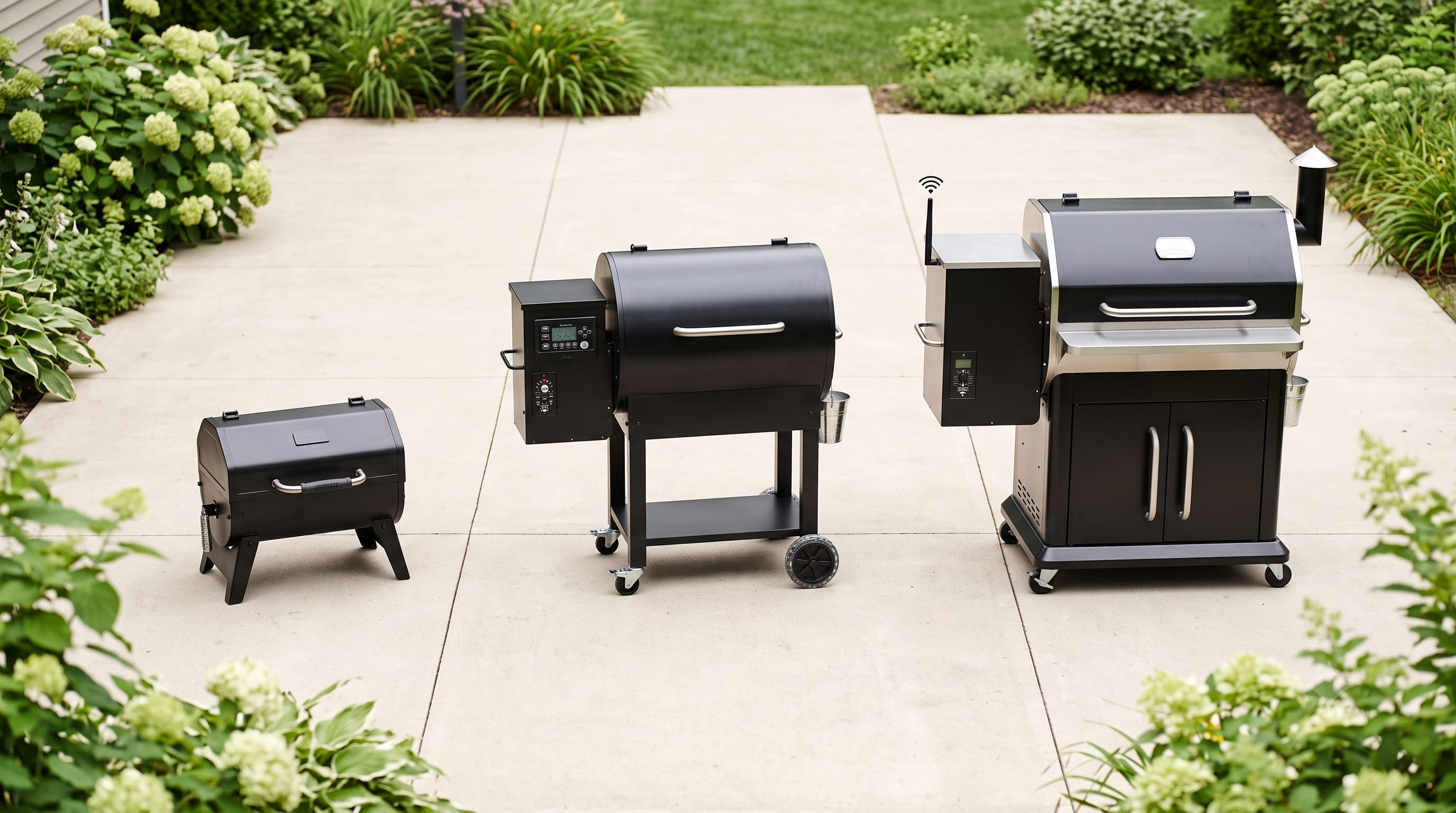
If you want to try pellet grilling without a major investment, the Pit Boss 150 is the most affordable genuine option we've tested, with a Flame Broiler that adds real searing capability most budget pellet grills skip. For most buyers, the Traeger Pro 34 is the strongest all-around pick — the tightest temperature consistency we've measured at this price. If you want app-based remote monitoring and the most complete feature set, the Traeger Woodridge delivers, at a real premium.
Pellet Grill Comparison Table
| Feature | Pit Boss 150 | Traeger Pro 34 | Traeger Woodridge |
|---|---|---|---|
| Price | $295–$329 | $559–$579 | $869–$899 |
| Cooking Area | 150 sq in | 884 sq in | 860 sq in |
| Hopper Capacity | 5 lbs | 18 lbs | 24 lbs |
| Max Temperature | 500°F | 450°F | 500°F |
| App Connectivity | No | No | Yes (WiFIRE) |
| Direct-Flame Searing | Yes (Flame Broiler) | No | No |
| Warranty | 3 years | 7 years | 10 years |
Best Budget: Pit Boss 150
We tested the Pit Boss 150 in depth, and it's the most affordable genuine wood pellet grill we've reviewed — a digital controller and a Flame Broiler slide plate that lets you sear directly over flame, something most budget pellet grills can't do at all. Our testing measured temperature consistency within 20–25°F of target, wider than pricier controllers but reasonable for the price.
Best for: Buyers who want to try pellet grilling without a $500+ commitment, or anyone with a smaller patio who values the searing flexibility.
Watch for: The 5 lb hopper needs refilling every 4–5 hours on a steady smoke, and 150 sq in of cooking area is tight for groups larger than 4–5 people.
Best Overall: Traeger Pro 34
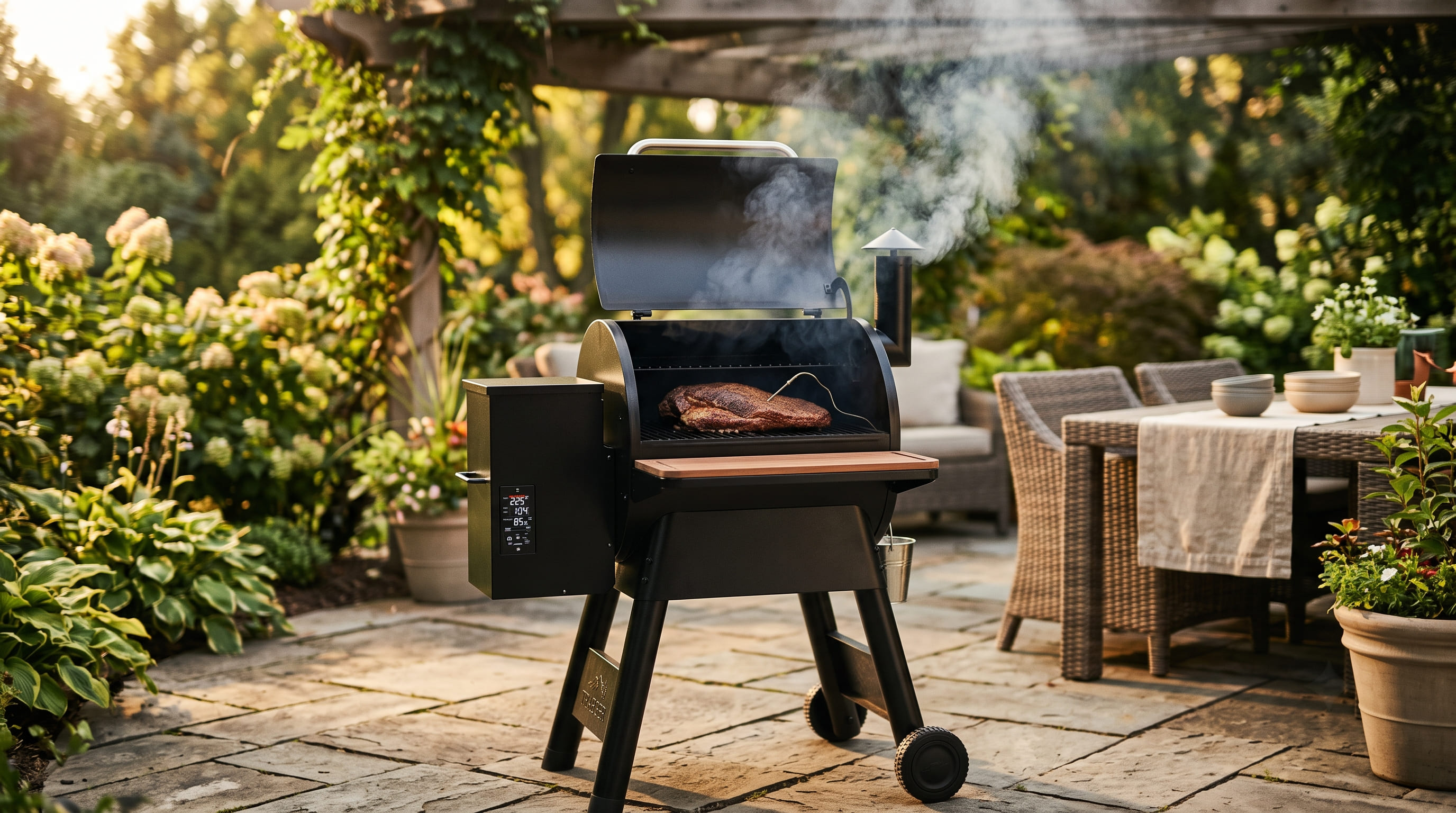
We tested the Traeger Pro 34 in depth, and its Digital Pro Controller held temperature within 15–18°F of target across every cook in our testing — the tightest consistency we've measured at this price point. The 884 sq in cooking area and 18 lb hopper comfortably handled an 11-hour overnight brisket smoke with only one refill.
Best for: Most buyers who want the strongest balance of consistency, capacity, and price without paying for app connectivity they may not use.
Watch for: No WiFi app monitoring on this model — you're checking the grill in person — and pushing past 450°F for a hard sear is noticeably slower than a dedicated gas grill.
Best Premium: Traeger Woodridge
We tested the Traeger Woodridge in depth, and its WiFIRE app connectivity genuinely worked — real-time temperature monitoring and pellet level tracking from inside the house across every test session. The digital pellet sensor and Super Smoke Mode are measurable upgrades over the non-connected Pro 34, and the 10-year warranty is the longest we've seen on any pellet grill.
Best for: Buyers who want remote monitoring and the most complete feature set, and are willing to pay roughly 50% more than the Pro 34 for it.
Watch for: Core smoking performance is closer to the Pro 34 than the price gap suggests — you're mainly paying for connected features, not dramatically better smoke.
What to Look for in a Pellet Grill
Temperature Consistency
This is the single most important factor. A controller that swings 30–40°F above and below target makes it hard to isolate whether a bad cook was your fault or the equipment's. Our tested Traeger Pro 34 held within 15–18°F of target, while the budget Pit Boss 150 ran a wider 20–25°F — both usable, but the tighter consistency shows up in more predictable results over time.
Hopper Capacity and Refill Frequency
Hopper size determines how long you can go between refills. An 18–24 lb hopper, like our tested Traeger models, typically covers 18–20+ hours of low-and-slow cooking — enough for most overnight briskets without a mid-cook refill. Smaller hoppers, like the Pit Boss 150's 5 lbs, mean checking and refilling every 4–5 hours, which matters for long unattended smokes.
Cooking Area vs. Budget
Budget pellet grills tend to have smaller cooking areas — our tested Pit Boss 150 offers 150 sq in versus 860–884 sq in on the pricier Traeger models. Decide how much capacity you actually need before comparing prices; a smaller grill that fits your typical cook size is a better value than an oversized one you never fill.
App Connectivity
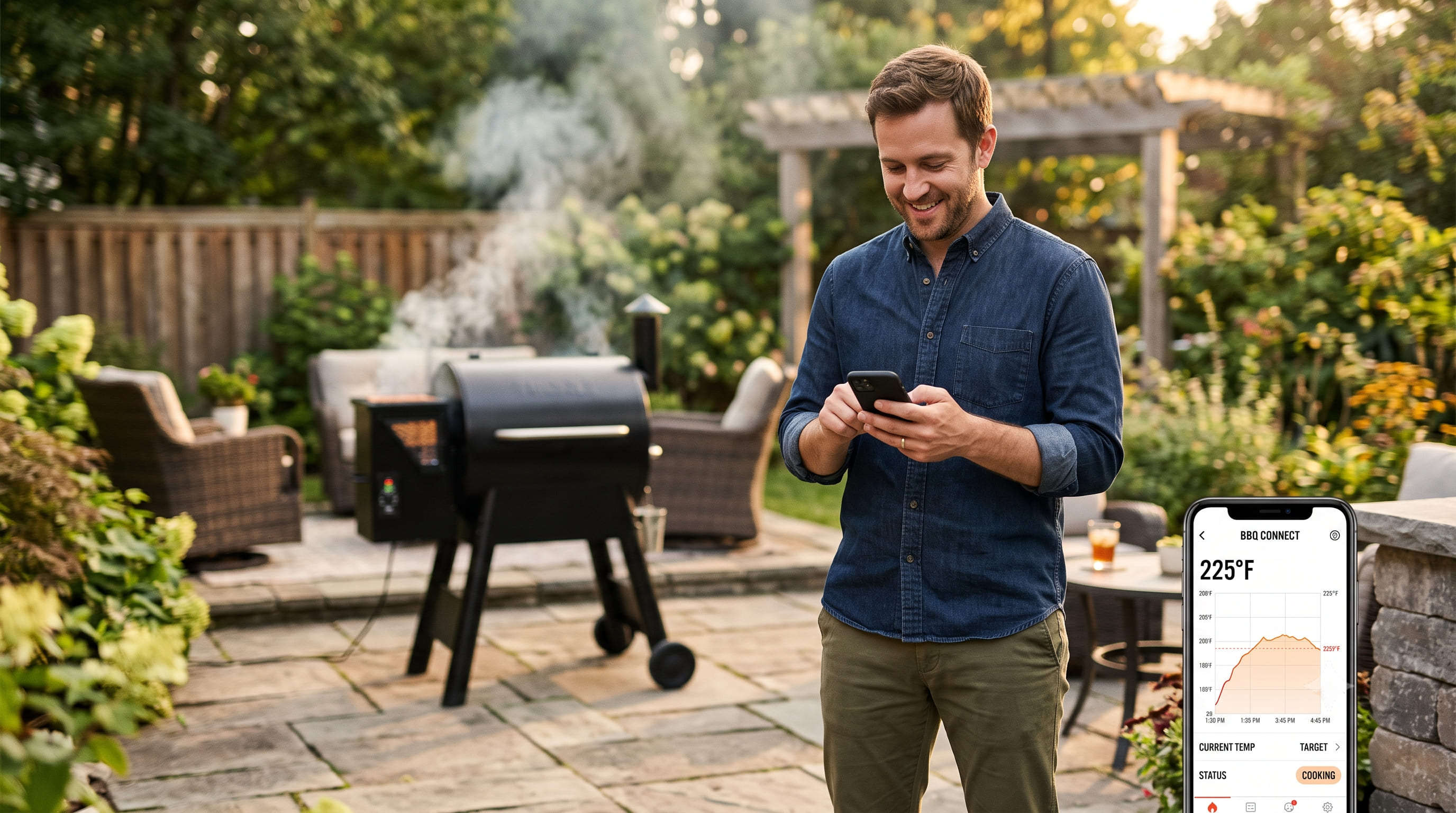
WiFi monitoring is a genuine convenience but not a performance upgrade — our testing found the Traeger Woodridge's WiFIRE system reliable, but core cooking results were close to the non-connected Pro 34. Pay for connectivity only if remote monitoring is something you'll actually use regularly.
Direct-Flame Searing
Most pellet grills are indirect-heat only, meaning they can smoke beautifully but struggle to produce a real sear. A slide-plate feature like the Pit Boss 150's Flame Broiler solves this by giving direct access to the firepot's flame — a genuinely useful two-in-one capability that neither Traeger model in this guide offers.
Warranty Length
Warranty coverage varies significantly by tier in our testing — 3 years on the budget Pit Boss 150, 7 years on the Traeger Pro 34, and 10 years on the Traeger Woodridge. A longer warranty is a reasonable proxy for how confident the manufacturer is in long-term durability, though it also tracks closely with price tier.
Pellet Grill Maintenance Basics
A pellet grill has more moving parts than a charcoal kettle — an auger, an igniter rod, and a fan — so basic upkeep matters more for long-term reliability. Vacuum the firepot and empty the ash bucket every 3–4 cooks; our testing shows this is the single most effective habit for maintaining consistent airflow and accurate temperature readings across all three tested models. Store pellets in a dry, sealed container, since moisture exposure causes swelling that can jam the auger — a common failure point we've seen flagged across pellet grill ownership reports generally, not specific to any one brand.
A fitted cover is worth the modest cost on any pellet grill, since the hopper's electronic components and auger motor are the most weather-sensitive parts of the unit. Check the auger and igniter for pellet dust buildup periodically, especially if you notice inconsistent startup times — a slow or failed ignition is often the first sign that a cleaning is overdue, not a sign the unit is failing.
Pellet Grills by Household Size
For 1–4 People
The Pit Boss 150's 150 sq in comfortably fits 4–5 burgers or a single small rack of ribs — enough for a small household, with the added benefit of Flame Broiler searing.
For 4–8 People
Both the Traeger Pro 34 and Traeger Woodridge offer 860–884 sq in of cooking area, comfortably handling two full racks of ribs or a large brisket with room to spare.
For Overnight, Unattended Cooks
Hopper capacity matters most here. The Traeger models' 18–24 lb hoppers meaningfully outlast the Pit Boss 150's 5 lb hopper for long, unattended overnight smokes.
Frequently Asked Questions
What is the best pellet grill overall?
Based on our testing, the Traeger Pro 34 is the best all-around pellet grill — the tightest temperature consistency we've measured, strong cooking capacity, and a 7-year warranty, without paying for app connectivity most buyers won't use daily.
What is the best budget pellet grill?
The Pit Boss 150 at $295–$329 is the most affordable genuine pellet grill we've tested, with a digital controller and direct-flame searing capability most budget models skip entirely.
Is a WiFi-connected pellet grill worth the extra cost?
If you'll genuinely use remote monitoring, yes — our tested Traeger Woodridge delivered reliable WiFIRE connectivity. If you're comfortable checking your grill in person, the non-connected Traeger Pro 34 delivers comparable core smoking performance for meaningfully less money.
How big a hopper do I need on a pellet grill?
For overnight or multi-hour unattended smokes, look for at least an 18 lb hopper — our tested Traeger models covered 18–20+ hours between refills. Smaller hoppers like 5 lbs are fine for shorter cooks but need more frequent attention on long smokes.
Can a pellet grill sear a steak well?
Most pellet grills top out around 450–500°F and are slower to develop a hard sear than a dedicated gas or charcoal grill. A model with a direct-flame feature, like the Pit Boss 150's Flame Broiler, is the exception — it gave us genuine sear marks in testing that standard indirect-only pellet grills can't match.
Final Recommendation
For most buyers, the Traeger Pro 34 offers the strongest overall balance of temperature consistency, cooking capacity, and price at $559–$579. If budget is your main constraint, the Pit Boss 150 gets you into real pellet grilling for under $330, with the bonus of direct-flame searing. If you want the most complete feature set and app-based monitoring, the Traeger Woodridge delivers it at a real premium.
Ready to compare more options? Browse our full grill reviews, see our best grills of 2026, or check out our pellet grills category hub.
Ready to shop? Browse our expert grill reviews to find your perfect match.