Best Smokers for Beginners 2026
Best smokers for beginners in 2026: we compare pellet, offset, and electric smokers by ease of use, cost, and learning curve, with real tested product picks.
Why Smoking Is Different From Grilling
Grilling and smoking solve different problems. Grilling cooks food fast, directly over high heat — a burger or steak is done in minutes. Smoking cooks food low and slow, indirectly, at temperatures usually between 200–275°F, for anywhere from 2 to 14+ hours, breaking down connective tissue in tougher cuts like brisket, pork shoulder, and ribs while infusing real wood smoke flavor you cannot replicate on a standard grill.
If you've never owned a smoker, the biggest decision you'll make isn't which brand to buy — it's which type of smoker matches how much hands-on involvement you actually want. That decision matters more for a beginner than almost any spec on the box.
Quick Answer: Our Top Picks for Beginners
| Smoker Type | Best For | Our Pick | Price |
|---|---|---|---|
| Pellet | Easiest learning curve, true set-and-forget | Traeger Pro 34 | $559–$579 |
| Dedicated charcoal | Longest unattended run, serious barbecue | Weber Smokey Mountain 18-Inch | $409–$429 |
| Offset (charcoal) | Authentic flavor, lowest running cost | Royal Gourmet CC1830S | $143–$153 |
| Charcoal (kettle-based) | Budget entry point, most versatile | Weber Original Kettle 22-Inch | $147–$157 |
| Gas/propane | Fast warm-up, no fire management | Pit Boss 3-Series Vertical Gas Smoker | $339–$399 |
| Electric | Lowest effort, apartment/balcony-friendly | Masterbuilt 40-Inch Digital Electric Smoker | $349–$399 |
If you read nothing else in this guide: a pellet smoker is the right starting point for most first-time buyers, because it removes the two hardest parts of learning to smoke — fire management and temperature control — while still producing real wood-fired flavor. Read on for the reasoning behind that recommendation and when the alternatives make more sense.
Types of Smokers Explained
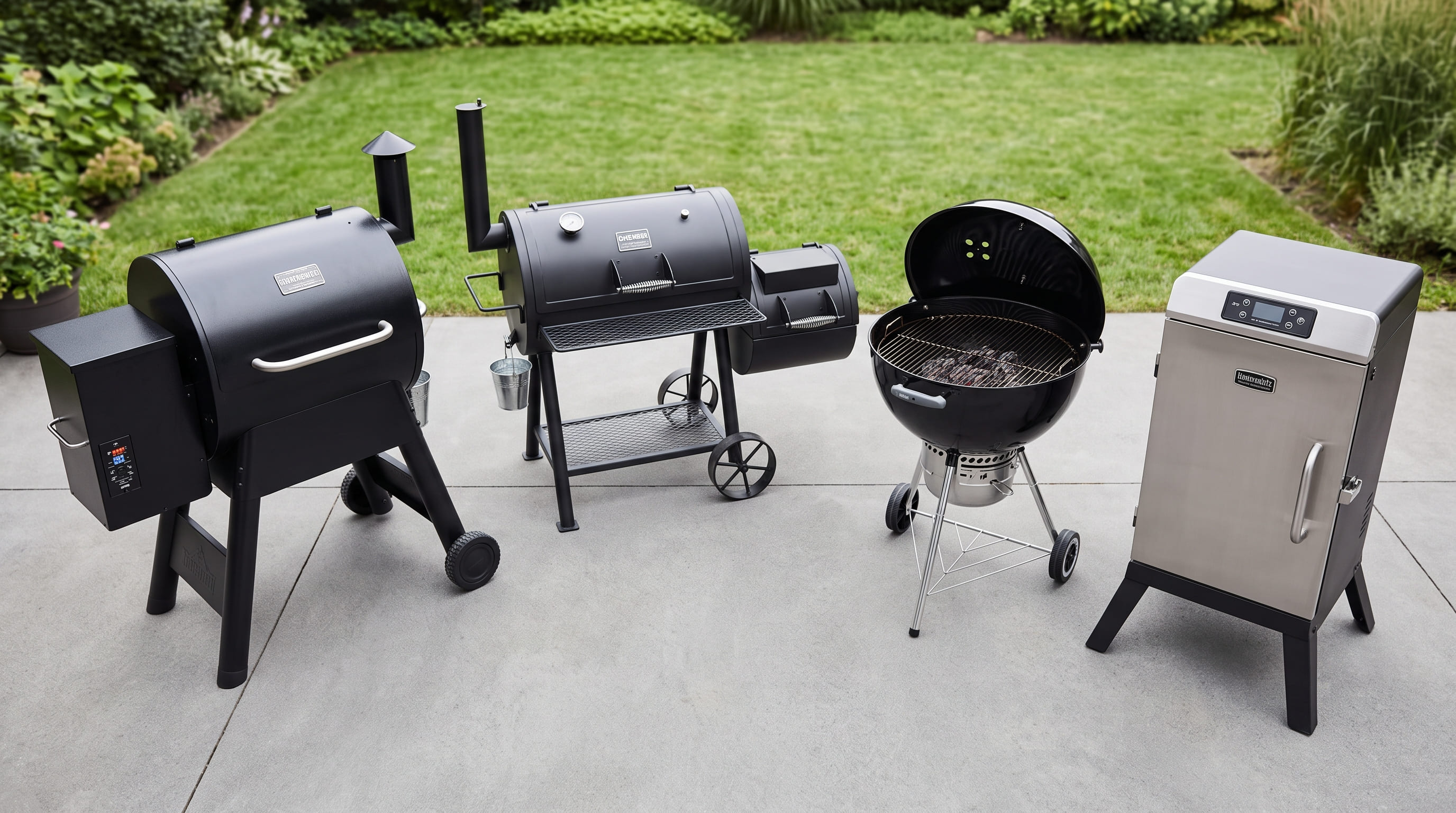
Pellet Smokers
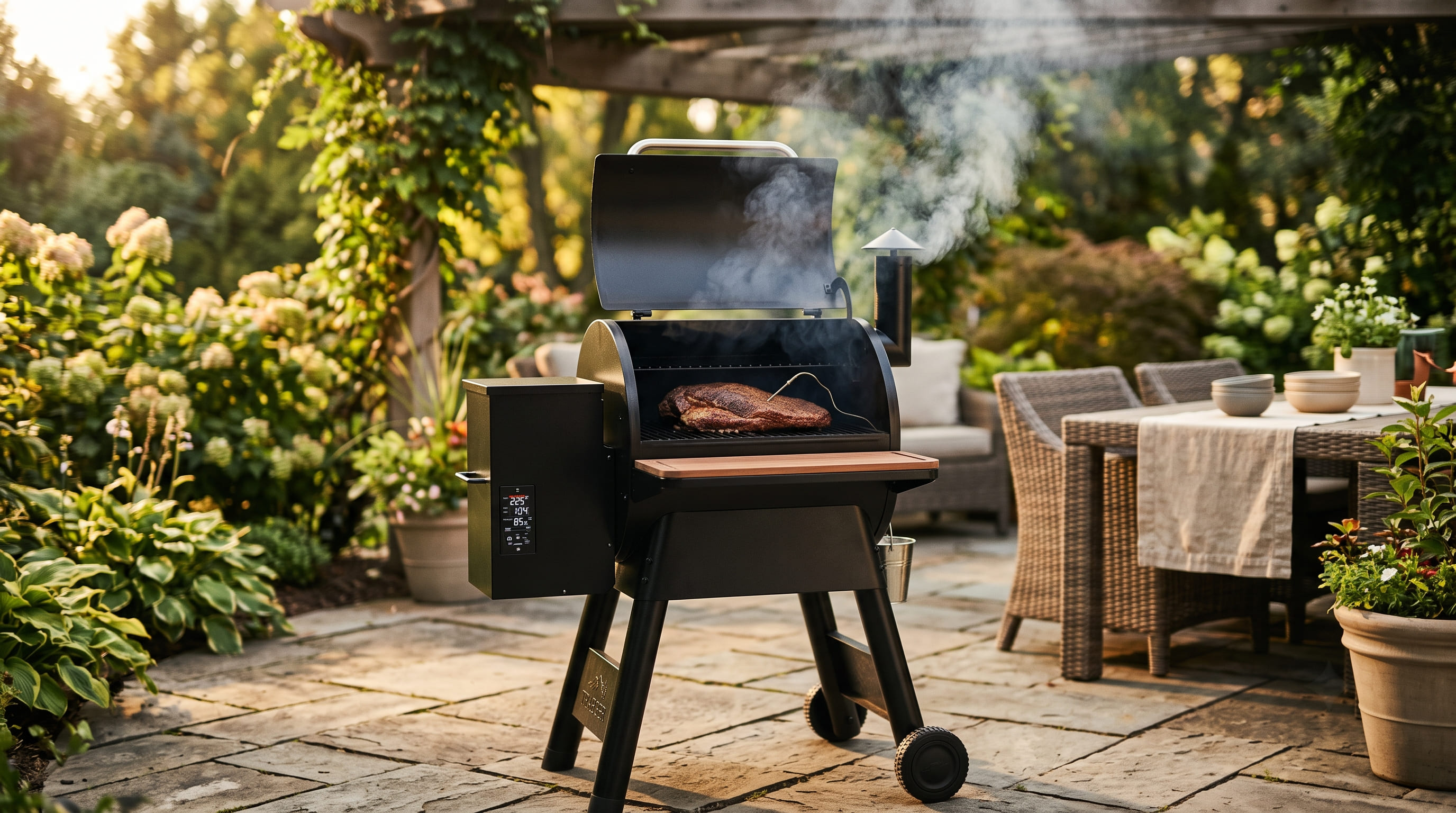
Pellet smokers burn compressed hardwood pellets, fed automatically from a hopper by an auger, with a digital controller managing temperature by adjusting pellet feed rate and airflow. This is the closest thing to "set it and forget it" smoking available. You set a target temperature, load the hopper, and the controller does the fire management for you.
Why beginners like them: No charcoal chimney, no manual vent adjustments, no babysitting the fire every 30–45 minutes. Our testing on the Traeger Pro 34 showed the controller holding within 15–18°F of target across an entire 11-hour unattended overnight brisket cook — the kind of consistency that used to require years of fire-management experience.
Tradeoff: Pellet smokers cost more upfront than a basic charcoal setup, require electricity to run the auger and controller, and produce a milder smoke flavor than a stick burner or offset smoker.
Offset Smokers
An offset smoker burns wood or charcoal in a separate firebox chamber to the side, with heat and smoke pulled through a connected main cooking chamber before exiting a chimney. Food never sits directly over the fire. This is the traditional design behind most competition-style barbecue.
Why beginners consider them: Offset smokers are usually the most affordable entry point into real wood-fired smoking, and the flavor produced by an active wood or charcoal fire is generally considered the most authentic. Our tested Royal Gourmet CC1830S combines an offset smoker chamber with a full-size charcoal grill for $143–$153, making it one of the cheapest ways to try the technique.
Tradeoff: Offset smokers demand the most hands-on skill of any smoker type. You're managing airflow through dampers, adding fuel every 45 minutes to an hour, and learning to read fire behavior — genuinely useful skills, but a real learning curve for a first smoker.
Electric Smokers
Electric smokers use a heating element instead of live fire, often with wood chips added for smoke flavor. Temperature control is typically a simple dial or digital thermostat, similar to an oven.
Why beginners consider them: The lowest-maintenance option available, and safe for use in spaces where an open flame or gas line isn't practical, such as some apartment balconies or covered patios (always check local regulations first). No fuel to monitor beyond periodic wood chip refills. Our tested Masterbuilt 40-Inch Digital Electric Smoker held its target temperature within 8-10°F in testing — the tightest consistency we've measured on any smoker, fuel type included — and its built-in meat probe removes another variable beginners often get wrong.
Tradeoff: Smoke flavor is the mildest of any smoker type, since there's no live combustion — some beginners find electric-smoked food noticeably less smoky than pellet or offset results. You'll also need a nearby 120V outlet.
Charcoal (Kettle-Style) Smokers
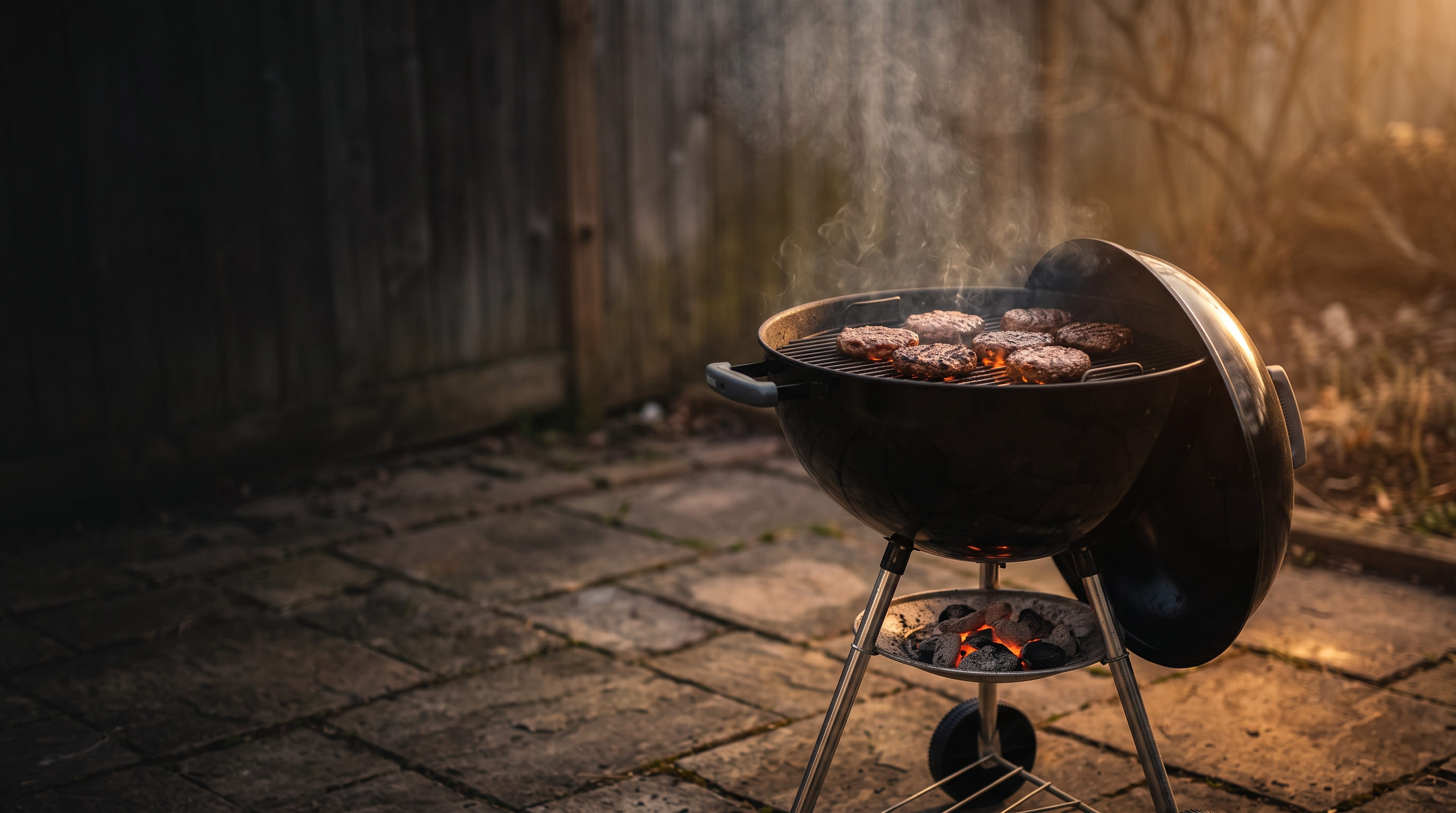
A standard charcoal kettle grill, like the Weber Original Kettle 22-Inch, can function as a genuine smoker using the "snake method" — arranging charcoal briquettes in a curving line around the kettle's edge so they burn slowly and sequentially, holding a low temperature for hours.
Why beginners consider them: If you already own a charcoal kettle grill, this is the cheapest possible entry into smoking — no additional purchase required. Our testing held a steady 250°F for over 4 hours using this method on a single charcoal load.
Tradeoff: Cooking area and unattended run time are both more limited than a dedicated smoker, and vent control requires more active learning than a pellet controller.
Dedicated Vertical Charcoal Smokers
A vertical water smoker like the Weber Smokey Mountain 18-Inch is purpose-built for low-and-slow cooking, using a charcoal bowl at the base, a water pan for moisture, and stacked grates rather than repurposing a kettle grill.
Why beginners consider them: Genuinely the longest unattended run time of any charcoal-fueled option we've tested — our Smokey Mountain review measured a steady 225°F for over 9 hours on a single charcoal load using the Minion Method, well beyond what a kettle's snake method can match.
Tradeoff: At $409–$429, this is a real step up in price from a kettle, and it's a dedicated smoker only — it doesn't grill burgers or handle fast direct-heat cooking.
Propane and Gas Smokers
Gas smokers use a propane or natural gas burner, often with a water pan and wood chip box, inside an insulated cabinet. They sit between electric and charcoal in terms of hands-on involvement.
Why beginners consider them: Faster to reach temperature than charcoal, easier to control than an offset fire, and don't require electricity like an electric smoker does. Our tested Pit Boss 3-Series Vertical Gas Smoker reached its 225°F target in about 12 minutes from a cold start — the fastest warm-up of any smoker we've reviewed, with 1,097 sq in of cooking area across three racks.
Tradeoff: Like electric smokers, flavor tends to be milder than charcoal or offset options, since the primary heat source isn't wood combustion, and you'll need a propane tank on top of the smoker's cost.
What to Look for When Buying Your First Smoker
Temperature Control and Consistency
This is the single most important factor for a beginner. A smoker that swings 30–40°F above and below your target will produce inconsistent results and make it much harder to learn proper technique, because you can't isolate whether a bad cook was your fault or the equipment's. Pellet smokers with a digital controller (like the Digital Pro Controller on the Traeger Pro 34) generally offer the tightest consistency for a first-time buyer.
Cooking Area
Think about what you'll actually cook. A full packer brisket needs roughly 20+ inches of grate space; a rack of ribs needs less. Most beginner-friendly smokers in the $150–$600 range offer 300–900 sq in of combined cooking area — more than enough for learning on typical cuts, but check the specific dimensions if you plan to cook whole briskets or multiple racks at once.
Fuel Capacity and Run Time
For pellet smokers, hopper capacity determines how long you can go between refills — an 18–20 lb hopper typically covers 18–20 hours of low-and-slow cooking, enough for most overnight briskets without a mid-cook refill. For offset and charcoal smokers, this translates to how often you'll need to add fuel, typically every 45–60 minutes on a live fire.
Build Quality and Insulation
Thinner steel loses heat faster in wind and cold weather, meaning more fuel consumption and less stable temperatures. This matters less in mild climates and more if you plan to smoke through winter or in consistently windy conditions. Heavier-gauge steel and tighter door/lid seals cost more but pay off in fuel efficiency and consistency over time.
Price and Warranty
Beginner smokers span a wide range — genuinely capable options exist from $150 (charcoal kettle, offset add-on units) up through $600+ (dedicated pellet smokers with larger capacity). A longer warranty on the firebox and main cooking chamber (7+ years on some pellet models, 10+ years on quality charcoal kettles) is a reasonable proxy for how confident the manufacturer is in long-term durability.
Common Beginner Mistakes to Avoid
- Opening the lid too often. Every time you open a smoker, you lose heat and smoke, extending cook time. The saying "if you're lookin', you ain't cookin'" exists for a reason — trust your thermometer, not your eyes.
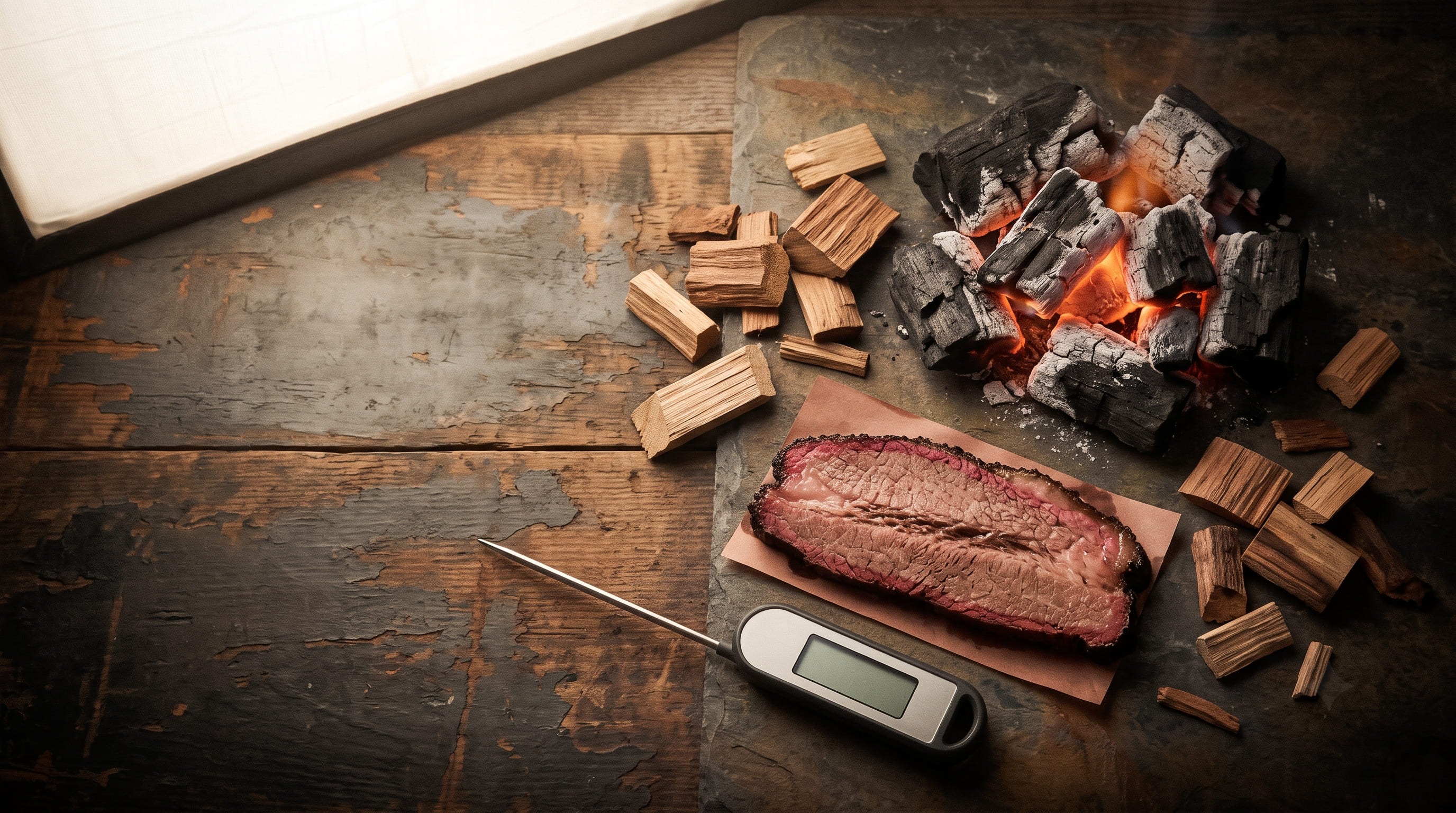
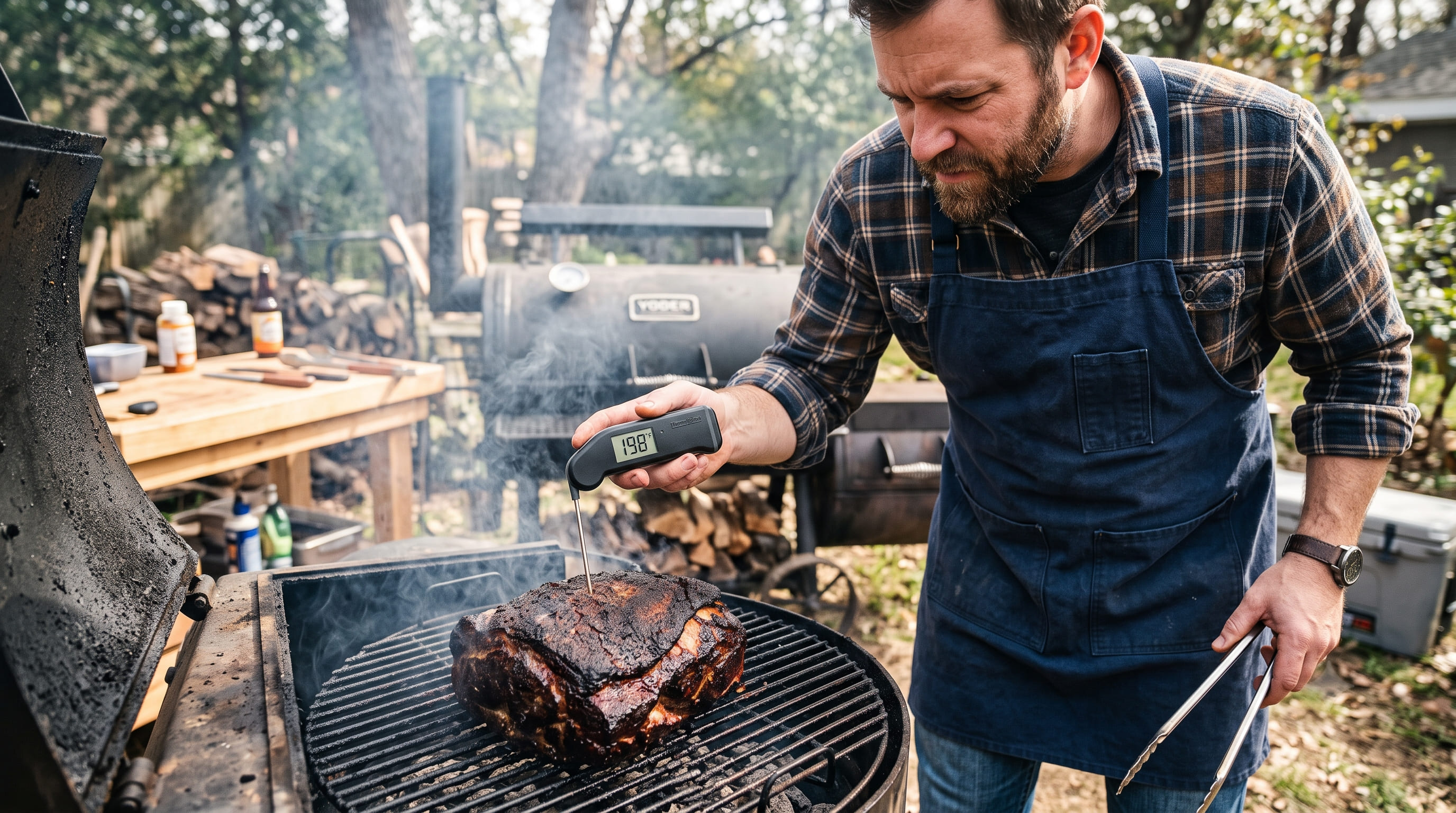
- Not using a separate meat thermometer. Built-in lid thermometers measure air temperature near the lid, not the meat itself. A separate instant-read or leave-in probe thermometer is the single most useful accessory you can buy alongside your first smoker.
- Oversmoking. More smoke is not always better. Thin, blue smoke is what you want; thick white or black smoke usually means incomplete combustion and can produce a bitter, acrid flavor called "creosote" buildup.
- Wrong wood-to-meat pairing. Stronger woods like mesquite and hickory can overpower delicate meats like chicken or fish; save them for beef and pork. Milder woods like apple, cherry, and pecan work well across nearly everything and are a safer starting point.
- Not accounting for "the stall." Large cuts like brisket and pork shoulder often plateau in internal temperature for hours during cooking (the "stall") as moisture evaporates from the surface. This is normal, not a sign something is wrong — plan your cook time with extra buffer for it.
- Skipping a water pan. On offset and charcoal smokers especially, a water pan helps stabilize temperature swings and keeps the cooking environment more humid, reducing moisture loss in the meat.
Essential Wood and Fuel Basics
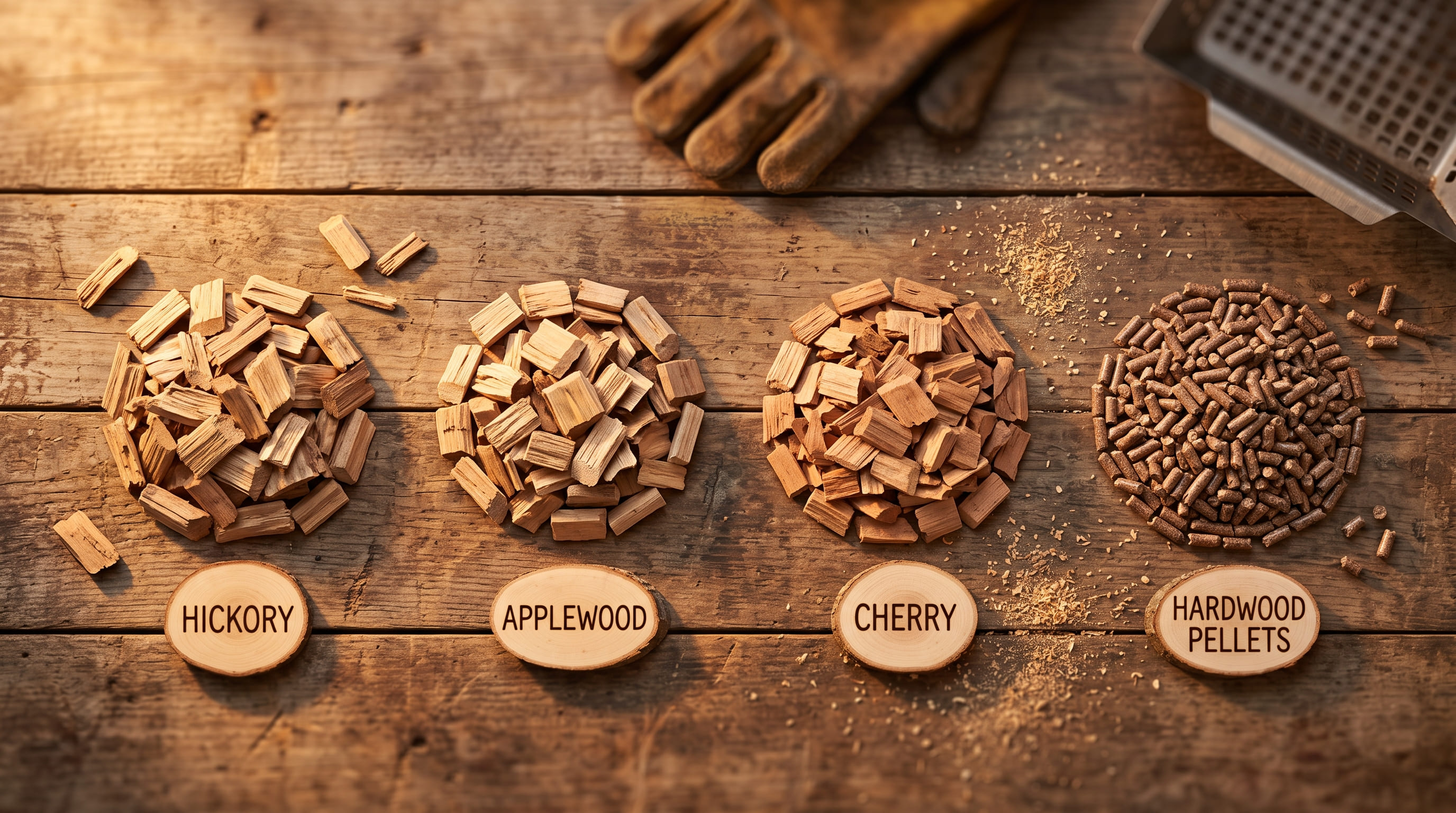
If you're using a pellet or offset smoker, wood choice meaningfully affects flavor:
| Wood Type | Flavor Profile | Best Paired With |
|---|---|---|
| Hickory | Strong, bacon-like | Pork shoulder, ribs |
| Mesquite | Very strong, earthy | Beef brisket (use sparingly) |
| Apple | Mild, slightly sweet | Chicken, pork, fish |
| Cherry | Mild, sweet, adds red color | Poultry, pork |
| Oak | Medium, balanced | Beef, all-purpose |
| Pecan | Medium, nutty, sweet | Pork, poultry |
Start with milder woods like apple, cherry, or oak while you're still learning how smoke intensity builds over a long cook — it's much easier to add more smoke on your next attempt than to fix an oversmoked cook you've already pulled off the grates.
How Much Should You Spend on Your First Smoker?
For most beginners, $150–$600 is the right range to learn on before considering a premium dedicated smoker. Spending less often means sacrificing the build quality and temperature consistency that make learning easier in the first place; spending significantly more before you know which smoking style you actually enjoy risks buyer's remorse.
A reasonable path: start with a charcoal kettle you may already own (effectively free) or a budget offset combo unit like the Royal Gourmet CC1830S around $150 to learn fire management fundamentals, or jump straight to a pellet smoker like the Traeger Pro 34 around $560–580 if you'd rather prioritize consistency while you learn everything else — meat selection, trimming, resting, slicing.
Frequently Asked Questions
What is the easiest smoker for a beginner to use?
A pellet smoker. The digital controller automates fire management and temperature control — the two hardest skills to learn on an offset or charcoal smoker — so you can focus on learning meat selection, trimming, and timing instead.
Is a pellet smoker or offset smoker better for beginners?
A pellet smoker is easier to learn on because it automates temperature control. An offset smoker produces arguably more authentic flavor and typically costs less upfront, but demands real hands-on fire management skill from day one. If you want the fastest path to consistent results, choose pellet; if you want to learn traditional technique and don't mind a steeper learning curve, offset is a legitimate choice.
How much does a good beginner smoker cost?
Plan on $150–$600. Charcoal kettles and budget offset combo units start around $150; capable pellet smokers with digital controllers typically run $500–600. Spending less usually means sacrificing build quality and temperature consistency that make learning easier.
Can I smoke food on a regular charcoal grill?
Yes, using the "snake method" — arranging charcoal briquettes in a line around the kettle's edge so they burn slowly and sequentially. This can hold low, stable temperatures for several hours on a single load, making a standard charcoal kettle a legitimate (and often free, if you already own one) way to start smoking.
What's the first thing I should smoke as a beginner?
Pork shoulder or chicken thighs are the most forgiving first cooks — both have enough fat content to stay moist through minor timing or temperature mistakes, unlike a lean cut like brisket flat, which punishes errors more severely. Save whole brisket for after a few successful cooks.
Do I need a separate meat thermometer if my smoker has a built-in one?
Yes. A built-in lid thermometer measures ambient air temperature near the lid, not the internal temperature of your food. A separate instant-read or leave-in probe thermometer is essential for judging doneness accurately and safely.
Final Recommendation
For most first-time buyers, a pellet smoker is the smartest starting point — the Traeger Pro 34 held temperature within 15–18°F of target across every cook in our testing, including an unattended overnight brisket, removing the fire-management learning curve that trips up most beginners. If you'd rather learn traditional technique on a smaller budget, the Royal Gourmet CC1830S offset smoker combo gets you into real wood-fired smoking for under $150, or the Weber Original Kettle 22-Inch lets you start smoking on a grill you may already own using the snake method.
If you already know you want to commit to serious low-and-slow barbecue, the Weber Smokey Mountain 18-Inch delivers the longest unattended charcoal run we've measured. And if fire management of any kind sounds like more hassle than you want to learn right now, the Pit Boss 3-Series Vertical Gas Smoker or Masterbuilt 40-Inch Digital Electric Smoker both remove it almost entirely, at the cost of a milder smoke flavor.
Whichever type you choose, invest in a separate meat thermometer, start with milder woods while you learn, and expect your first few cooks to be a learning process — every experienced pitmaster started exactly where you are now.
Ready to compare specific models? Browse our full smoker and grill reviews, see our best grills of 2026, or check out pellet grills and charcoal grills by category.
Ready to shop? Browse our expert grill reviews to find your perfect match.