Gas Grill Ignition Troubleshooting Guide 2026
Gas grill won't light? Our step-by-step troubleshooting guide covers regulator bypass, weak batteries, clogged igniters, and low propane fixes.
Why This Happens More Than You'd Think
Ignition failure is one of the most common issues we hear about from readers, and in our testing, it's almost never a defective grill — it's one of a handful of predictable causes, most of which take under 10 minutes to diagnose and fix without a service call. This guide walks through the exact troubleshooting order we use, starting with the most common and easiest-to-fix causes first.
Working through causes in the wrong order is the biggest time-waster we see — readers often jump straight to assuming a defective regulator or igniter module needs full replacement, when the actual fix is a 60-second regulator reset or a $3 battery swap. Following the diagnostic order below, from simplest to most involved, gets most grills relighting without unnecessary part purchases.
Quick Diagnostic Table
| Symptom | Most Likely Cause | Fix |
|---|---|---|
| No click, no spark at all | Dead igniter battery | Replace battery |
| Clicking, but no flame | Regulator in bypass mode | Reset the regulator (see below) |
| Weak, low flame after lighting | Regulator bypass or low propane | Reset regulator, check tank level |
| One burner won't light, others fine | Clogged burner port | Clean burner tubes |
| Strong propane smell | Leak — do not attempt to light | Turn off tank, ventilate, leak test |
If you only try one thing first, reset the regulator — this single step resolves the largest share of "won't light or lights weak" cases we've seen in testing.
Step 1: Check for a Propane Smell First
Before doing anything else, check whether you smell propane. If you do, do not attempt to light the grill. Turn off the tank valve immediately, move away from the grill, and do not use any ignition source nearby. Once the area is clear and ventilated, a soapy-water test at each connection point will reveal a leak — bubbles forming at a fitting means it needs tightening or replacement before you attempt to light the grill again.
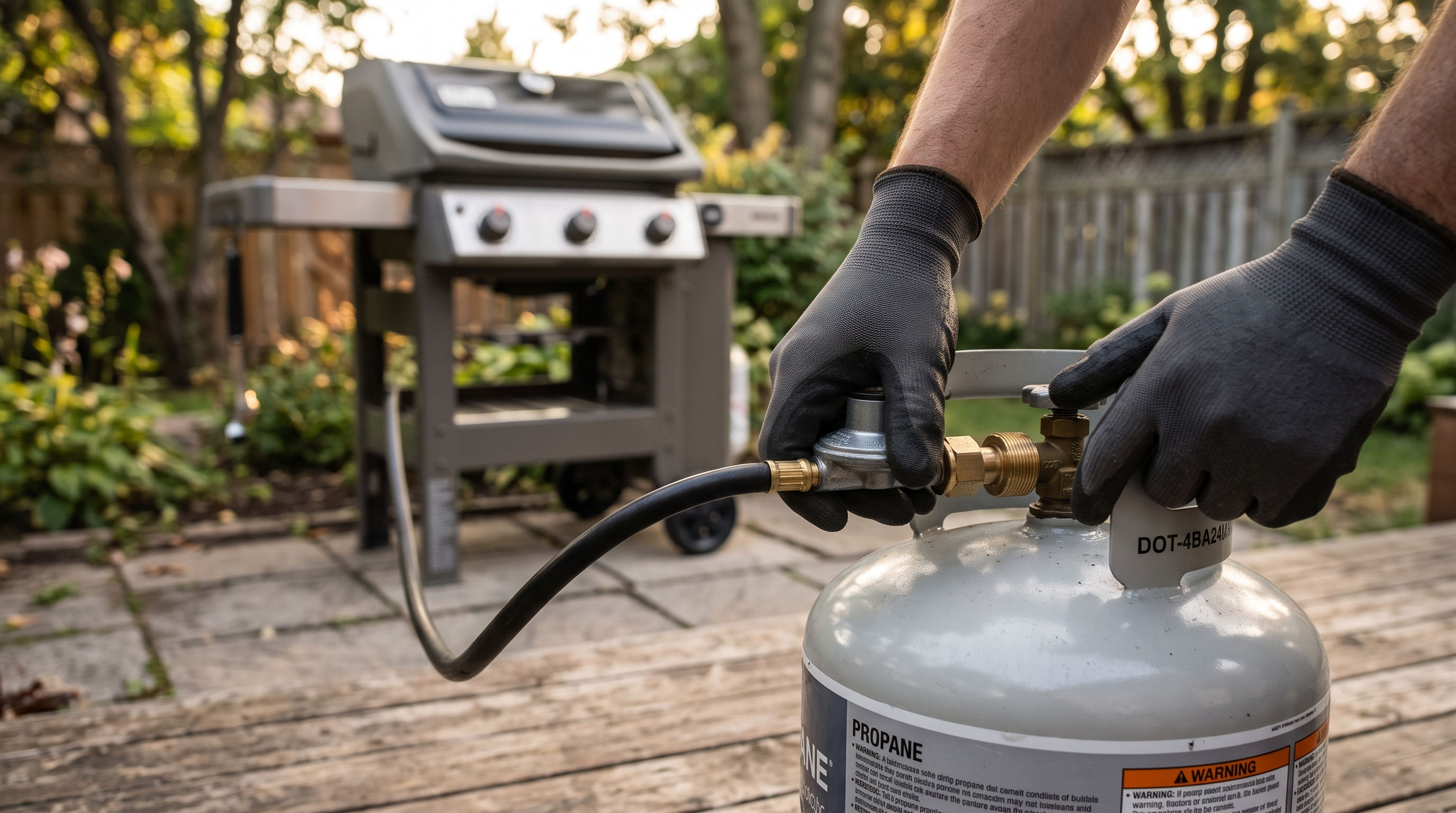
Step 2: Reset the Regulator (Bypass Mode)
What Bypass Mode Is
Most modern propane regulators have a safety feature that restricts gas flow to a trickle if it detects a sudden pressure surge — often triggered by opening the tank valve too quickly, or during a prior overpressure event. This is the single most common cause of a grill that lights but burns weak, or won't reach full flame, and it's frequently mistaken for a broken regulator or empty tank.
How to Reset It
- Turn off all burner control knobs on the grill.
- Close the propane tank valve completely.
- Disconnect the hose from the tank.
- Wait about 60 seconds.
- Reconnect the hose, then slowly open the tank valve — turning it too fast can re-trigger bypass mode.
- Light the grill following normal ignition steps.
Our testing across multiple gas grills found this resolves the large majority of "weak flame" or "won't reach temperature" complaints without needing any parts replaced.
Step 3: Check the Igniter
Battery-Powered Igniters
No Click or Spark
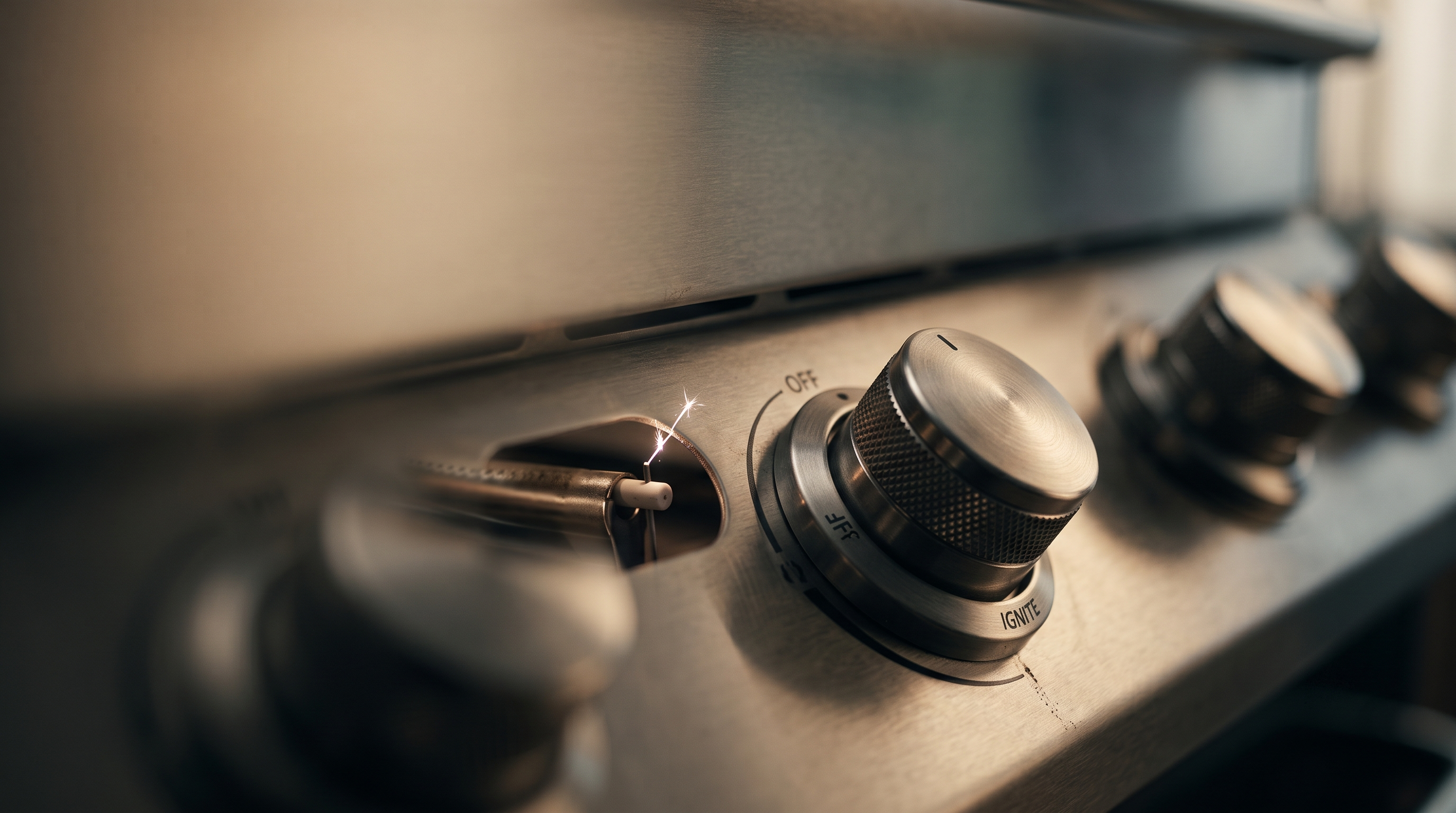
If you hear nothing at all when pressing the ignition button, the battery is the most likely cause. Most grills use a standard AA or 9V battery in the igniter module — replace it and test again before assuming a deeper electrical issue.
Clicking But No Spark Visible
If you hear clicking but see no spark at the electrode, check that the electrode itself isn't fouled with grease or corrosion, and that the gap between the electrode and burner hasn't shifted. A cotton swab and light cleaning often resolves this.
Match-Light Backup
If your grill has a manual match-lighting hole (most do, as a backup), use it to confirm the burner itself is receiving gas and will ignite — this isolates whether the problem is the igniter specifically or something further upstream, like the regulator or tank.
Step 4: Check Individual Burner Ports
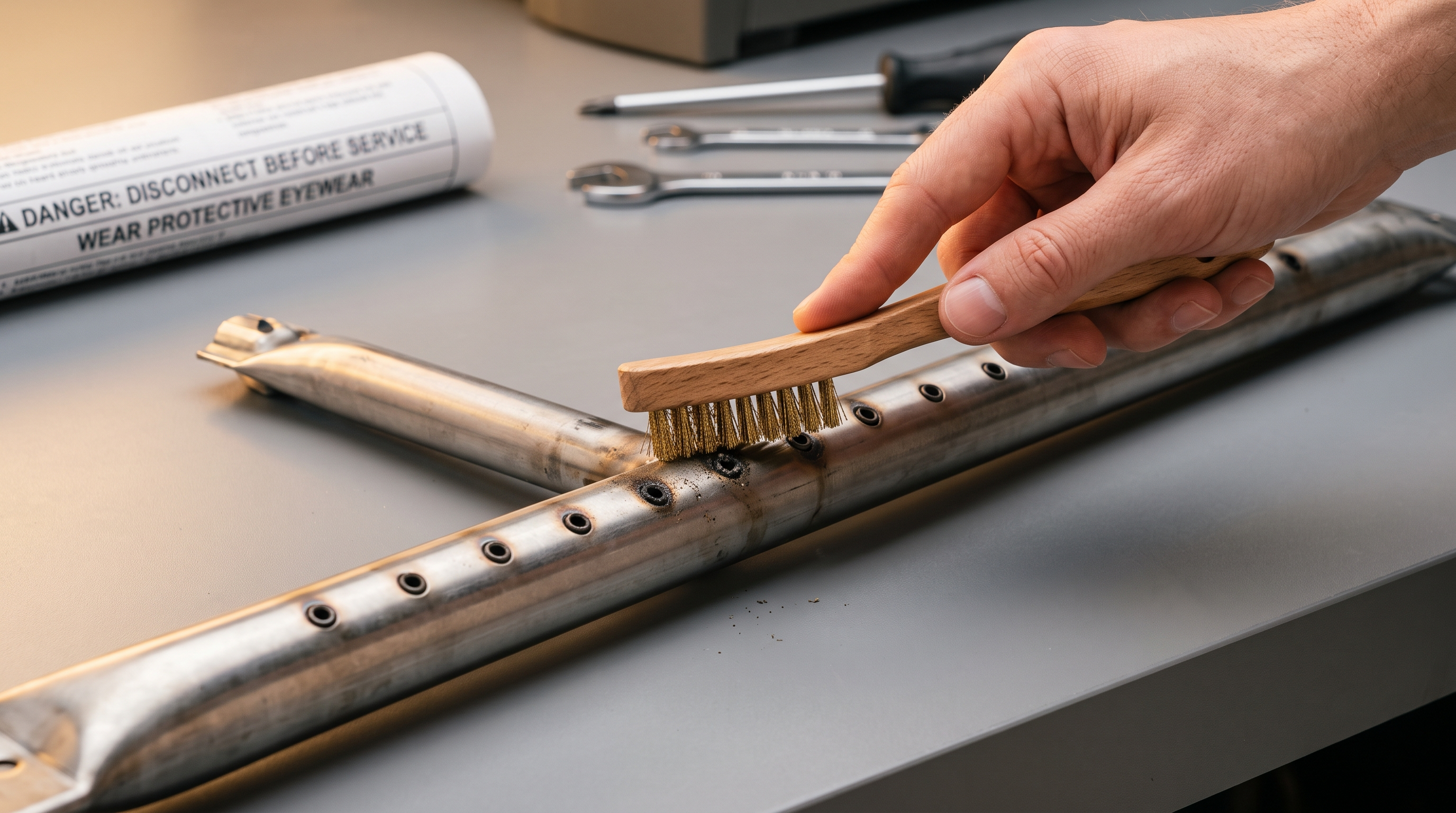
If one burner won't light while others work fine, the igniter and regulator are likely functioning correctly, and the issue is a clogged burner port on that specific tube. Grease and debris buildup inside burner ports is one of the most common causes we've documented in our testing, and it's a cleaning task, not a parts replacement.
How to Clean Burner Ports
- Turn off the gas and disconnect the tank as a safety precaution.
- Remove the burner tube per your grill's manual.
- Use a pipe cleaner or dedicated burner-port brush to clear each port along the tube.
- Check for any insect nests inside the tube itself — a surprisingly common cause of full burner blockage, especially after a season of non-use.
- Reinstall and test.
Step 5: Check Propane Level
It sounds obvious, but a tank that's genuinely low — not empty, but low enough that pressure is inconsistent — can produce symptoms that look like an ignition or regulator problem. Most tanks have a simple weight-based level check: the empty tank weight (tare weight) is usually stamped on the collar, so subtracting that from the total weight on a bathroom scale gives you remaining propane weight.
Step 6: Check for Cold-Weather Effects
Why Cold Affects Propane Pressure
Propane pressure drops in cold temperatures, which can produce a weak flame even with a full tank and a correctly functioning regulator. This is a genuine physical property of propane, not a malfunction — our cold-start testing consistently shows longer heat-up times and slightly reduced maximum output below roughly 40°F.
What to Do About It
Give the grill a longer preheat window in cold weather before judging flame strength, and consider keeping the tank itself slightly warmer (stored indoors between uses, if your setup allows) rather than left in freezing conditions, which can meaningfully affect pressure on the coldest days.
Preventing Ignition Problems Before They Start
Seasonal Maintenance Habits
Most of the causes in this guide are preventable with routine maintenance rather than reactive troubleshooting. Cleaning burner tubes every few months, checking hose connections during your regular grill cleaning, and testing the igniter periodically catches small issues before they become a "won't light" situation on the day you actually want to cook. Our grill cleaning and maintenance guide covers the full routine.
Pre-Winter and Post-Storage Checks
Ignition problems spike noticeably after extended storage, since hoses, connections, and igniter batteries all degrade somewhat even when not in active use. If your grill has been in winter storage, run through this entire troubleshooting sequence proactively before your first spring cook rather than waiting for a failure — see our winterizing guide for the full off-season prep checklist.
When to Call a Professional
Most ignition issues in this guide are safe, straightforward DIY fixes. Call a professional or contact the manufacturer if:
- You've completed a soapy-water leak test and found a leak you can't resolve by tightening a fitting
- The regulator reset doesn't restore normal flame after multiple attempts
- You notice damage to the hose itself, like cracking or brittleness, rather than just a connection issue
- The burner tubes show rust perforation rather than surface residue
Frequently Asked Questions
My gas grill clicks but won't light — what's wrong?
This is most often a regulator in bypass mode, restricting gas flow. Turn off the burners, close the tank valve, disconnect and wait 60 seconds, then reconnect and slowly reopen the valve before trying again.
Why does my grill light but only produce a weak flame?
The most common cause is the same regulator bypass mode that prevents lighting entirely — resetting it as described above resolves this in the majority of cases we've documented.
One burner won't light but the others work fine — why?
This points to a clogged burner port on that specific tube rather than an igniter or regulator issue. Clean the burner tube with a pipe cleaner or dedicated brush, and check for insect nests, a surprisingly common cause after a season of non-use.
Is it safe to keep trying to light my grill if I smell propane?
No. Stop immediately, turn off the tank valve, and do not use any ignition source near the grill. Ventilate the area and perform a soapy-water leak test at all connections before attempting to light it again.
How do I know if my propane tank is actually empty?
Check the tare weight stamped on the tank collar, then weigh the tank on a scale — the difference is your remaining propane weight. A tank that feels light but isn't fully empty can still cause inconsistent pressure and flame issues.
Why is my grill harder to light in cold weather even with a full tank?
Propane pressure genuinely drops in cold temperatures, which can produce a weaker flame or slower ignition even with correct equipment. Give the grill a longer preheat window in cold conditions, and consider keeping the tank warmer between uses if your setup allows it.
Final Takeaway
The large majority of gas grill ignition problems we've diagnosed trace back to one of four causes: a regulator in bypass mode, a dead igniter battery, a clogged burner port, or genuinely low propane. Work through them in that order before assuming your grill needs replacement parts or professional service — most issues resolve in under 10 minutes once you know what to check, and building routine maintenance into your regular grilling schedule prevents most of these from becoming a surprise in the first place.
For broader upkeep beyond ignition issues, see our grill cleaning and maintenance guide, or browse our gas grill reviews if you're shopping for a replacement.
Ready to shop? Browse our expert grill reviews to find your perfect match.