How to Season a Griddle (Complete Guide)
How to season a flat-top griddle or cast-iron grate step by step, plus re-seasoning after rust, cleaning between cooks, and common mistakes to avoid.
Why Seasoning Matters More Than Cleaning Alone
Seasoning is what turns raw steel into a naturally nonstick, rust-resistant cooking surface — it's a thin, polymerized layer of oil bonded to the metal through repeated heat cycles, not just a coating you wipe on. Skipping proper seasoning is the single biggest reason we see readers complain about sticking, rust, or uneven cooking on an otherwise well-built griddle like the Blackstone 2364. This guide covers the full process, from a brand-new griddle to fixing a rusted or neglected one.
Unlike a nonstick pan coated at the factory, a raw steel griddle's performance is genuinely built by you, over time, through this process. A griddle seasoned correctly from day one, and maintained with light ongoing care, will outperform an unseasoned or poorly maintained one regardless of how much the unit itself cost.
Quick Answer: The Seasoning Process in Brief
| Step | What to Do |
|---|---|
| 1. Clean | Wash new griddle with soap and water to remove factory coating |
| 2. Dry | Heat briefly to fully evaporate moisture |
| 3. Oil | Apply a thin, even layer of high-smoke-point oil |
| 4. Heat | Heat until the oil smokes and darkens, then cool |
| 5. Repeat | Do 2–3 full oil-and-heat cycles for a durable base |
If you remember one thing: thin layers, repeated multiple times, always beat one thick layer. A thick coat of oil doesn't bond properly and flakes off — the opposite of what you're trying to build.
Seasoning a New Griddle
Step 1: Remove the Factory Coating
New griddles, including the Blackstone 2364, ship with a protective coating to prevent rust during shipping and storage. Wash the surface thoroughly with warm soapy water and a scrub pad before your first seasoning cycle — this is the one time using soap on the griddle is correct; after seasoning, you'll avoid it.
Step 2: Dry Completely
Heat the griddle briefly on low to fully evaporate any remaining moisture. Any water left on the surface interferes with oil bonding in the next step.
Step 3: Apply a Thin Oil Layer
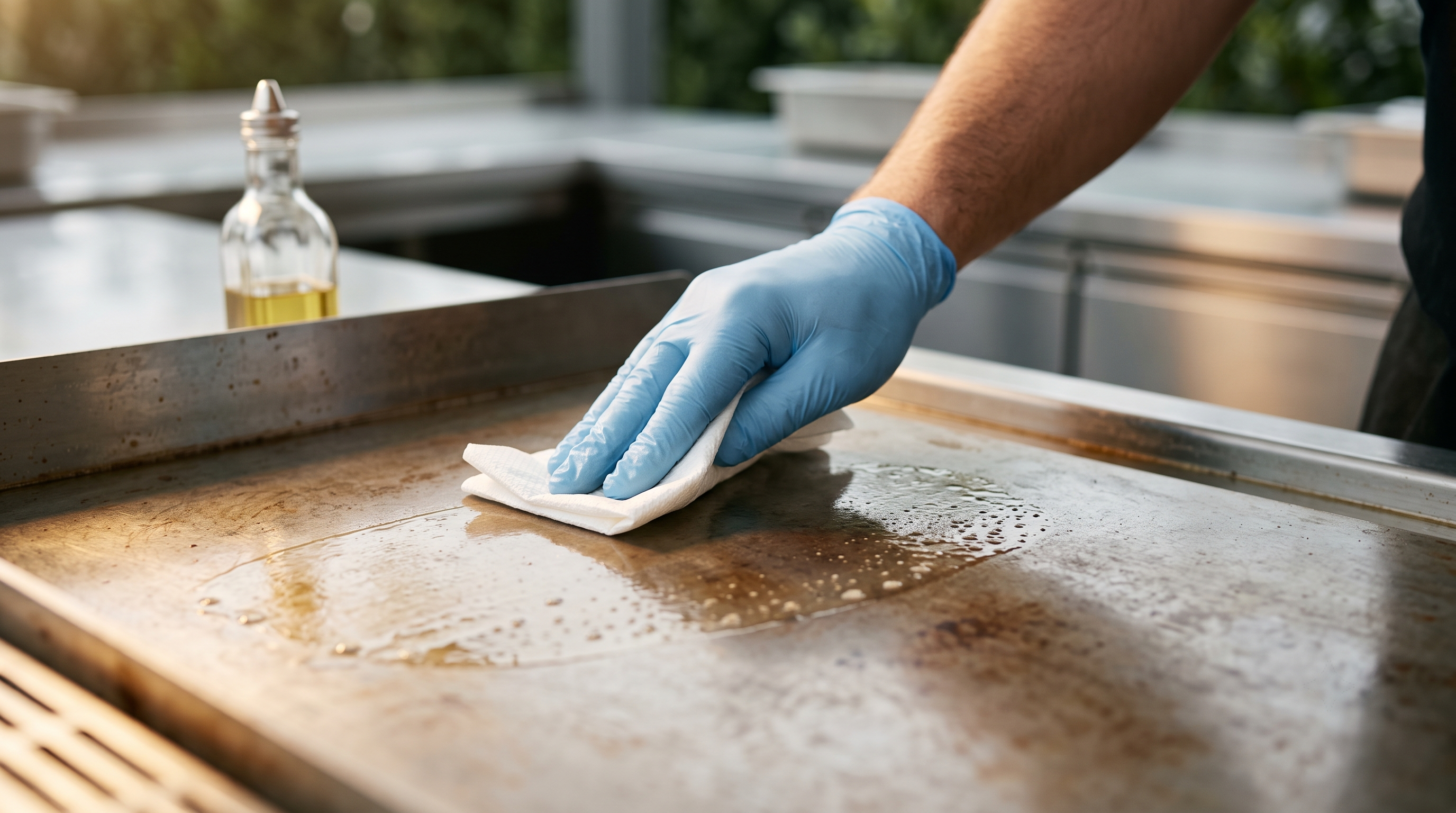
Use a high-smoke-point oil — flaxseed, canola, vegetable, or a dedicated griddle seasoning oil all work. Apply a very thin layer with a paper towel or cloth, then wipe off any visible excess. It should look almost dry, not glossy or pooled. This step is where most first-time seasoning attempts go wrong: the instinct is to apply a generous coat, but a heavier layer actually produces a worse result, since excess oil pools and turns gummy rather than bonding evenly to the metal.
Step 4: Heat Until It Smokes and Darkens
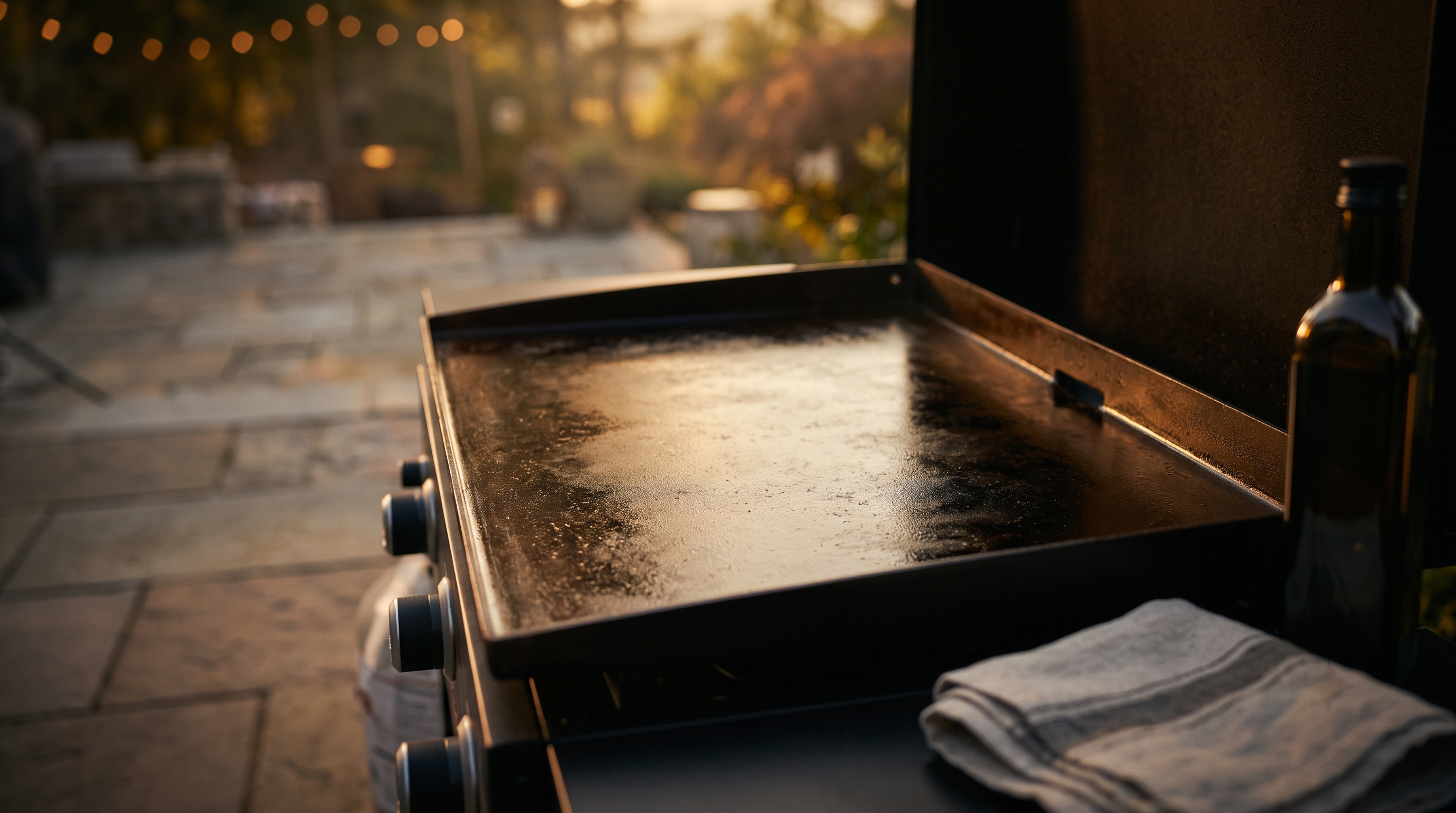
Heat the griddle until the thin oil layer smokes visibly, then let it darken and cool naturally. This is the polymerization process that actually bonds the oil to the metal — skipping this step and just wiping oil on cold griddle doesn't create real seasoning, just a temporary film that washes off with the first cook.
Step 5: Repeat 2–3 Times
A single seasoning cycle isn't enough for a durable base. Repeat the oil-and-heat process 2–3 times before your first real cook — each layer builds on the last, and the surface should darken progressively with each pass.
Maintaining Seasoning Between Cooks
After Each Cook
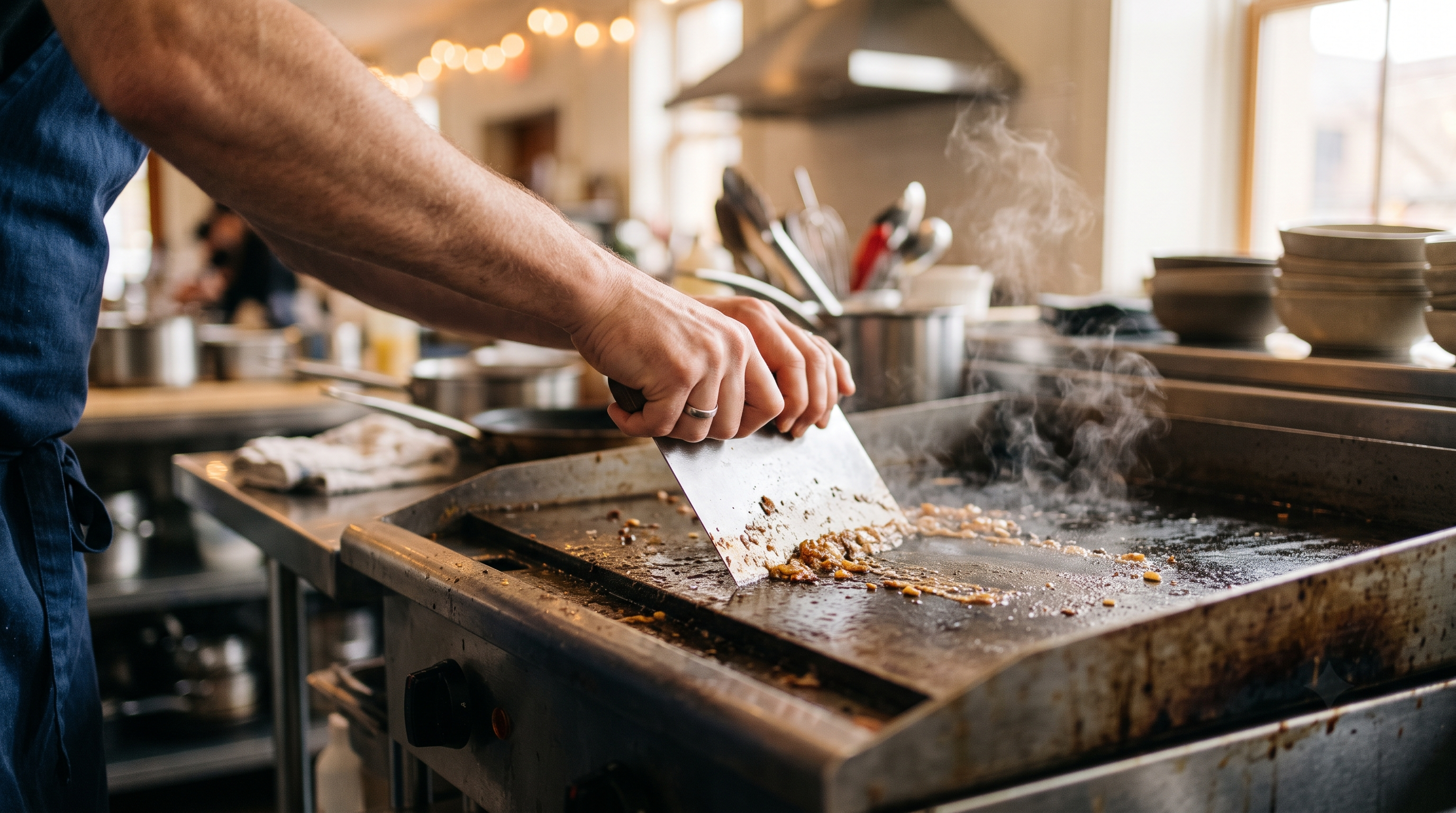
Scrape off food residue while the griddle is still warm using a metal scraper, then wipe with a paper towel. Avoid soap on a seasoned surface — it strips the oil layer you've built up. If stuck-on residue needs more than a dry scrape, use a small amount of water and scrape while warm, then dry the surface fully and apply a very thin oil layer before storing.
Building Seasoning Over Time
Seasoning genuinely improves with regular use — cooking with oil (smash burgers, bacon, eggs) reinforces the layer naturally. Our testing on the Blackstone 2364 found the surface performing noticeably better after several cooks than fresh out of the initial seasoning process.
Fixing Rust or Neglected Seasoning
When to Re-Season From Scratch
If you see orange or brown rust spots, a dull grey patchy surface, or food sticking significantly more than usual, the seasoning has broken down and needs to be rebuilt, not just touched up.
Stripping and Restarting
- Scrub the affected area with a scouring pad and soap to remove rust and any remaining broken seasoning — this is the one situation where aggressive cleaning is correct.
- Dry the surface completely, then check for any remaining rust; repeat scrubbing if needed.
- Follow the full new-griddle seasoning process from the beginning: oil, heat until smoking, cool, repeat 2–3 times.
Rust that's addressed early is a straightforward fix. Deep rust that's been left for a long period may need more aggressive mechanical removal (steel wool or a grinding pad) before seasoning can bond properly again.
When Rust Means Something More Serious
Surface rust that responds to scrubbing and re-seasoning is normal wear, not a defect. If you find rust that has actually perforated or thinned the metal itself, rather than sitting on the surface, that's a structural issue re-seasoning can't fix, and it's time to consider a replacement surface rather than continued restoration.
Seasoning Cast-Iron Grates vs. Flat-Top Griddles
Shared Principles, Different Surfaces
The core seasoning process — thin oil, heat to smoking, cool, repeat — applies to both cast-iron grill grates and flat-top griddles. The main practical difference is surface area and shape: grates have more surface texture and gaps that make oil application slightly more involved, while a flat griddle surface, like the Blackstone 2364's, is faster to season evenly simply because it's flat and uninterrupted.
Grates on Charcoal and Gas Grills
Cast-iron grates on charcoal or gas grills season the same way, but see less consistent oil contact during normal cooking than a griddle does, since food doesn't cover the full surface the way it does on a flat-top. Expect grates to need slightly more deliberate maintenance seasoning over time compared to a griddle that's re-seasoned somewhat automatically through regular cooking oil contact.
Common Seasoning Mistakes
- Using too much oil. A thick layer doesn't bond correctly and creates a sticky, uneven surface instead of a smooth one. Wipe off visible excess every time.
- Skipping the smoke step. Oil applied to a cold or barely warm surface doesn't polymerize — it just sits on top and washes away with the first real cook.
- Using low-smoke-point oils. Butter or olive oil burn and turn gummy at seasoning temperatures rather than forming a hard, durable layer. Stick to flaxseed, canola, vegetable, or a dedicated griddle oil.
- Washing with soap after the initial seasoning. Soap strips the oil layer you've built. Scrape and wipe instead, reserving soap only for a full rust-removal re-season.
- Storing without a protective oil layer. Especially before extended storage, apply a light oil coat to protect against moisture and rust — see our winterizing guide for full storage prep.
Frequently Asked Questions
What's the best oil for seasoning a griddle?
High-smoke-point oils work best — flaxseed, canola, and vegetable oil are all reliable choices. Avoid butter or olive oil, which burn and turn gummy rather than forming a durable, polymerized layer.
How many times do I need to season a new griddle?
Plan on 2–3 full oil-and-heat cycles before your first real cook. A single pass isn't enough to build a durable base layer — each cycle should darken the surface progressively.
Can I use soap on a seasoned griddle?
No, not for regular cleaning — soap strips the oil layer you've built up. Scrape residue off while warm and wipe clean instead. The one exception is a full rust-removal re-season, where scrubbing with soap is the correct first step.
Why is my griddle sticking even though I seasoned it?
Usually either too much oil was applied during seasoning (creating an uneven, sticky layer), or the oil wasn't heated to smoking point, so it never properly bonded. Strip back and re-season using thin layers and the full smoke-and-cool cycle.
How do I know if I need to fully re-season my griddle?
Look for rust spots, a dull patchy grey surface, or noticeably more sticking than usual. Any of these mean the seasoning has broken down and needs a full rebuild, not just a quick oil wipe.
Do cast-iron grates and flat-top griddles season the same way?
The core process is identical — thin oil, heat until smoking, cool, repeat. Flat griddles tend to season more evenly and pick up incidental maintenance seasoning from regular cooking oil contact, while grates need slightly more deliberate attention since food doesn't cover their full surface.
Final Takeaway
Proper seasoning is what separates a griddle that performs like new for years from one that sticks and rusts within a season. Thin oil layers, heated until they smoke and darken, repeated 2–3 times, build the durable base — and regular cooking with oil, plus scraping (not washing) between cooks, maintains it from there. Treat seasoning as an ongoing relationship with the surface, not a one-time setup step, and it will keep improving the longer you own the griddle.
For broader grill care beyond griddle seasoning, see our grill cleaning and maintenance guide, or browse our full grill reviews if you're shopping for a griddle.
Ready to shop? Browse our expert grill reviews to find your perfect match.