How to Winterize Your Grill (Complete Guide)
How to winterize your grill for storage: cleaning, rust prevention, propane tank safety, and pellet moisture protection, from our testing team.
Why Winterizing Actually Matters
A grill left uncleaned and uncovered over winter doesn't just look neglected in spring — our testing has repeatedly found that skipped winterizing is the single biggest predictor of rust perforation, seized vent dampers, and gas grill hoses cracking within the first year of ownership. Cold cycling, moisture, and UV exposure do real damage even to well-built grills. This guide covers the specific winterizing steps for every fuel type we test, so your grill performs the same in spring as it did the day you bought it.
Quick Answer: Winterizing Checklist by Fuel Type
| Fuel Type | Key Winterizing Steps |
|---|---|
| Gas | Disconnect and store propane tank separately, deep clean burners and grates, cover |
| Charcoal | Empty ash fully, oil cast-iron grates lightly, cover |
| Pellet | Empty hopper, store pellets in a sealed container, protect auger and controller from moisture |
| Electric | Wipe down plates, protect digital controls with a cover, no fuel to manage |
If you do nothing else before winter: deep clean the grill fully, disconnect and separately store any propane tank, and use a fitted cover. Those three steps prevent the large majority of off-season damage we see across every fuel type.
How Long Winterizing Actually Takes
None of this requires a full afternoon. A thorough gas or charcoal grill winterizing session, including a deep clean, typically takes 30–45 minutes. Pellet and electric grills add a few extra minutes for hopper emptying or wipe-down, but the total time investment is genuinely small relative to the damage it prevents — replacing a rusted-through firebox or a corroded pellet auger costs far more in time and money than an annual half-hour of prep.
Winterizing Gas Grills
Deep Clean Before Storage
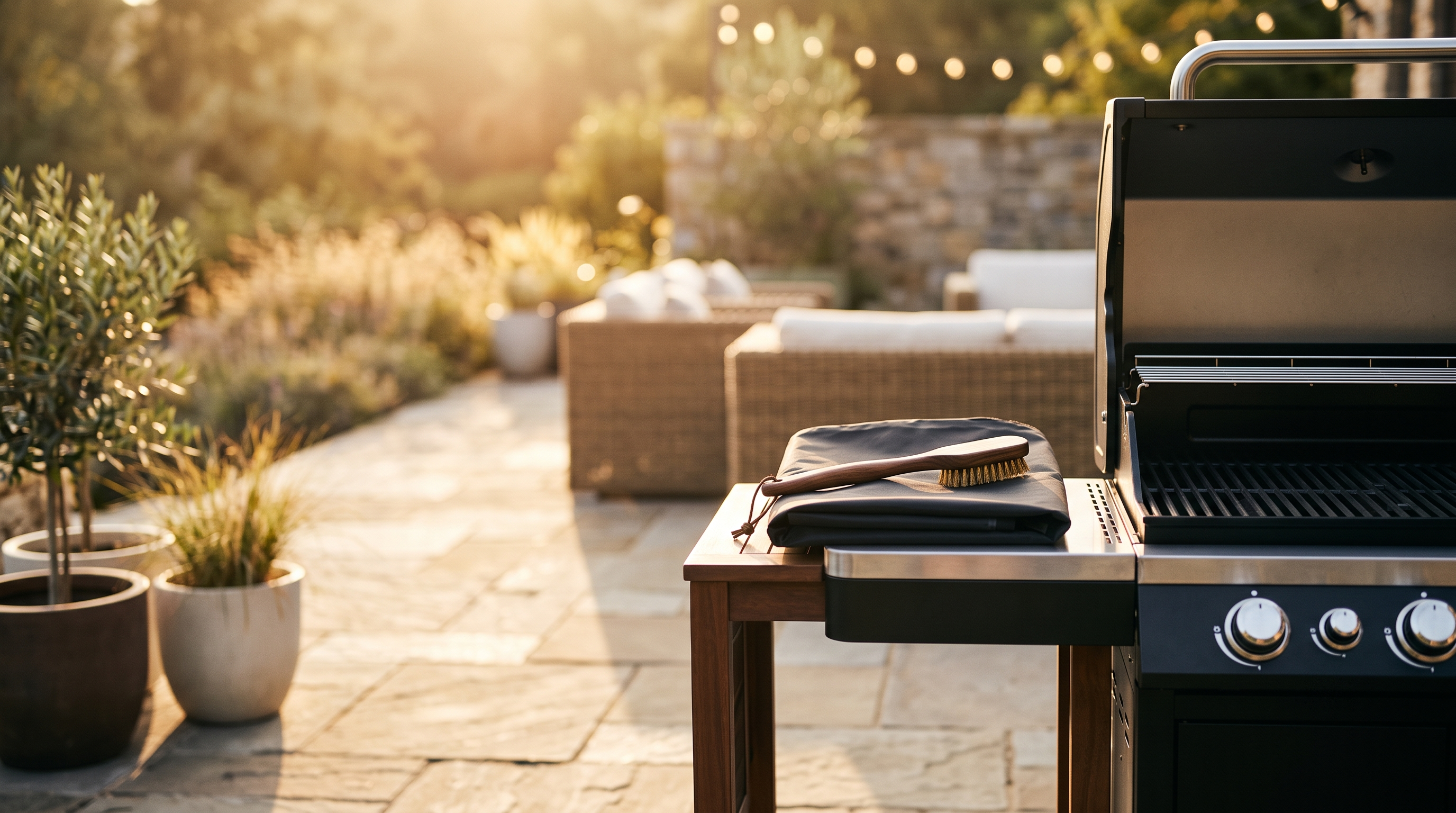
Brush all grates thoroughly, empty the grease and drip trays completely, and clean out any accumulated debris from the burner area. Leftover grease is both a pest attractant and a source of corrosive residue over months of storage — our tested Weber Spirit E-325 held up across repeated seasons specifically because grease was never left to sit through winter.
Propane Tank Storage
Never Store Tanks Indoors
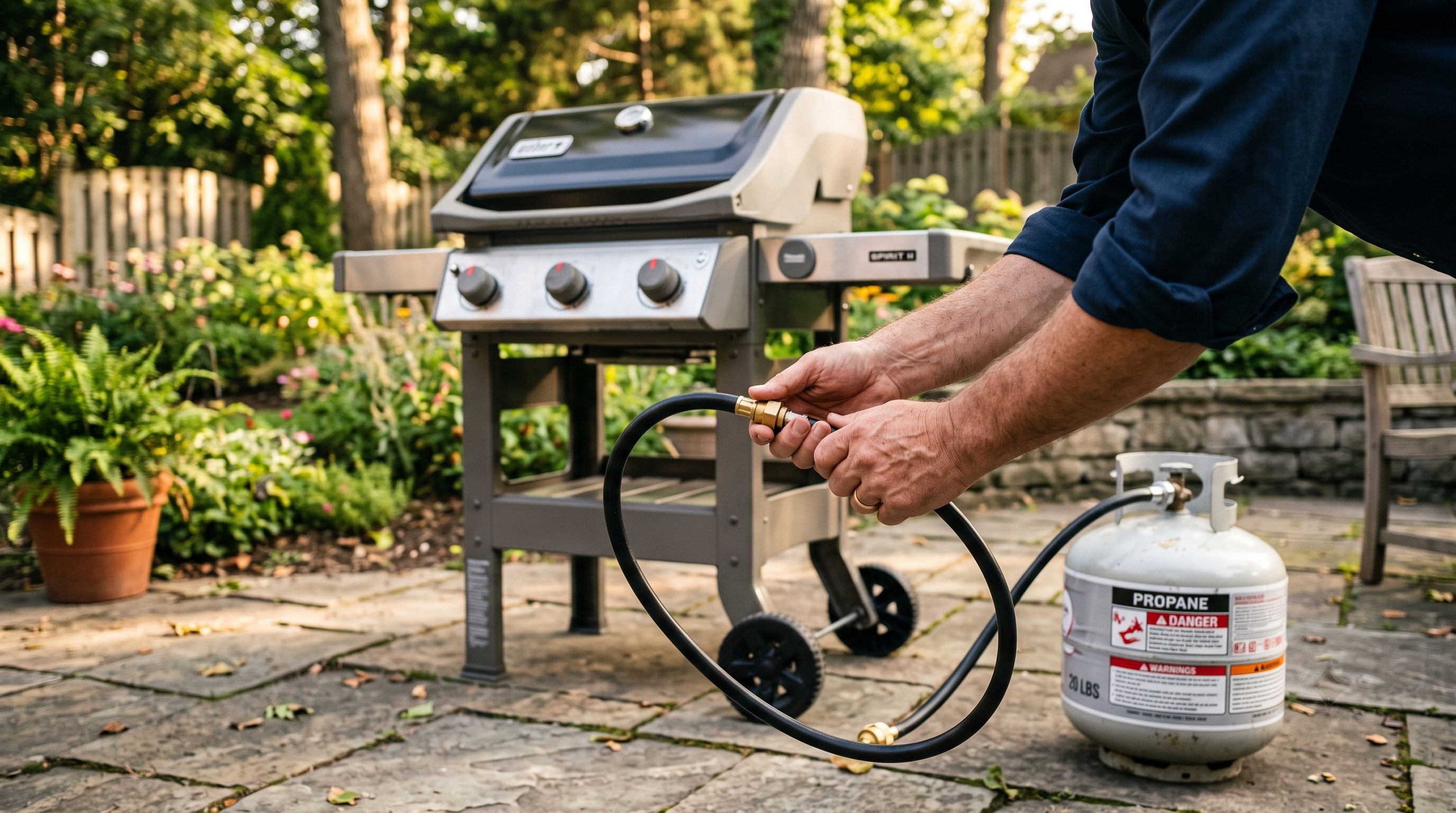
Disconnect the propane tank and store it outdoors in a well-ventilated, upright position, away from direct sun and any structure. Never store a propane tank in a garage, basement, or other enclosed space, regardless of how the grill itself is stored.
Check the Valve and Hose
Inspect the hose and regulator connection for cracking or wear before storage — a simple soapy-water leak test at the connection point catches most issues before they become a spring safety problem. If your regulator has been in bypass mode recently (restricting flow to a trickle), resolve that before storage rather than leaving it for spring, since the reset process is the same either way and takes only a minute.
Winterizing Charcoal Grills
Ash and Grate Care
Empty the ash catcher completely — leftover ash retains moisture and accelerates rust in the bowl over winter. Our tested Weber Original Kettle 22-Inch's aluminum vent dampers resist this better than steel, but the porcelain-enameled bowl still benefits from a full ash removal before storage.
Protecting Cast Iron
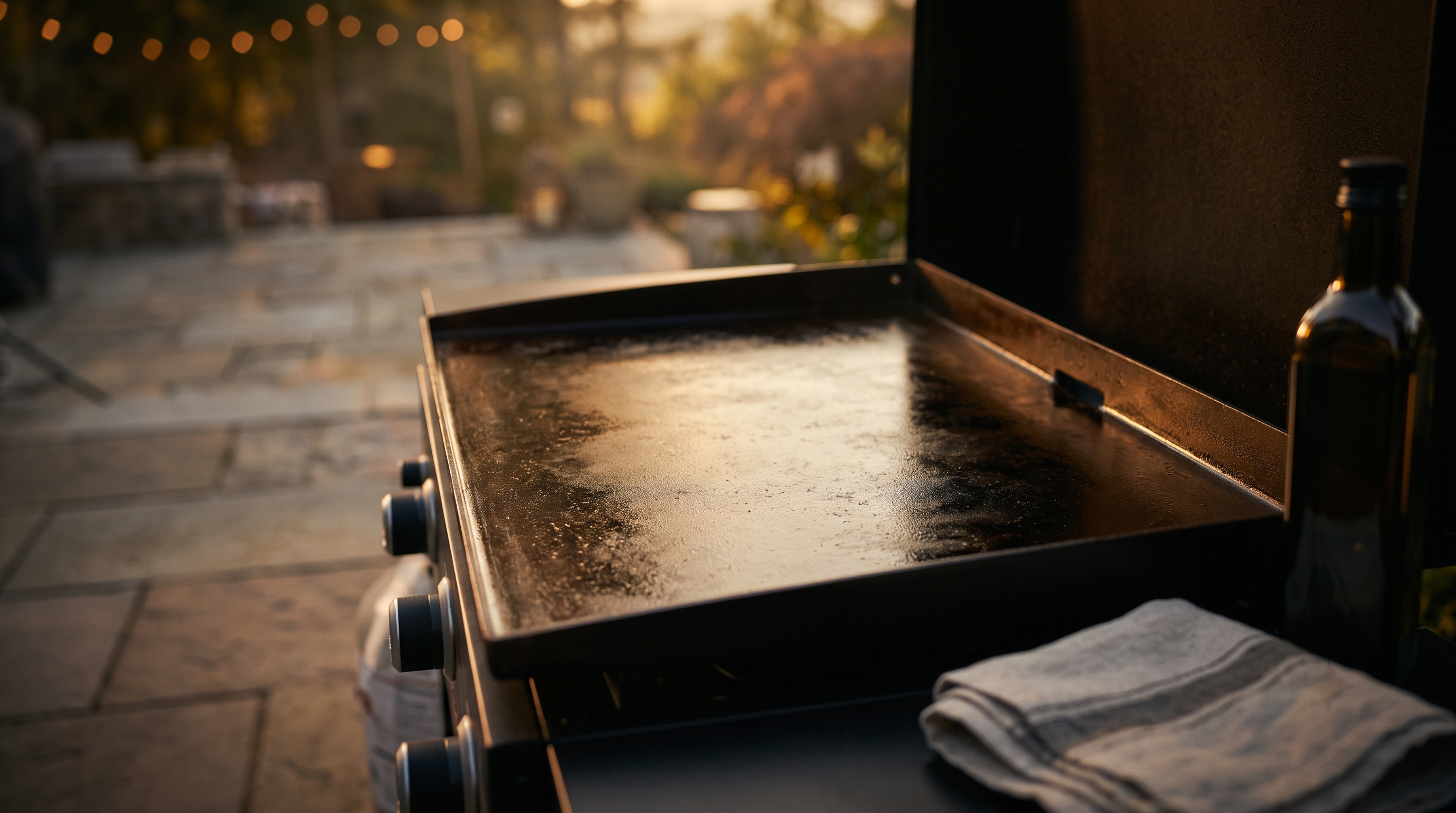
Apply a light coat of cooking oil to cast-iron or plated-steel grates before storage to prevent rust from forming over the off-season. Wipe off any excess before your first spring cook to avoid an oily first cook.
Dedicated Smoker Considerations
Vertical smokers with a water pan, like the Weber Smokey Mountain 18-Inch, need the water pan fully emptied and dried before storage — standing water left in the pan over winter is a common source of rust we've seen on tested units left improperly stored.
Winterizing Pellet and Electric Grills
Pellet Grills
Empty the Hopper
Remove any remaining pellets from the hopper before storage. Leftover pellets exposed to humidity swell and can jam the auger, one of the most common pellet grill failure points we've documented across the Pit Boss 150, Traeger Pro 34, and Traeger Woodridge.
Protect the Controller
The digital controller and auger motor are the most weather-sensitive components on any pellet grill. A fitted cover matters more here than on a basic charcoal kettle — moisture intrusion into electronics is a genuine failure risk that ash or charcoal residue simply isn't.
Electric Grills and Smokers
Electric units have no fuel to manage before storage, but the same rule applies to their control panels: a cover protects the digital display and power components from winter moisture. Our tested Weber Lumin Portable Electric Grill is weather-resistant for active outdoor use, but extended off-season storage under a cover still extends component life beyond what daily weather exposure alone would produce.
Choosing a Grill Cover
What to Look For
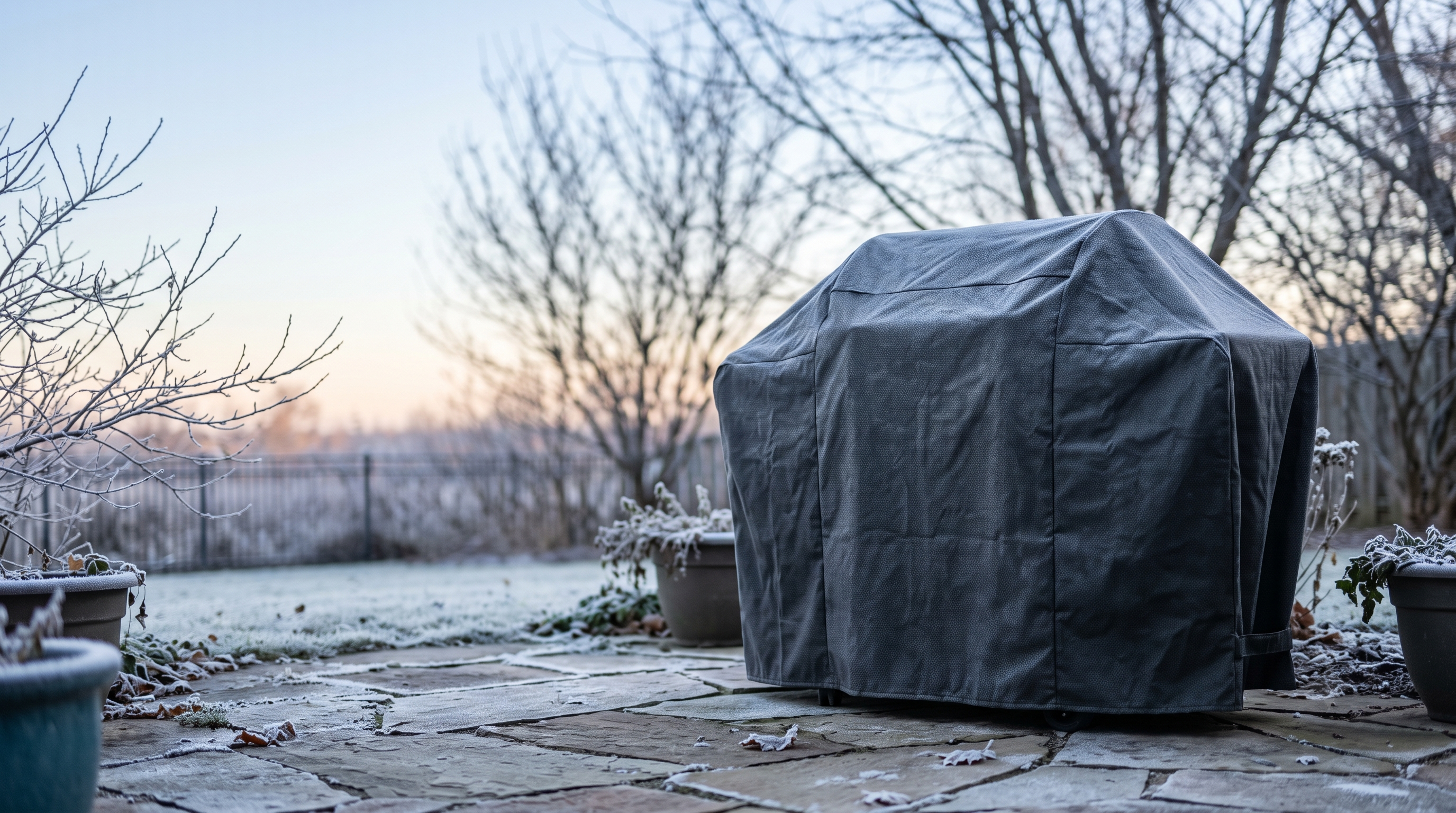
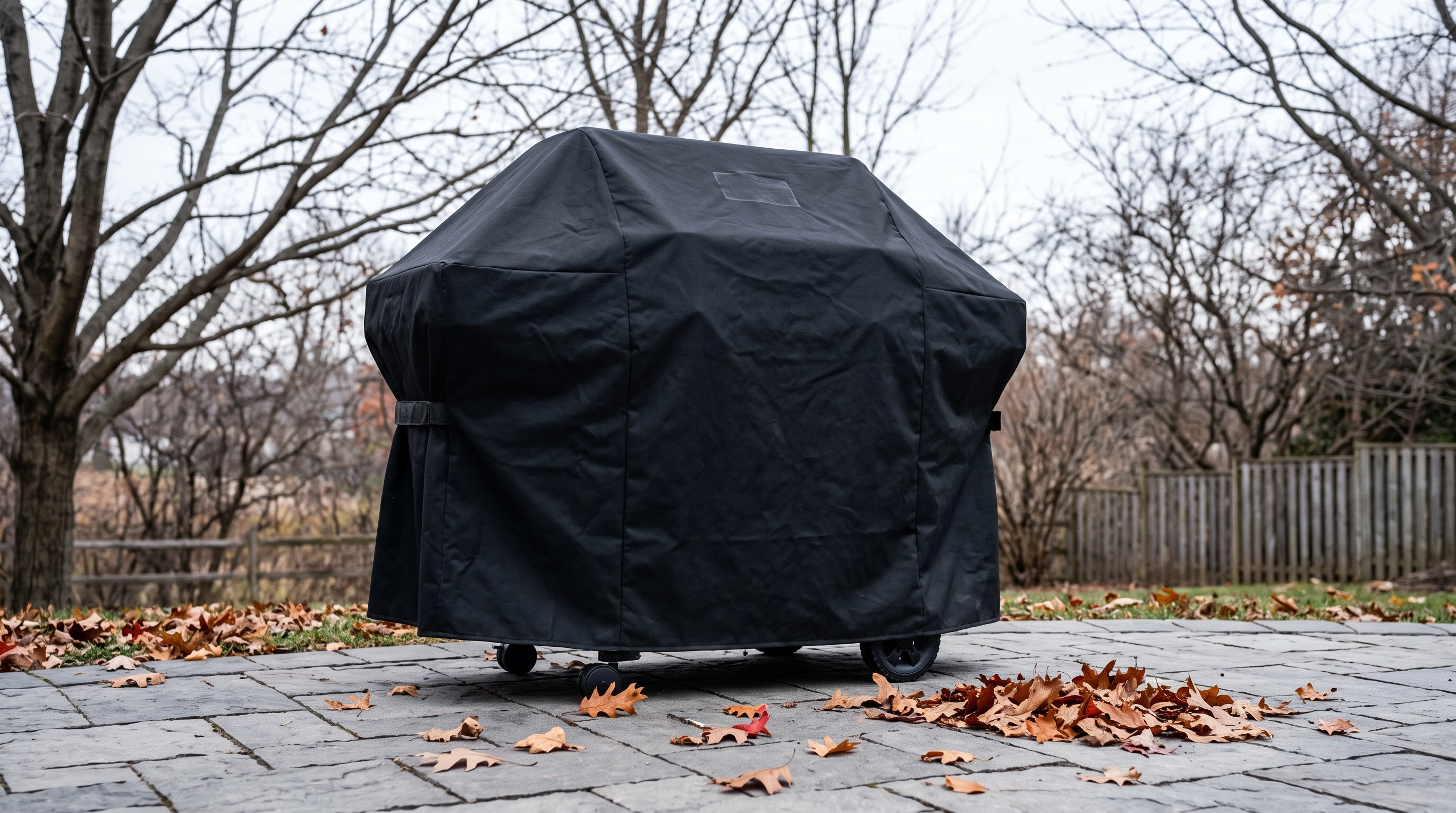
A properly fitted cover — not a generic oversized tarp — makes the biggest difference in winter protection. Look for a cover rated for outdoor UV and water exposure, with a design that fits your specific grill's dimensions closely enough to prevent wind from working underneath it.
Ventilation Matters Too
A completely airtight cover can trap moisture underneath during temperature swings, which is worse than no cover at all in some climates. Covers with small vents or a breathable fabric layer avoid this while still blocking rain and UV.
Storage Location Matters Too
Sheltered vs. Fully Exposed
A grill stored under a patio roof, in a shed, or against a wall with some overhang faces meaningfully less winter stress than one sitting fully exposed to open sky. If you have any sheltered option on your property, even a partial one, use it in addition to a cover — the two aren't redundant, they solve different problems.
Ground Contact
Avoid letting a grill's wheels or legs sit directly in standing water or snow melt for extended periods. A simple platform, paver, or even a scrap of plywood underneath keeps moisture from wicking up into legs and wheel mechanisms over the off-season.
Climate-Specific Considerations
Mild, Rarely-Freezing Climates
If your winters rarely dip below freezing and stay relatively dry, winterizing is less urgent but still worthwhile — UV exposure and rain cycles continue year-round regardless of temperature, and a cover still meaningfully extends component life.
Cold, Wet, or Coastal Climates
Freeze-thaw cycles, heavy snow load, and salt air near coastlines all accelerate corrosion and component wear significantly faster than in milder regions. If you're in one of these climates, prioritize full disassembly of removable parts (grates, drip trays, water pans) for indoor or garage storage where practical, rather than relying on a cover alone.
Spring Startup After Winter Storage
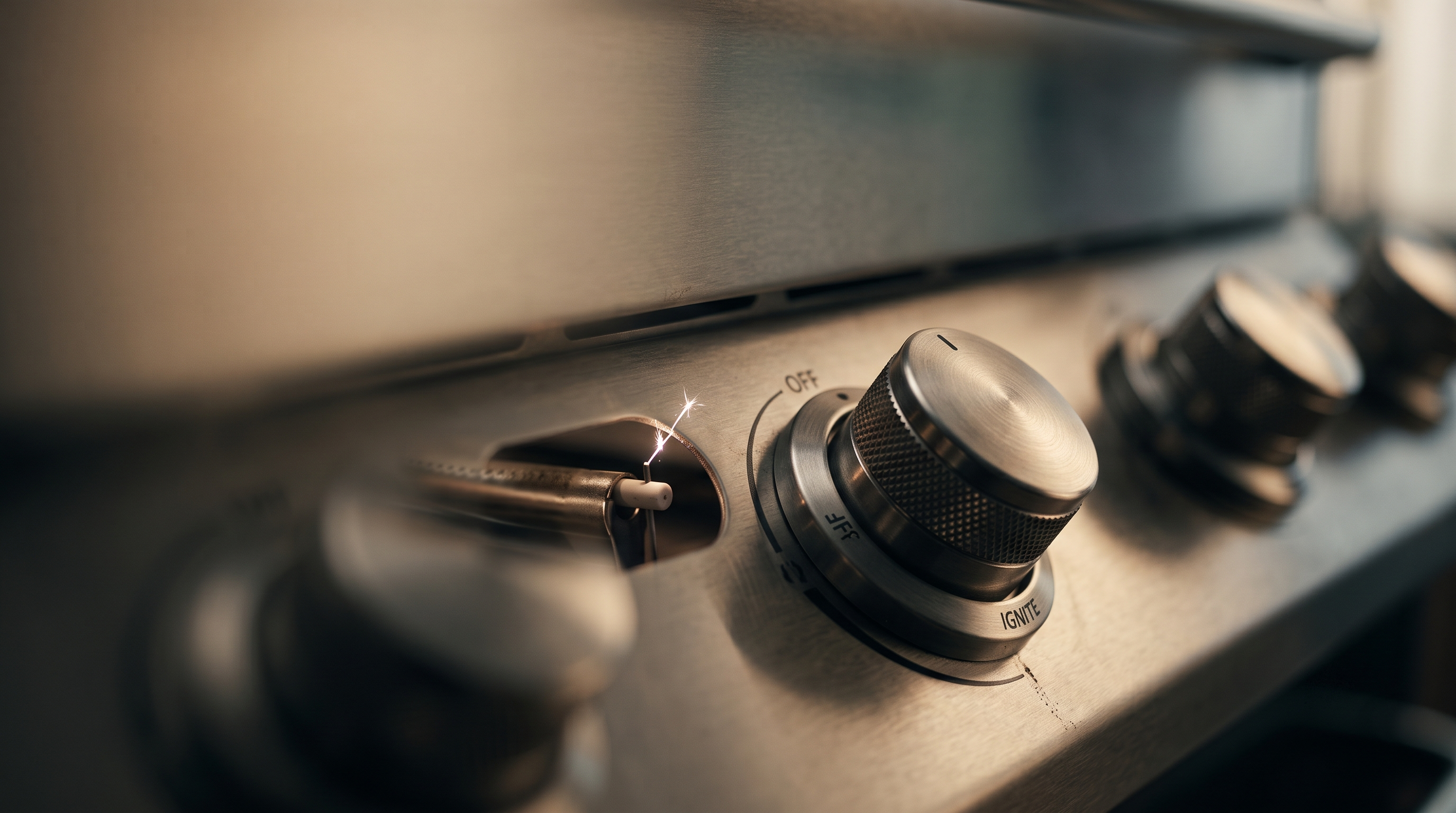
Before your first cook of the season, inspect hoses and connections for cracking, wipe off any protective oil from cast iron, and run a burn-in or preheat cycle to clear any dust or residue that accumulated during storage. For gas grills, do a fresh soapy-water leak check on all connections before relighting, even if you checked before winter storage. If ignition seems inconsistent after storage, our gas grill ignition troubleshooting guide covers the most common post-storage causes, starting with a simple regulator reset.
Frequently Asked Questions
Do I need to store my propane tank separately from my grill in winter?
Yes, always. Disconnect the tank and store it outdoors in a well-ventilated, upright position — never indoors or in an enclosed space, regardless of how you store the grill body itself.
Will my charcoal grill rust if I don't winterize it?
It's more likely to, especially if ash is left in the bowl or grates aren't protected with a light oil coating. Surface rust is a cleaning and reseasoning issue, not a replacement trigger, but proper winterizing meaningfully reduces how much you'll deal with in spring.
Can I leave pellets in the hopper over winter?
We don't recommend it. Leftover pellets exposed to humidity swell and can jam the auger, one of the most common pellet grill failure points. Empty the hopper and store pellets separately in a dry, sealed container.
Is a grill cover really necessary?
Yes, for any fuel type, but especially for pellet and electric grills with digital controllers and motors that are genuinely weather-sensitive. A properly fitted, breathable cover is one of the cheapest, highest-impact purchases you can make.
What should I check before my first cook after winter storage?
Inspect hoses and connections for cracking, wipe off any protective oil from cast iron, and run a preheat or burn-in cycle to clear dust. For gas grills, always do a fresh soapy-water leak check on connections before relighting.
Does winterizing differ much between mild and cold climates?
The core steps stay the same, but urgency and thoroughness scale with your climate. Mild, dry regions can get by with basic cleaning and a cover; cold, wet, or coastal climates benefit from removing and separately storing components like grates and water pans rather than relying on a cover alone.
Final Takeaway
Winterizing isn't complicated, but skipping it is the single most common reason a well-built grill starts showing rust, sticking vents, or ignition problems within its first year. Deep clean fully, store propane tanks separately and outdoors, protect cast iron with a light oil coating, and use a properly fitted cover — the same four steps apply regardless of which fuel type you're storing. Treat it as routine annual maintenance rather than an optional extra, and your grill should perform the same in its fifth spring as it did in its first.
For more on year-round care, see our grill cleaning and maintenance guide, or browse our full grill reviews if you're shopping for a new one.
Ready to shop? Browse our expert grill reviews to find your perfect match.