Weber vs Traeger 2026: Which Brand Wins?
Weber vs Traeger compared: gas and charcoal grilling versus pellet smoking, tested head to head on heat control, flavor, price, and warranty. Full verdict.
Two Different Grilling Philosophies
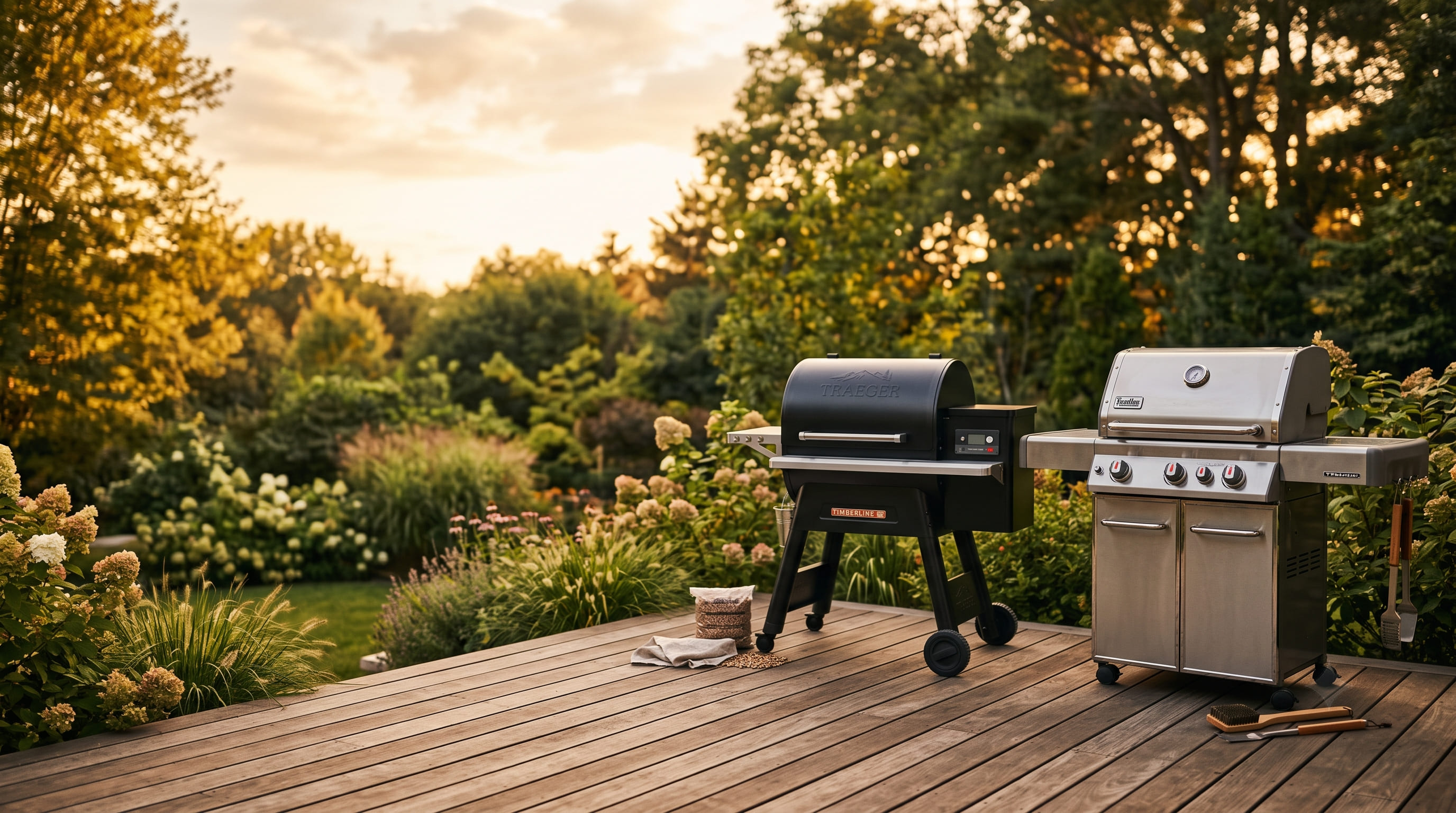
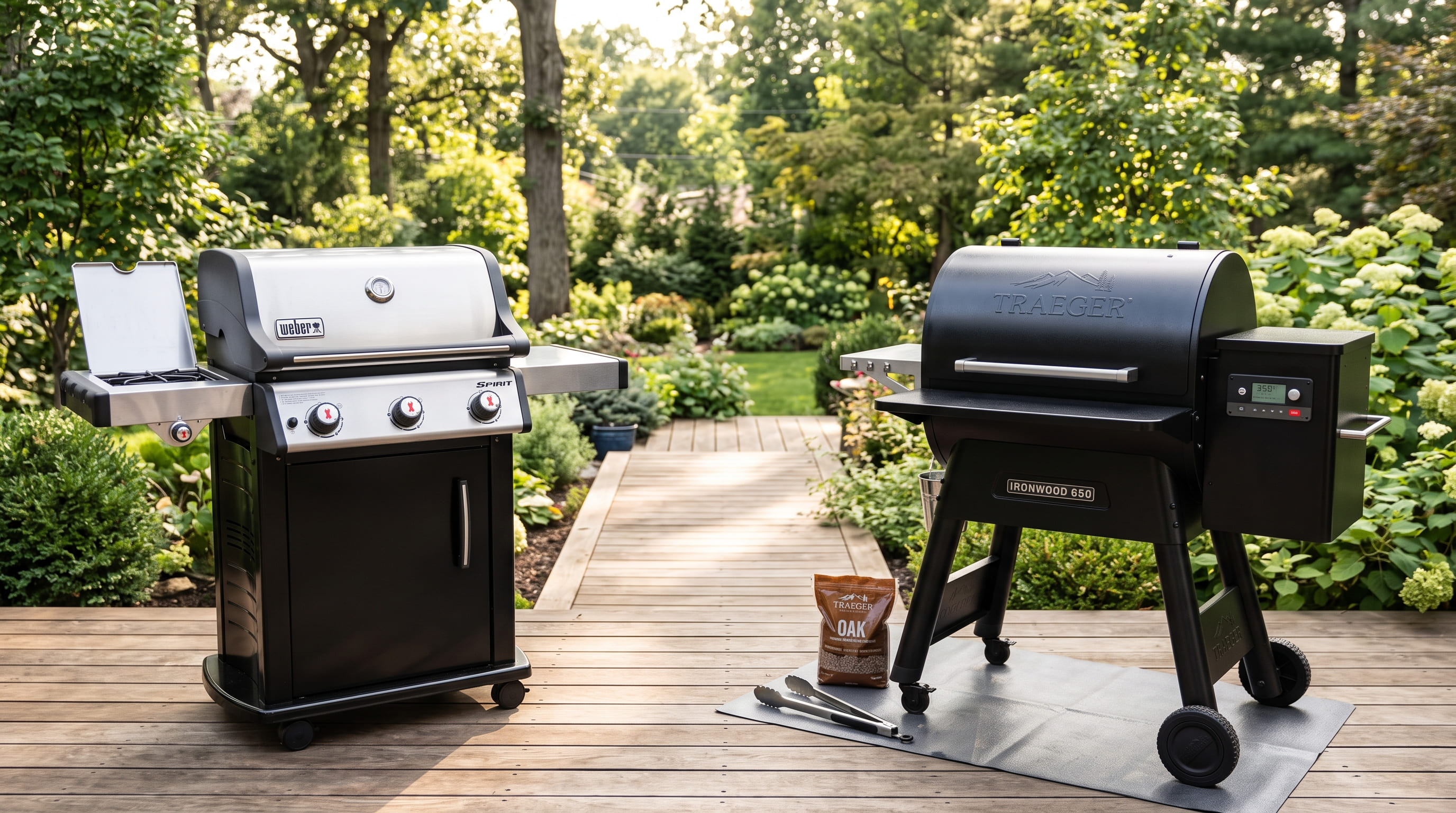
Weber and Traeger aren't really competing for the same purchase, even though they're constantly compared. Weber built its reputation on gas and charcoal grilling — direct, high-heat cooking with decades of refinement behind burner design and heat retention. Traeger essentially created the modern pellet grill category — wood-fired, low-and-slow smoking with digital, set-and-forget temperature control.
Choosing between them isn't really "which brand is better" — it's "which cooking method matches how you actually want to cook." This guide compares them head to head across the factors that actually matter, using our own tested models from both brands, so you can make that call with real data instead of brand loyalty.
Quick Answer: Which Should You Buy?
| If You Want... | Choose | Our Pick | Price |
|---|---|---|---|
| Fast, direct high-heat grilling | Weber | Weber Spirit E-325 | $499–$529 |
| Premium gas grilling, larger groups | Weber | Weber Genesis E-325 | $949–$999 |
| Budget charcoal, most versatile | Weber | Weber Original Kettle 22-Inch | $147–$157 |
| Set-and-forget wood-fired smoking | Traeger | Traeger Pro 34 | $559–$579 |
| WiFi-connected smoking, remote monitoring | Traeger | Traeger Woodridge | $869–$899 |
If you want to sear a steak in minutes or throw burgers on for a weeknight dinner, Weber wins — nothing beats direct-heat gas or charcoal for speed and control. If you want to smoke a brisket overnight without babysitting a fire, Traeger wins — its auger-fed pellet system and digital controller do the fire management for you. Many serious backyard cooks eventually own one of each, because they solve genuinely different problems.
Weber vs Traeger: Head-to-Head Comparison
| Feature | Weber (Gas/Charcoal) | Traeger (Pellet) |
|---|---|---|
| Cooking Method | Direct/indirect heat, propane or charcoal | Indirect convection heat, wood pellets |
| Temperature Range | Up to 600°F+ (searing) | Typically 165–500°F |
| Fire Management | Manual (charcoal) or instant (gas ignition) | Automated via auger and digital controller |
| Flavor Profile | Char and sear-driven; charcoal adds smoke | Consistent wood-smoke flavor across the whole cook |
| Best Cooking Style | Burgers, steaks, chicken, fast weeknight meals | Brisket, pork shoulder, ribs, low-and-slow cooks |
| Startup Time | Instant (gas) to ~15–20 min (charcoal chimney) | 10–15 minutes for auger priming and warm-up |
| App Connectivity | None on Spirit/Genesis lines (reserved for Summit) | Available on WiFIRE-equipped models like the Woodridge |
| Price Range Tested | $147–$999 | $559–$899 |
| Warranty (Cookbox/Body) | 10–12 years | 7–10 years |
Heat Control and Cooking Style
Weber: Fast, Direct, Hands-On
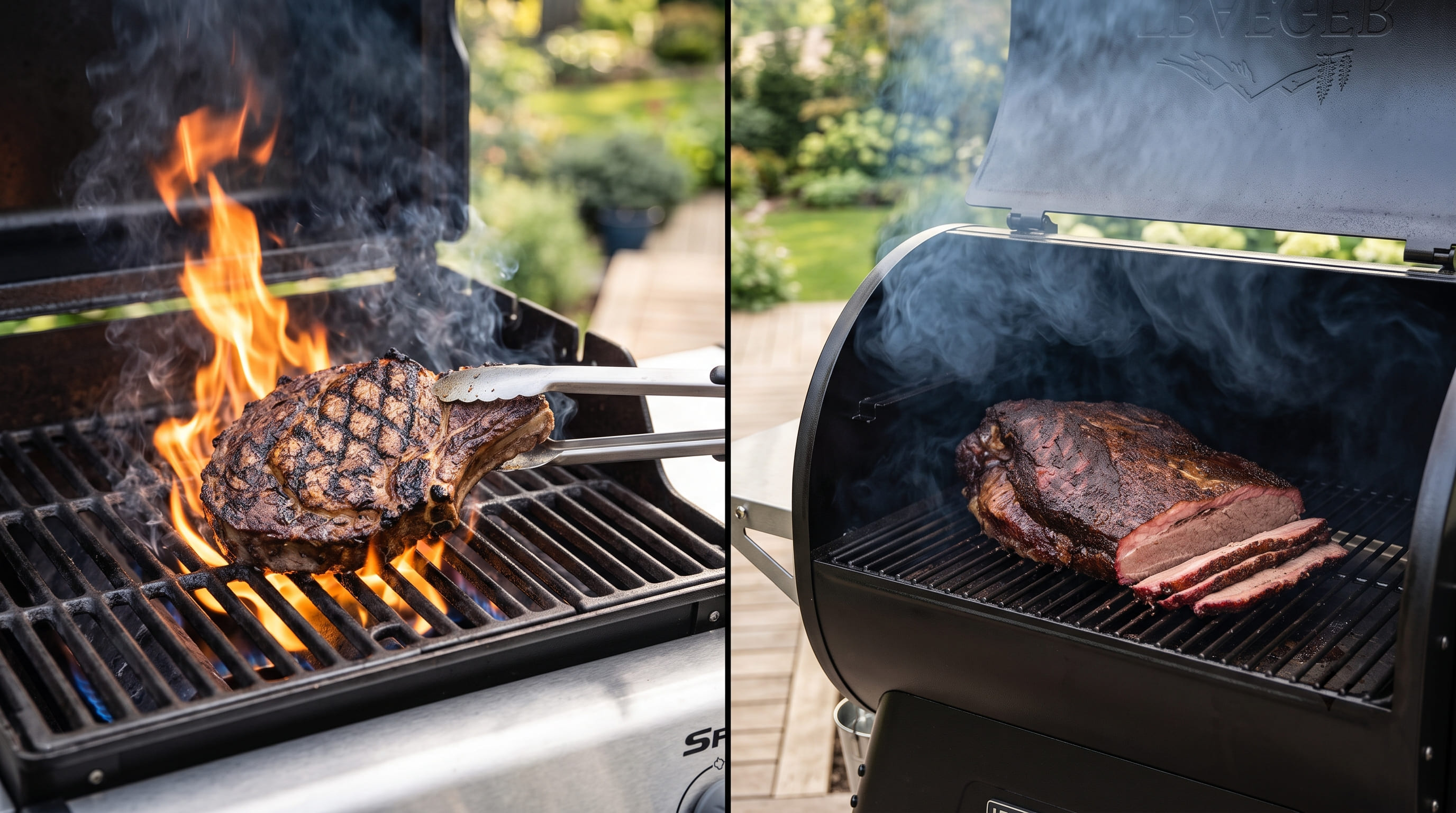
Weber's strength is direct heat. Our tested Weber Spirit E-325 produced steakhouse-quality sear marks on a ribeye in under 3 minutes per side using its Sear Zone boost burners, and the Weber Genesis E-325 showed no cold spots across a full 5-point temperature mapping thanks to its GS4 burner system. Ignition is instant on gas models, so you can go from "decided to grill" to "food on the grate" in under 5 minutes.
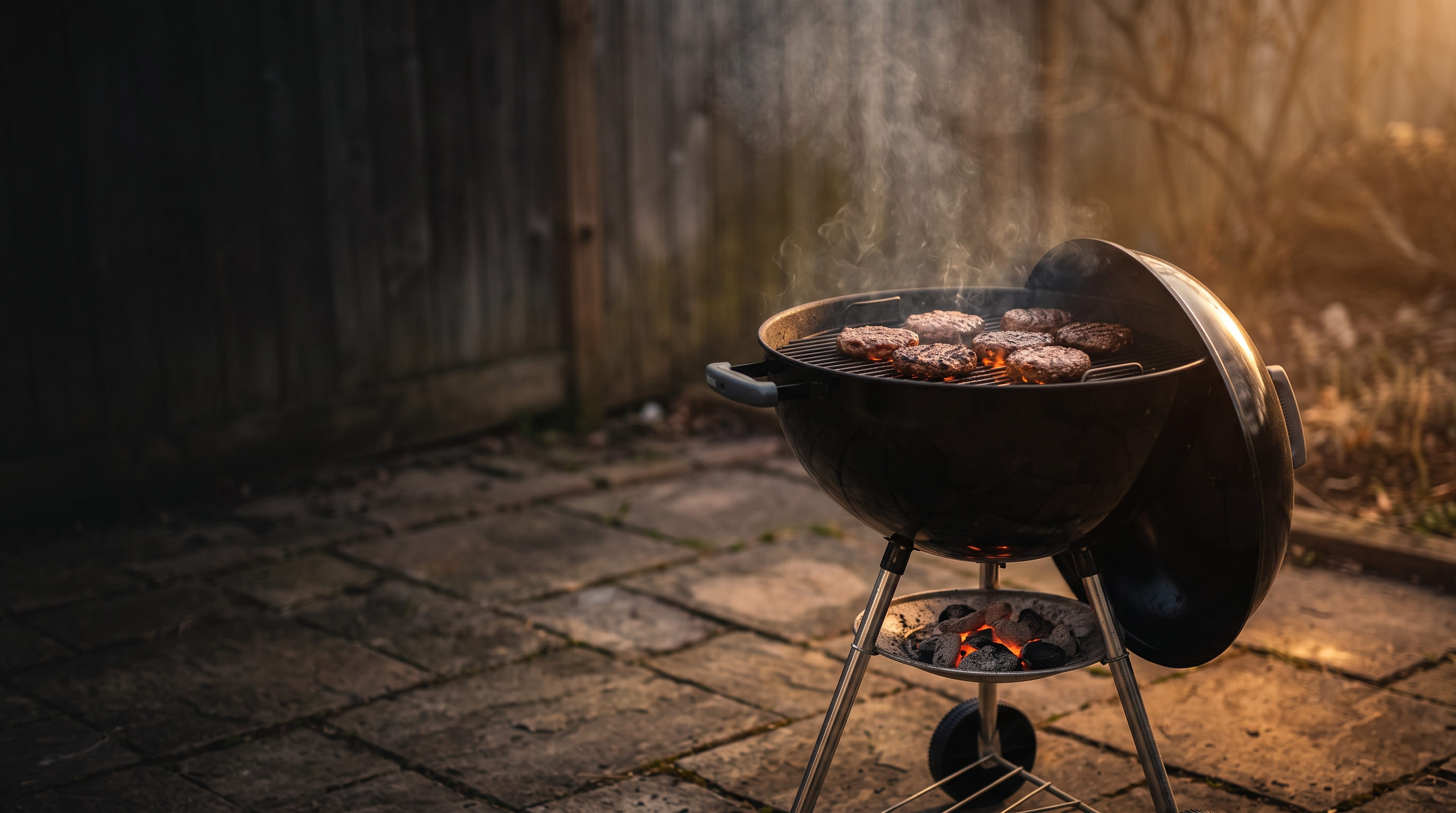
Charcoal Webers, like the Weber Original Kettle 22-Inch, trade instant ignition for more hands-on control and genuine charcoal flavor — our testing held a steady 250°F for over 4 hours using the snake method, proving a basic kettle can smoke as well as grill.
Traeger: Consistent, Automated, Low-and-Slow
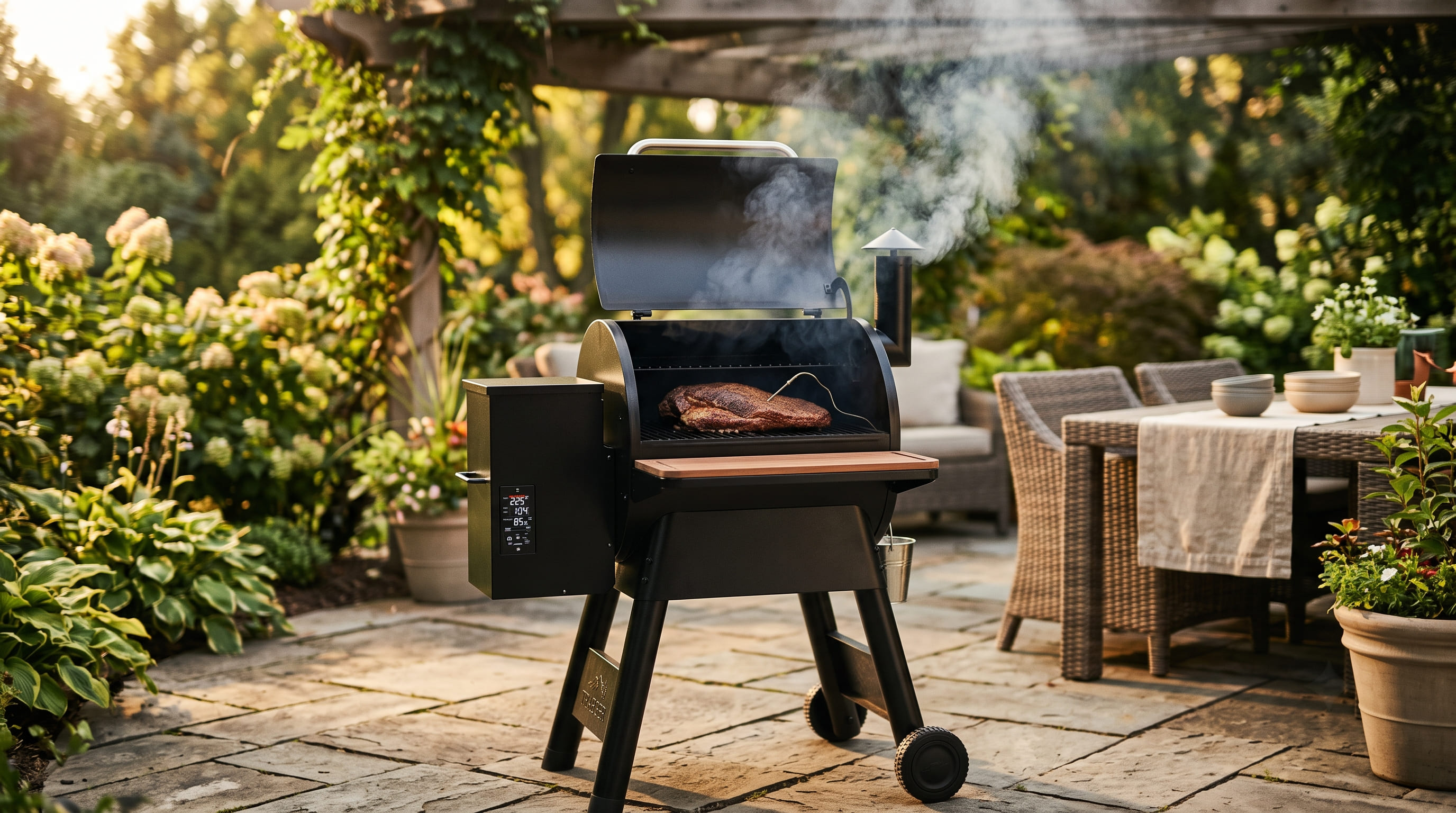
Traeger's strength is consistency over long cooks with minimal intervention. The Traeger Pro 34's Digital Pro Controller held temperature within 15–18°F of target across an 11-hour unattended overnight brisket cook — a level of hands-off consistency that's difficult to match with live fire. The Traeger Woodridge adds WiFIRE app monitoring and Super Smoke Mode on top of that same auger-fed foundation, so you can check and adjust the cook from inside the house.
The tradeoff: pellet grills top out around 450–500°F, noticeably slower to reach a hard sear than a dedicated gas burner, and the 10–15 minute auger priming cycle means no truly instant on/off like a gas grill offers.
Price and Value
Weber spans a wider price range than Traeger in our testing — from the $147–$157 Original Kettle up to the $949–$999 Genesis E-325, giving budget-conscious buyers a genuine entry point Traeger doesn't really offer. Traeger's tested lineup starts higher, at $559–$579 for the Pro 34, since even its base pellet grills include a digital controller and auger system that a basic charcoal kettle simply doesn't need.
Dollar for dollar, a budget Weber charcoal grill delivers more raw grilling capability per dollar than any pellet smoker; a mid-range Traeger delivers more automated low-and-slow consistency per dollar than any comparably priced Weber. Neither brand is "better value" in isolation — it depends entirely on which cooking method you're paying for.
Flavor Differences
This is where the two brands genuinely diverge, not just in convenience but in the food itself. Weber's charcoal models produce a more intense char and smoke flavor concentrated around direct high heat, while gas models produce minimal smoke flavor unless you add a smoker box. Traeger's pellet system infuses wood smoke flavor evenly across the entire cook — our testing on the Traeger Woodridge showed a visible, consistent smoke ring on pulled pork and ribs without any liquid smoke or additives, something a gas grill cannot replicate and a charcoal grill only partially matches without dedicated smoking technique.
If your priority is a fast sear with a light char, Weber's flavor profile wins. If your priority is deep, even wood-smoke flavor on low-and-slow cuts, Traeger's is the more purpose-built tool.
Build Quality and Warranty
Both brands build genuinely durable equipment, but the numbers favor Weber slightly on paper. The Weber Genesis E-325 carries a 12-year warranty against rust and burn-through — the longest we've seen on any gas grill in our testing — and even the entry-level Original Kettle carries a 10-year warranty on the bowl and lid. Traeger's tested warranties run 7 years on the Pro 34 up to 10 years on the Woodridge, matching Weber's better-covered models but not exceeding them.
In hands-on testing, both brands' cookboxes and grates held up well across repeated cooks, with no structural issues on either brand through our full testing cycles.
Who Should Buy Weber
- You want fast, direct-heat grilling for weeknight meals — burgers, steaks, chicken breasts done in minutes, not hours
- You're budget-conscious and want genuine grilling capability starting under $200 (charcoal kettle)
- You want the longest warranty coverage available on a gas grill (up to 12 years on Genesis)
- You're comfortable with either instant gas ignition or hands-on charcoal management, depending on the model
Who Should Buy Traeger
- You want low-and-slow smoking — brisket, pork shoulder, ribs — without babysitting a live fire for hours
- You value set-and-forget consistency over an unattended overnight cook
- You want WiFi app monitoring so you can check your cook from inside the house (Woodridge and higher tiers)
- You're willing to pay a higher starting price for automated fire and temperature management
Frequently Asked Questions
Is Weber or Traeger better overall?
Neither is universally better — they solve different problems. Weber excels at fast, direct-heat grilling with gas or charcoal; Traeger excels at automated, low-and-slow wood-fired smoking. Choose based on which cooking style you'll actually use most.
Can a Traeger sear a steak as well as a Weber?
Not quite as well. Our tested Traeger models top out around 450–500°F, which is hot enough to cook a steak but noticeably slower to develop a hard sear than a dedicated gas burner like the Weber Spirit E-325's Sear Zone, which reached steakhouse-quality crust in under 3 minutes per side.
Is Traeger worth the higher starting price compared to Weber?
If you regularly cook low-and-slow cuts like brisket or pork shoulder, yes — the automated auger and digital controller remove the fire-management skill and attention a Weber charcoal grill requires for the same result. If you mostly grill quick weeknight meals, a Weber gets you there for less money.
Does Weber make a pellet grill, or does Traeger make a gas grill?
Based on our tested lineup, Weber's core products are gas and charcoal grills, while Traeger's core products are pellet smokers — the brands are largely built around different cooking methods rather than competing directly in each other's category.
Which brand has the better warranty?
Weber's tested lineup edges ahead on paper — the Genesis E-325 carries a 12-year warranty, the longest we've seen on any gas grill, and even the budget Original Kettle carries 10 years. Traeger's tested models run 7–10 years, matching but not exceeding Weber's best coverage.
Final Recommendation
If your cooking style leans toward fast weeknight meals, searing, and direct high heat, the Weber Spirit E-325 or Weber Genesis E-325 will serve you better than any pellet grill. If you're drawn to low-and-slow barbecue — real smoke rings, tender brisket, overnight cooks you don't have to babysit — the Traeger Pro 34 or Traeger Woodridge is the more purpose-built tool for that job.
Many of our testers ultimately own equipment from both brands, since gas/charcoal grilling and pellet smoking are complementary skills rather than competing ones — there's no rule that says you have to pick just one.
Ready to compare specific models? Browse our full grill and smoker reviews, see our best grills of 2026, or check out gas grills, charcoal grills, and pellet grills by category.
Ready to shop? Browse our expert grill reviews to find your perfect match.