Best Grills for Steaks 2026 (Sear Ranked)
Best grills for steaks in 2026, ranked by real sear performance: max temperature, time to crust, and heat consistency, from our hands-on testing team.
A steakhouse-quality crust comes down to one thing above all else: how much heat a grill can put directly on the meat, how fast, and how consistently across the grate. Not every grill we test is built for that — plenty prioritize even low-and-slow heat instead. This list ranks only the grills in our lineup that genuinely excel at hard, direct-heat searing, based on measured cold-start-to-sear times, dedicated sear-zone output, and real crust results from our own test kitchens.
Our Picks at a Glance
| Rank | Winner | Sear Advantage | Price |
|---|---|---|---|
| Best Overall for Searing | Kamado Joe Classic Joe Series II | 750°F+ in ~15 min, dedicated hot zone | $1,350–$1,450 |
| Best Premium Gas | Weber Genesis E-325 | 13,000 BTU dedicated sear burner | $949–$999 |
| Best Value Gas | Weber Spirit E-325 | Steakhouse crust in under 3 min/side | $499–$529 |
| Best Budget Kamado | Kamado Joe Classic Joe I Premium | 750°F+ at a lower entry price | $899–$999 |
| Best Charcoal | Weber Original Kettle 22-Inch | Mounded direct-pile charcoal sear | $147–$157 |
| Best Compact/Portable | Weber Smokey Joe 14-Inch | Burger-ready sear in under 6 minutes | $79–$89 |
Best Overall for Searing: Kamado Joe Classic Joe Series II
Nothing in our lineup beats the Kamado Joe Classic Joe Series II for pure sear capability. Its thick ceramic shell hit a genuine 750°F+ from a cold start in about 15 minutes during our testing — the highest sustained searing temperature we've measured on any grill, gas or charcoal. The Divide & Conquer cooking system lets you run a dedicated hot zone for searing while the rest of the grate stays cooler, so you can hard-sear a ribeye and hold a side of vegetables at a gentler temperature on the same fire.
The tradeoff is price and setup time — at $1,350–$1,450 and with a half-day initial assembly and seasoning burn, this is a serious investment, not an impulse buy. But if searing performance is genuinely your top priority, nothing else we've tested gets as hot, as fast, with as much heat retention once you're there.
Best for: Steak enthusiasts who want the single hottest, most controlled sear available, and who cook often enough to justify the price.
Price may vary. We earn a commission at no extra cost to you.
Read the full review: Kamado Joe Classic Joe Series II Review
Best Premium Gas: Weber Genesis E-325
For buyers who want gas-grill convenience without giving up serious sear power, the Weber Genesis E-325 is the strongest option we've tested. Its 13,000 BTU dedicated sear burner produced a genuinely hotter, more even crust than the Spirit line's Sear Zone in side-by-side testing, and the GS4 grilling system held a heat spread under 12°F edge-to-edge across our 5-point temperature mapping — meaning the sear is consistent no matter where on the grate the steak lands, not just directly over the burner.
At $949–$999, it costs roughly double the Spirit E-325, and at 188 lbs with both side tables extended, it's a large, heavy grill that needs real patio space. For buyers who sear steaks regularly and want instant gas ignition rather than charcoal setup time, it's the clearest premium gas pick.
Best for: Frequent steak cooks who want push-button convenience with genuine sear-zone heat, and who have the patio space and budget for a premium gas grill.
Price may vary. We earn a commission at no extra cost to you.
Read the full review: Weber Genesis E-325 Review
Best Value Gas: Weber Spirit E-325
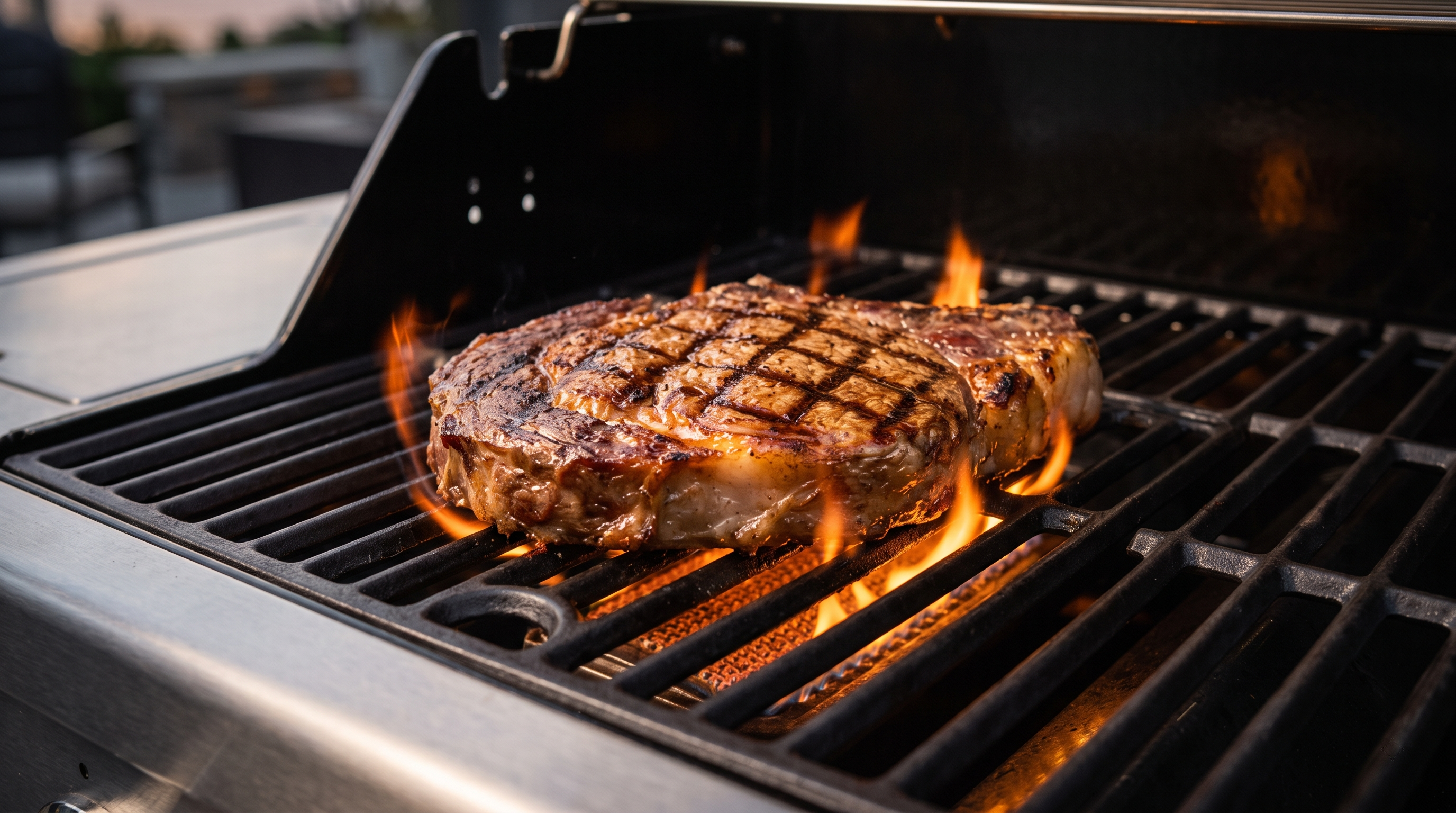
If premium pricing isn't in the budget, the Weber Spirit E-325 still delivers genuine steakhouse results. Its Sear Zone's two red Boost Burner knobs push roughly 40% more heat than the standard burners, and our testing measured a real steakhouse-quality crust on a ribeye in under 3 minutes per side — a result that held up across all 8 of our test cooks, including one windy evening session where Snap-Jet ignition still lit every burner on the first push.
At $499–$529, it's a fraction of the Genesis's price while still delivering a dedicated sear zone most budget gas grills simply don't offer. The 360 sq in primary cooking area is the main limitation if you're regularly cooking for a crowd, but for weeknight or weekend steak nights for a typical household, it's hard to beat.
Best for: Budget-conscious steak lovers who want a real dedicated sear zone without paying premium-tier prices.
Price may vary. We earn a commission at no extra cost to you.
Read the full review: Weber Spirit E-325 Review
Best Budget Kamado: Kamado Joe Classic Joe I Premium
The ceramic sear performance of the Classic Joe Series II at a meaningfully lower price — the Kamado Joe Classic Joe I Premium also reached 750°F+ from a cold start in about 15 minutes in our testing, producing a real steakhouse-quality crust on the same unit used for low-and-slow smoking. At $899–$999, it's a genuine way into ceramic-grade searing without stepping up to the Series II's $1,350–$1,450 price tag.
You give up some of the Series II's accessory ecosystem and multi-zone flexibility, but the core heat retention and searing capability that make kamado grills worth considering are fully present here.
Best for: Buyers who want kamado-level sear performance without the flagship price tag.
Price may vary. We earn a commission at no extra cost to you.
Read the full review: Kamado Joe Classic Joe I Premium Review
Best Charcoal: Weber Original Kettle 22-Inch
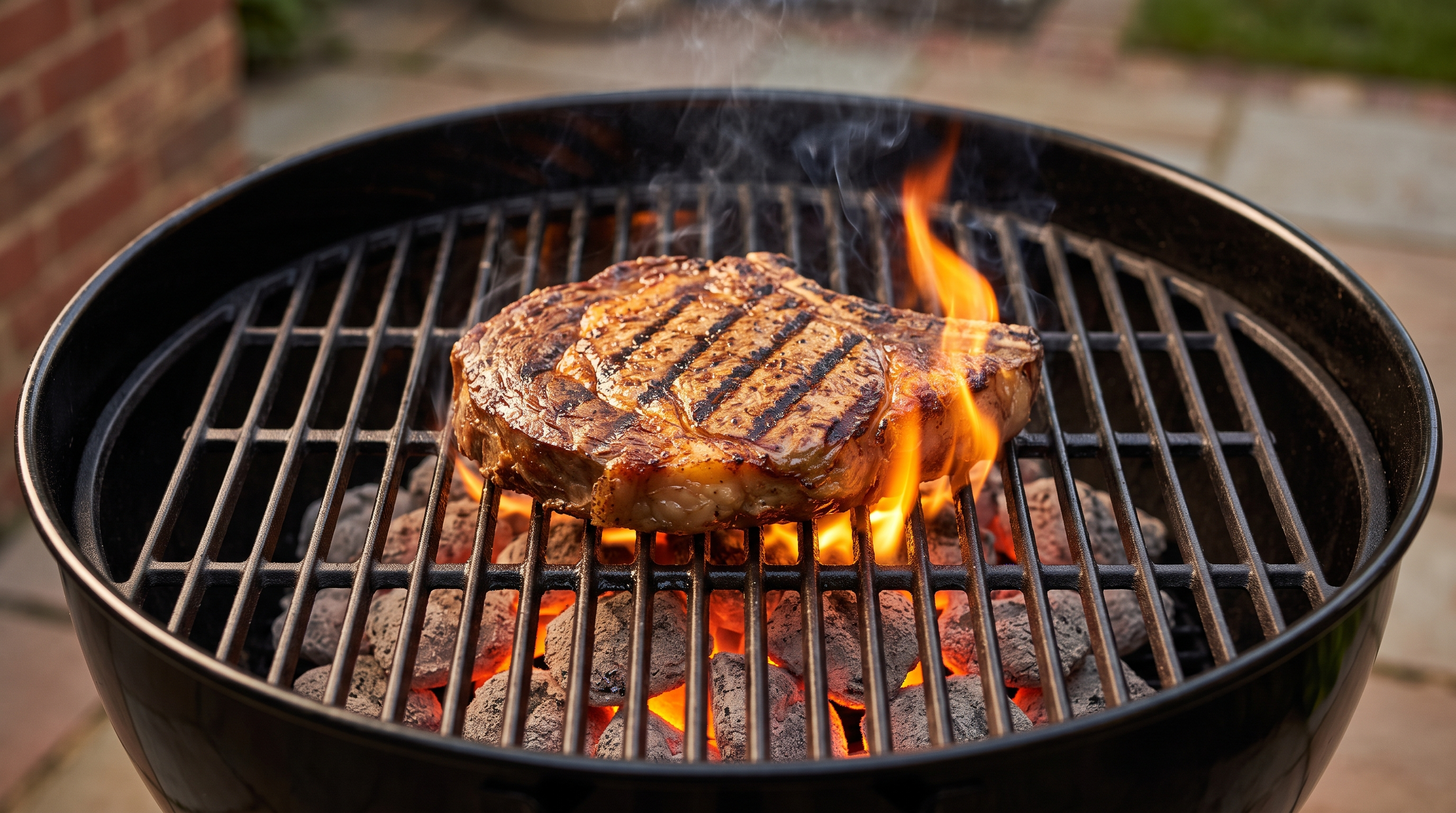
Live-fire flavor still has its advocates, and the Weber Original Kettle 22-Inch remains the best budget way to get a genuine charcoal sear. Piling coals into a mounded direct-heat setup on one side of the kettle produced consistently strong, crisp crusts in our high-heat steak night testing, and the two-zone setup — hot side for searing, empty side for a gentler finish — worked reliably without flare-ups once we dialed in vent control.
At $147–$157, it costs a fraction of any gas or kamado option on this list, though it takes longer to get to searing heat than gas (15–20 minutes for a chimney to fully ash over) and asks for more hands-on vent management to hold consistent results.
Best for: Budget-conscious cooks who want authentic charcoal flavor and don't mind the extra setup time and hands-on vent control it takes to get there.
Price may vary. We earn a commission at no extra cost to you.
Read the full review: Weber Original Kettle 22-Inch Review
Best Compact/Portable: Weber Smokey Joe 14-Inch
Small doesn't mean weak here. The Weber Smokey Joe 14-Inch surprised us with how much sear it could generate from a compact, uninsulated bowl — a standard half-chimney of briquettes reliably delivered a strong crust on burgers in under 6 minutes total cook time across all 8 of our test sessions, and the single lid vent gave enough control to hold a steady sear temperature consistently. For steaks specifically, its small grate limits you to one or two cuts at a time, but the sear quality per square inch matches grills many times its size.
At $79–$89, it's the cheapest entry on this list and genuinely portable — tailgates, camping trips, and small balconies are all realistic use cases, not just backyard duty.
Best for: Tailgaters, campers, and anyone searing for one or two people who doesn't need a full-size grill.
Price may vary. We earn a commission at no extra cost to you.
Read the full review: Weber Smokey Joe 14-Inch Review
What Actually Makes a Grill Good at Searing
Maximum Achievable Temperature
A hard sear needs real heat — ideally 600°F or hotter at the grate. Ceramic kamados hold the top spot here in our testing, reaching 750°F+, followed by dedicated gas sear zones, then a well-managed direct charcoal pile. Grills that top out in the 450–500°F range, like most pellet smokers, simply can't produce the same crust in the same time, which is why no pellet grill appears on this list despite several earning spots in our other buying guides.
Time to Reach Searing Heat
Gas wins on raw speed — instant ignition means a dedicated sear burner is ready in minutes. Ceramic kamados take longer to fully preheat (around 15 minutes to 750°F+) but hold that heat with far less fuel once there. Charcoal takes the longest, 15–20 minutes for a chimney to fully ash over, and demands the most hands-on management to reach and hold peak sear temperature.
Heat Consistency Across the Grate
A hot grill that's only hot in one spot produces inconsistent results cut to cut. This is where build quality shows up — the Genesis E-325's under-12°F edge-to-edge spread in our 5-point mapping is meaningfully tighter than budget grills we've tested, and it's the difference between every steak on the grate getting the same crust versus a lottery based on placement.
Tips for Getting the Best Sear on Any Grill
For the complete technique walkthrough — doneness temperatures, flip timing, resting, and the reverse sear method — see our how to grill the perfect steak guide.
Preheat Fully Before Food Touches the Grate
Rushing preheat is the single most common reason a "seared" steak comes out grey instead of crusted. See our how long to preheat a grill guide for fuel-specific minimums — none of the times in this article are worth cutting short.
Dry the Surface and Use High-Smoke-Point Oil
Excess surface moisture steams the meat instead of searing it. Pat steaks dry before they hit the grate, and use a high-smoke-point oil rather than butter or a low-smoke-point option that will burn before the sear develops.
Consider a Reverse Sear for Thick Cuts
For steaks over 1.5 inches thick, cooking low and slow first, then finishing with a hard sear at the end, produces more even doneness edge to edge than a straight high-heat cook. This works especially well on grills capable of true two-zone cooking, like the Kamado Joe's Divide & Conquer system or a two-zone charcoal kettle setup — see our direct vs indirect grilling guide for the full technique.
Don't Overcrowd the Sear Zone
A dedicated sear burner or a mounded charcoal pile loses heat fast if you pile on too much food at once. Sear in batches if needed rather than dropping the surface temperature by overloading the hot zone.
How We Choose Our Best Picks
Every product on this list goes through the same process before it earns a spot:
- Purchased at retail price — we buy what we test, the same way you would.
- Full multi-cook testing protocol, with a dedicated high-heat steak night logged specifically to measure sear performance across every grill we review.
- Real measurements, not marketing claims — time-to-temperature, edge-to-edge heat mapping, and actual crust results from our own kitchens.
- Honest cons, every time — every review this list links to includes genuine tradeoffs, not just strengths.
Visit our website for our complete testing methodology.
Frequently Asked Questions
What's the best grill overall for searing steaks?
The Kamado Joe Classic Joe Series II, based on our testing — its ceramic shell reached 750°F+ in about 15 minutes from a cold start, the highest sustained searing temperature we've measured on any grill in our lineup.
Is gas or charcoal better for searing a steak?
Both can produce a genuine steakhouse crust. Gas with a dedicated sear zone, like the Weber Genesis E-325 or Spirit E-325, reaches searing heat faster and more consistently edge-to-edge. A well-managed charcoal pile, like on the Weber Original Kettle, can match that crust quality but takes longer to prepare and asks for more hands-on skill.
Do pellet grills sear as well as gas or charcoal?
Not typically. Pellet grills in our testing generally top out around 450–500°F, well short of the 600°F+ most grills on this list can reach, which is why no pellet grill appears here despite several earning spots in our other buying guides.
What temperature do I need to sear a steak properly?
At least 600°F at the grate for a genuine hard sear. The grills on this list range from 600°F+ (charcoal, gas sear zones) up to 750°F+ (ceramic kamado), all well above that minimum threshold.
Is a dedicated sear zone worth paying extra for on a gas grill?
If searing is a priority, yes. Our testing found dedicated sear burners on the Spirit E-325 and Genesis E-325 produced meaningfully better, more consistent crusts than standard burners alone — the Genesis's larger 13,000 BTU sear burner in particular showed a noticeably tighter heat spread than budget gas grills without one.
What's the fastest way to get a good sear if I'm short on time?
A gas grill with a dedicated sear zone, like the Weber Spirit E-325 — our testing measured steakhouse-quality crust in under 3 minutes per side once fully preheated, with instant ignition meaning you're cooking within about 15 minutes of deciding to grill.
Final Recommendation
If sear performance is your single top priority and budget allows, the Kamado Joe Classic Joe Series II delivers the hottest, most controlled sear in our testing. For gas convenience without sacrificing real sear power, the Weber Genesis E-325 or the more affordable Weber Spirit E-325 both deliver genuine steakhouse results. And if you want authentic charcoal flavor on a budget, the Weber Original Kettle 22-Inch remains the strongest value pick on this list.
For more on getting the technique right once you've got the equipment, see our, and.
Marcus Reilly has spent 15 years competing on the KCBS circuit and is a certified competition judge. He leads all grill and smoker testing at SmokyHQ, running every unit through multi-cook burn-in tests across searing, low-and-slow, and high-heat scenarios before writing a word.