
To clean a Blackstone griddle, Blackstone's manual says to work while the top is still warm: scrape debris into the grease cup, add a few tablespoons of water and scrape again, using a bit of coarse salt on stuck-on food. Wipe it, dry it completely and finish with a thin coat of cooking oil. For rust, scrape the top, scrub it with oil and steel wool, low-grit sandpaper or a pumice stone, wipe until the towels come up clean, then re-season.
No soap after the first wash, and the grease cup comes out only when the griddle is cold.
Blackstone Griddle Cleaning at a Glance
Four jobs keep a bare steel top cooking well.
| Job | When | What Blackstone says to use | Done when |
|---|---|---|---|
| After every cook | While the top is still warm | Scraper, a few tbsp of water, a bit of coarse salt, paper towels, thin oil | Top is dry and lightly oiled |
| Grease cup | After each use, once completely cooled | Empty it | Cup is empty and back in place |
| Light rust | As soon as you see it | Scraper, oil, and steel wool, low-grit sandpaper or a pumice stone | Wipes come up clean |
| After rust removal | The same day | Full re-season | Black, even surface |
What You Need
- A flat metal scraper or spatula
- Paper towels or a cotton cloth
- Water
- Coarse salt
- Cooking oil
- Heat-resistant gloves
- For rust: steel wool, low-grit sandpaper or a pumice or griddle stone
- A griddle cover
Step-by-Step: How to Clean a Blackstone Griddle After Cooking
These steps follow the cleaning page in Blackstone's owner's manual for the 36" Griddle with Hood.
Step 1 of 6Scrape while the top is still warm
Time: right after cooking, while the top is still warm
Push loose food debris into the grease cup with a spatula or straight metal scraper. On the Blackstone 36-inch griddle, the cup sits at the back under the rear grease channel.
Step 2 of 6Add water and scrape again
Target: a few tablespoons of water
Pour the water onto the warm top, then scrape the water and loosened debris into the grease cup. For stuck-on residue, Blackstone says to use a bit of coarse salt.
Step 3 of 6Wipe and dry completely
Done when: no water is left on the top
Wipe the top with a paper towel and dry it completely. Bare steel rusts when water sits on it, and Blackstone says to always dry the griddle fully before storing it.
Step 4 of 6Spread a thin coat of oil
Done when: a thin, even film covers the top
Blackstone's manual says this thin coat of cooking oil maintains the seasoning and protects the griddle top.
Watch out: Blackstone warns that rags and towels used to spread oil must be disposed of properly, because they can catch fire on their own through spontaneous combustion.
Step 5 of 6Empty the grease cup once it's cold
Done when: the griddle has completely cooled
Blackstone says the grease cup must be removed and emptied after each use.
Watch out: the cup is hot during and after cooking. Blackstone's manual says not to remove it until the griddle has completely cooled.
Step 6 of 6Cover it and store it dry
Done when: the top is covered and out of the weather
Blackstone strongly recommends covering the griddle whenever it's left outside, and keeping it away from rain and sprinklers. Its rust article adds a cool, dry storage spot. For the off-season, see how to winterize your grill.
How Do You Get Rust Off a Blackstone Griddle?
Scrape, scrub with oil, wipe until clean, then re-season.
Blackstone's manual says to rub rust off with steel wool, low-grit sandpaper or the Blackstone pumice stone, then re-season the surface. Blackstone's rust guide gives the full sequence below.
Sign
orange spots or a dusty red film on the top, for example after rain or damp storage.
Fix
- Put on heat-resistant gloves, open the hood and run the burners on high for 20 minutes, then let the griddle cool down. Blackstone's manual says the hood must be open while the burners are lit.
- Scrape the whole top with a metal scraper until you can't see any more corrosion.
- Add a few tablespoons of oil and scrub with a griddle stone, steel wool or low-grit sandpaper. Wipe it off with a cloth or paper towels, then keep adding oil and wiping until the towels show no more rust debris.
Expect
a clean, bare top that needs seasoning before you cook on it again, so season the griddle with the full steps. Blackstone's warranty does not cover rust or corrosion, and if the rust won't scrub off, contact Blackstone support.
How do you keep a griddle from rusting?
- Cook on it often. Blackstone says every cook adds to the seasoning, which makes rust less likely.
- Oil it after every cook. Blackstone's rust guide lists the thin coat from Step 4 as everyday prevention.
- Use a cover. Blackstone's rust guide recommends a heavy-duty canvas cover.
- Season more often in damp places. Blackstone says griddles in humid or coastal climates may need more frequent seasoning between uses.
- Check it if it sits. If you don't cook on it weekly, Blackstone suggests inspecting it at least once a month.
Does a Nonstick Blackstone Griddle Clean Differently?
Yes: a coated plate skips the scraper and every abrasive.
The Blackstone 2364 camp griddle has a ceramic-titanium nonstick plate that needs no seasoning. Blackstone says the plate is not compatible with metal utensils or its orange scrub pads, so skip the scraper, steel wool and sandpaper steps above and clean it with silicone or nylon tools and a soft sponge. Check Current Price
What Should You Never Use on a Blackstone Griddle?
Blackstone rules out soap, cleaning products and pulling a hot grease cup.
| Don't | Why (Blackstone) | Do instead |
|---|---|---|
| Dish soap or degreaser on a seasoned top | It ruins and erases the seasoning | Water, a scraper and coarse salt |
| Oven cleaner or other cleaning products | Blackstone says not to use them | Water, a scraper and coarse salt |
| Pulling out a hot grease cup | It's hot during and after use | Wait until the griddle has fully cooled |
| Steel wool or metal tools on a nonstick plate | Not compatible with the coating | Soft sponge and nylon or silicone tools |
| Leaving the top wet or uncovered | Moisture causes rust | Dry it, oil it and cover it |
Blackstone says scrubbers and other abrasives are only needed to remove rust. A sticky brown film after oiling is a seasoning problem (too much oil, or heat turned off too soon), and the fix sits with the seasoning steps.
Which Blackstone Griddle Is Easiest to Keep Clean?
Bare steel needs the scrape-and-oil routine after every cook; a nonstick plate trades that for gentler tools.
The full-size 36" uses bare steel with rear grease management, so it gets the scrape, water and oil routine above. The 2364 skips seasoning but rules out metal tools. Our best outdoor griddles compare more flat tops, and Flatrock owners should follow Traeger's own cleaning steps; see our Traeger Flatrock review.
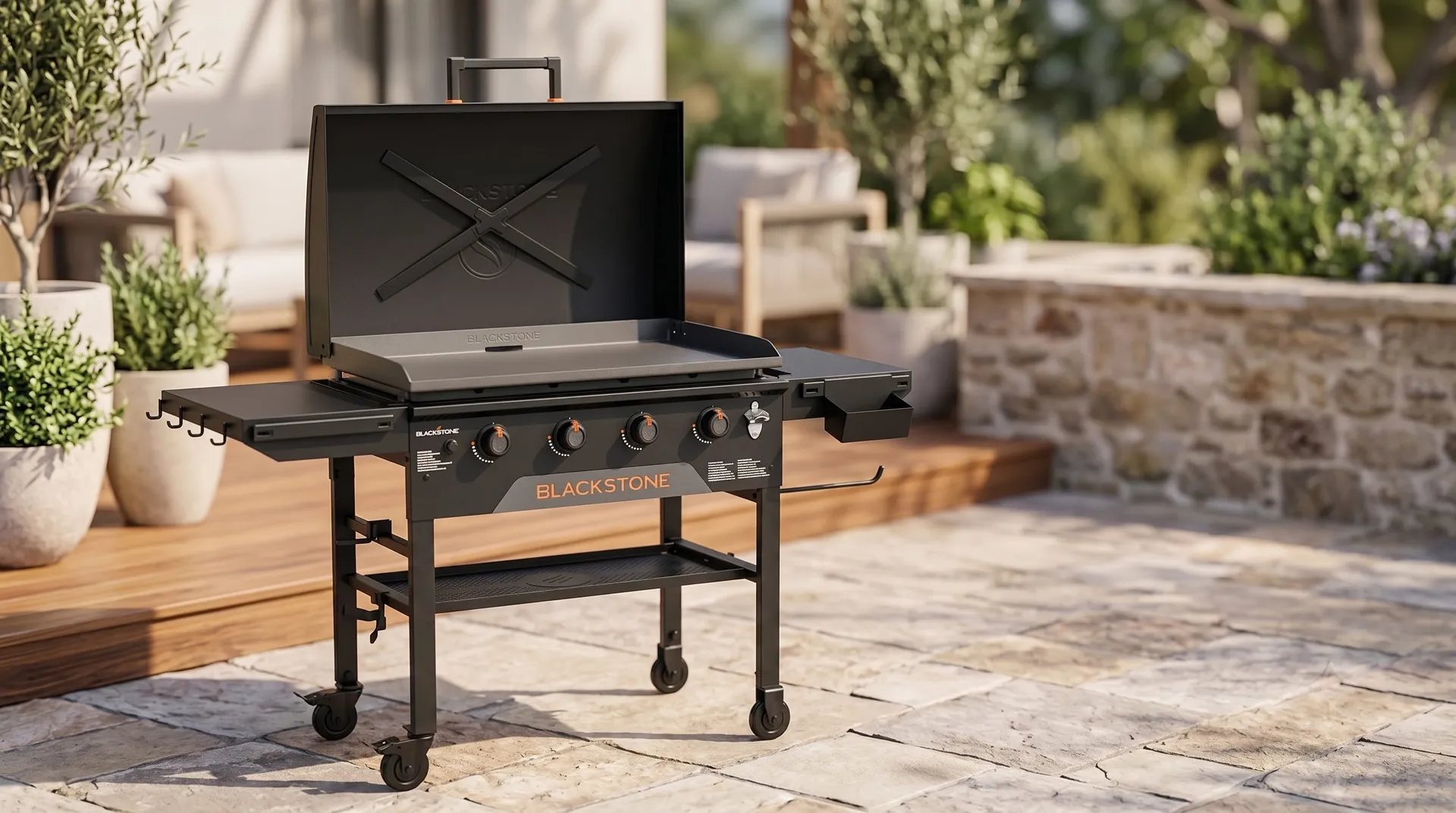 Full-size bare steel
A seasoned steel top you scrape and oil after every cook, with a grease cup to empty.
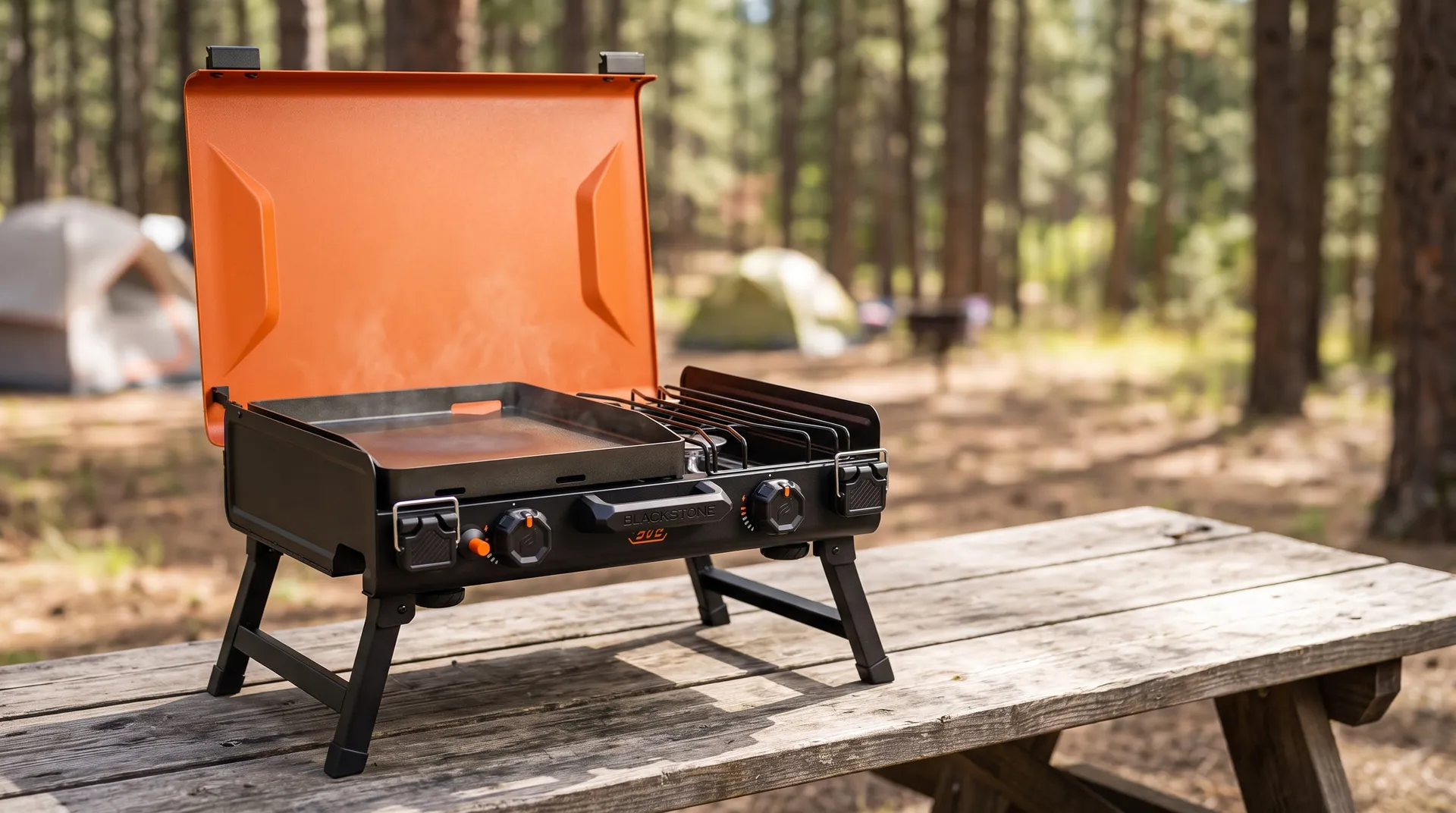 No-season camp griddle
A nonstick plate that skips seasoning but rules out metal tools and scrub pads.
Frequently Asked Questions
01Can you use soap on a Blackstone griddle?
Only on a brand-new top before the first seasoning. Blackstone says that is the only time soap should touch the cooking surface.
02Should you clean a Blackstone griddle hot or cold?
Both, in order: the cooking surface while it's still warm, and the grease cup only after everything has cooled.
03What gets rust off a Blackstone griddle fast?
Oil and an abrasive. Blackstone names steel wool, low-grit sandpaper and its pumice stone, followed by a re-season.
04Can you use vinegar on a Blackstone griddle?
Blackstone's cleaning and rust steps don't use it. Stick to scraping, oil and an abrasive, which is what Blackstone describes.
05Do you have to re-season after removing rust?
Yes. Blackstone's manual says to re-season the surface after you rub the rust off.
06How often should you empty the grease cup?
After every use, once it's cold (Step 5). Grates on a regular grill need a different routine; see how to clean grill grates.
The Takeaway
Blackstone's routine is short: scrape and wipe while it's warm, dry it, oil it, and leave the grease cup until it's cold. Rust comes off with oil and an abrasive, but the top always needs seasoning afterward.
- After every cook: scrape, water, dry, thin oil.
- Grease cup: empty it once the griddle is cold.
- Light rust: scrape and scrub with oil, then re-season.
- Nonstick camp plate: no metal tools or abrasives.
Next, learn how to season the griddle properly, or plan the year with our grill cleaning and maintenance guide.
Written by
Marcus Reilly
Senior Editor & Researcher
Marcus Reilly has 15 years of competition barbecue. He leads SmokyHQ’s pellet, charcoal and kamado coverage and also writes in other categories, comparing specs, warranties and what owners report so you can see which cookers suit brisket, ribs or overnight smokes.
- Smokers
- Pellet Grills
- Charcoal & Kamado
- Low-and-Slow BBQ
- Temperature Control
Every grill is scored with the same method. How we score
Keep reading
Related guides
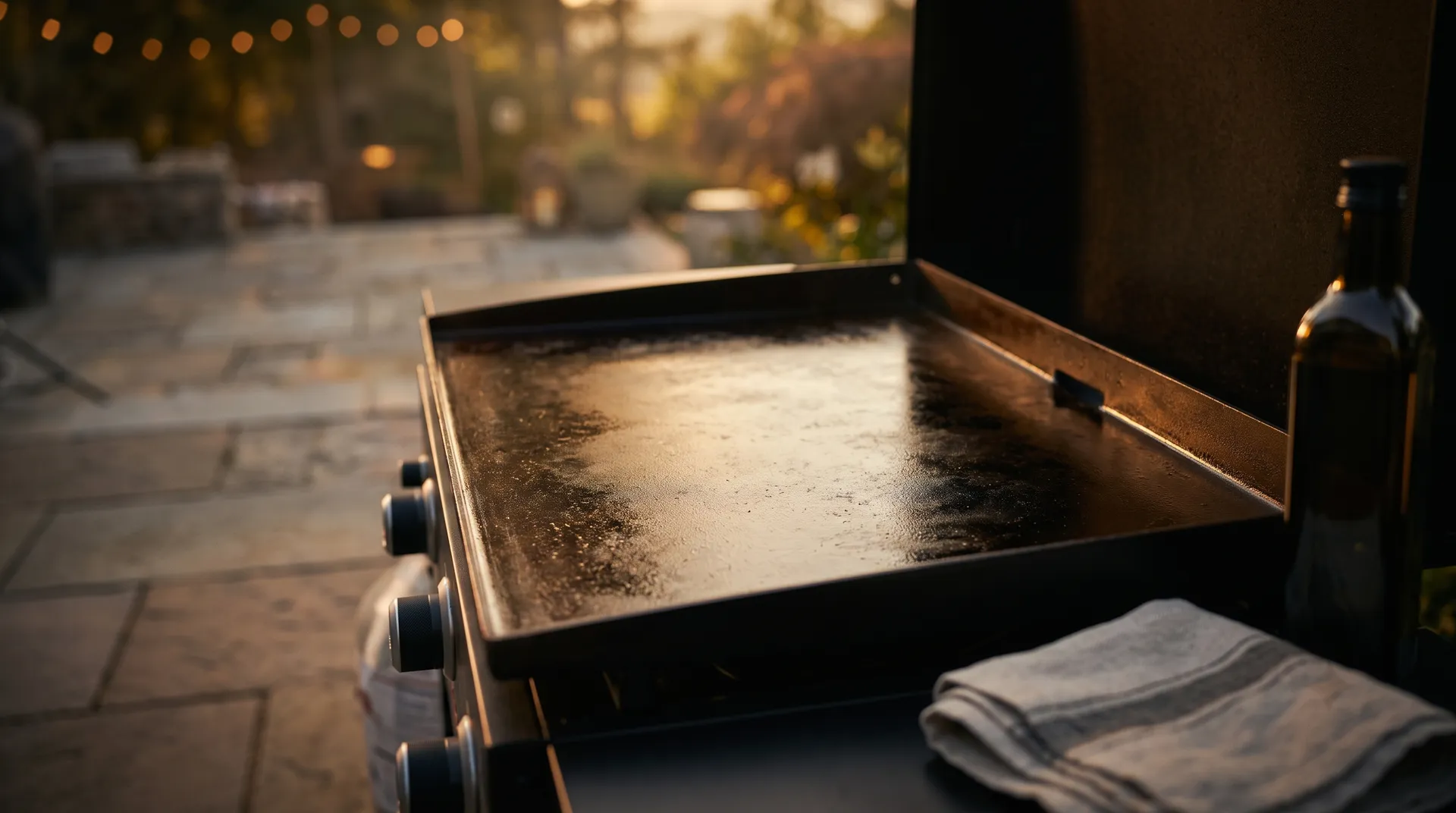
How to Season a Blackstone Griddle
Blackstone's and Traeger's own seasoning steps side by side, plus the oils they approve and how to fix sticky or rusty patches.
Read the guide

How to Clean Grill Grates
Material-by-material grate cleaning from Weber and Traeger's own care pages, the wire-brush question answered with the CDC's advice, and signs a grate needs replacing.
Read the guide
How to Clean a Grill
Each maker's cleaning steps and schedule side by side: burn-off and brush, the deep clean by fuel, grease and ash, the gas leak check and what to do before storage.
Read the guide

How to Winterize Your Grill
A storage checklist built from the makers' own advice: grease out, tank outdoors, pellets out, cover on, and a spring check before the first cook.
Read the guide