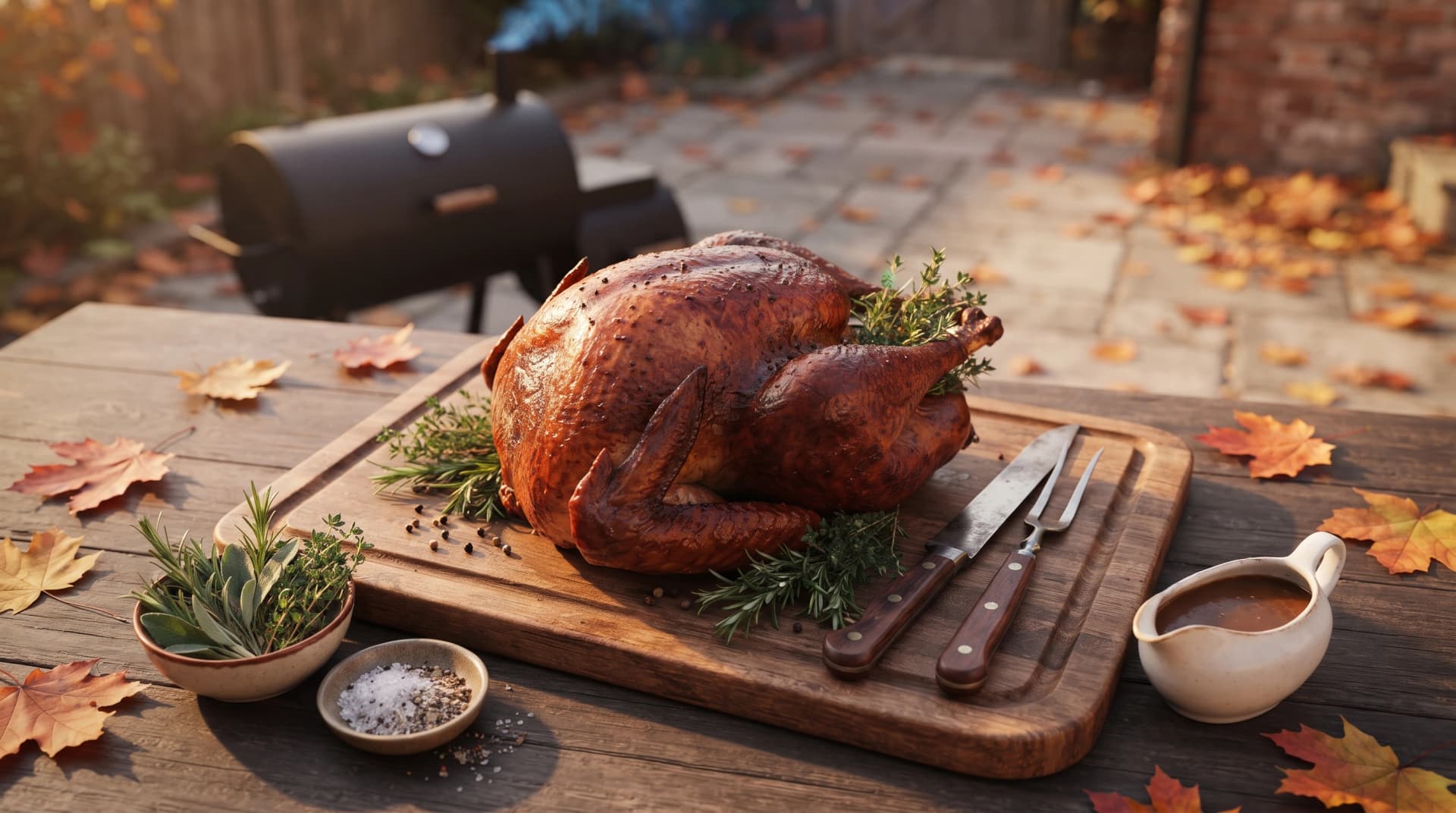

To smoke a turkey, dry brine it for 24–48 hours, then smoke it at 275–300°F over apple, cherry or pecan wood. A 12–14 lb bird takes about 3–5 hours. Pull it when the thickest part of the breast reads 165°F and the thighs reach at least 175°F, then rest it 30 minutes before carving.
Smoke it hotter than brisket. Below about 275°F the skin turns rubbery, and the cook drags on.
Which turkey question do you have?
Jump straight to the part you need for the big day.
| You want to know | Short answer | Go to |
|---|---|---|
| How long it takes | About 15–20 minutes per lb at 275–300°F | Times |
| What temperature to smoke at | 275–300°F for crisp skin | Temps |
| The full method | Eight steps from thawing to carving | Steps |
| How to get crisp skin | Dry skin, high heat, a hot finish | Crisp skin |
| When to start for dinner | Count back from serving time | Timeline |
| Why yours went wrong | One step slipped | Fixes |
How long does it take to smoke a turkey?
Plan on 15–20 minutes per pound at 275–300°F, plus a 30-minute rest.
Smoker temperature sets the pace more than anything else. Use these as planning numbers and let the thermometer make the final call.
| Turkey weight | At 225–250°F | At 275°F | At 300–325°F | Spatchcocked at 300°F |
|---|---|---|---|---|
| Rough pace | 30–40 min per lb | About 20 min per lb | 13–15 min per lb | About 10–12 min per lb |
| 10 lb | 5–6.5 hours | About 3.5 hours | 2.25–2.5 hours | About 1.75–2 hours |
| 12 lb | 6–8 hours | About 4 hours | 2.75–3 hours | About 2–2.5 hours |
| 14 lb | 7–9.5 hours | 4.5–5 hours | 3–3.5 hours | About 2.5–2.75 hours |
These are general planning ranges widely used for whole birds, not measured cook times. A bird straight from a cold fridge, wind or a lid you keep opening all add time.
Watch out: the slow 225–250°F column is the one to avoid for a whole turkey. The skin can't render at that heat, and a large bird spends longer warming through.
What size turkey should you smoke?
Stick to about 12–14 lb for a whole smoked bird. Larger turkeys take longer to climb through the temperatures where bacteria grow fastest, and the breast tends to dry out before the thighs are done.
Feeding a crowd? Smoke two 12 lb birds side by side, or spatchcock one larger turkey so it cooks faster and more evenly.
What temperature should you smoke a turkey at?
Hot enough to render the skin, low enough to take on smoke.
| Stage | Temperature | What it means |
|---|---|---|
| Smoker | 275–300°F (325°F works too) | Renders skin and keeps the cook to an afternoon |
| Breast | 165°F in the thickest part | The USDA minimum for all poultry |
| Thigh | 175–180°F near the joint | Dark meat turns tender and juicy |
| Rest | 30–45 minutes, loosely tented | The breast climbs a few more degrees |
The 165°F breast target is the USDA minimum for poultry. Take the thighs further because their connective tissue needs more heat to soften.
Watch out: don't stuff a smoked turkey. The stuffing inside a bird cooked at smoker temperatures can sit in the danger zone too long. Bake the stuffing in a dish and put aromatics like onion, lemon and herbs in the cavity instead.
What do you need to smoke a turkey?
A smoker that reaches 300°F and two thermometers matter most.
- A smoker or grill that holds 275–325°F for 4 hours (picks are in the gear section below)
- A 12–14 lb turkey, fully thawed, giblets removed
- Kosher salt, baking powder (optional), butter or oil, and a rub
- A leave-in probe thermometer and an instant-read thermometer
- A wire rack and sheet pan for dry brining in the fridge
- Kitchen shears or a sturdy knife if you spatchcock
- A drip pan to catch drippings for gravy
- 2–3 chunks of apple, cherry or pecan, or fruitwood pellets
Turkey takes on smoke fast, so mild fruitwood is the safe choice. Our guide to the best wood chips for smoking covers which woods suit poultry and how much to use.
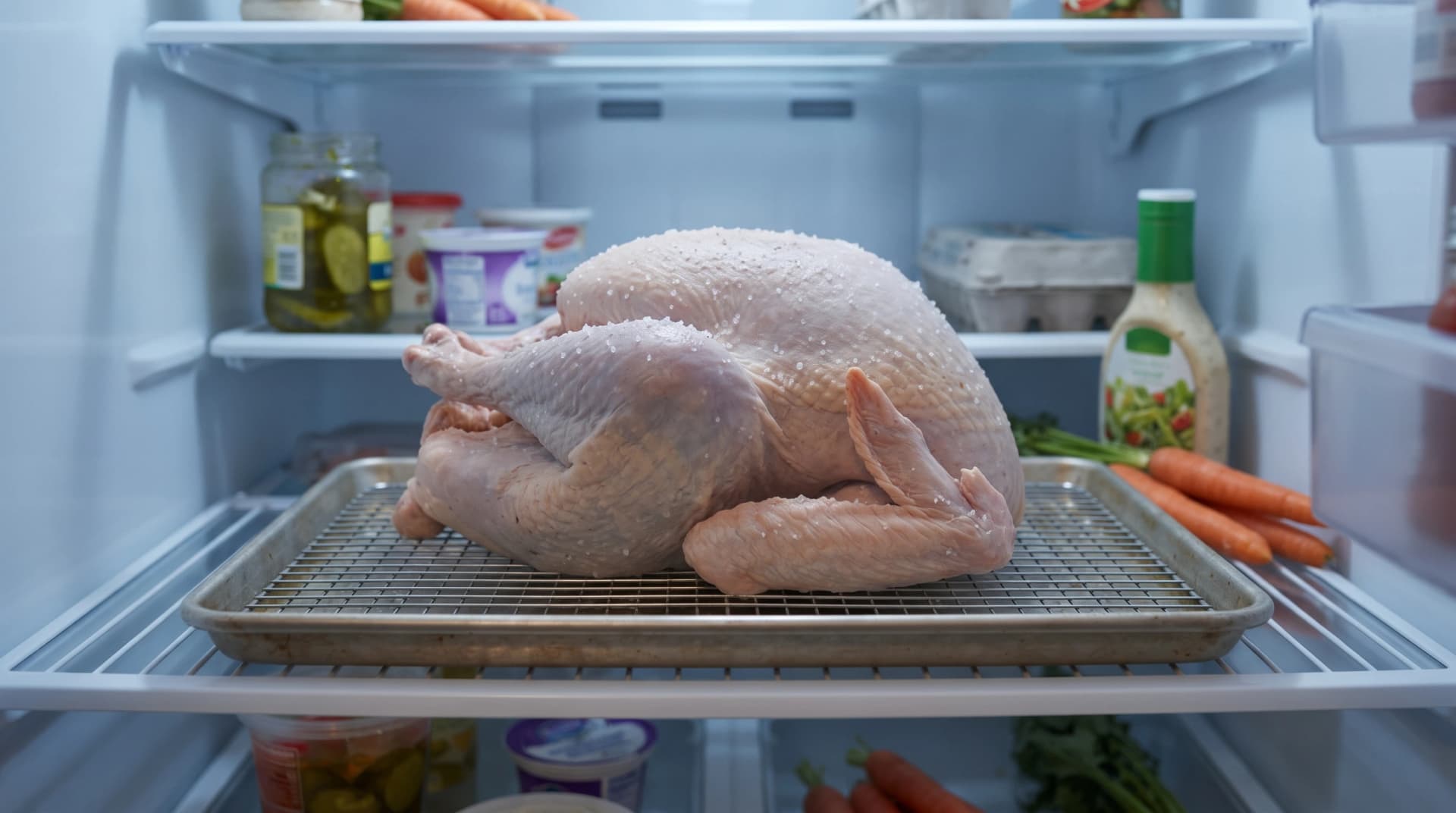 Uncovered in the fridge, the skin dries out while the salt seasons the meat.
Step-by-Step: How to Smoke a Turkey
Steps 1–3 happen in the days before; steps 4–8 are cook day.
Step 1 of 8Thaw the turkey in the fridge
Time: about 1 day for every 4–5 lb
A 12–14 lb frozen turkey needs about 3 days in the refrigerator. Never thaw it on the counter. A partly frozen bird cooks unevenly and throws your timing off.
Step 2 of 8Spatchcock it (optional)
Time: about 10 minutes
Cut out the backbone with heavy shears, flip the bird and press hard on the breastbone until it lies flat. Spatchcocking puts the breast and legs at the same height, so they finish closer together, and it can cut the cook time by about a third.
Skip this if you want a whole bird to carve at the table.
Step 3 of 8Dry brine for 24–48 hours
Target: about ½ teaspoon kosher salt per pound
Salt the turkey all over, including under the breast skin. Mix in a tablespoon of baking powder if you want extra-crisp skin. Refrigerate it uncovered on a rack so cold, dry air dries the skin.
If you wet brine instead, pat the bird dry and give it at least a few hours uncovered in the fridge before smoking.
Step 4 of 8Preheat the smoker
Target: 275–300°F with thin, pale blue smoke
Light the smoker and add 2–3 chunks of fruitwood, or fill the hopper with fruitwood pellets. Wait until the thick white smoke from a fresh fire thins out; heavy smoke leaves turkey skin bitter.
Set a drip pan under the grate if you want drippings for gravy.
Step 5 of 8Season and load the bird
Target: legs facing the hottest part of the smoker
Pat the skin dry, brush it with melted butter or oil and add your rub. Go light on sugar, since you'll finish hot.
Set the turkey breast side up with the legs toward the heat so the thighs keep pace. Insert a leave-in probe into the thickest part of the breast, away from bone.
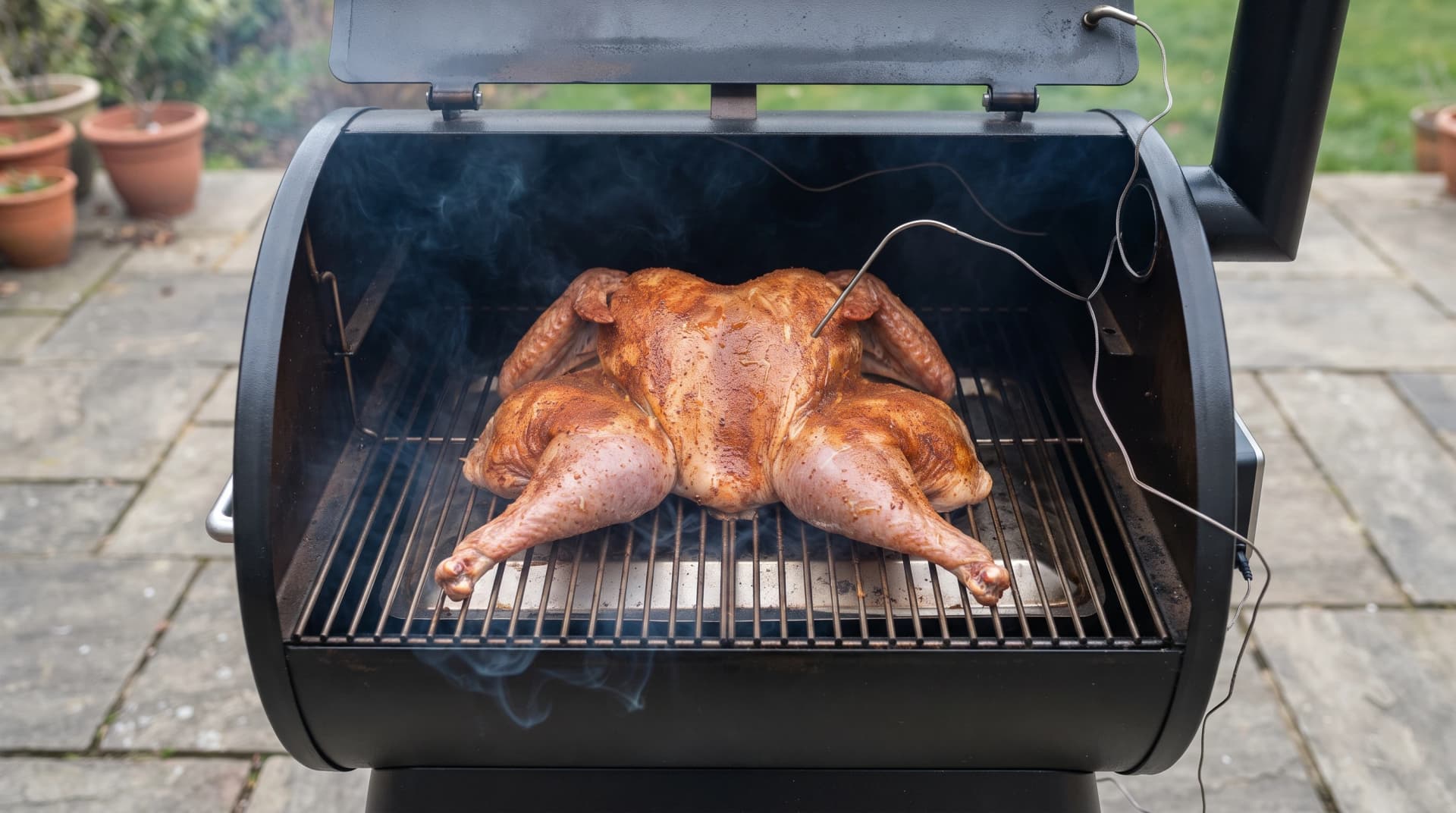 Point the legs toward the heat; the thighs need to finish hotter than the breast.
Step 6 of 8Smoke until the breast nears 165°F
Time: about 15–20 minutes per pound at 275–300°F
Keep the lid closed and leave the bird alone. If the breast skin browns too fast, lay a loose piece of foil over it.
Step 7 of 8Check two spots, then crisp the skin
Done when: the breast reads 165°F and the thigh 175–180°F
Check the thickest part of the breast and the thigh near the joint with an instant-read thermometer, without touching bone. If the skin is still pale, raise the smoker to 350°F or more for the last 15–20 minutes.
Step 8 of 8Rest and carve
Time: 30–45 minutes
Rest the turkey loosely tented with foil; the breast will climb a few degrees. Carve the legs and thighs first, then take each breast off whole and slice it across the grain.
How do you get crisp skin on a smoked turkey?
Dry skin plus enough heat to render the fat underneath.
Rubbery skin is the most common complaint about smoked turkey. Turkey skin carries a thick fat layer, and it only renders above roughly 275°F.
- Dry it first: an uncovered dry brine is the single biggest help.
- Add baking powder: a little mixed into the salt helps the skin brown and crisp.
- Skip the water pan: a drier chamber runs hotter and crisps better.
- Finish hot: a final 15–20 minutes at 350°F or more tightens and browns it.
- Use fat, not sugar: butter or oil helps browning; sugary rubs burn first.
Pro tip: If your smoker tops out around 275°F, smoke the bird there, then move it to a 400°F oven for the last 15–20 minutes to finish the skin.
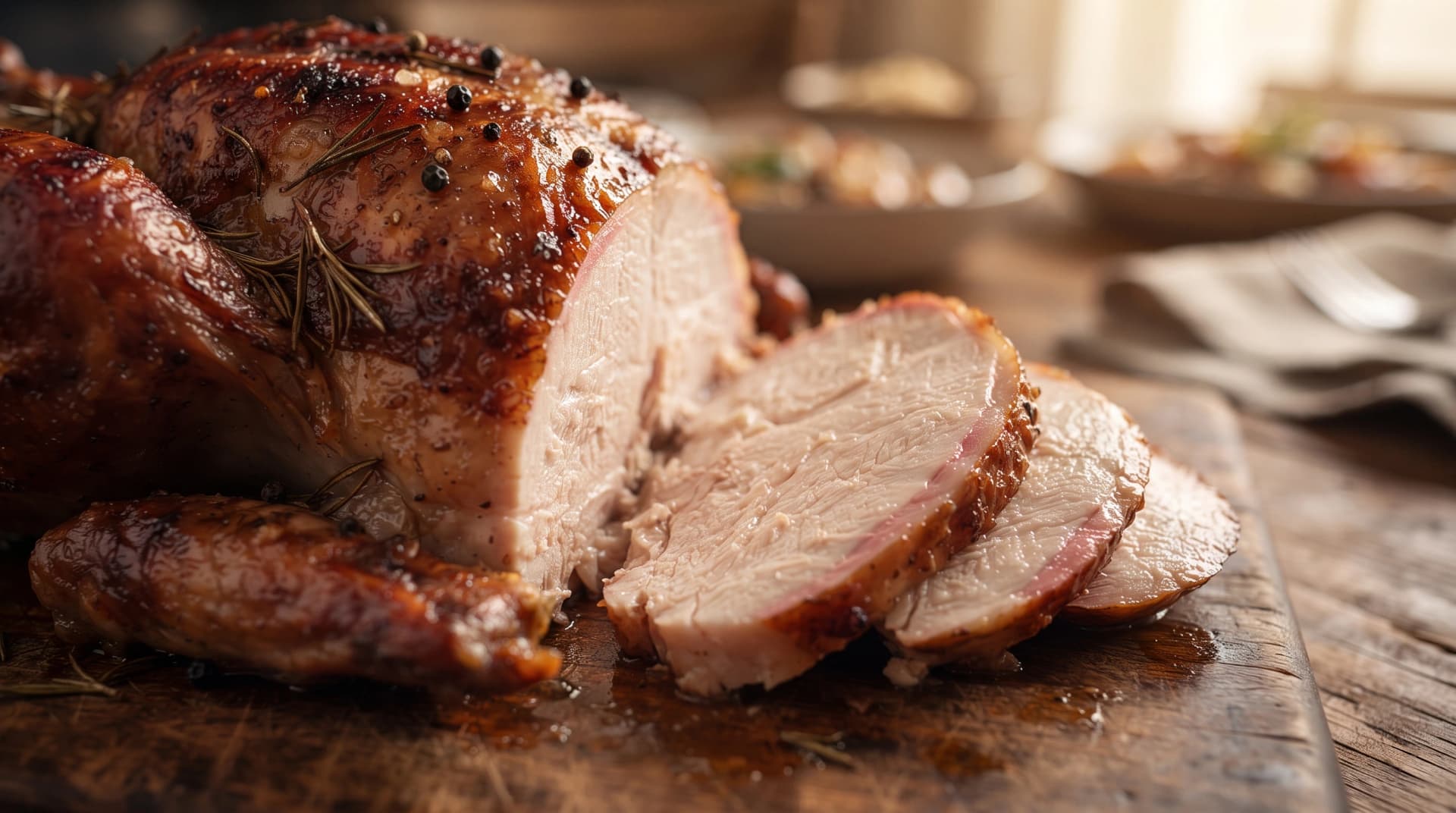 Tight, mahogany skin means the fat underneath rendered; pale and loose means it needed more heat.
How do you smoke a turkey on your smoker or grill?
The method stays the same; only the heat setup changes.
| Cooker | How to set it up | Watch for |
|---|---|---|
| Pellet grill | Set 275–300°F with fruitwood pellets; use a smoke setting for the first hour if yours has one | Lighter smoke flavor; raise to 350°F+ to finish the skin |
| Charcoal kettle | Bank lit coals to one side with a drip pan beside them; turkey on the cool side | Fit under the lid; rotate the bird halfway for even color |
| Gravity-fed charcoal | Set 275–300°F on the controller, add wood chunks to the ash bin or charcoal | Top up the hopper on longer cooks |
| Bullet or water smoker | Run the water pan empty or dry and open the vents to reach 275°F+ | These run cooler by design; finish in the oven if needed |
| Gas grill | Light one side, add a smoker box of chips over it, bird on the unlit side | Gentle smoke flavor; most gas grills hold 300°F easily |
On a kettle, the indirect heat setup is the key. Our guide to charcoal grill temperature control explains how to hold 275–300°F with the vents.
When should you start the turkey for dinner?
Count back from serving time, and add a buffer.
For a 12–14 lb bird at 275–300°F and dinner at 5 p.m.:
| Time | What happens |
|---|---|
| 3 days before | Move the frozen turkey to the fridge to thaw |
| 1–2 days before | Dry brine and leave it uncovered in the fridge |
| 11:30 a.m. | Light the smoker and let the smoke clean up |
| 12:00 p.m. | Turkey on the smoker |
| About 3:30–4:00 p.m. | Check temperatures; crisp the skin if needed |
| 4:15 p.m. | Off the smoker to rest; make gravy from the drippings |
| 5:00 p.m. | Carve and serve |
Build in a 30–60 minute buffer. A turkey that finishes early holds well tented in foil, while a late one holds up dinner.
Why did your smoked turkey turn out wrong?
Most problems trace back to one step.
| Problem | Likely cause | Fix next time |
|---|---|---|
| Rubbery skin | Smoked too low or skin went on wet | Smoke at 275°F+, dry brine uncovered and finish hot |
| Dry breast | Cooked past 165°F waiting on the thighs | Point legs at the heat, or spatchcock |
| Undercooked thighs | Breast probe said done too soon | Always check the thigh separately |
| Bitter or sooty taste | Thick white smoke or too much strong wood | Wait for thin smoke; use 2–3 chunks of fruitwood |
| Pink meat near the bone | Smoke ring, or underdone | Trust the thermometer; smoked poultry can stay pink at safe temps |
| Way behind schedule | Cold bird, wind or a low smoker | Raise the heat to 325°F; it's safe and helps the skin |
Pink meat in a smoked bird is often just the smoke ring. If both spots read safe temperatures, it's done.
Best Smokers for Turkey
Each of these holds 275–300°F and climbs high enough to finish the skin.
A turkey needs a cooker that runs hotter than a brisket smoker, with room for a 12–14 lb bird. These picks fit that job; our list of the best smokers for beginners compares more options.
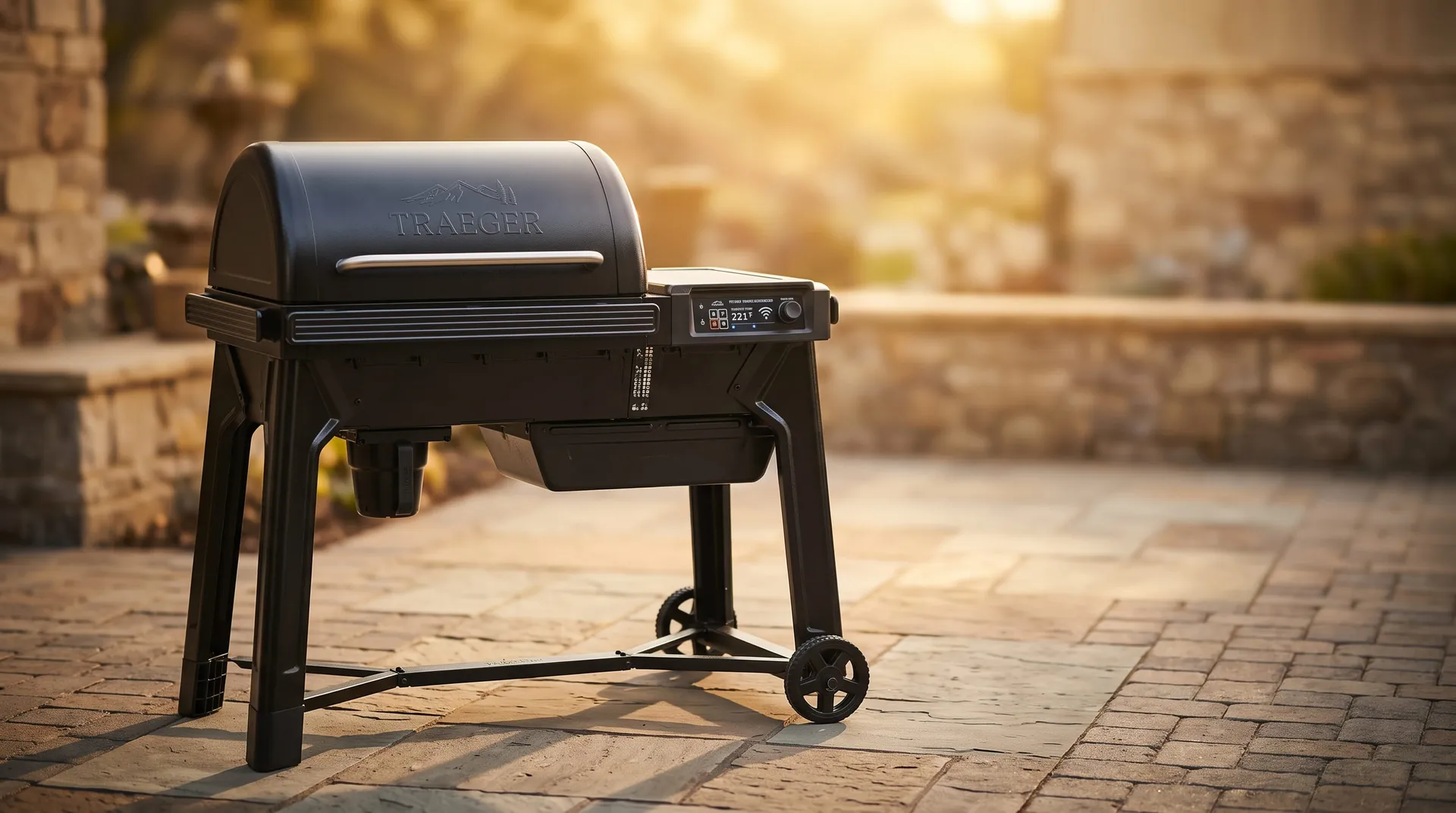 Easiest pellet
Traeger Woodridge★ 4.4/5
A 180–500°F range covers a 275–300°F smoke and a hot skin finish, with 860 sq in total for a whole bird.
 Charcoal on a dial
Rated 225–700°F with a fan controller, so it holds a turkey temp and then gets hot enough to crisp the skin.
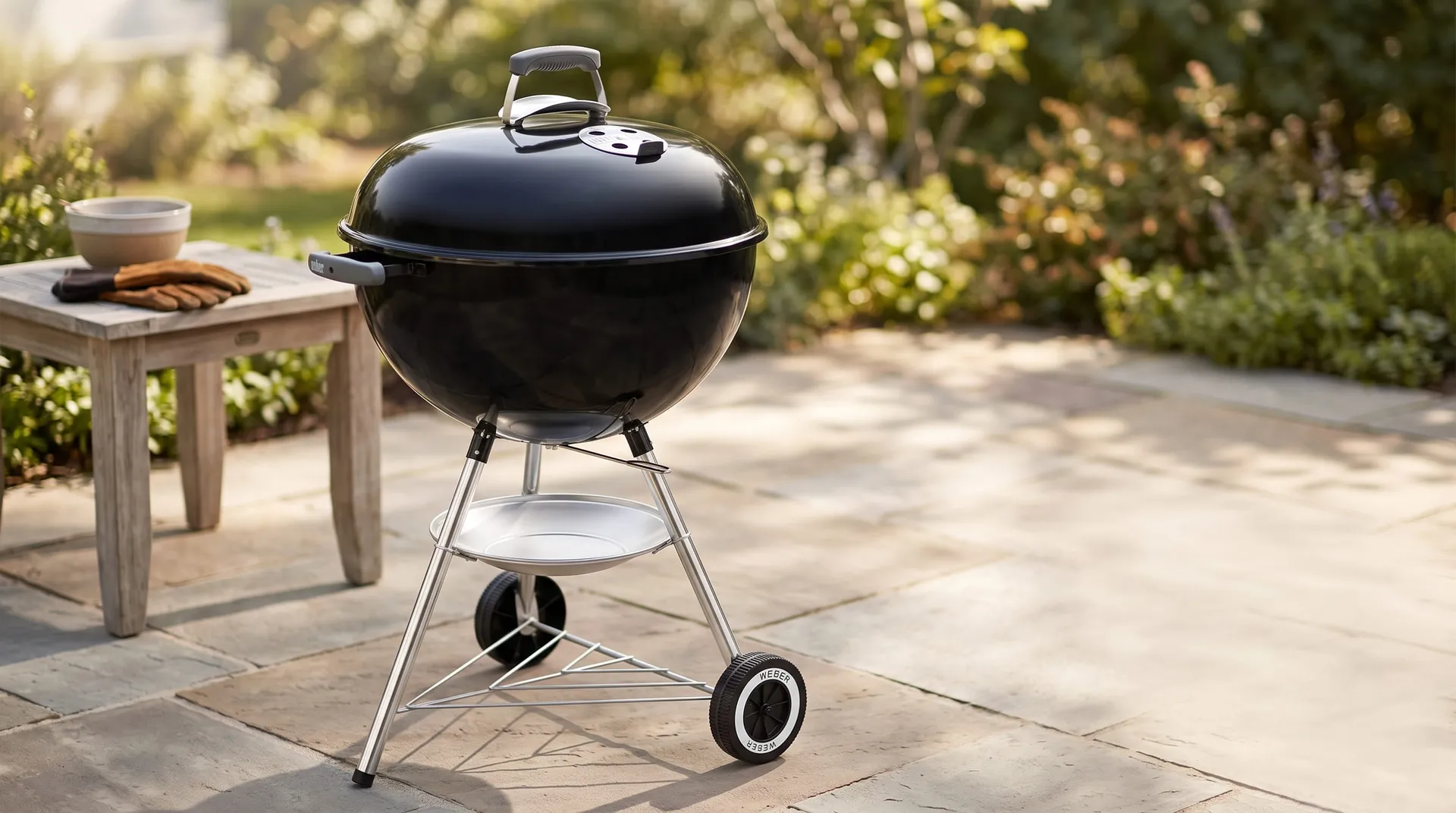 Budget charcoal
Weber Original Kettle 22"★ 4.7/5
Banked coals and a drip pan turn this kettle into a turkey cooker that runs hot enough for crisp skin.
Frequently Asked Questions
01How long does it take to smoke a turkey?
A 12–14 lb turkey takes about 3–5 hours at 275–300°F, or roughly 15–20 minutes per pound. At 225–250°F the same bird can take 6–9 hours, and the skin stays rubbery. Spatchcocked, it can finish in about 2–2.5 hours at 300°F.
02What temperature should I smoke a turkey at?
Smoke a turkey at 275–300°F. That range renders the fat under the skin and keeps the cook to an afternoon. You can go up to 325°F if you're running behind.
03What internal temperature should smoked turkey reach?
Pull it when the thickest part of the breast reads 165°F, the USDA minimum for poultry. Take the thighs to 175–180°F so the dark meat turns tender.
04How long does it take to smoke a turkey at 225?
Plan on 30–40 minutes per pound, so 6–8 hours for a 12 lb bird. Most cooks avoid 225°F for whole turkeys because the skin won't crisp.
05Should I brine a turkey before smoking it?
Yes. A dry brine of about ½ teaspoon of kosher salt per pound for 24–48 hours seasons the meat and dries the skin. A wet brine adds juiciness but makes crisp skin harder.
06Can you smoke a turkey on a pellet grill?
Yes. Set it to 275–300°F with fruitwood pellets, then raise it to 350°F or more for the last 15–20 minutes to crisp the skin.
07Should I spatchcock a turkey for smoking?
Spatchcocking cooks the turkey faster and more evenly, so the breast and thighs finish closer together. Skip it only if you want to carve a whole bird at the table.
08Can you stuff a smoked turkey?
No. Stuffing inside a slow-cooked bird can stay in the danger zone too long. Bake it separately and fill the cavity with aromatics instead.
The Takeaway
Dry brine the bird, smoke it at 275–300°F over mild wood and pull it by temperature in two spots. Finish hot if the skin needs it, and give yourself a buffer before dinner.
If you're new to poultry on the smoker, practice on a smoked whole chicken first; it uses the same method on a smaller bird.
Written by
Marcus Reilly
Senior Editor & Researcher
Marcus Reilly is a KCBS Certified Judge with 15 years of competition barbecue. He researches and writes SmokyHQ’s smoker, pellet, charcoal and kamado coverage, comparing verified specs, warranties and documented owner feedback so you can see which cookers suit brisket, ribs or overnight smokes.
- Smokers
- Pellet Grills
- Charcoal & Kamado
- Low-and-Slow BBQ
- Temperature Control
Every grill is scored on the same research scorecard, from verified specs and documented owner feedback. How we research
Keep reading
More in Smoking meat
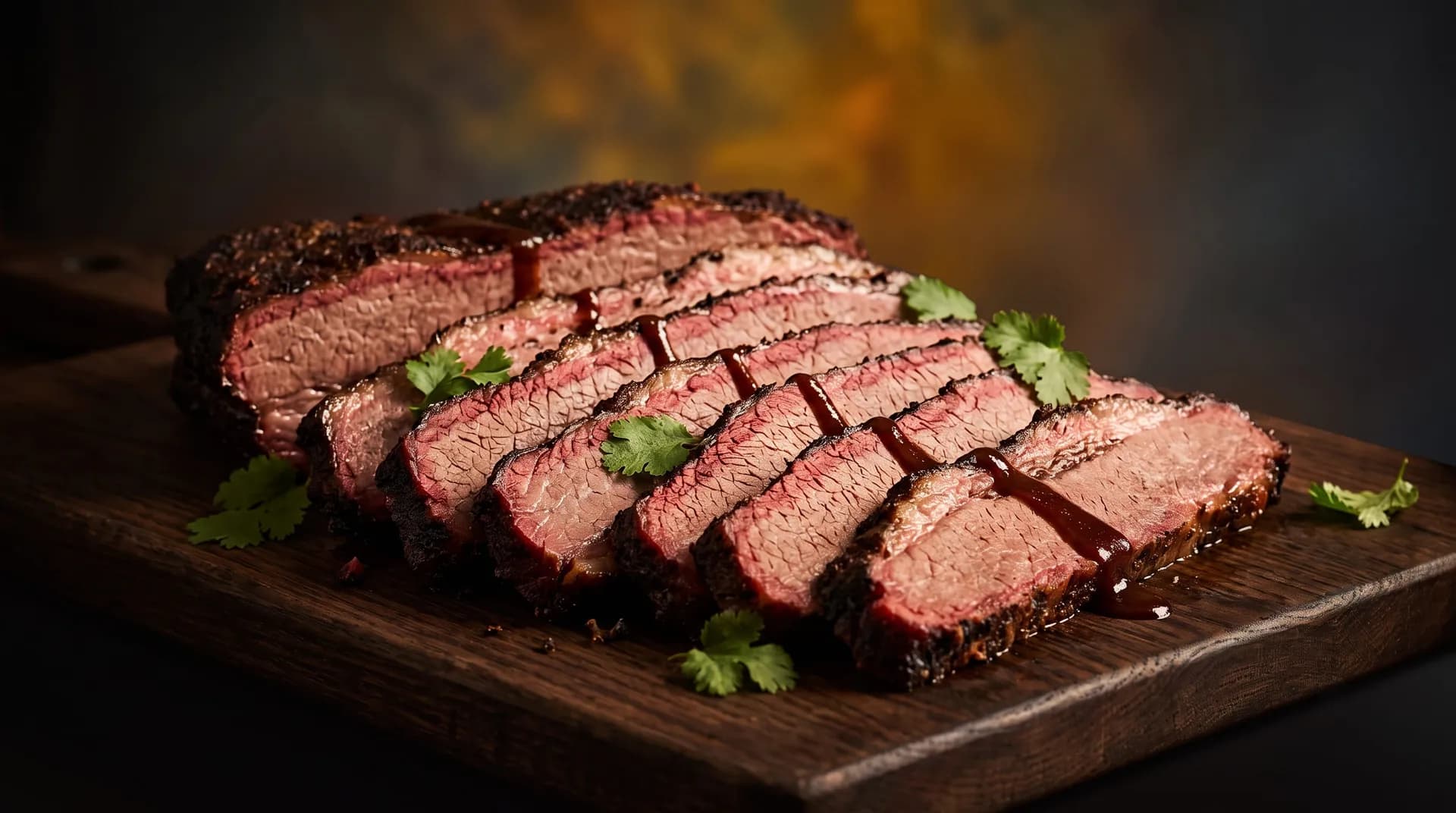
How to Smoke a Brisket
This beginner-proof plan walks you through buying, trimming, smoking, wrapping, resting and slicing a brisket, with a dinner timeline and fixes.
Read the guide
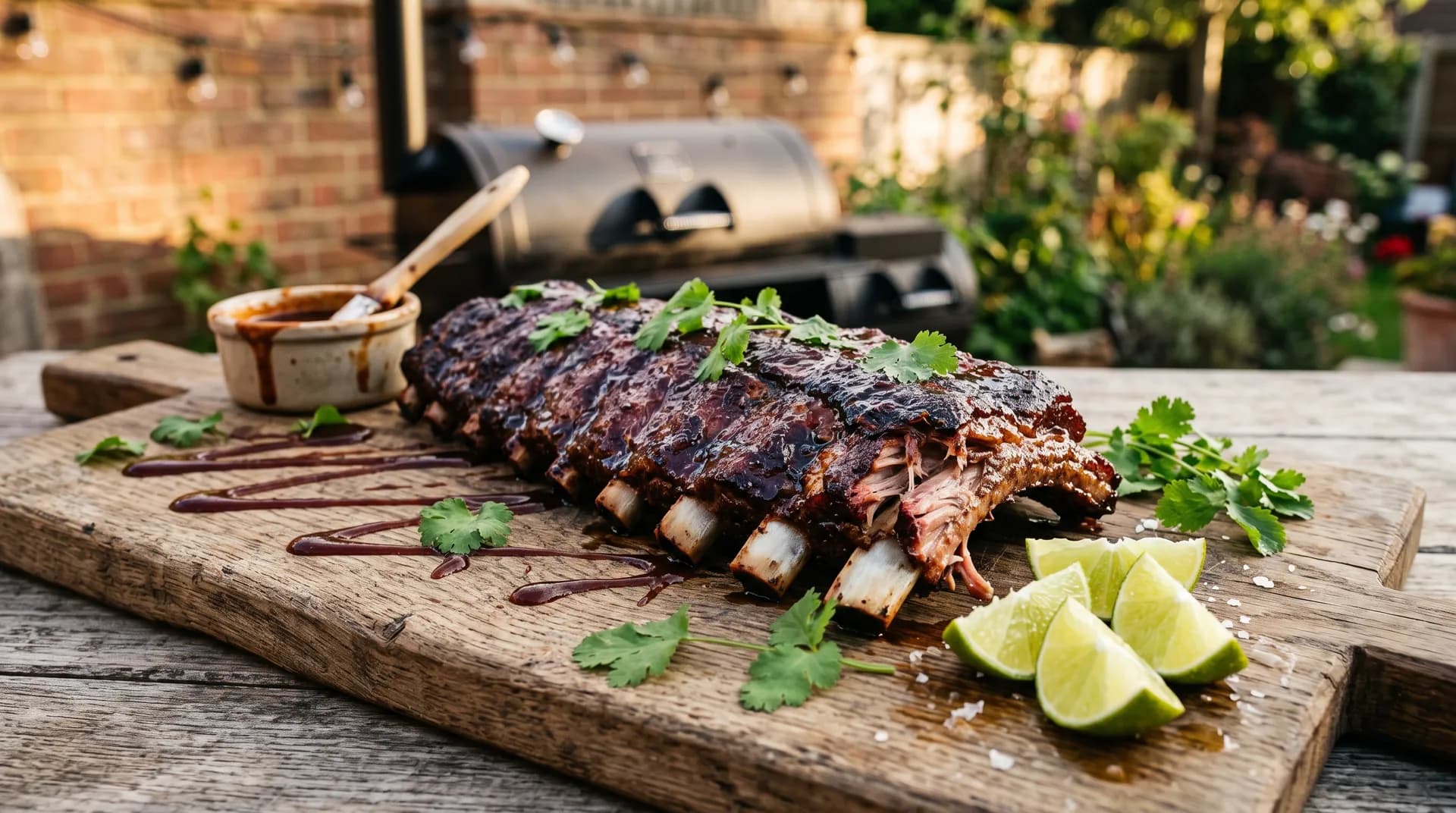
How to Smoke Ribs
This step-by-step plan covers times by cut, when to wrap and glaze, the bend test for doneness and how to fix tough or mushy ribs.
Read the guide
How to Smoke Chicken
This guide shows how to smoke juicy chicken with skin that bites through, with brining, temps, times by cut, wood choices and fixes.
Read the guide
Smoked Pork Shoulder
This guide takes pulled pork from shopping to shredding, covering the cut, rub, stall, wrap, rest, a cook-day timeline and fixes for dry pork.
Read the guide