Skip to contentSkip to content
Best Kamado Grills 2026: 5 Ceramic and Steel Picks

Best-Of Buying Guide5 grills compared

Best Kamado Grills 2026: 5 Ceramic and Steel Picks

The best kamado grill for how you cook and what you want to spend, from a full Kamado Joe setup to a crack-proof steel kamado and a small ceramic for patios. Chosen on ceramic, seal, hinge, grate size and warranty.

By Marcus ReillyLast updated:15 min read

The best kamado grill for most people is the Kamado Joe Classic Joe I. It has the same 18-inch ceramic body, 250 sq in grate and 225–750°F rating as the pricier Classic II, plus two-tier racks, a cart and side shelves in the box. If you want a kamado for well under half the price, the steel Char-Griller AKORN gets you most of the way there.

SmokyHQ did not cook on these grills. Each pick comes from a research review built on manufacturer specs and manuals, warranty terms, retailer listings and owner feedback, and each section says who should skip it.

Our top picks at a glance

5 picks
  1. Best overall
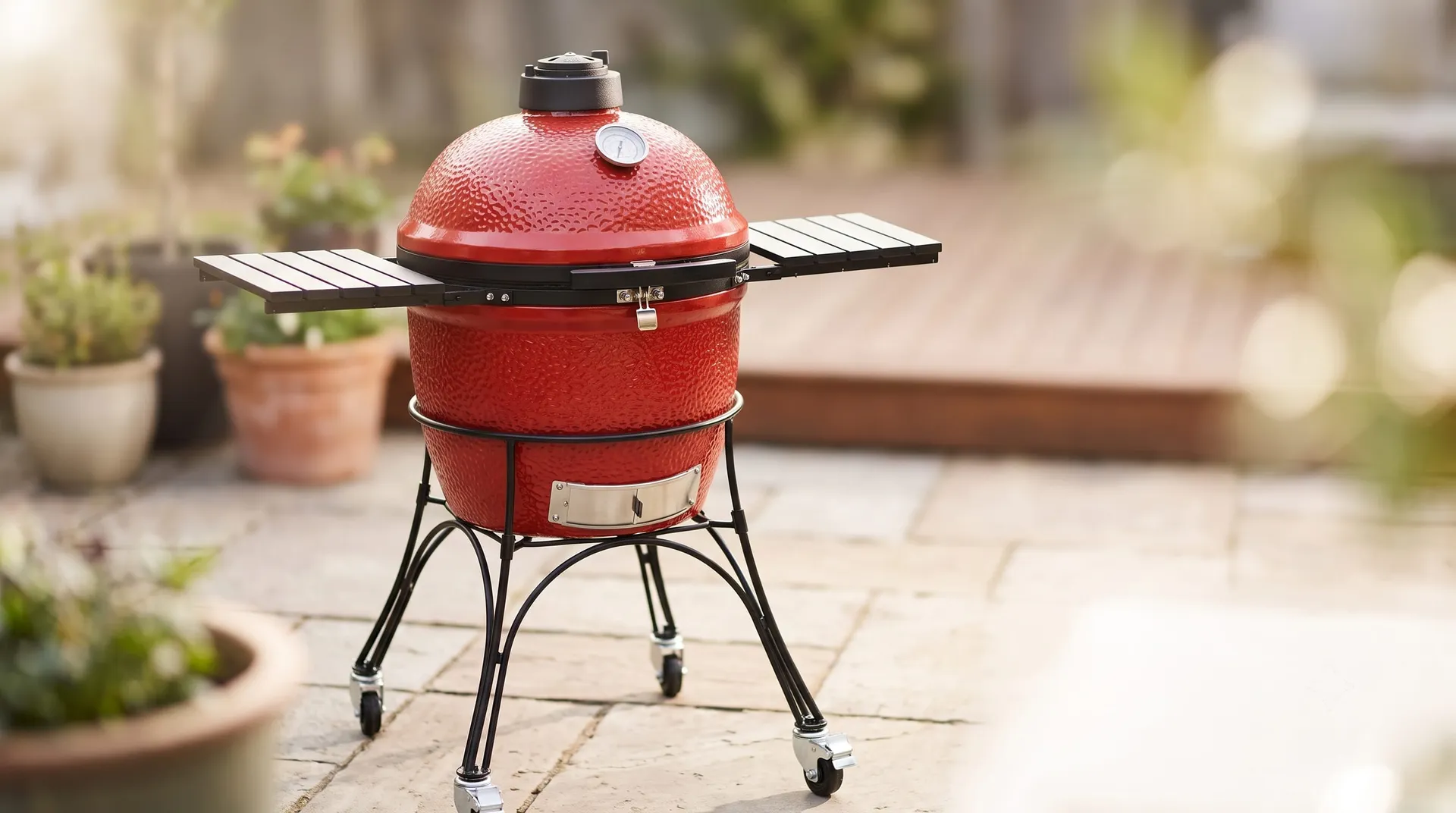
    Kamado Joe Classic Joe I
    4.5/5

    First-time kamado buyers who want searing and long smokes from one grill for less.

  2. Best upgrade
    Kamado Joe Classic Joe II 18"
    4.6/5

    Frequent cooks who want one premium grill for searing, pizza and overnight smokes.

  3. Best budget and steel
    Char-Griller AKORN 20-Inch Kamado
    4.1/5

    First-time kamado cooks who want a big grate and a light, crack-proof body.

  4. Best small
    London Sunshine 15-Inch Ceramic Kamado
    4.0/5

    Couples and small households who want kamado cooking in a small space.

  5. Ceramic alternative
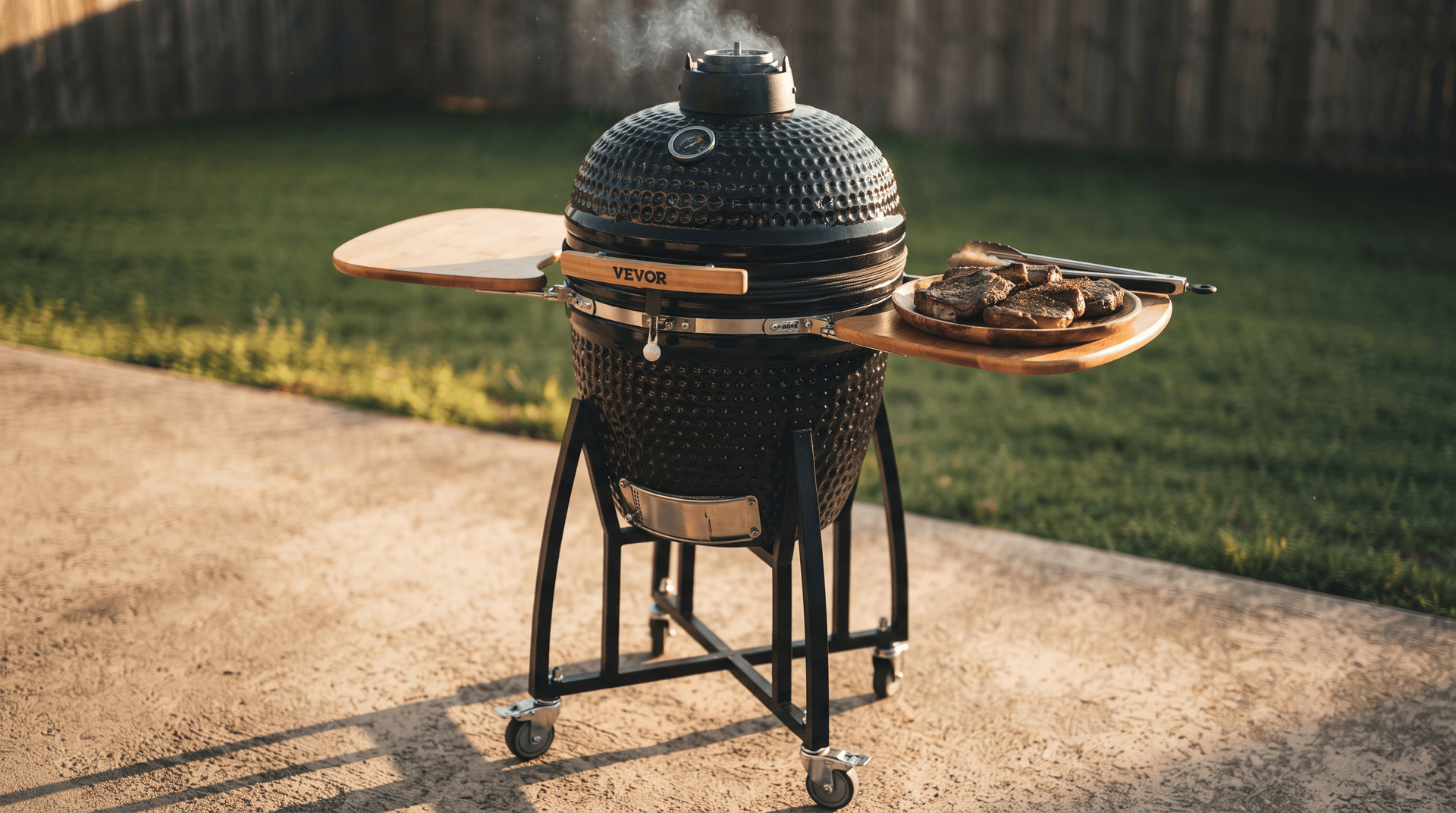
    VEVOR 18-Inch Ceramic Kamado
    4.0/5

    Buyers who find it well below Kamado Joe prices and want lift assist and shelves.

How to Pick in 30 Seconds

Match your situation to one line. If two lines fit, the first one is the safer choice for most households.

Your situationOur pickWhy it fits
You want one ceramic kamado that does everythingKamado Joe Classic Joe IFull 225–750°F range and two-zone racks at the lowest Kamado Joe price.
You'll lift the dome daily and want the best hardwareKamado Joe Classic Joe IIAn Air Lift hinge, an aluminum top vent and a mesh gasket.
You want a kamado on a tight budgetChar-Griller AKORN KamadoInsulated steel that won't crack and weighs about 88 lb.
You cook for two to four on a small patioLondon Sunshine 15-Inch KamadoA small ceramic with a footprint of about 21 x 20 in.
You want a full-size ceramic and find a deep discountVEVOR 18-Inch KamadoThick ceramic, a lift-assist hinge and a cart.

Still deciding whether you need a kamado at all? Our kamado vs regular grill guide answers that first.

Best Overall: Kamado Joe Classic Joe I

1Best overall
Kamado Joe
Kamado Joe Classic Joe I
4.5/5

Best for: First-time kamado buyers who want searing and long smokes from one grill for less

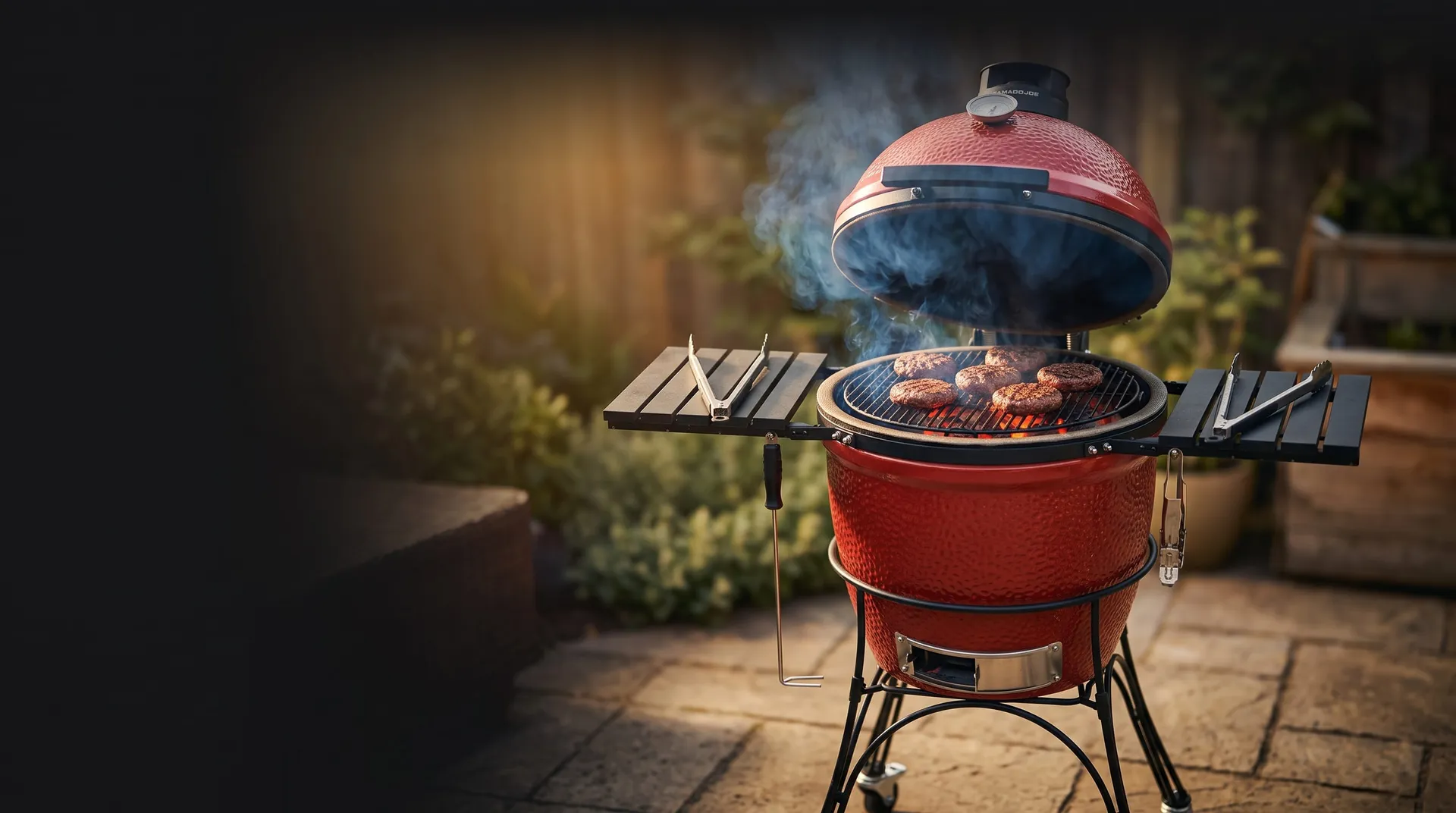
Why we picked it: It's the cheapest way into a complete Kamado Joe system. The Kamado Joe Classic Joe I shares the Classic II's ceramic body, 250 sq in stainless grate and 225–750°F rating, so it smokes and sears the same. The two-tier Divide & Conquer racks, cart with locking wheels, folding shelves and ash drawer are all included.

Kamado Joe lists it at $999.99, about $400 under the Classic II, and backs the ceramic with a limited lifetime warranty for the registered original buyer.

Who it's for: First-time kamado buyers who want searing, pizza and long smokes from one grill.

Skip it if: You'll struggle lifting a heavy dome. It uses a spring hinge rather than Air Lift, the cast iron top vent can rust, and the felt gasket wears faster at very high heat.

What we liked
Same 18-inch ceramic body, 250 sq in grate and 225–750°F rating as the Classic II for about $400 less at list.
2-tier Divide & Conquer racks, cart, side shelves and ash drawer are listed as standard.
Insulated ceramic needs little airflow, which favors long, fuel-thrifty smokes.
What could be better
Spring hinge instead of Air Lift, so you lift more of the heavy dome yourself.
Cast iron top vent can rust and can shift when the dome drops, an often-reported owner annoyance.
Felt gasket wears faster than the Classic II's mesh gasket on very hot cooks.
Kamado Joe Classic Joe I
Scored 4.5/5 research score

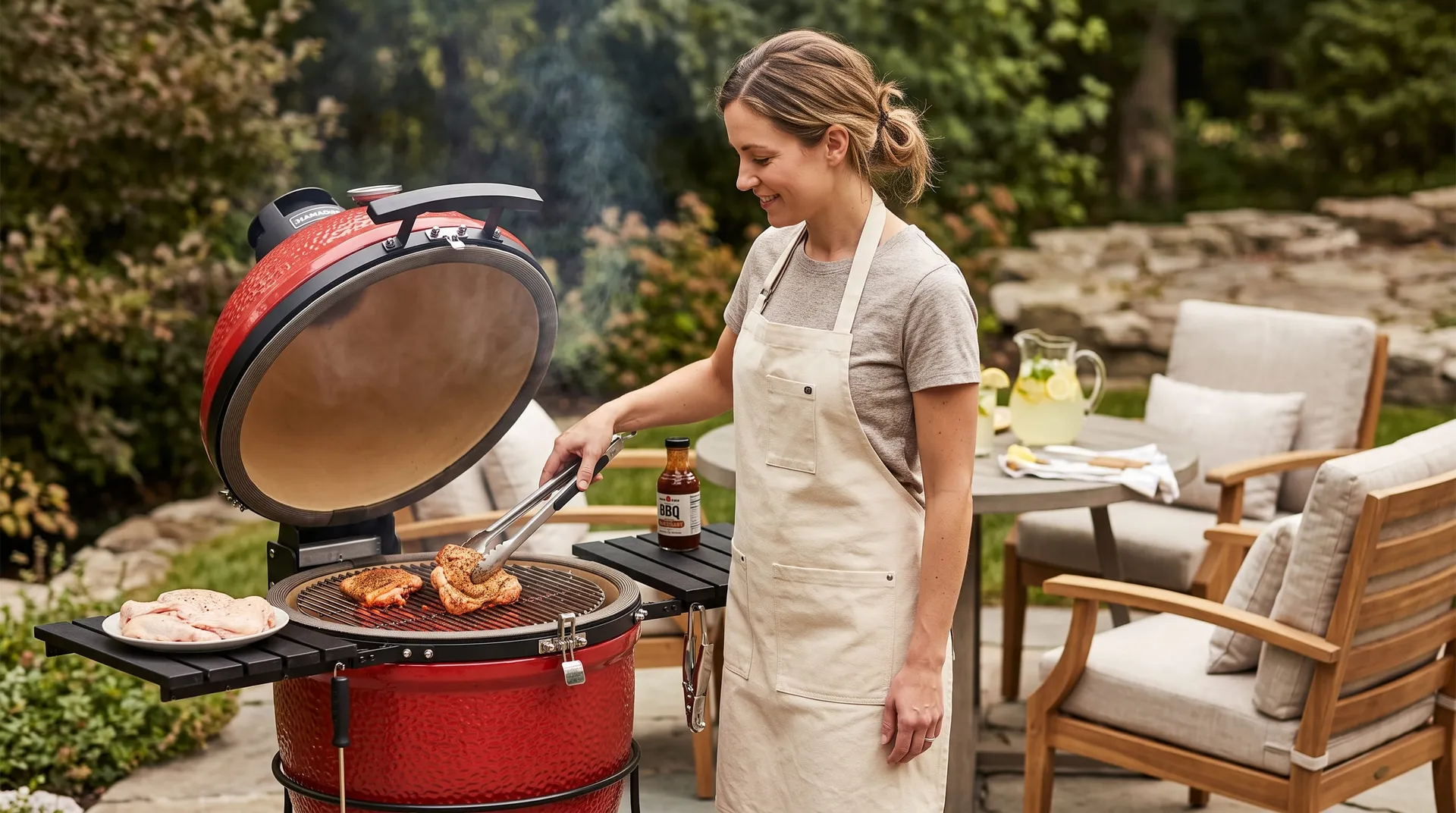
Woman turning seasoned chicken thighs on a red kamado grill beside patio seatingTwo-tier racks let one side run direct and the other indirect, a setup most kamados charge extra for.

Best Upgrade: Kamado Joe Classic Joe II

2Best upgrade
Kamado Joe
Kamado Joe Classic Joe II 18"
4.6/5

Best for: Frequent cooks who want one premium grill for searing, pizza and overnight smokes

Why we picked it: Every difference from the Classic I is hardware you touch on every cook. The Kamado Joe Classic Joe II adds the Air Lift hinge, which takes most of the dome's weight, and the Kontrol Tower aluminum top vent, which holds its setting when you open the lid. It also has a multi-panel firebox built to flex with heat and a double-thick mesh gasket.

It has the highest research score here (4.6), but Kamado Joe lists it at $1,399.99–$1,499.99 and shows it sold out on its US site, with the Classic III now the flagship.

Who it's for: Frequent cooks who open the dome daily and want the most durable seal and vent.

Skip it if: Budget matters, or you can find a Classic III for similar money. Cooking performance on paper matches the Classic I.

What we liked
Air Lift hinge is designed to take most of the heavy ceramic dome's weight.
Kontrol Tower cast-aluminum top vent has dual adjustment and stays set when the dome opens.
AMP multi-panel firebox is built to flex with heat, reducing the risk of a costly firebox crack.
What could be better
Kamado Joe lists it at $1,399.99–$1,499.99, about $400 more than the Classic I.
Kamado Joe lists 227.7 lb, so it's effectively a permanent fixture once built.
The 250 sq in main grate is small next to steel cookers at the same price.
Kamado Joe Classic Joe II 18"
Scored 4.6/5 research score

Cook lifting a seared ribeye off a red kamado grill beside a set dinner table in a gardenThe hinge and vent upgrades matter most to people who light their kamado several times a week.

Best Budget Kamado: Char-Griller AKORN Kamado

3Best budget and steel
Char-Griller
Char-Griller AKORN 20-Inch Kamado
4.1/5

Best for: First-time kamado cooks who want a big grate and a light, crack-proof body

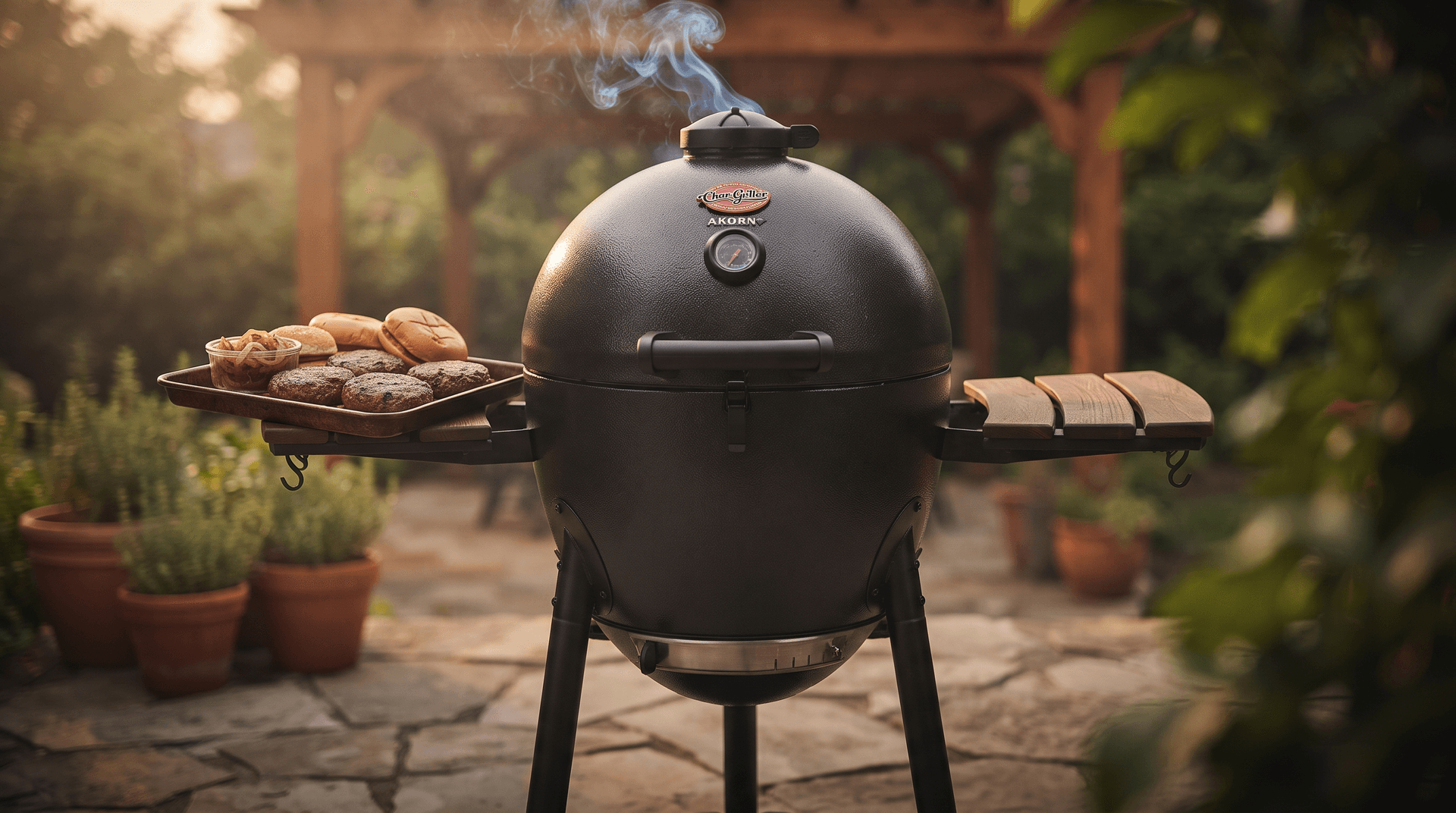
Why we picked it: It's the only steel kamado here, and steel solves two ceramic headaches: weight and cracking. The Char-Griller AKORN uses a triple-wall insulated steel body rated 200–700°F, weighs about 88 lb and has the biggest grate on this list (325 sq in of cast iron, 445 sq in with the warming rack).

It usually sells for $229–$400, a fraction of a ceramic kamado.

Who it's for: First-time kamado cooks who want a big grate, a light body and the lowest price.

Skip it if: You cook through cold, wet winters. Thin steel stores less heat than ceramic, so wind moves the temperature more, and painted steel rusts where it chips. Budget for a heat deflector, since none comes in the box.

What we liked
Triple-wall insulated steel body, rated by Char-Griller from 200°F to 700°F
Steel won't crack from a knock or a cold start the way ceramic can
325 sq in cast iron primary grate and 445 sq in total with the warming rack
What could be better
Painted steel can rust where the finish chips, so it needs a cover
Thin steel walls store less heat than thick ceramic, so wind and cold move temperatures more
No heat deflector in the box; you need one for low-and-slow smoking
Char-Griller AKORN 20-Inch Kamado
Scored 4.1/5 research score

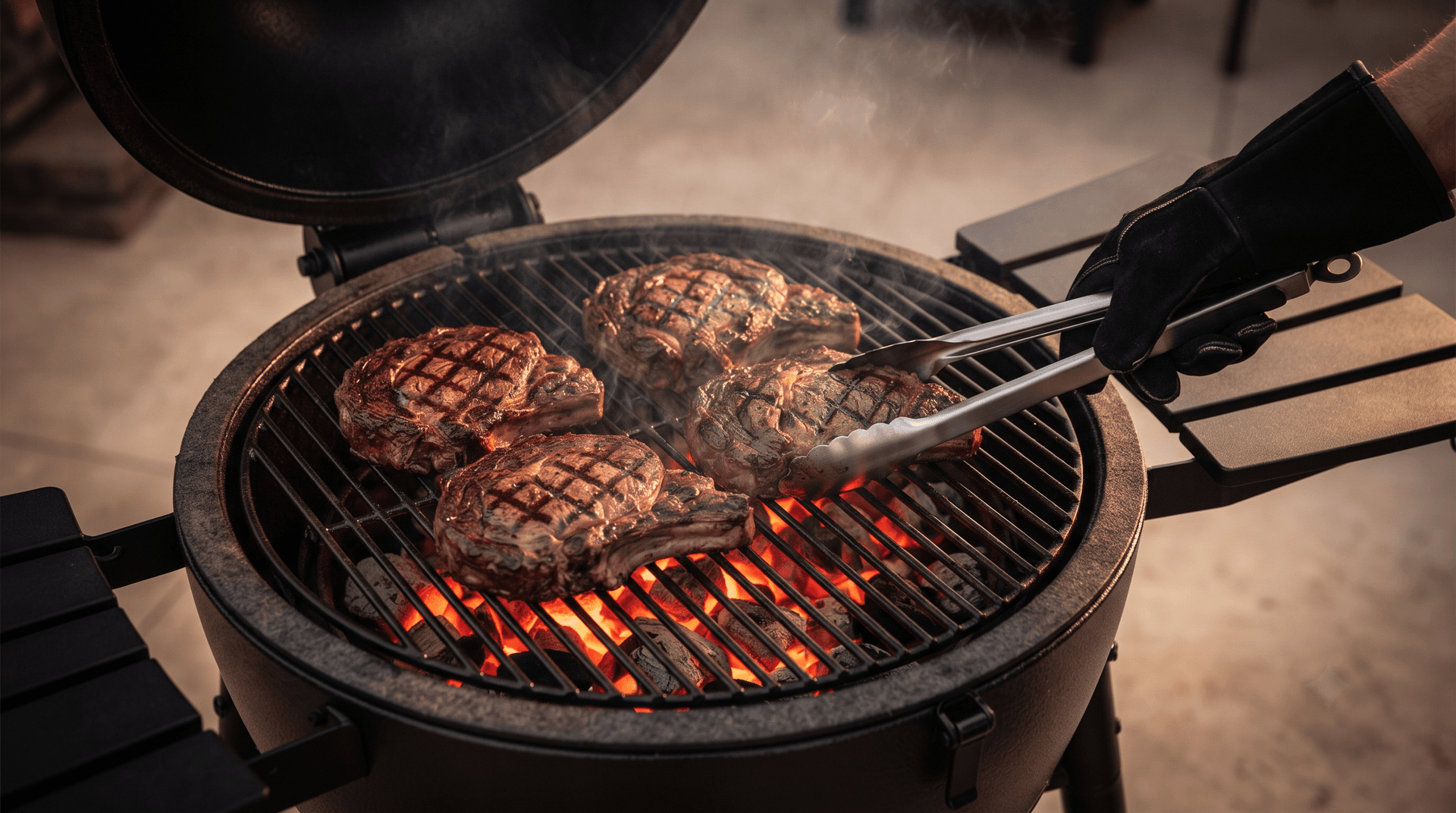
Ribeyes searing on a cast iron grate over glowing lump charcoal in a steel kamadoInsulated steel still gets hot enough to sear; it just holds that heat less steadily in wind and cold.

Best Small Kamado: London Sunshine 15-Inch

4Best small
London Sunshine
London Sunshine 15-Inch Ceramic Kamado
4.0/5

Best for: Couples and small households who want kamado cooking in a small space

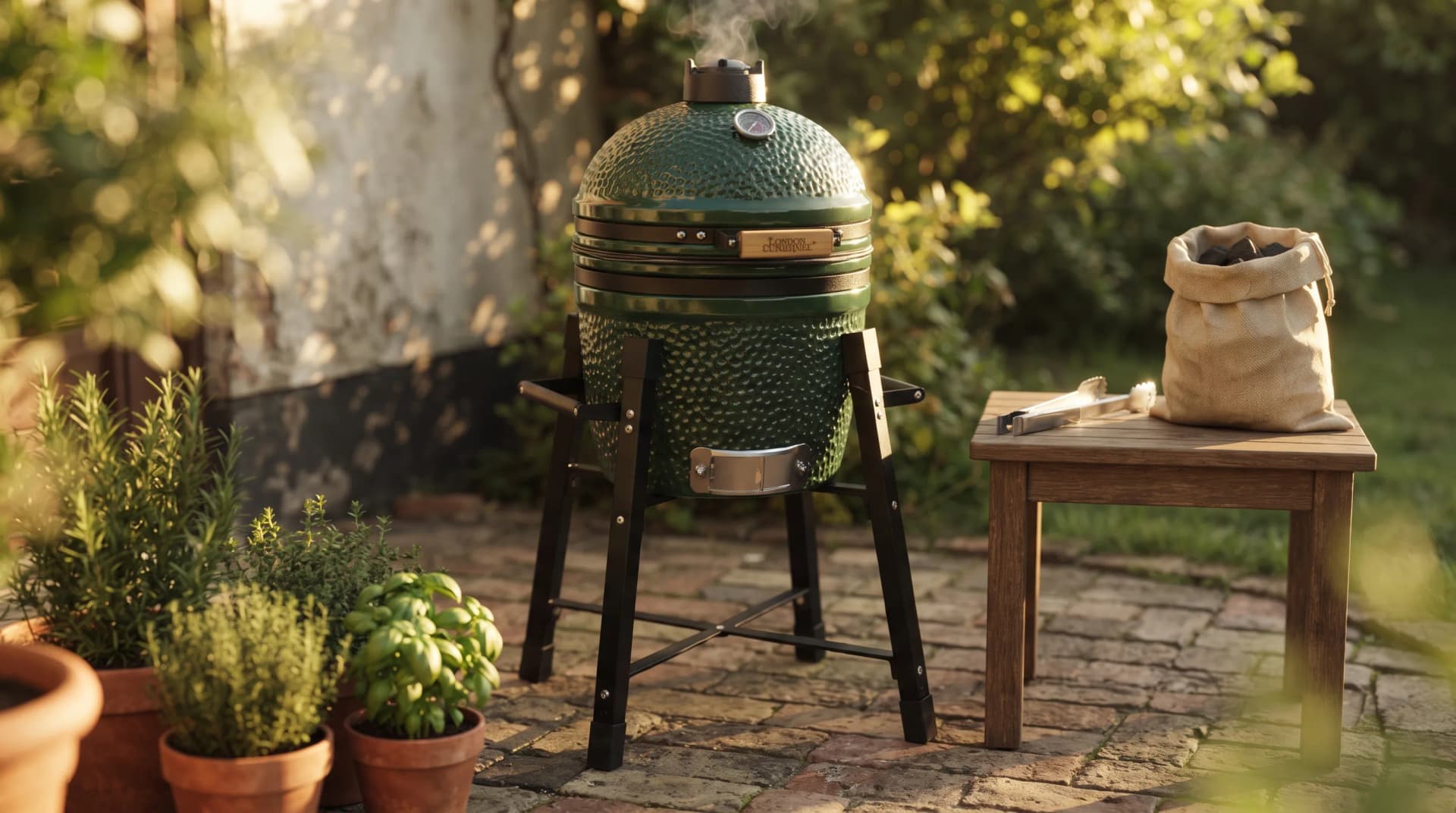
Why we picked it: It's the only compact ceramic here. The London Sunshine 15-inch kamado has a 13.2-inch stainless grate (about 137 sq in) and a seller rating of 180–750°F. A tall cast iron stand puts the grate at working height on a footprint of about 21 x 20 in.

It sells for $359–$399, so it's the cheapest way into ceramic.

Who it's for: Couples and small households who want kamado cooking on a small patio.

Skip it if: You feed more than four or want clear warranty terms. Two large steaks or one small pork shoulder is about the limit, there are no side shelves, and no deflector or stone is included.

What we liked
Thick ceramic walls are the design that kamados use to hold low smoking temperatures on one load of lump
Seller-rated range of 180–750°F covers low-and-slow smoking through pizza heat
About a 21 x 20 in footprint suits small patios
What could be better
The 13.2-inch grate (about 137 sq in) fits a few steaks or one small pork shoulder, not a party
No heat deflector, pizza stone or cover in the box
Dome thermometer reads dome air, not the grate
London Sunshine 15-Inch Ceramic Kamado
Scored 4.0/5 research score

Green 15-inch ceramic kamado grill on a tall black stand on a small patioA footprint of about 21 x 20 in fits a corner most full-size kamados can't.

Ceramic Alternative: VEVOR 18-Inch Kamado

5Ceramic alternative
VEVOR
VEVOR 18-Inch Ceramic Kamado
4.0/5

Best for: Buyers who find it well below Kamado Joe prices and want lift assist and shelves

Why we picked it: It brings features usually found on pricier kamados: an air-lift hinge that holds the dome at any angle, a four-caster cart and two side shelves. The VEVOR 18-inch kamado has ceramic walls about 1 inch thick and a 15.2-inch stainless grate (about 181 sq in).

At about $960 list it's only about $40 under the Classic Joe I, so it earns its place only at a real discount.

Who it's for: Buyers who find it well below Kamado Joe prices and want lift assist without paying for it.

Skip it if: You want a heat deflector in the box, a second rack, a published warranty or a known parts network. The Classic Joe I includes all four.

What we liked
Ceramic body with about 1-inch (25 mm) walls, the material that gives kamados their heat retention
Air-lift hinge holds the dome open at any angle
Four casters (two locking) and two side shelves come with it
What could be better
No heat deflector or second-tier rack, so indirect cooking needs extra parts
VEVOR's listing doesn't state a manufacturer warranty term
At about $960 list, it's only about $40 under a Kamado Joe Classic Joe I ($999.99 list), and often costs more than one on sale
VEVOR 18-Inch Ceramic Kamado
Scored 4.0/5 research score

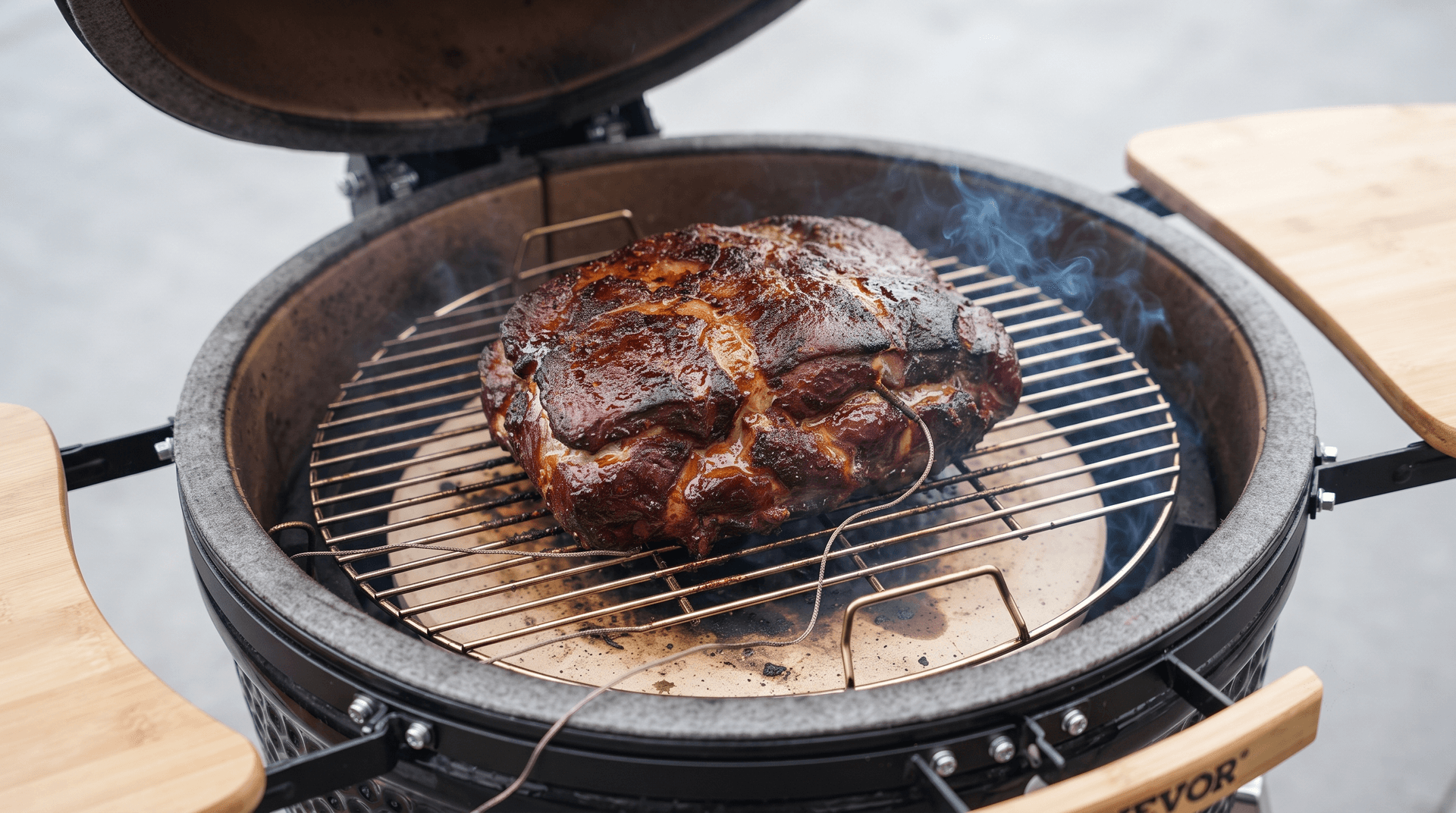
Pork shoulder with dark bark on the grate of a black ceramic kamadoAdd a deflector before your first low-and-slow cook; this one ships without it.

Best Kamado Grills Compared

Use the specs to confirm a pick, not to choose one. Grate size is the main grate unless noted.

GrillBodyGrateRated rangeHingeWarranty
Kamado Joe Classic Joe I18-inch ceramic250 sq in, two tiers225–750°FSpring hingeLifetime ceramic, 5 years metalCheck Current Price
Kamado Joe Classic Joe II18-inch ceramic250 sq in, two tiers225–750°FAir LiftLifetime ceramic, 5 years metalCheck Current Price
Char-Griller AKORNInsulated steel325 sq in cast iron, 445 total200–700°FNot listed5-year badge; few detailsCheck Current Price
London Sunshine 15-inch15-inch ceramicAbout 137 sq in180–750°F (seller)Not listedNot clearly publishedCheck Current Price
VEVOR 18-inch18-inch ceramicAbout 181 sq inNot rated; gauge reads to 800°FAir-liftNot statedCheck Current Price

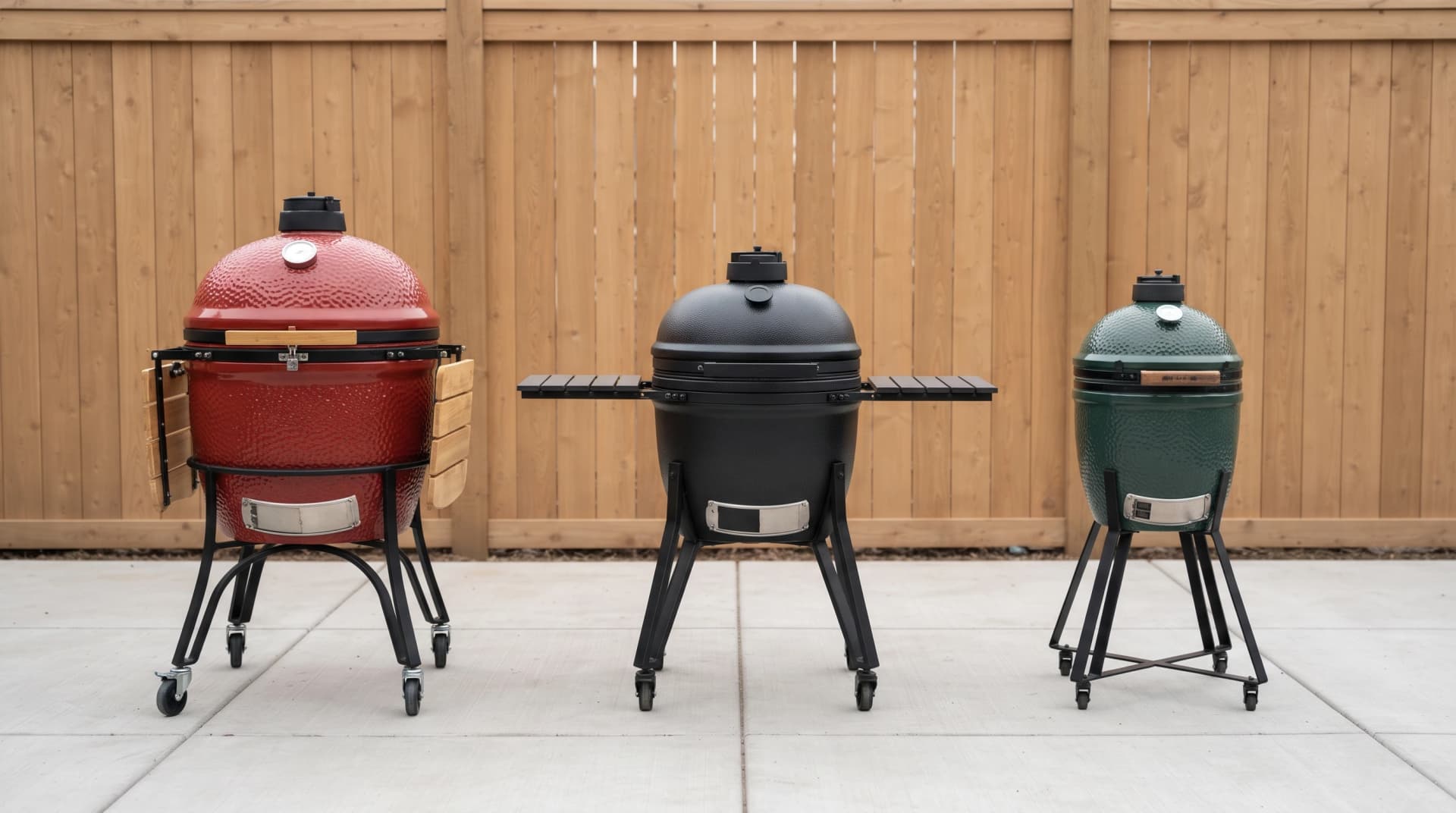
Large red ceramic kamado, black steel kamado and small green ceramic kamado lined up on a patioSize and body material decide more about daily use than any single feature.

Classic Joe I or Classic Joe II?

Both cook the same on paper; the Classic II's extra $400 buys easier lifting, a rust-proof vent and a longer-lasting gasket. Choose the Classic I unless you'll open the dome daily or have trouble lifting.

AKORN or a ceramic kamado?

The AKORN costs far less, weighs about a third as much and won't crack. Ceramic holds heat more steadily through cold and wind and lasts longer outdoors. Pick steel if price or moving the grill matters most; pick ceramic if you'll cook year-round.

VEVOR or Classic Joe I?

At similar prices, the Classic Joe I includes the second rack, a deflector system, a clear lifetime ceramic warranty and parts support. Choose the VEVOR only if it's discounted enough to cover those extras.

Kamado Grill Buying Guide

How a kamado works

A kamado is a thick, insulated egg-shaped cooker with a gasketed dome and two vents. The walls soak up heat and radiate it back, and the tight seal limits airflow. That's why a kamado holds 225–275°F for hours on one load of lump charcoal and can also climb past 700°F for searing and pizza.

The catch is the flip side of that mass. Once a kamado overshoots, it cools slowly, so you creep up on your target with small vent moves.

Ceramic or steel?

CeramicInsulated steel
Heat holdingBest, especially in cold and windGood, but drifts more in bad weather
WeightAbout 130–230 lb for 18-inch modelsAbout 88 lb for the AKORN
DurabilityCan crack if dropped or heated too fast from coldWon't crack; rusts where paint chips

What size do you need?

An 18-inch kamado's 250 sq in grate feeds a family of four to six, or one pork shoulder. A 15-inch model suits two to four. A larger grate like the AKORN's helps if you grill burgers for a crowd, but most kamado cooks add a second tier rather than a bigger body.

Features that make daily use easier

  • Hinge: lift-assist hinges take most of a heavy ceramic dome's weight.
  • Gasket: mesh fiberglass outlasts felt at very high heat.
  • Top vent: aluminum won't rust and holds its setting better than cast iron.
  • Heat deflector: you need one for smoking and baking. Check whether it's included.
  • Cart and shelves: a locking cart and side shelves save buying a table or nest.

Lump or briquettes?

Use lump charcoal. It burns hotter and leaves far less ash than briquettes, and the ash from briquettes can choke a kamado's airflow on long cooks. Add a few chunks of wood for smoke; our guide to the best wood chips for smoking covers which to use.

Warranty and parts

Ceramic warranties vary more than any other spec. Kamado Joe covers the ceramic for life for the registered original buyer, while the VEVOR and London Sunshine don't publish clear terms. Gaskets, deflectors and thermometers wear out on every brand, so check that replacements are easy to buy.
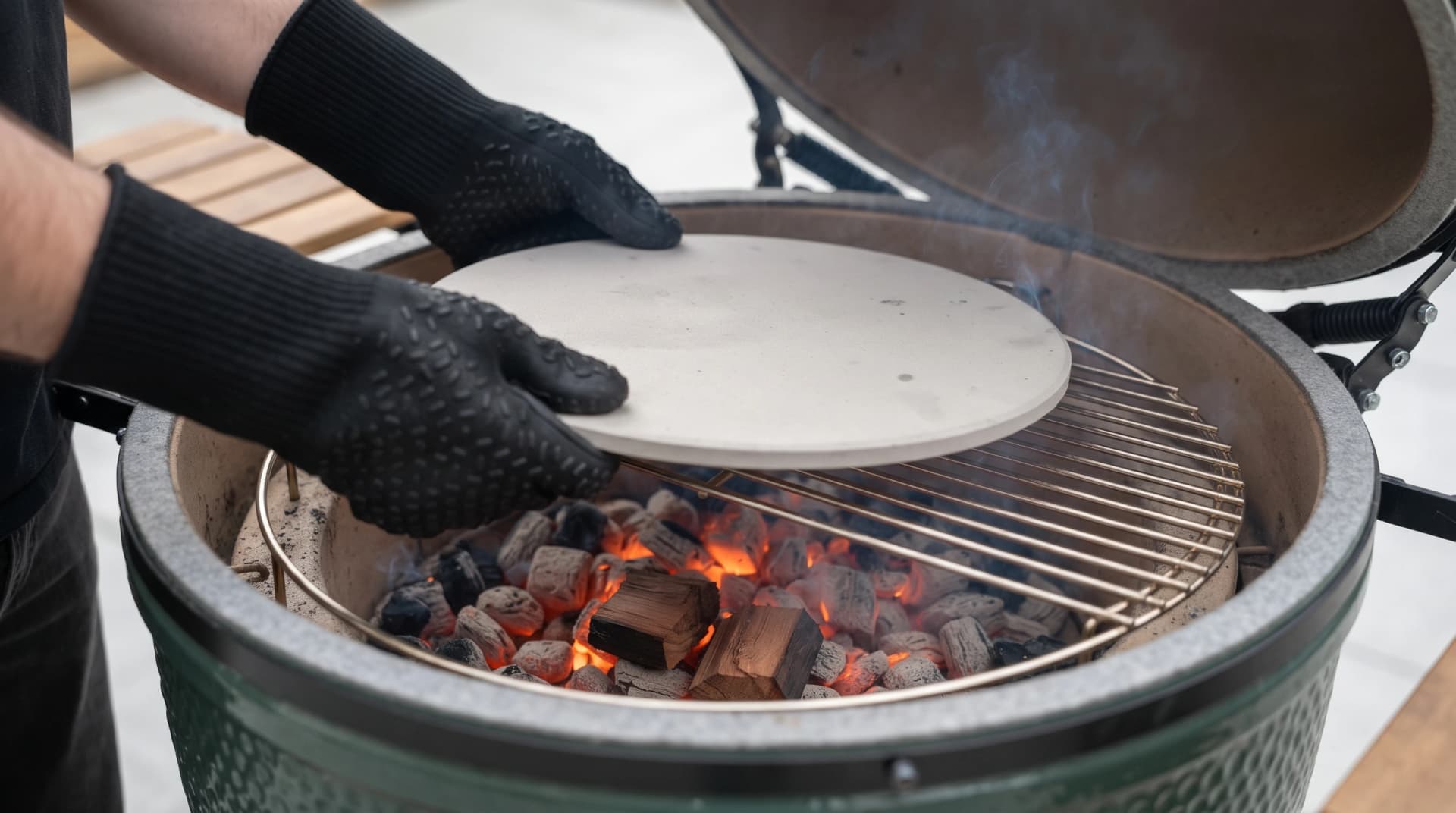
Hands setting a ceramic heat deflector onto the rack inside an open kamado over lit lump charcoalA deflector turns a kamado from a searing grill into a smoker and oven; budget for one if it isn't included.

Who shouldn't buy a kamado

If you mainly grill quickly a few times a month, a kettle gives you most of the flavor for far less. The Weber Original Kettle 22 is our pick for that, and our best charcoal grills guide compares kettles, kamados and smokers side by side.

How We Chose These Picks

SmokyHQ did not test these grills hands-on. We started from our research reviews, which draw on manufacturer specs and manuals, warranty terms, retailer listings and owner feedback.

We ranked what matters in this order:

  1. Body and seal: ceramic thickness or insulation, gasket material and firebox design.
  2. Usability: hinge, top vent, cart and what's included.
  3. Capacity: main grate size and multi-level racks.
  4. Ownership: warranty clarity, parts and accessory support.
  5. Price: each step up had to add something you'd use.

We haven't reviewed a Big Green Egg, Primo or Kamado Joe Classic III, so they aren't included. To compare every kamado we've reviewed, see our kamado grill reviews.

Frequently Asked Questions

01

What is the best kamado grill for most people?

The Kamado Joe Classic Joe I. It has the full 18-inch ceramic body, a 225–750°F rating, two-tier racks and a cart for about $400 less than the Classic II.

02

What is the best budget kamado grill?

The Char-Griller AKORN. Its insulated steel body costs a fraction of ceramic, weighs about 88 lb and won't crack, though it holds heat less steadily in cold weather.

03

Is a ceramic kamado better than a steel one?

Ceramic holds heat better and lasts longer outdoors, while steel is lighter, cheaper and won't crack. Choose ceramic for year-round cooking and steel for price or portability.

04

What size kamado grill should I buy?

An 18-inch kamado suits most families of four to six. A 15-inch model fits two to four people and small patios.

05

Do I need a heat deflector for a kamado?

Yes, for smoking, roasting and baking. It blocks direct heat from the coals, and several kamados here don't include one.

06

Is a kamado grill good for beginners?

Yes, once you learn to make small vent changes. The main mistake is overshooting, because a kamado cools slowly once it's too hot.

07

How long does a ceramic kamado last?

With care, a ceramic kamado can last many years. Avoid fast heat-ups from cold and dropping the body, and replace the gasket when it wears.

08

Kamado Joe or Big Green Egg?

We haven't reviewed a Big Green Egg, so we can't compare them directly. Kamado Joe's Classic models include the cart, racks and hinge in the base price, so compare the total cost of the setup you want.

The Takeaway

Buy the kamado that fits your budget and household, not the biggest one.

  • One ceramic kamado for everything: the Kamado Joe Classic Joe I.
  • Easier lifting and longer-lasting hardware: the Kamado Joe Classic Joe II.
  • A kamado on a budget: the Char-Griller AKORN.
  • Two to four people on a small patio: the London Sunshine 15-inch.

Once it's set up, start with how to smoke a pork shoulder, the most forgiving first long cook.

Written by

Marcus Reilly

Senior Editor & Researcher

Marcus Reilly is a KCBS Certified Judge with 15 years of competition barbecue. He researches and writes SmokyHQ’s smoker, pellet, charcoal and kamado coverage, comparing verified specs, warranties and documented owner feedback so you can see which cookers suit brisket, ribs or overnight smokes.

  • Smokers
  • Pellet Grills
  • Charcoal & Kamado
  • Low-and-Slow BBQ
  • Temperature Control

Every grill is scored on the same research scorecard, from verified specs and documented owner feedback. How we research