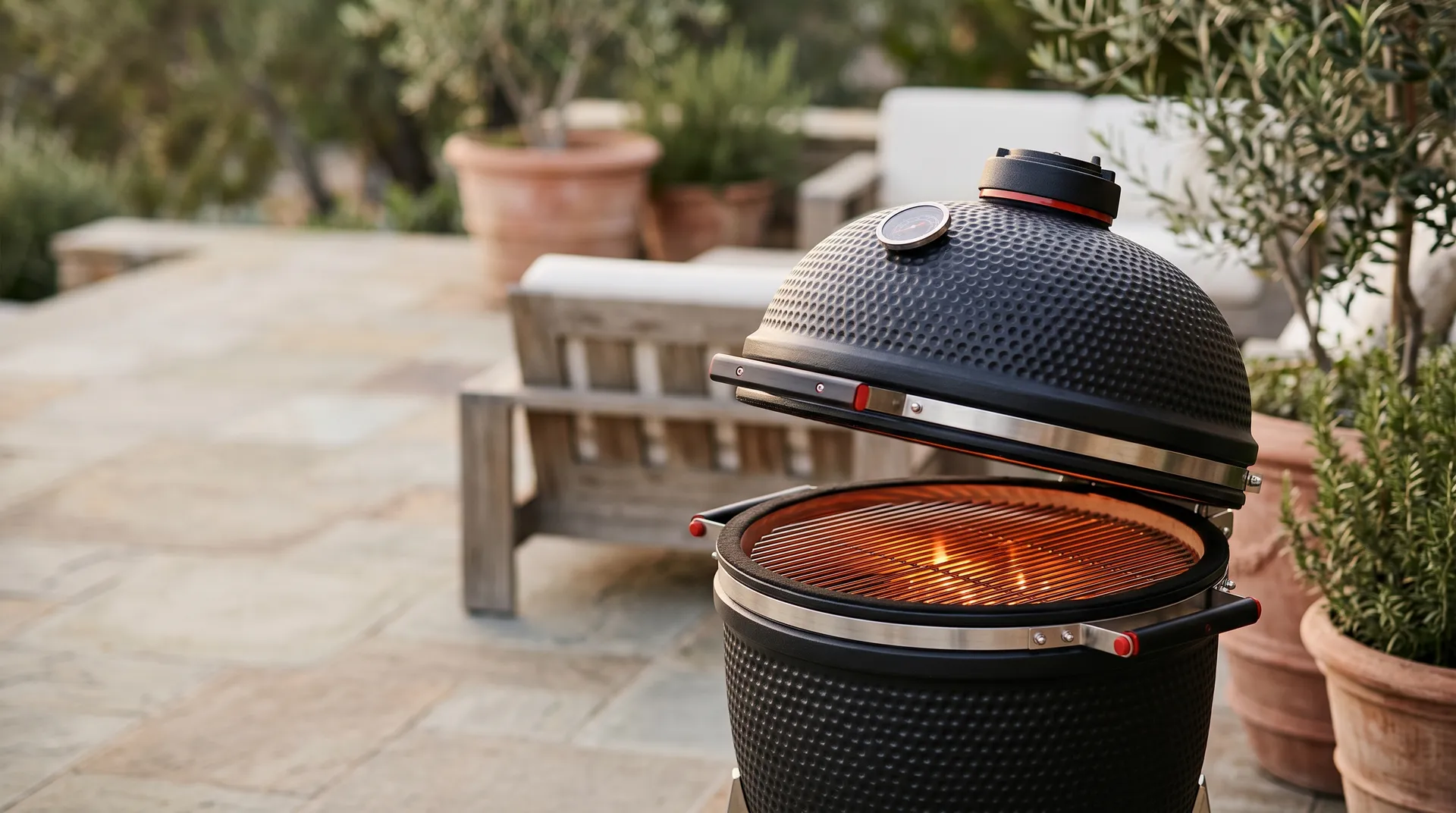

To use a kamado grill, fill lump charcoal to the fire ring, light it with one or two fire starters and leave the dome and bottom vent fully open for 10 minutes, as Kamado Joe directs. Close the dome, start closing both vents once you're within 50°F of your target, and give a ceramic kamado 20 to 60 minutes to settle before food goes on. Put the heat deflector in for low and slow, take it out for searing, burp the dome before you open it, and shut down by closing the bottom vent, then the top once it's below 400°F.
Creep up on your temperature: a kamado is much harder to cool down than to heat up.
Kamado Grill Settings at a Glance
Ceramic and steel kamados follow different maker rules, so read your column.
| Task | Kamado Joe (ceramic) | Char-Griller AKORN (steel) |
|---|---|---|
| First fire | No pre-season; stay under 400°F for 1 hour | Oil the inside, then about 250°F for 2 hours |
| Lighting | Dome and bottom vent open 10 min | Bottom damper fully open, top slightly open |
| Settle time | 20–60 min | Until the charcoal ashes over, 20–30 min |
| Low and slow | Both deflector halves in; vents mostly closed | Smokin' Stone above the coals; top closed, bottom on 2 |
| Searing | Deflector out; vents fully open to 500°F+, grate low | Top fully open, bottom on 4 |
| Shutdown | Bottom vent closed; top closed below 400°F | All vents closed; empty the ash pan when cold |
The Kamado Joe column comes from the Classic I manual and Kamado Joe's own guides; if you own the Classic Joe II, check its manual for hinge and top vent differences. The AKORN column comes from Char-Griller's AKORN heat guide and FAQ, which list more damper combinations.
Where and How Should You Set Up a Kamado?
A kamado burns charcoal, so it gets the same outdoor-only rules as any charcoal grill.
Kamado Joe's manual says to use the grill only outdoors, somewhere well ventilated, and never:
- In enclosed areas, RVs or boats
- Under roof coverings, carports, awnings or overhangs
- Within 10 ft of overhead construction, walls, rails or combustible materials
- In high winds
Watch out: burning charcoal gives off carbon monoxide, which is why every enclosed space is ruled out. Kamado Joe also says not to use lighter fluid, never to overfill the charcoal grate, never to load more than 6 lb of charcoal in the Classic Joe's main firebox, and to keep a fire extinguisher nearby.
What You Need
- Lump charcoal (Kamado Joe says lump only; Char-Griller's own AKORN examples use lump or briquettes)
- One or two fire starters
- A heat deflector: the Classic Joe I ships with two ceramic ones; the AKORN's Smokin' Stone is sold separately
- An ash tool
- A grate scraper or damp rag
- Heat-resistant gloves
- A food thermometer
- A grill cover
Step-by-Step: How to Use a Kamado Grill
Nine steps run from the first fire to a safe shutdown.
Step 1 of 9Do a gentle first fire
Target: under 400°F for 1 hour
Kamado Joe says its grills need no pre-seasoning. Before the first burn on a Kamado Joe Classic Joe I, tighten the hardware, bands and hinge, wash the grates with mild dish detergent, then build a small to medium fire and hold it below 400°F for an hour before shutting down. After that first heat, the bands may need re-tightening, and fine cracks in the glaze are crazing, which Kamado Joe calls a natural part of porcelain.
A steel Char-Griller AKORN is cured instead: Char-Griller says to lightly coat every interior surface with vegetable oil, light the charcoal, and once it ashes over, close the lid and heat at about 250°F for two hours. Its FAQ says to repeat the cure at least twice a year.
Step 2 of 9Clear the ash and load the charcoal
Done when: loose ash has dropped away and the lump reaches the fire ring
Stir the old charcoal with the ash tool so loose ash falls through, then empty the ash. Add charcoal until the mound reaches the fire ring. On an AKORN, Char-Griller says charcoal goes on the fire grate, never the bottom of the grill.
Step 3 of 9Light it with the dome open
Time: 10 minutes with the dome and bottom vent fully open
Light one or two fire starters in the charcoal and leave the dome up. Kamado Joe says starter fluids add off flavors, damage the grill and create a fire hazard. Don't cook until the charcoal has a coating of ash.
Step 4 of 9Close the dome and sneak up on your temperature
Target: start closing the top and bottom vents within 50°F of your target
More air means more heat, and so does more charcoal. Kamado Joe says each vent change takes 10 to 15 minutes to show on the thermometer, so make small moves and wait. For vent positions by temperature, see our vent settings for a kamado.
Step 5 of 9Let the ceramic settle
Time: 20–60 minutes before food goes on
Kamado Joe says this time lets the temperature stabilize and heats the ceramic before you start cooking. On a steel AKORN, Char-Griller's guide says to wait until the charcoal has ashed over.
Step 6 of 9Set the heat deflector for the cook
Done when: the deflector is in for indirect cooking, or out for direct grilling and searing
The full setup for each style is in the heat deflector section below.
Step 7 of 9Burp before you open the dome
Done when: you've lifted the dome 2–3 inches for about 5 seconds before opening it all the way
Kamado Joe's guides say to burp every time you open the dome, and its manual makes it a must above 350°F.
Watch out: opening a hot kamado in one move can cause a flashback, which Kamado Joe describes as a surge of white-hot heat caused by a rush of oxygen. Keep your face and arms clear of the gap.
Step 8 of 9Cook to a safe internal temperature
Done when: the food thermometer reads USDA's safe minimum for that meat
Use a thermometer, not the clock. Look up the number in our chart of safe internal temperatures.
Step 9 of 9Shut it down
Done when: both vents are closed and the dome is cool to the touch
Close the bottom vent completely, scrape the grates with a grate scraper or damp rag while they're still warm, and close the top vent once the temperature falls below 400°F. Kamado Joe says not to cover or clean the grill until the dome is cool to the touch, 115°F, and not to spill liquids inside or on the grill while it's hot, so never pour water on the coals. Kamado Joe says to wrap cold ashes in foil, soak them with water and dispose of them in a non-combustible container.
On an AKORN, Char-Griller says to close all the vents and let the fire die down, which can take several hours to a couple of days, then lock the lid and empty the ash pan once it's fully cooled. Char-Griller says to empty the pan after every cook to prevent rust.
How Do You Set Up a Kamado Heat Deflector?
The deflector decides whether food cooks over the fire or beside its heat.
For low and slow (indirect)
Kamado Joe says to install both half-moon deflector plates on the accessory rack, under the cooking grate, to shield the meat from direct flame. For long smokes it suggests stabilizing at 225 to 250°F for at least 30 to 45 minutes before the meat goes on, with 2 to 4 wood chunks mixed into the charcoal. Our guide to smoke a brisket takes it from there.
For two-zone cooking
With one deflector under one half of the Divide & Conquer rack and the other half left open, one side of the grate cooks direct and the other indirect. Our guide to direct vs indirect grilling explains when to use each side.
For searing (direct)
Take the deflectors out. Kamado Joe says to put the half-moon grates in the lower position, closest to the coals, and open both vents fully until the grill reaches 500°F or above. For timing on a steak, see how to grill the perfect steak.
If your kamado has no deflector
The AKORN doesn't include one. Char-Griller's smoking setup puts its Smokin' Stone above the coals with a water pan on top. The VEVOR 18-inch kamado has no deflector listed, so follow the manual that came with it, as you should on the London Sunshine 15-inch kamado.
Keep the deflector clean
Kamado Joe says to flip a dirty deflector dirty side down on the next cook, and the fire cleans it. When mold or mildew shows up, it suggests a self-cleaning burn: deflector in, dirty side down, vents fully open with the dome closed, held at 600°F for 15 to 20 minutes or until no smoke shows. More on routine upkeep is in how to care for a kamado.
Why Won't My Kamado Hold Temperature?
Move the vents a little and wait 10 to 15 minutes; for heat surges at the dome, see Step 7.
It overshot the target
Sign
The dome reads well above what you planned after you opened the vents.
Fix
- Close both vents part way.
- Wait 10 to 15 minutes before changing them again.
Expect
A slow drop, because the ceramic holds heat. Our guide to kamado vent settings covers running too hot.
The fire is too low or dying
Sign
The temperature won't climb even with the vents set.
Fix
- Open the bottom vent further.
- Check that ash isn't blocking the fire grate; stir the charcoal with the ash tool before your next cook.
Expect
A climb within 10 to 15 minutes of the vent change.
Which Kamado Is Easiest to Learn On?
Deflectors in the box, or a lower-cost steel body with the deflector bought later.
A ceramic Kamado Joe ships with its deflectors, so low and slow works on day one. The steel AKORN uses a triple-wall body and needs the Smokin' Stone for indirect cooking.
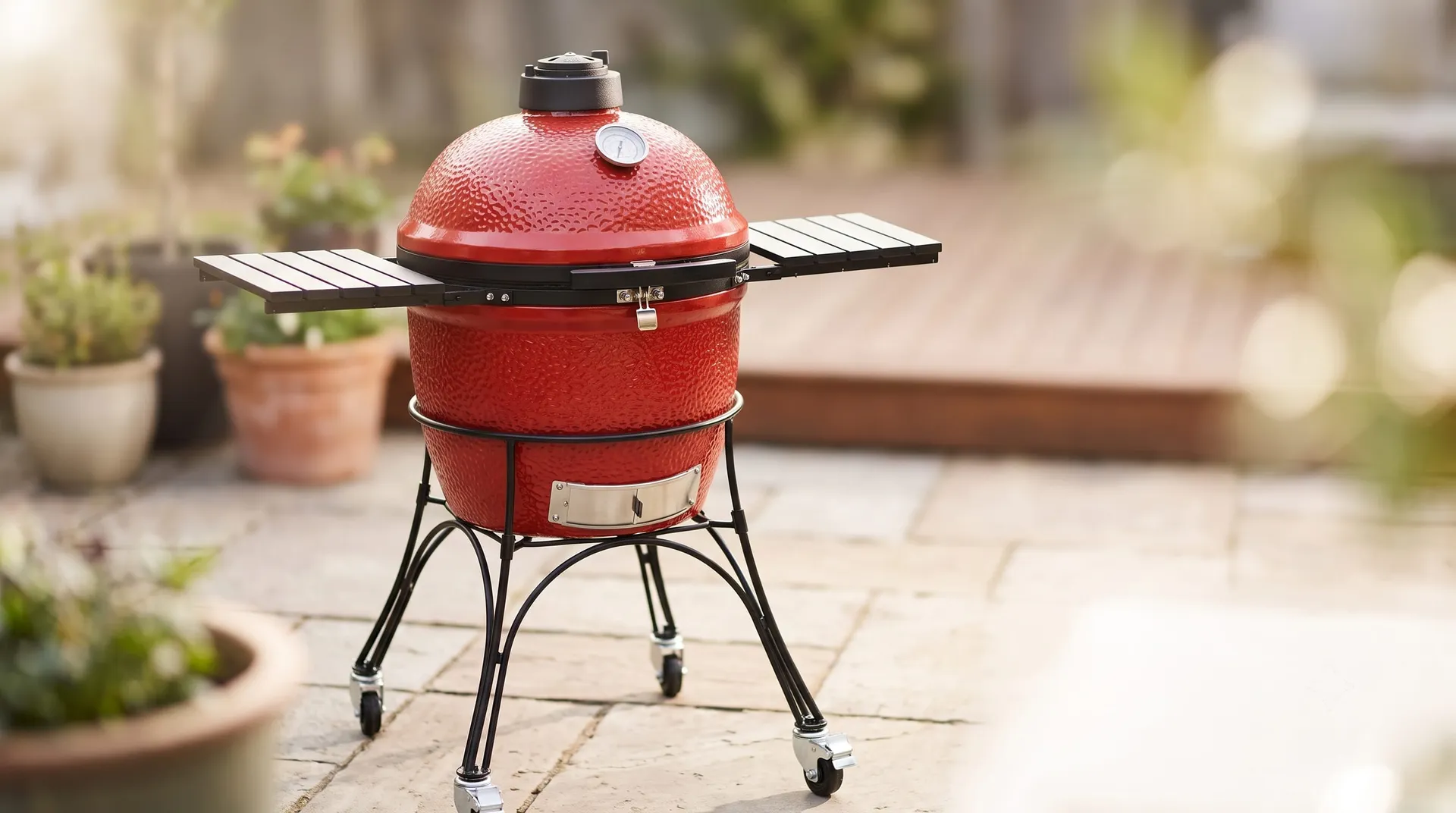 Deflectors in the box
Kamado Joe Classic Joe I★ 4.5/5
An 18-inch ceramic kamado that ships with two ceramic heat deflectors and a two-tier rack.
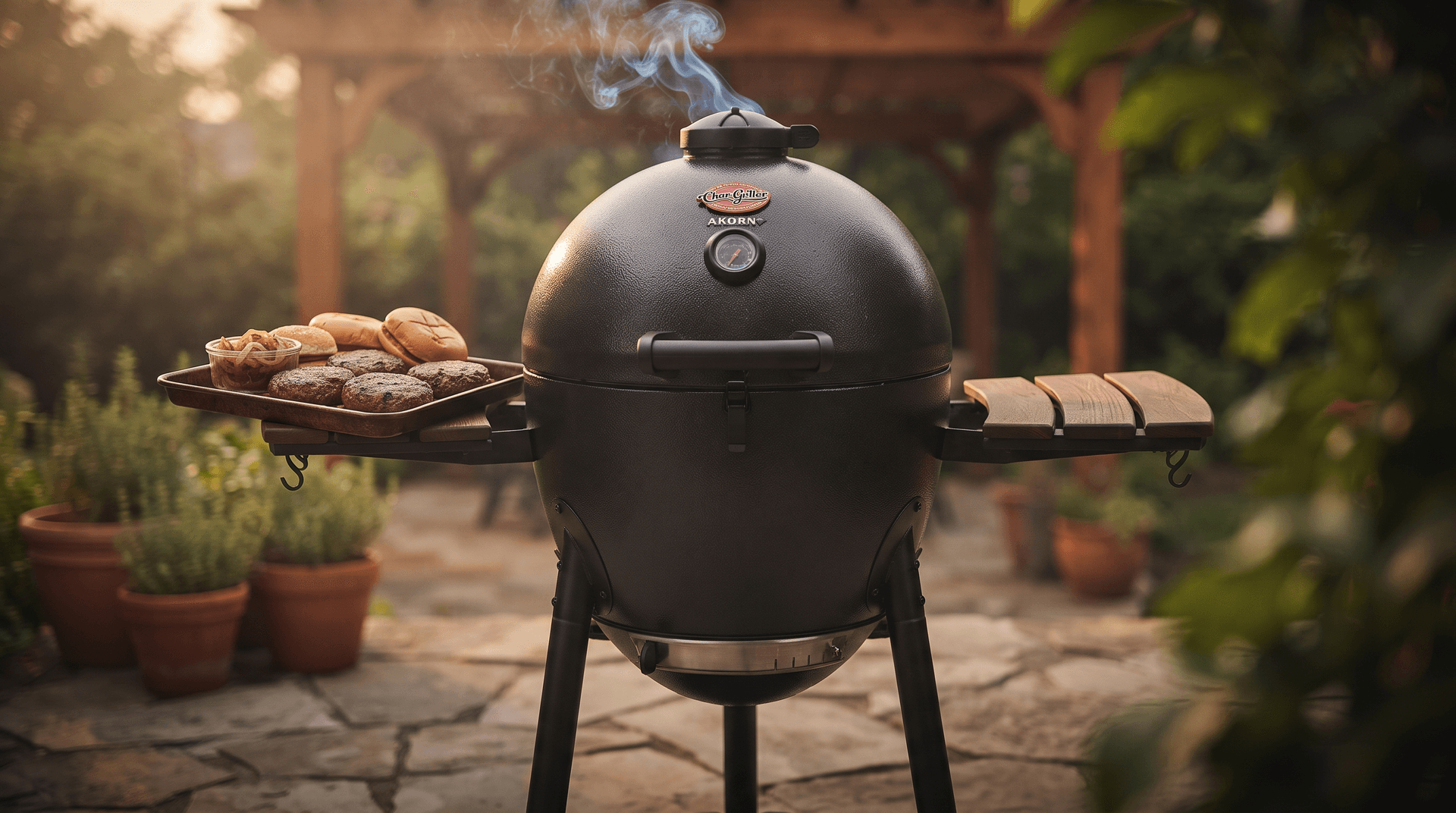 Steel kamado on a budget
A triple-wall steel kamado with a big grate; the Smokin' Stone deflector is extra.
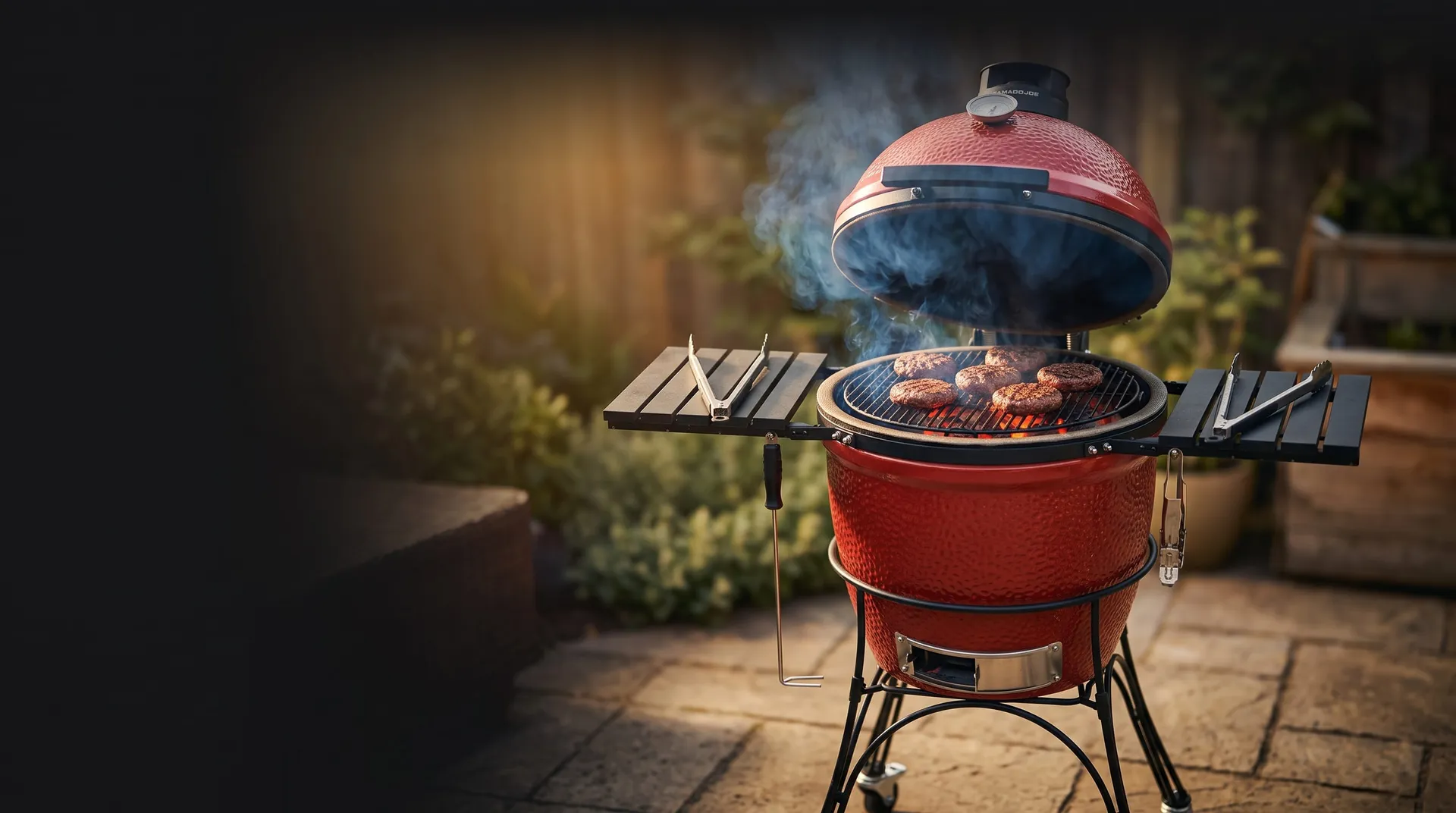 Easier dome lifting
Adds an Air Lift hinge and Kontrol Tower top vent to the Classic I design.
Compare every pick in our best kamado grills, or browse all our kamado grill reviews.
Frequently Asked Questions
01Do you need to season a kamado grill?
A ceramic Kamado Joe doesn't need it, just a gentle first fire. A steel AKORN does: Char-Griller calls for an oil cure before first use.
02How long does a kamado take to heat up?
Count on about 10 minutes to light with everything open, then 20 to 60 minutes for a ceramic kamado to settle, per Kamado Joe.
03Why do you burp a kamado grill?
To avoid a flashback. Kamado Joe says a sudden rush of oxygen into a hot kamado causes it.
04Can you use lighter fluid in a kamado?
No. Kamado Joe says not to; use fire starters instead.
05Do you leave the vents open when you're done?
No. Close the bottom vent first, then the top once it's under 400°F, so the fire goes out.
06Can you use briquettes in a kamado?
Follow your maker. Kamado Joe says lump only, while Char-Griller's own AKORN heat guide lights briquettes.
The Takeaway
A kamado rewards patience: small vent moves, time to settle and a burp before every opening. Follow your maker's numbers and let the deflector set the style of cook.
- First fire: gentle, under 400°F on a ceramic; an oil cure on a steel AKORN.
- Every cook: light with everything open, close the vents near your target, then let it settle.
- Low and slow: deflector in.
- Searing: deflector out, grate low.
- Done: bottom vent closed, then the top.
Still deciding? Compare a kamado or a regular grill before you buy.
Written by
Tom Bricker
Consumer Research Analyst & Editor
Tom Bricker has 10+ years of grilling on every fuel type and a consumer-research background. He leads SmokyHQ’s gas, portable, electric and flat-top coverage and also writes in other categories, so if you’re weighing price against how long a grill will last, his reviews compare specs, materials and warranties to show which ones look worth the money.
- Gas Grills
- Portable Grills
- Electric & Indoor Grills
- Griddles
- Value & Durability
Every grill is scored with the same method. How we score
Keep reading
Related guides
Charcoal Grill Temperature Control
Set your vents and coals for smoking, roasting or searing using the makers' own settings, and fix a charcoal fire that runs too hot, too cold or won't hold steady.
Read the guide
Kamado Grill vs Regular Grill
A ceramic kamado smokes and sears on one fire; gas is faster and a kettle is cheaper. Specs, prices and design trade-offs show which fits how you cook.
Read the guide

Direct vs Indirect Grilling
Which foods go over the fire and which cook beside it, Weber's time cutoffs and chart examples, and how to set up two zones on charcoal, gas, kamado and pellet grills.
Read the guide
How to Grill a Steak
Grill a steak on gas or charcoal with Weber's times by thickness, a two-zone fire, makers' doneness temperatures and fixes for gray, charred or tough steak.
Read the guide